

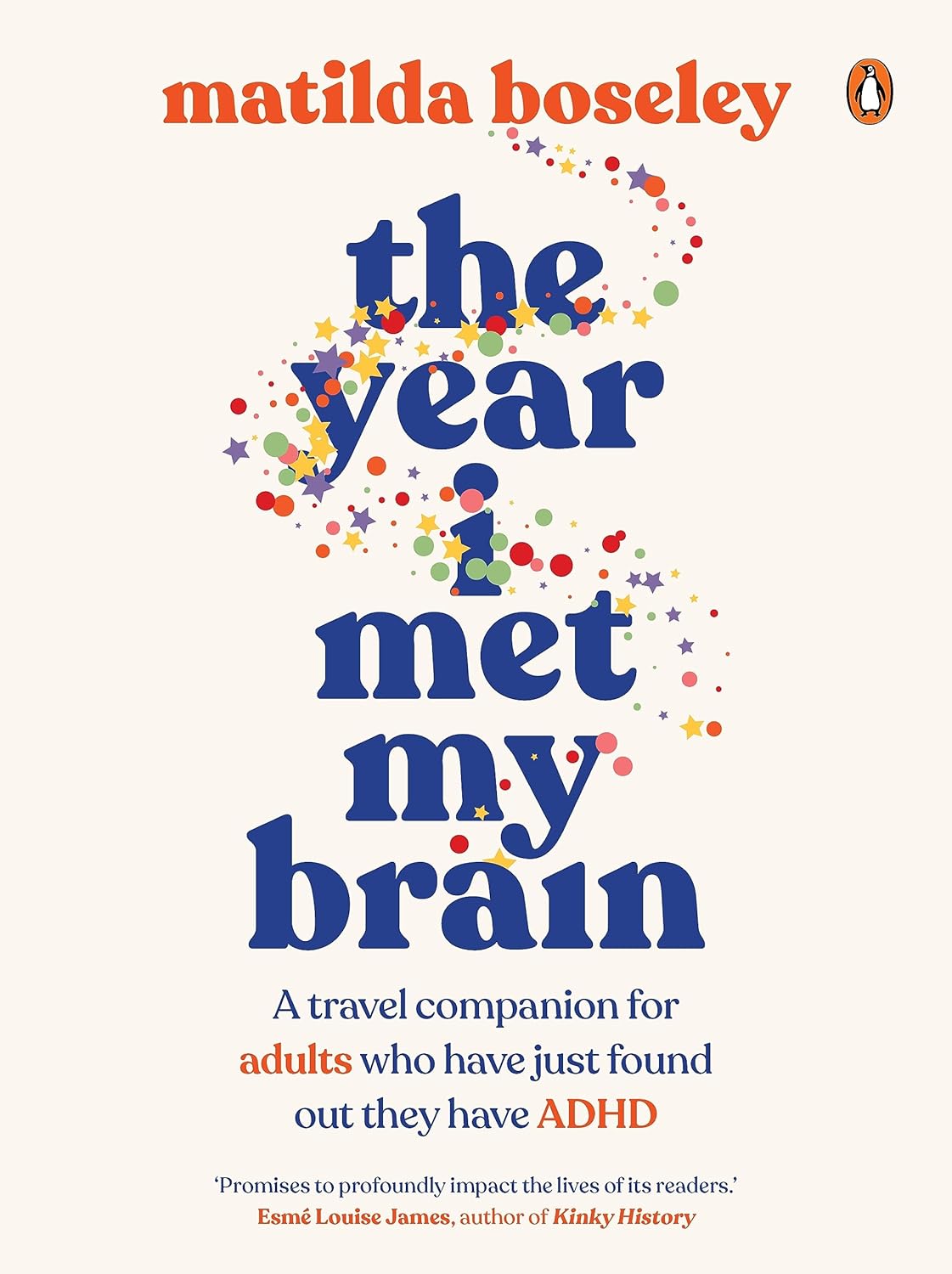
About The Year I Met My Brain by Matilda Boseley
What if the things you dislike about yourself are not signs that you are lazy, careless, or broken? What if your brain simply works in a different way?
The Year I Met My Brain by Matilda Boseley is a warm, funny, and deeply honest book about discovering ADHD as an adult. After receiving an ADHD diagnosis at the age of 23, Matilda had a name for many of her struggles. Yet a name alone did not tell her what ADHD meant for her daily life, relationships, work, memories, feelings, or future.
She had medicine, but she still had many questions. Why did simple tasks sometimes feel so hard? Why could she focus deeply on one thing but forget another important job? Why had nobody noticed the signs when she was younger? Most of all, how could she build a good life without fighting against her own brain every day?
Matilda spent a year looking for answers. She spoke with specialists, examined research, listened to other people with ADHD, and looked back at her own experiences. The result is a book that combines personal storytelling with clear information and useful ideas.
It is not written like a cold medical guide. It feels more like travelling with a friendly person who understands how confusing an adult ADHD diagnosis can be.
Finally Understand Why Your Brain Acts This Way
Many adults live with attention problems, poor time awareness, unfinished tasks, forgotten plans, strong emotions, or messy routines. They may blame themselves for years. They may hear words such as “lazy,” “careless,” or “not trying hard enough.”
An ADHD diagnosis may explain some of these experiences, but it can also create a new set of questions. A person may feel relief, sadness, anger, hope, or fear at the same time. They may wonder how much of their past was shaped by ADHD and what they should do next.
The Year I Met My Brain helps readers explore these feelings without shame. Matilda shows how learning about her brain changed the way she understood her past. Instead of seeing every problem as a personal failure, she began to understand the role played by attention, motivation, memory, impulse control, and executive function.
The book offers a kinder path: learn how your brain works, forgive yourself for what you did not know, and build systems that match your real needs.
A Personal Story Filled with Useful Knowledge
This book is part memoir and part practical ADHD guide. Matilda shares what happened after her diagnosis and explains what she learned during the following year. Her own life gives the information a clear and human shape.
She writes about the difference between knowing that you have ADHD and truly understanding how it touches your life. A diagnosis may happen in one appointment, but learning to live with that knowledge can take much longer.
The book looks at common adult ADHD experiences in work, home life, friendships, love, organisation, and self-esteem. It also explores why many people, especially girls and women, may reach adulthood before their ADHD is noticed.
Some people do not match the old picture of a very active young boy who cannot sit still. They may hide their difficulties, work very hard to appear organised, or direct their struggles inward. This can make the signs easier for other people to miss.
Matilda uses research, expert knowledge, and lived experience to explain these ideas in an easy and welcoming way. She does not speak down to the reader. She admits when life is confusing and shows that learning about ADHD can include both painful truths and funny moments.
Learn About ADHD Without Feeling Judged
Information about ADHD can be hard to read when it is filled with medical words. It can also feel hurtful when it talks only about problems and ignores the person living with them.
Matilda takes a different approach. She explains difficult ideas through stories, simple examples, and humour. She discusses executive function—the mental skills used to start, plan, remember, manage, and finish tasks—in a way that connects with real life.
Readers can learn why a small task may feel impossible to begin, why important objects disappear, or why time can seem to move in strange ways. They can also explore why interest, urgency, reward, and emotion may have a strong effect on attention.
The book does not claim that every person with ADHD has the same life. ADHD can appear differently from one person to another. Instead, Matilda offers a starting point for readers who want language for experiences they have struggled to explain.
This kind approach can help replace harsh self-talk with curiosity. Instead of asking, “What is wrong with me?” a reader may begin asking, “What support would make this task easier for my brain?”
A Helpful Companion After an Adult Diagnosis
Receiving an ADHD diagnosis can bring relief. It may answer questions that have followed a person for many years. But relief is not always the only feeling.
Some people grieve for missed help, lost time, difficult school years, damaged confidence, or chances they feel they could have taken. Others worry that the diagnosis will change how family members, friends, or coworkers see them.
The Year I Met My Brain makes room for these mixed feelings. Matilda does not tell readers that they must feel happy or sad about their diagnosis. She shows that understanding a new part of yourself is a journey.
This makes the book especially valuable for adults who have recently learned that they have ADHD. It may also help people who are waiting for a professional assessment or carefully exploring whether their experiences sound familiar.
However, the book is not a diagnostic test and cannot replace help from a qualified healthcare professional. It should be used for learning, reflection, and support rather than self-diagnosis or medical treatment decisions.
Discover Why ADHD Is Often Missed
One of the book’s important subjects is the way ADHD may go unnoticed during childhood. Public ideas about ADHD have often focused on visible hyperactivity. Yet many people have signs that are quieter, hidden, or misunderstood.
A child may dream during class, forget instructions, lose school items, speak very quickly, or struggle to begin homework. They may still receive good marks because they work under great pressure, get help from family, or build ways to hide their difficulties.
Girls and women may be more likely to have their struggles overlooked when they do not fit common ideas about ADHD. They may be called emotional, careless, talkative, disorganised, or overly sensitive without anyone asking what is behind those behaviours.
Matilda looks at these missed signs with care. This can help adult readers look back at their childhood with fresh eyes. It may also help parents, partners, friends, and teachers understand that ADHD does not have one single appearance.
Build a Life That Fits Your Brain
Many people try to make themselves fit systems that do not meet their needs. They buy a planner, create a strict routine, or promise that they will simply try harder. When the plan fails, they blame themselves.
This book invites readers to take another route. Instead of forcing the brain to work like somebody else’s brain, a person can change the environment, task, or support system.
Matilda shares practical thoughts about organisation and social life. The aim is not to create a perfect routine. It is to make daily living more manageable.
A reader may begin thinking about visual reminders, easier storage, smaller task steps, outside support, clearer deadlines, or realistic rest. The right answer will not be the same for everyone. The useful lesson is that a support system should work in real life, not only look good on paper.
This change in thinking can be powerful. It moves the focus away from shame and toward problem-solving. It can help readers see that asking for support is not cheating. It is a sensible way to care for the brain they have.
See the Effect on Work, Love, and Daily Life
ADHD does not stay in one small part of life. It may affect arriving on time, answering messages, completing work, controlling spending, remembering plans, or keeping a home organised.
These actions can also affect other people. A forgotten date may look like a lack of care. An interrupted conversation may feel rude. An unfinished task may create stress for a partner or coworker.
The Year I Met My Brain explores these difficult areas with honesty. It helps readers understand that an explanation is not the same as an excuse. Knowing why a problem happens can make it easier to accept responsibility and find a better way forward.
The book can also support conversations between people with ADHD and the people who love them. A partner, parent, sibling, or close friend may gain a clearer view of challenges that are hard to see from the outside.
This understanding can reduce blame. It can help people discuss needs, limits, reminders, and shared systems with more care.
Heal the Hurt Caused by Years of Self-Blame
One of the deepest parts of the book is its focus on self-esteem. A person who repeatedly forgets, delays, loses, or interrupts may receive many negative messages. Over time, those messages can become part of how they see themselves.
They may believe they are unreliable, difficult, selfish, or weak. Even after receiving a diagnosis, these beliefs may not disappear quickly.
Matilda explores the emotional work of looking back without attacking your younger self. She shows why self-forgiveness matters and why understanding ADHD can bring both healing and grief.
The book does not pretend that knowledge removes every struggle. Instead, it gives readers a more honest and gentle story about who they are. A mistake can remain a mistake without becoming proof that the whole person is bad.
For readers who have spent years feeling different, this message can offer comfort. It can create space for hope, growth, and a healthier sense of identity.
Clear Reasons to Add This Book to Your Shelf
The Year I Met My Brain offers a strong mix of information, humour, personal experience, and practical reflection. Its approachable style makes a serious subject easier to explore.
Inside the book, readers can expect:
-
A personal account of receiving an ADHD diagnosis in adulthood
-
Clear discussion of common adult ADHD symptoms
-
Insight into why ADHD can be missed during childhood
-
Special attention to overlooked experiences among girls and women
-
Explanations of executive function and everyday mental struggles
-
Honest discussion of relationships, work, identity, and confidence
-
Practical ideas for organisation and social situations
-
Encouragement to replace shame with understanding
-
Research and expert insight presented in a friendly style
-
A hopeful view of creating a life that works with an ADHD brain
These subjects make the book useful both as an introduction and as a companion during a longer journey of self-understanding.
Who Will Find This Book Most Helpful?
This book is a thoughtful choice for adults who have recently received an ADHD diagnosis and do not know where to begin. It can help them find clear words for their thoughts, feelings, and daily struggles.
It may also suit:
-
Adults who are exploring possible ADHD traits
-
Women whose ADHD was missed when they were younger
-
Partners and family members of adults with ADHD
-
Friends who want to offer better support
-
Teachers, carers, and employers seeking a personal viewpoint
-
Readers interested in neurodiversity and mental health
-
People who enjoy memoirs mixed with helpful knowledge
-
Anyone trying to understand attention, motivation, or executive function
A reader does not need medical training to follow the book. Matilda writes for ordinary people and keeps the subject connected to familiar situations.
A Book That Can Start Better Conversations
Some experiences are hard to explain aloud. A person may know that a task feels impossible but not know how to describe the reason. They may love someone deeply but still forget an important plan. They may want to focus but feel unable to direct their attention.
This book can give readers language for those moments. It can also be shared with someone who wants to understand.
Couples may use it to begin talks about reminders, housework, money, time, or communication. Families may use it to discuss old misunderstandings. Friends may learn why certain kinds of support are more helpful than criticism.
The goal is not to use ADHD as an answer for every problem. The goal is to understand the full picture so that people can respond with knowledge, honesty, and care.
Made for Comfortable and Regular Reading
Bookish Wonderland offers this edition for readers who want a durable and pleasant physical book. The crystal-clear print keeps each line sharp and easy to follow.
Premium eye-soothing cream paper gives the pages a soft look and helps make long reading sessions more comfortable. The high-quality stitched and glue binding provides added strength, helping the pages remain secure through regular reading.
These physical features are especially useful for a nonfiction book that readers may want to mark, revisit, or keep nearby. You can return to important sections whenever you need a reminder, a useful idea, or a little reassurance.
The quality is presented here once because the real value is simple: a clear, comfortable, and lasting copy made for reading and keeping.
Read It in the Way That Works for You
The book does not need to be read quickly. You can move through it chapter by chapter, pause to think, and return to useful parts later.
Newly diagnosed readers may read it from beginning to end because Matilda’s personal journey gives the book a natural path. Other readers may prefer short sessions so they have time to reflect on each topic.
You can keep notes about ideas that match your experience. You may also mark pages you want to discuss with a healthcare professional, partner, or family member.
If attention makes long reading sessions difficult, try reading for a few minutes at a regular time. The aim is not to finish on a perfect schedule. The aim is to learn something useful and treat yourself with patience.
The Year I Met My Brain by Matilda Boseley Price in Bangladesh
Readers searching for The Year I Met My Brain by Matilda Boseley price in Bangladesh can order a premium-quality copy from Bookish Wonderland. It is a valuable choice for personal reading and also makes a thoughtful gift for someone learning about adult ADHD.
Bookish Wonderland offers nationwide delivery, including service inside and outside Dhaka. Cash on Delivery is available across the country, so customers can place an order with ease. A fast or urgent delivery option may also be available in Dhaka, depending on the location and current delivery conditions.
Best Sellers Rank of This Book
-
#354,564 in Books
-
#204 in Medical Professional Biographies
Bring More Kindness to the Way You See Yourself
The Year I Met My Brain does more than explain ADHD. It shows how knowledge can change the story a person tells about themselves.
If you have spent years wondering why certain parts of life feel harder for you, this book may help you ask better questions. If someone you love has ADHD, it may help you listen with greater care. If you simply want an honest and friendly introduction to adult ADHD, Matilda’s journey offers an engaging place to start.
Order The Year I Met My Brain by Matilda Boseley from Bookish Wonderland today. Read it for understanding, keep it for support, and return to it whenever you need a kinder way to think about a busy, different, and deeply human brain.
If you require any customization or have any questions, please inbox us via FB or Insta.
| Primary Specification | |
| Author | Matilda Boseley |
| Narrator | Matilda Boseley |
| Genre | Nonfiction, Memoir, Self-Help, Psychology, Mental Health, Adult ADHD, Neurodiversity |
| ISBN-13/ISSN | 978-0143779773 |
| ISBN-10 | 014377977X |
| Publisher | Penguin Life Australia |
| Publishing Date | October 3, 2023 |
| Language | English |
| Reading Age | 18+ years |
| Format | Paperback |
| Physical Specification & Quality | |
| Paper Quality | Premium eye-soothing cream paper |
| Binding Quality | High quality stitched and glue binding (for longevity) |
| Print Quality | Crystal-clear print |
| Pages | 352 pages |
| Country | Australia |
| Logistics Information | |
| Weight | 364 gm |
| Length | 8.5 inches |
| Width | 5.6 inches |
| Height | 1 inch |