

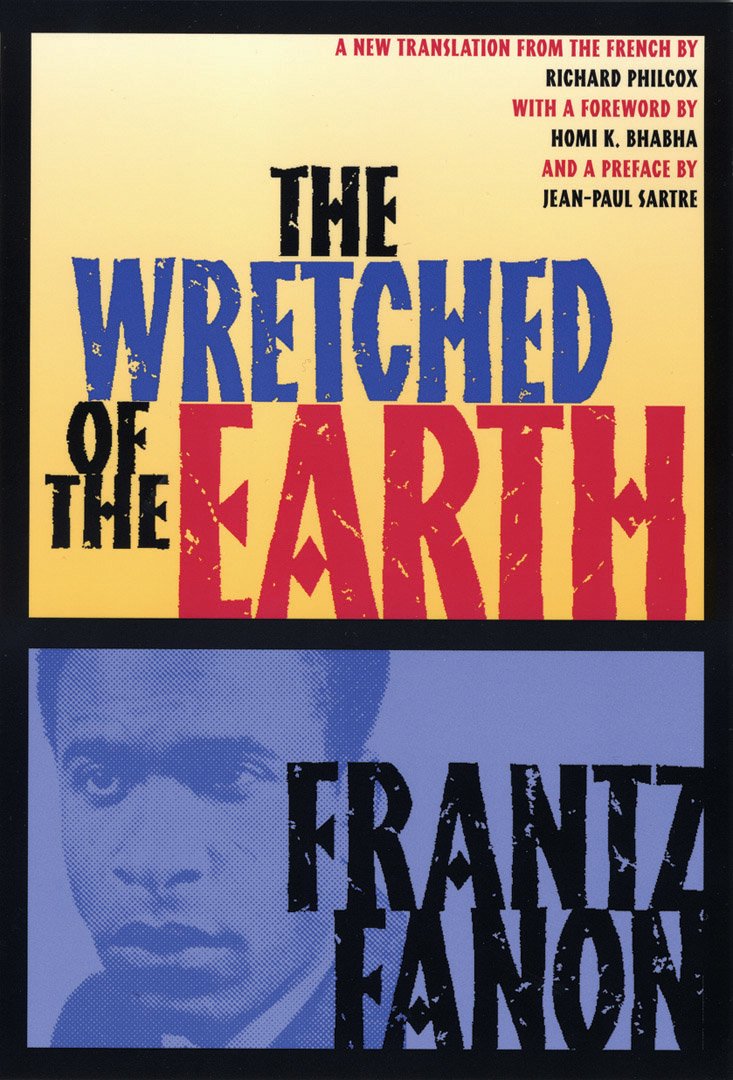
About The Wretched of the Earth by Frantz Fano
Some books tell us what happened in history. Other books help us understand why it happened, how it changed people and why its effects can remain for many years. The Wretched of the Earth by Frantz Fanon belongs to the second group.
First published in French in 1961 as Les Damnés de la Terre, this major work examines colonial rule, racism, political violence, national identity and the difficult road from oppression to freedom. Fanon was a psychiatrist, political thinker and active supporter of Algeria’s struggle for independence. He did not study colonialism only from a safe distance. He saw how fear, humiliation, violence and unequal power could affect both individuals and whole communities.
The result is a serious and challenging book that continues to be read in politics, history, sociology, psychology, cultural studies and postcolonial studies. It asks questions that remain important today: What does long-term oppression do to the human mind? What happens when a colonized country becomes independent? Can a new ruling class repeat the mistakes of the old rulers? How can a nation rebuild its culture without becoming trapped in the past?
Readers looking for The Wretched of the Earth by Frantz Fanon price in Bangladesh can order this durable English edition from Bookish Wonderland.
Why this book still matters
Colonial rule does more than take land and control money. It can also damage identity, language, culture and self-respect. People may be taught that their own history has little value. They may begin to see themselves through the unfair ideas created by those who control them.
This creates a deep problem. A country may receive a new flag and a new government, but the old ways of thinking can remain. Wealth may still stay in the hands of a small group. Leaders may copy the same systems that once harmed their people. Ordinary citizens may discover that political freedom has not brought real change to their daily lives.
Fanon helps readers see this hidden side of colonialism. He connects public power with private pain. He explains how oppression can affect confidence, relationships, behaviour and mental health. He then explores what real liberation might require—not only a change of leaders, but also a change in social life, national purpose and human understanding.
The book does not offer an easy answer to every problem. Instead, it gives readers a strong way to study power and question simple stories about freedom.
Enter the world of Fanon’s political thought
The Wretched of the Earth was written during the Algerian War of Independence, when Algeria was fighting to end French colonial rule. This setting is important because the book was shaped by a real and violent struggle, not only by classroom theory.
Fanon examines how the colonial world is divided between those who rule and those who are ruled. He argues that this system presents inequality as if it were natural. The colonized person is often described as dangerous, weak or less human, while the colonizer presents control as order or progress.
This system affects both the body and the mind. It controls where people live, how they work, what they learn and how they understand themselves. Fanon shows that the struggle for freedom therefore becomes psychological as well as political.
His discussion of violence is one of the most famous and debated parts of the book. It should not be reduced to a simple slogan. Fanon studies violence as part of the colonial system and as a force that shapes resistance, fear and identity. His later clinical examples also reveal the lasting mental injuries experienced by people caught in war and political conflict.
This makes the book more complex than a simple defence of revolution. It is also a warning about the terrible human cost of colonial domination and armed struggle.
More than a book about one country
Although Algeria strongly influenced Fanon’s writing, the book looks beyond one nation. It considers anti-colonial movements across Africa and other colonized regions. Fanon studies the choices that newly independent countries may face and the dangers that can appear after colonial rulers leave.
One danger is the rise of a small national middle class that takes control without changing the unfair system. Such leaders may enjoy wealth and power while most citizens remain poor. They may speak about national pride but fail to build useful schools, industries, public services or fair institutions.
Fanon warns that independence can become an empty word when ordinary people do not receive meaningful political and economic power. A nation needs more than new officials. It needs public involvement, responsible leadership and a clear plan for improving people’s lives.
These ideas help explain why the book remains useful in discussions about inequality, state power, economic dependence and the long effects of empire. Readers can apply its questions to many parts of the world while still remembering that each country has its own history.
Discover the link between power and the mind
Fanon’s work as a psychiatrist gives this book a special depth. He understood that political systems can create emotional and psychological harm. Oppression may produce fear, anger, shame, trauma and a painful loss of identity.
The book includes clinical material related to people affected by the Algerian conflict. These cases show that war does not end when a battle stops. Violence can remain inside memory, sleep, family life and daily behaviour. It can harm both those who suffer violence and those who carry it out.
This part of the book makes its political argument feel personal. Large words such as colonialism and revolution become connected to real human lives. Readers see that injustice is not only a matter of laws, borders or governments. It can reach deeply into the mind.
For students of psychology and mental health, this connection is especially valuable. Fanon invites readers to consider how social conditions may influence personal suffering. He asks us to look beyond the individual and examine the political world around that person.
Understand Fanon’s idea of national culture
A major part of The Wretched of the Earth explores culture under colonial rule. A colonized society may be told that it has no valuable past or that its traditions are signs of weakness. In response, writers and thinkers may try to recover older customs and prove that their people have a worthy history.
Fanon understands why this recovery matters, but he also sees a risk. Culture cannot live only in old objects, memories or stories. A living culture must respond to the needs and struggles of people in the present.
For Fanon, national culture grows through shared action and participation. Artists and intellectuals should not speak only to foreign audiences or powerful groups. They should connect with ordinary people and the real conditions of national life.
This argument is helpful for readers interested in literature, art, language and cultural identity. It shows that culture is not merely decoration. It can challenge control, protect dignity and help people imagine a different future.
A book that asks difficult questions
The Wretched of the Earth is not light reading. Its subjects include racism, war, dehumanization, trauma, political conflict and violence. Some arguments may make readers uncomfortable, and several ideas have produced serious debate since the book first appeared.
That difficulty is part of its value. Fanon does not allow the reader to treat colonialism as a finished event with no connection to the present. He asks how old systems may continue through money, education, government and culture. He also questions the actions of leaders who claim to represent freedom while protecting their own power.
You do not have to agree with every argument to learn from the book. Careful readers can compare Fanon’s claims with history and other political thinkers. The book works best when read slowly, with attention to the time and struggle in which it was written.
It is a strong choice for readers who enjoy books that create discussion rather than provide comfortable answers.
What you will explore in this book
The book brings several connected subjects together:
-
The structure and daily reality of colonial rule
-
The psychological harm caused by racism and oppression
-
The place of violence in colonialism and decolonization
-
The role of ordinary people in national liberation
-
The duties of writers, artists and intellectuals
-
The creation of national culture
-
The danger of selfish political elites after independence
-
The limits of nationalism without social change
-
Mental trauma during war and political conflict
-
The need to build a more equal and humane future
Each subject supports the book’s larger question: How can people become truly free after living under a system designed to control both their land and their minds?
Who should read The Wretched of the Earth?
This book is ideal for university students, researchers, teachers, activists and serious general readers. It is especially useful for people studying political science, history, sociology, psychology, international relations, African studies, cultural studies and postcolonial theory.
Readers interested in civil rights, racism, liberation movements and national identity will also find important ideas here. The text can help book clubs and study groups hold deeper conversations about freedom, power and historical memory.
Because the subject matter and language can be demanding, the book is generally better suited to mature readers and older students. A beginner may wish to read one chapter at a time and keep notes on important terms. Reading a short history of the Algerian War may also make the setting clearer.
Teachers can use the book to connect political history with mental health and culture. Researchers can compare Fanon’s ideas with later independence movements and postcolonial governments. Thoughtful readers can use it to question how old systems continue to shape the modern world.
What makes this edition comfortable to read?
A serious book deserves a physical form that supports slow and careful reading. Bookish Wonderland prepares this edition for readers who want both clear content and lasting quality.
-
Premium eye-soothing cream paper offers a softer reading surface and helps reduce harsh glare under normal light.
-
Crystal-clear printing keeps letters sharp, dark and easy to follow during long reading sessions.
-
High-quality stitched and glue binding gives the pages added support and helps the book remain secure with regular use.
-
A clean, reader-friendly layout makes highlighting, note-taking and returning to important sections easier.
-
Durable production makes it suitable for a personal collection, study shelf, classroom or thoughtful gift.
These features are especially helpful for a work that readers may need to revisit. Fanon’s ideas are connected across different chapters, so many people return to earlier passages while studying the book.
How this book can help you
Reading The Wretched of the Earth can build a deeper understanding of colonial history and its human effects. It gives you useful ideas for examining political speeches, social movements, national identity and unequal systems.
For students, the book can support essays, presentations and class discussions. Its chapters offer clear areas for analysis, including violence, national consciousness, culture, political leadership and mental trauma.
For teachers, it can open discussion about the relationship between history and psychology. For activists and community leaders, it offers both inspiration and warning. Fanon respects the power of liberation movements, but he also warns that freedom can fail when power becomes separated from ordinary people.
For general readers, the book offers a new way to understand why the effects of colonialism may continue after formal independence. It encourages readers to look beneath public symbols and ask who holds power, who receives the benefits and whose voice is missing.
Most importantly, it asks readers to think about freedom as something larger than the removal of a foreign ruler. Real freedom must include dignity, public participation, cultural renewal and material change.
A lasting work for your personal library
Some books are read once and placed aside. The Wretched of the Earth is often studied, discussed and revisited. A passage that feels difficult during the first reading may become clearer after learning more about colonial history or modern political events.
The book can also be read beside other works by Fanon, especially Black Skin, White Masks. Together, these writings offer a wider view of race, language, identity, power and psychological life under colonialism.
A durable copy is useful because this is the kind of text readers may underline, annotate and use for many years. It can support academic work while also remaining a meaningful part of a personal collection.
When comparing Book price in Bangladesh, consider not only the selling price but also paper comfort, print clarity and binding strength. A well-made copy gives better value when a book is used for study and repeated reading.
Bring this landmark work to your bookshelf
The Wretched of the Earth by Frantz Fanon is for readers who want to understand more than the surface of political freedom. It shows how colonialism can shape institutions, culture, identity and mental health. It also warns that independence may remain incomplete when a small group gains power while ordinary people continue to struggle.
This is not a book designed to make every reader comfortable. It is designed to make readers think. Its questions about dignity, resistance, leadership and national renewal continue to create serious discussion around the world.
Order your copy from Bookish Wonderland and enjoy premium cream paper, crystal-clear printing and durable stitched-and-glue binding. Cash on Delivery is available across the country, with nationwide delivery inside and outside Dhaka. Customers in Dhaka may also request a fast or urgent delivery option, subject to availability.
If you require any customization or have any questions, please inbox us via FB or Insta.
| Primary Specification | |
| Author | Frantz Fanon |
| Translator | Constance Farrington |
| Narrator | Aaron Goodson |
| Genre | Political Philosophy, Postcolonial Studies, Political Theory, Psychology, History, Anti-Colonial Nonfiction, and Revolutionary Theory. |
| ISBN-13/ISSN | 978-0141186542 |
| ISBN-10 | 0141186542 |
| Publisher | Gardners Books |
| Publishing Date | January 1, 2001 |
| Language | English |
| Reading Age | 18+ years |
| Format | Paperback |
| Physical Specification & Quality | |
| Paper Quality | Premium eye-soothing cream paper |
| Binding Quality | High quality stitched and glue binding (for longevity) |
| Print Quality | Crystal-clear print |
| Pages | 256 pages |
| Country | France |
| Logistics Information | |
| Weight | 268 gm |
| Length | 8.5 inches |
| Width | 5.6 inches |
| Height | 5.08 inches |