

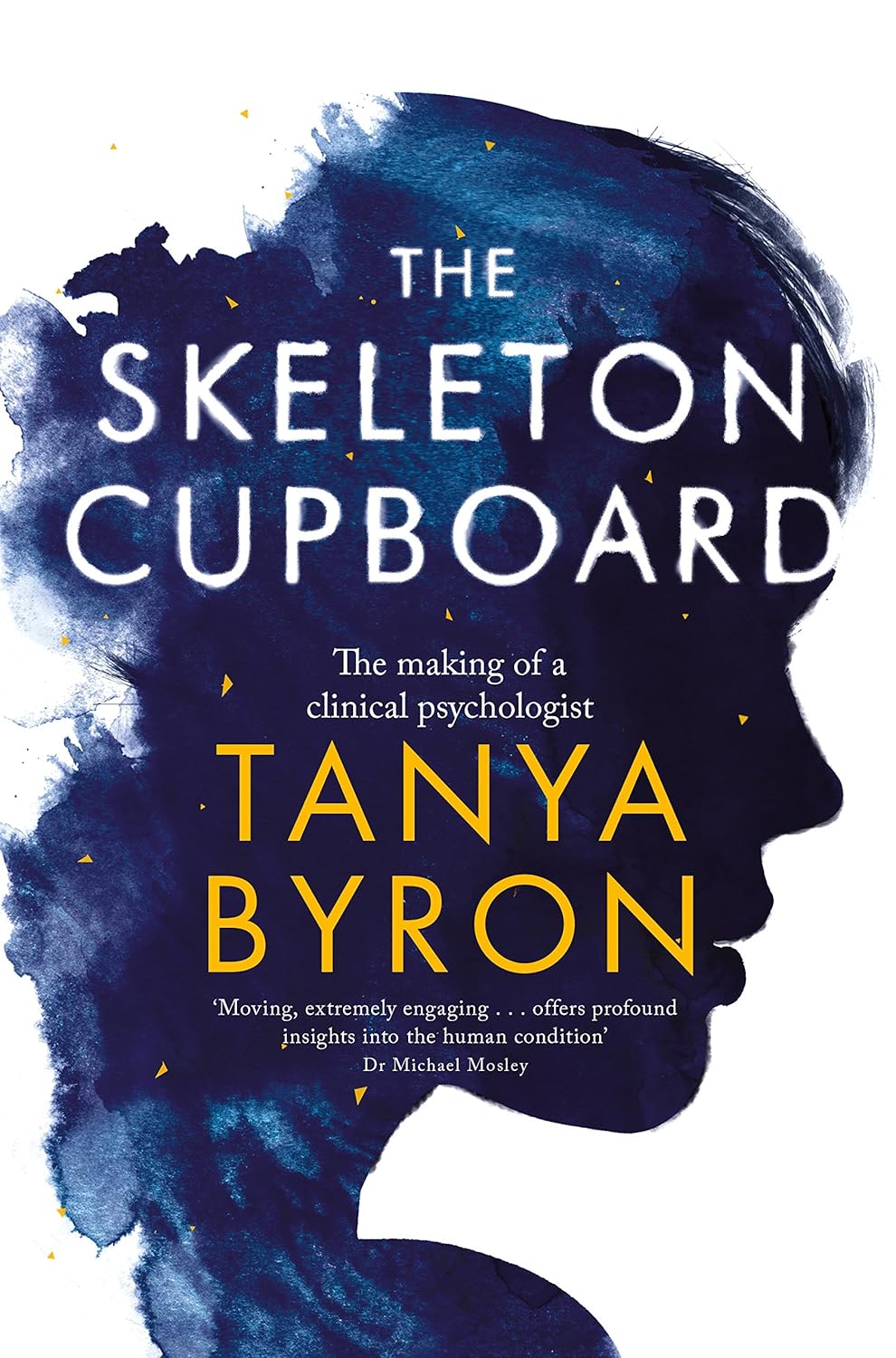
About The Skeleton Cupboard by Tanya Byron – True Stories of Training, Fear and Human Strength
What is it really like to sit with a person who is in deep pain and try to help?
The Skeleton Cupboard by Tanya Byron takes readers behind the closed doors of clinical psychology. It follows Tanya during her early years of training, when she was still learning how to listen, what to ask and when to stay quiet. She entered each room as a young trainee, but the people she met taught her lessons that no classroom could fully give.
This is not a dry study book filled with hard words. It is a warm, honest and sometimes dark account of real clinical work. The stories are inspired by patients Tanya had the honour of treating. Names and details are shaped to protect privacy, but the fear, hope, grief and courage at the heart of the cases feel very real.
The official publisher calls the book an account of Tanya Byron’s years of training as a clinical psychologist. It shows the hard placements faced by trainees and the care mental-health workers give to their patients. The Pan paperback edition has 304 pages and was published on 23 April 2015.
Step inside the room with a new psychologist
Tanya begins as a learner. She has studied the ideas, read the books and passed exams. Yet knowing an idea is not the same as meeting a person whose life is falling apart.
Each new placement brings a different kind of work. She meets people with pain that cannot be fixed by one easy answer. Some are fighting illness. Some are living with loss, fear or addiction. Others are trying to understand why they feel or act in a certain way.
Tanya must learn how to help without acting as if she knows everything. She also has to face her own worry. What if she says the wrong thing? What if she misses something important? What if she cannot reach the person sitting in front of her?
These questions make the book easy to connect with. You do not need to work in psychology to know the fear of being new. Many people have entered a job, class or hard talk while wondering if they were ready. Tanya’s honesty shows that a skilled person does not begin with every answer. Skill grows through care, work, mistakes and the will to learn.
When a textbook is not enough
Psychology books can explain a condition and list its signs. They may tell a student what should happen during treatment. Real life is rarely so neat.
The people in The Skeleton Cupboard are more than labels. Their lives have family ties, old wounds, wishes, shame, anger and love. Two people may be given the same diagnosis but need very different forms of care. A method that helps one person may fail with another.
This is the problem many new mental-health workers face: they know the rules, but a human being is not a simple set of rules. Tanya finds a better path by learning to listen to the whole story. She begins to look past the label and see the person.
The book lets readers learn this lesson through scenes and talks, not long lectures. It gives a clear view of how trust can grow slowly between a therapist and a patient. It also shows why patience, respect and honest thought matter as much as formal knowledge.
Six cases, many kinds of pain
The book is built around six main chapters, each linked to a different case and training placement. An Oxford University review notes that the cases explore areas such as eating disorders, anxiety, depression, dementia and substance misuse. It also praises the clear style and lack of heavy jargon.
Each story opens a different door. The reader sees how age, health, family and past events can shape the way a person feels. The cases do not offer one magic cure. They show slow work, hard choices and small signs of change.
Some moments may make you sad. Some may shock you. Dark humour appears too, giving both the workers and the reader a little room to breathe. The mix of pain and humour feels close to real life, where a hard day can still hold one strange or funny moment.
The cases also show strength. The patients are not presented only as weak or broken. They are people trying to live through events that would test anyone. Their courage may appear in small acts: speaking an honest sentence, returning for another meeting or allowing another person to hear their story.
The learner is part of the story
Tanya does not write as a perfect expert looking back at people from a safe distance. She lets readers see her younger self feeling lost, afraid and unsure.
That choice gives the book much of its power. She is open about the gap between what she thought she knew and what the work asked of her. She must face her own ideas about illness, care and success. At times, the patient may teach the trainee as much as the trainee helps the patient.
This makes the book different from a guide that tells readers how therapy must be done. It is closer to a memoir about becoming a psychologist. It shows how professional skill grows beside personal growth.
Readers can see that care does not mean having control over another person. It means making space for that person’s truth. It means asking good questions, noticing what is not said and knowing that change cannot be forced.
The book also shows that therapists have feelings. They may carry worry home. They may question their choices. They need support, training and clear limits.
Why it feels like a story, not a lesson
Although this is nonfiction, many parts read with the pull of a novel. You enter a case without knowing what will happen. You learn about a person bit by bit. A small detail can change what you think about the problem.
The writing is direct and easy to follow. Tanya uses scenes, people and talks to carry the ideas. She does not hide the hard side of the work, but she also does not remove all hope.
That balance makes the book useful for readers who want to learn but do not enjoy formal textbooks. You receive a close view of clinical work while following personal stories with real feeling.
Who may enjoy this book most?
The Skeleton Cupboard is a strong choice for:
- Psychology students who want to see how learning may feel in real clinical settings
- People thinking about a career in counselling, therapy or mental-health care
- Working professionals who enjoy honest accounts from their field
- Readers interested in the mind, behaviour and human relationships
- People who prefer case stories to a formal psychology textbook
- Book clubs looking for a moving nonfiction title with many points to discuss
- Readers who enjoyed memoirs about medicine, care or professional training
- Anyone who wants to understand mental illness with more kindness
A book that can change the way you listen
One of the clearest benefits of this book is a better view of listening. Many of us hear a problem and rush to give an answer. Tanya’s work shows that people often need to feel heard before any useful change can begin.
The cases may help you become slower to judge. A strange action can have a long story behind it. Anger may hide fear. Silence may carry pain. A person who looks difficult may be trying to protect themselves in the only way they know.
This does not make the book a self-help guide or a replacement for professional care. It does not teach readers to diagnose themselves or other people. Its value comes from showing how complex each life can be.
After reading, you may think more carefully about the words people use, the things they avoid and the help they may need. You may also feel more respect for the patients who share painful truths and for the workers who stay beside them through slow change.
Good for study, discussion or quiet reading
Students can read the book beside their psychology course to see how theory and real work can differ. It can help them think about trust, privacy, professional limits and the feelings a therapist may bring into a session.
It also works as a personal read. You can pick it up when you want something true, thoughtful and full of human feeling. The case structure allows you to read one story at a time, which is useful when the subject feels heavy.
As a gift, it may suit a psychology student, counsellor, doctor, nurse, social worker or reader who enjoys medical memoirs. It says more than “I know your subject.” It offers a book that may support their learning and remind them why care matters.
A premium copy for regular reading
Bookish Wonderland offers a copy made for clear reading and long-term use:
- Premium eye-soothing cream paper gives the pages a softer look and helps make long reading sessions more comfortable.
- Crystal-clear printing keeps every line sharp and easy to read.
- High-quality stitched and glue binding holds the pages firmly and adds strength for regular use.
- A durable finish makes the book suitable for study, sharing, gifting and keeping on a personal shelf.
- The English text allows readers to enjoy Tanya Byron’s work in its original language.
These features make the copy practical for students who may mark important ideas, readers who return to favourite cases and professionals who want to keep it near other psychology books.
Know the tone before you begin
This is a caring book, but it is not always a light one. The stories deal with mental illness, grief, addiction, eating problems, family pain and other hard parts of life. Some scenes may feel upsetting to sensitive readers.
The book is best suited to readers aged 16 and above. Pan Macmillan lists the title as age 16+, and the mature subject matter supports that guide.
It is also important to know that the stories are inspired by clinical work and formed as protected case accounts. This is not a set of complete medical files, and it should not be used to diagnose or treat a health condition. Anyone who needs mental-health help should speak with a trained professional.
Best Sellers Rank of This Book
- #470 in Medical Mental Illness
- #1,482 in Medical Psychology Pathologies
- #1,757 in Popular Psychology Pathologies
These are the bestseller ranks supplied for this product. Sales ranks can change over time.
Add a deeply human book to your shelf
If you are checking The Skeleton Cupboard by Tanya Byron book price in Bangladesh, view the latest price on this product page before ordering.
Bookish Wonderland delivers inside Dhaka, outside Dhaka and across Bangladesh. Cash on Delivery is available nationwide, so you can pay when your order arrives. Customers in Dhaka who need the book soon can ask about the fast or urgent delivery option before placing an order.
Choose this book if you want psychology told through people rather than hard terms. It will take you into difficult rooms, introduce you to lives shaped by pain and show how a young trainee slowly learns what it means to help.
Order The Skeleton Cupboard by Tanya Byron from Bookish Wonderland and discover a moving account of care, mistakes, courage and the strength people can find in their hardest moments.
If you require any customization or have any questions, please inbox us via FB or Insta.
| Primary Specification | |
| Author | Tanya Byron |
| Narrator | Imogen Church |
| Genre | Psychology, mental health, memoir and narrative nonfiction |
| ISBN-13/ISSN | 978-1447262077 |
| ISBN-10 | 9781447262077 |
| Publisher | Macmillan |
| Publishing Date | May 22, 2014 |
| Language | English |
| Reading Age | 16+ |
| Format | Printed Book |
| Physical Specification & Quality | |
| Paper Quality | Premium eye-soothing cream paper |
| Binding Quality | High quality stitched and glue binding (for longevity) |
| Print Quality | Crystal-clear print |
| Pages | 310 pages |
| Country | UK |
| Logistics Information | |
| Weight | 336 gm |
| Length | 8.5 inches |
| Width | 5.6 inches |
| Height | 0.91 inch |