

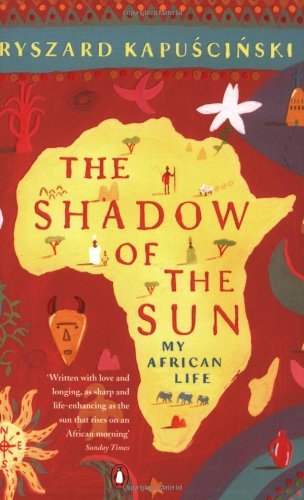
About The Shadow of the Sun by Ryszard Kapuscinski – A Vivid Journey Through Africa, History, and Everyday Life
The Shadow of the Sun by Ryszard Kapuscinski is a powerful work of literary reportage built from decades of travel, observation, danger, and close contact with ordinary people across Africa. Kapuscinski first arrived on the continent in 1957, when colonial rule was beginning to break apart and new nations were emerging. Instead of staying only with presidents, officials, and formal political events, he often went into streets, villages, buses, markets, deserts, poor neighborhoods, and border regions. The result is a book that tries to show how large historical changes feel when they reach everyday life.
This is not a simple travel guide and not a normal history textbook. It is a collection of connected experiences and reflections. Kapuscinski writes about independence, military rule, war, poverty, climate, culture, fear, hope, movement, and survival. He also pays attention to small details: conversations, waiting, heat, roads, rooms, food, silence, and the ways people adapt to difficult conditions.
For readers who want to understand Africa through human stories rather than statistics alone, this book offers an intimate and memorable entry point.
When History Feels Too Distant, Personal Stories Make It Real
A common problem with books about politics and history is that they can feel far away from ordinary life. Dates, governments, conflicts, and national borders may tell you what happened, but they do not always show what people experienced.
The Shadow of the Sun offers a different solution. Kapuscinski places himself inside the events he describes. He travels through newly independent Ghana, Nigeria, Ethiopia, Rwanda, and other parts of the continent. He meets people from different social levels and writes about moments of freedom, fear, confusion, violence, and change.
Because the book comes from lived reporting, large events become easier to picture. A political crisis is not only a headline. It may mean a road closes, a neighborhood changes, a family waits, a traveler becomes trapped, or a city suddenly feels unsafe.
That human scale makes the book especially useful for readers who want history to feel concrete. You still learn about colonialism, independence, coups, conflict, and state power, but you see them through scenes and encounters rather than only through formal explanation.
A Reporter Who Chose the Difficult Road
Ryszard Kapuscinski became known for going where events were unfolding and staying close to people who were living through them. His work in Africa stretched across many years, beginning during the period when European colonial control was weakening.
In The Shadow of the Sun, he does not present Africa as one single place with one simple story. He repeatedly shows differences between countries, communities, landscapes, and political experiences. That is important because Africa is often discussed too broadly, as if many nations and peoples can be explained with one idea.
The book moves through different settings and times. Kapuscinski writes about independence in Ghana, unrest in Nigeria, harsh travel conditions, dangerous political moments, rural life, urban poverty, disease, war, and the long aftereffects of colonial rule.
His strongest scenes often come from observation. He notices how people move, wait, speak, protect themselves, gather information, or respond when power changes hands.
More Than Politics: Heat, Distance, Fear, and Daily Survival
One reason The Shadow of the Sun stays memorable is that Kapuscinski writes about physical experience as much as political events. Heat, hunger, illness, transport, dust, distance, and uncertainty are part of the story.
This matters because the environment changes the way people live and travel. A journey that looks simple on a map may become difficult because of broken roads, weather, checkpoints, lack of transport, or political danger. Kapuscinski often describes these conditions in a direct, vivid way.
The book also shows how people build everyday routines inside unstable systems. A city may be affected by a coup, but people still need food. A country may be celebrating independence, but ordinary families still face work, money, housing, and safety problems.
Readers who enjoy travel writing may especially appreciate this balance. You get movement, landscape, risk, and cultural observation, but the journey is tied to serious questions about history and society.
A Book About Africa That Resists Easy Answers
The title may suggest one broad subject, but the book constantly pushes against the idea that Africa can be explained as a single culture or political experience.
Kapuściński writes about many places, each with different histories and tensions. Colonial borders, ethnic identities, language, local traditions, foreign influence, military power, and economic struggle do not operate in exactly the same way everywhere.
That makes the book valuable for readers who want to move beyond simple stereotypes. It does not offer a neat formula that explains the continent. Instead, it presents a mosaic of encounters.
At the same time, modern readers should approach the work critically. Kapuscinski writes from his own perspective as a Polish foreign correspondent, and literary reportage always involves selection, interpretation, and style. The book is strongest when read as one reporter’s long, personal record rather than as the only account of African history.
Pairing it with works by African historians, journalists, and writers can give readers an even wider understanding.
Why the Writing Feels Different From a Textbook
The Shadow of the Sun is nonfiction, but much of its appeal comes from its literary style. Kapuscinski builds scenes, captures atmosphere, and reflects on what he sees. That can make difficult political subjects easier to enter.
Rather than giving long academic explanations, he often begins with a place, person, journey, or moment. The reader learns by moving with him.
This creates suspense in some sections. You may wonder whether he will get through a dangerous area, recover from illness, find transport, or understand what is happening around him. In other sections, the pace slows and becomes reflective.
That mix makes the book suitable for readers who enjoy memoir, journalism, travel writing, history, or literary nonfiction. It sits between several categories rather than fitting neatly into only one.
Klara Glowczewska’s English translation carries Kapuscinski’s work to readers who do not read Polish, making this important piece of reportage widely accessible.
What Readers Can Learn From This Book
The Shadow of the Sun can deepen your understanding of post-colonial Africa, but its value goes beyond dates and political events.
You can learn how independence can bring both hope and instability. You can see how colonial rule leaves structures behind even after a flag changes. You can observe how coups, war, weak institutions, poverty, and foreign influence affect everyday life.
Broad labels are questioned. When people use one word to describe an enormous continent, what differences disappear? When outsiders report on another society, what do they notice, and what might they miss?
These questions make the book useful for students of history, international relations, journalism, politics, sociology, and literature.
It is also valuable for general readers who simply want a strong nonfiction book. You do not need specialist knowledge before starting. The scenes and stories give you a way into the larger subjects.
Comfortable for Long, Thoughtful Reading
Bookish Wonderland offers this printed edition for readers who want a physical copy that feels comfortable during longer reading sessions.
The book uses premium eye-soothing cream paper, which gives the page a softer tone than bright white paper. Crystal-clear printing keeps the text sharp and easy to follow, while high-quality stitched and glue binding supports the book through regular use.
These details matter for a work like The Shadow of the Sun because many readers will pause, reread passages, underline lines, or return to particular chapters later. A strong physical copy is useful when the book becomes part of a history, travel, or literary nonfiction collection.
The format also works well for students who want to mark important passages or keep notes while reading.
Key Features of This Edition
-
A major work of literary reportage by Ryszard Kapuscinski.
-
English translation by Klara Glowczewska.
-
Drawn from decades of reporting and travel across Africa.
-
Covers independence, conflict, political change, daily life, culture, and survival.
-
Blends journalism, memoir, travel writing, history, and reflection.
-
Suitable for readers interested in Africa, politics, journalism, and world history.
-
Premium eye-soothing cream paper for comfortable reading.
-
Crystal-clear print for sharp and clean text.
-
High-quality stitched and glue binding for better longevity.
-
A durable printed copy for study, annotation, rereading, or collecting.
Who Will Enjoy The Shadow of the Sun Most?
This book is a strong choice for readers who enjoy serious nonfiction but still want vivid storytelling.
History readers may appreciate the view of independence movements and post-colonial change. Journalism students can study how Kapuscinski turns reporting into narrative. Travelers may enjoy his observations about movement, place, climate, and human contact. Readers interested in politics can see how power shifts affect ordinary people.
It can also suit university students studying African history, international relations, media, development, sociology, or literature.
The book is best for readers who are comfortable with difficult topics. It includes war, poverty, political violence, disease, genocide, and other painful realities. These are not added for shock. They are part of the historical world Kapuscinski reported on.
Readers looking for a light travel memoir may find the subject matter heavier than expected. But those who want a thoughtful, challenging journey through modern African history may find it deeply rewarding.
The Shadow of the Sun by Ryszard Kapuscinski Price in Bangladesh
Readers looking for The Shadow of the Sun by Ryszard Kapuscinski price in Bangladesh often want to know whether the copy is comfortable to read and durable enough to keep, not only how much it costs.
Bookish Wonderland provides nationwide delivery, including service inside and outside Dhaka. Cash on Delivery is available across the country, making ordering convenient for customers who prefer to pay when the parcel arrives.
Readers in Dhaka can also ask about fast or urgent delivery when quicker service is available.
The final selling price may vary depending on stock, edition, printing, or current offers. Check the live product listing before placing your order.
When comparing Book price in Bangladesh options, also consider print clarity, paper comfort, binding strength, and whether the seller offers dependable delivery support.
Take a Journey That Changes the Way You See a Continent
The Shadow of the Sun by Ryszard Kapuscinski is not a book that reduces Africa to one story. Its power comes from movement, contradiction, observation, and the many people the author meets across decades of reporting.
You will encounter independence and fear, celebration and violence, harsh landscapes and crowded cities, political leaders and ordinary families. The book asks you to look closely at what happens when history enters daily life.
Order your copy from Bookish Wonderland if you want literary nonfiction that combines travel, journalism, politics, and human experience in one memorable volume.
It is also a book worth revisiting after further study, because new historical knowledge can change how you understand Kapuscinski’s observations, choices, limits, and memorable encounters across Africa.
Read it slowly. Question what you see. Then use it as a starting point for learning even more about the countries, histories, and voices that make up the continent.
If you require any customization or have any questions, please inbox us via FB or Insta.
| Primary Specification | |
| Author | Ryszard Kapuscinski |
| Translator | Klara Glowczewska |
| Narrator | Donald Corren |
| Editor | Ralph L. Fowler |
| Genre | Literary Reportage, Travel Writing, Memoir, History, Political Nonfiction |
| ISBN-13/ISSN | 978-0679779070 |
| ISBN-10 | 9780679779070 |
| Publisher | Vintage |
| Publishing Date | April 9, 2002 |
| Language | English |
| Format | Printed book |
| Physical Specification & Quality | |
| Paper Quality | Premium eye-soothing cream paper |
| Binding Quality | High quality stitched and glue binding (for longevity) |
| Print Quality | Crystal-clear print |
| Pages | 325 pages |
| Country | Poland |
| Logistics Information | |
| Weight | 329g |
| Length | 8.5 inch |
| Width | 5.6 inch |
| Height | 0.75 inch |