

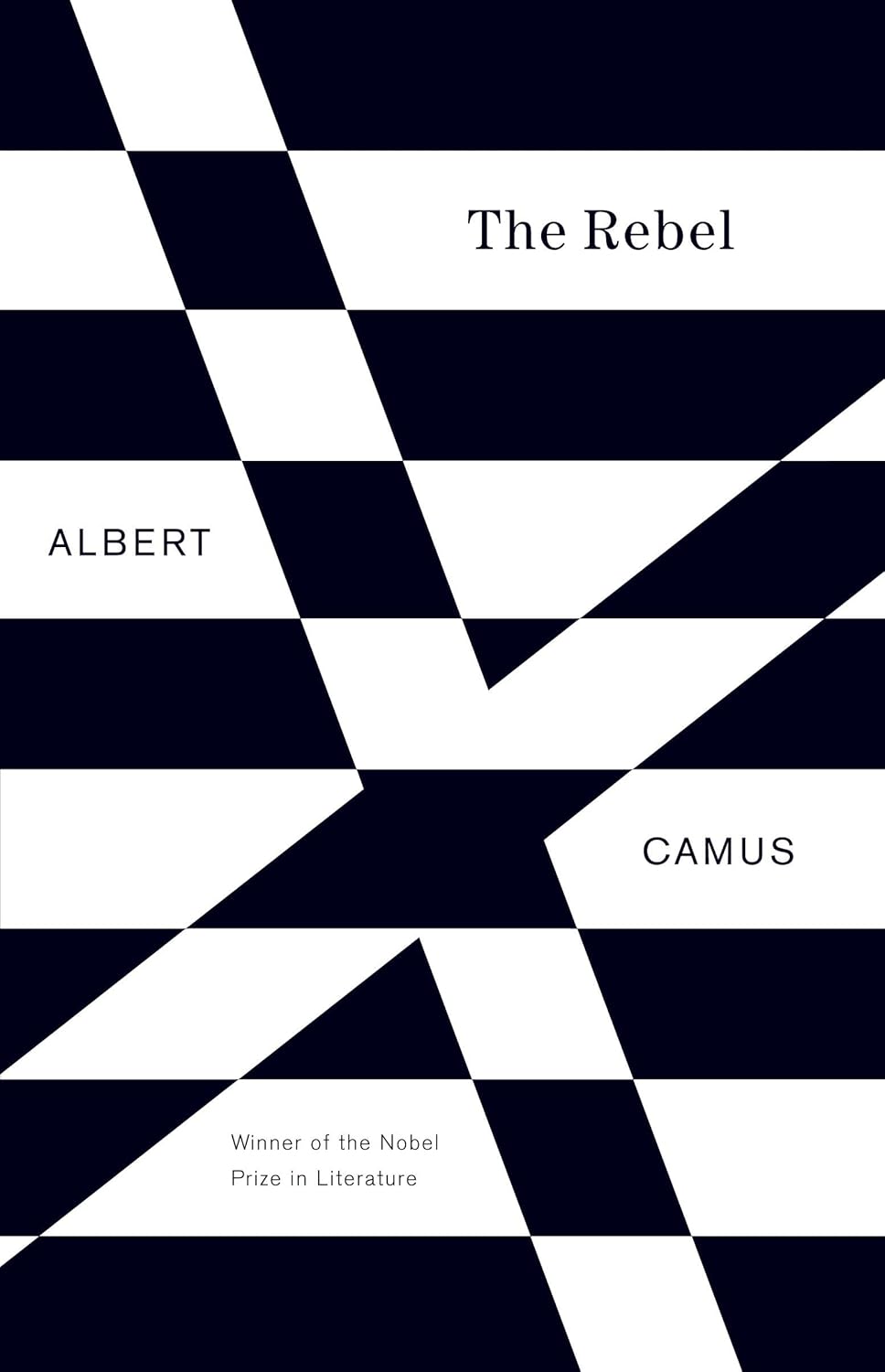
About The Rebel Book by Albert Camus – A Powerful Look at Rebellion, Freedom, Justice, and Human Limits
Why do people rebel? Why does a person suddenly decide that something is unfair and must stop? Can people fight for freedom without becoming cruel themselves?
These are some of the big questions Albert Camus explores in The Rebel.
This is not a normal story with one main character and a simple plot. The Rebel is a philosophical essay in which Camus studies rebellion, revolution, freedom, justice, violence, and human dignity. The book was first published in French in 1951 and later appeared in English translation, including the well-known translation by Anthony Bower.
Camus begins with a simple human act: saying no to something that feels wrong. From this small act, he asks much larger questions about society, politics, power, history, and morality.
For readers who enjoy books that challenge the mind, this can become a deeply rewarding reading experience.
When Fighting Injustice Creates Another Problem
People often rebel because they want justice.
A person may see cruelty, unfair power, suffering, or oppression and decide that enough is enough. That wish for change can begin with a good purpose. But Camus asks an uncomfortable question: what happens when a movement for freedom starts using unlimited violence?
Can people destroy others in the name of justice?
Can a revolution become as cruel as the system it wanted to replace?
This is one of the central problems explored in The Rebel. Camus studies how rebellion can grow into revolution and how revolutionary movements can lose their original moral limits. The publisher describes the work as a classic essay on revolution and highlights Camus's concern with the way revolt and revolution can move toward tyranny.
The book does not give readers an easy slogan. Instead, it asks them to think carefully about freedom, responsibility, and the value of human life.
A Journey Through Rebellion and History
The Rebel by Albert Camus moves through philosophy, literature, politics, and history.
Camus looks at different forms of rebellion. Some are personal. Some are political. Some challenge religion, kings, governments, or entire systems of thought.
He studies how people have tried to create a better world and why some of those attempts have produced new forms of violence.
Instead of simply saying rebellion is good or bad, Camus looks at the ideas behind it. He wants readers to understand what happens when a person says that something has crossed a limit.
That word—limit—is very important to his thinking.
A rebel may demand freedom, but Camus argues that freedom cannot mean doing anything without responsibility. If people fight injustice by treating other human lives as worthless, they can destroy the very values they wanted to defend.
This makes the book useful for readers interested in philosophy, political thought, ethics, history, freedom, revolution, and the question of how people should live together.
Why The Rebel Still Makes Readers Think
The questions in this book are not limited to one time or country.
People still argue about freedom, power, violence, protest, justice, government, and individual rights. That is one reason The Rebel continues to attract readers interested in philosophy and political ideas.
Camus does not ask readers to accept every rebellion without question. He asks them to examine what rebellion is trying to protect.
When someone says, “This is too far,” that person is also saying that something has value and should not be destroyed.
For Camus, rebellion can therefore reveal a belief in human dignity. But rebellion becomes dangerous when it forgets the value of human beings and begins to justify unlimited killing or control.
That tension gives the book much of its power.
It pushes readers to ask not only what should we fight against? but also what should we protect while we fight?
What Kind of Reader Will Enjoy This Book?
The Rebel is especially suitable for readers who enjoy books that make them stop, think, and question familiar ideas.
It can be a strong choice for:
-
Readers interested in existentialism and modern philosophy
-
Students studying Albert Camus
-
Readers interested in freedom and political thought
-
People studying rebellion and revolution
-
Readers interested in ethics and human responsibility
-
Fans of The Myth of Sisyphus, The Stranger, or other works by Camus
-
University students studying philosophy or literature
-
Readers who enjoy serious nonfiction and philosophical essays
Penguin Random House identifies The Rebel as one of Camus's major philosophical essays, alongside The Myth of Sisyphus.
You do not need to be a philosophy expert before opening the book. However, some ideas are complex, so patient reading can make the experience much better.
A Book You Can Read Slowly
This is not the type of book that must be finished in one night.
Many readers may enjoy reading a few pages, stopping, and thinking about what Camus is saying before continuing.
You may underline an idea, write a note, return to an earlier page, or discuss a chapter with a friend or teacher.
That makes The Rebel useful for both personal reading and study.
The book can also work well in a reading group because many of its questions do not have simple answers. Two readers may understand the same argument in different ways.
That is part of what makes philosophical books valuable. They do not only tell you what happened. They make you examine what you believe.
Premium Reading Quality From Bookish Wonderland
A serious book deserves a physical copy that is comfortable to read.
Bookish Wonderland prepares this edition for readers who want better print and stronger construction.
-
Premium eye-soothing cream paper: The softer page tone provides a comfortable surface for long reading sessions.
-
Crystal-clear print: Sharp and clean text helps keep difficult passages easy to follow.
-
High quality stitched and glue binding: Strong construction supports repeated reading and better book longevity.
-
Printed physical format: Suitable for personal reading, study, highlighting, gifting, and shelf collections.
-
Carefully prepared English book: A practical choice for readers building a philosophy or classic literature collection.
Instead of struggling with weak printing or pages that feel uncomfortable during long study sessions, readers can focus more fully on Camus's ideas.
More Than a Book for Philosophy Students
You do not have to study philosophy at university to find value in The Rebel.
A student may read it while learning about existentialism. A teacher may use it when discussing freedom and ethics. A reader of classic literature may want to understand the ideas behind Camus's fiction. Someone interested in history may be drawn to the discussion of revolution.
It can also be a useful gift for a reader who enjoys serious books.
The biggest benefit is not simply learning information. The book trains you to question ideas carefully.
It asks you to think about whether a good goal can excuse a bad action, whether freedom needs limits, and how people can resist injustice without creating another form of injustice.
These questions give the book value far beyond one reading.
The Rebel by Albert Camus Book Price in Bangladesh
When searching for The Rebel by Albert Camus book price in Bangladesh, readers should also look at the physical quality they receive for the price.
Bookish Wonderland offers a convenient local option for readers who want a premium printed English copy without depending on complicated overseas ordering.
Customers can order from Dhaka or other districts, and Cash on Delivery is available across Bangladesh. Nationwide delivery makes the book accessible to readers outside the capital, while customers in Dhaka can also ask about fast or urgent delivery when available.
This makes it easier for students, philosophy readers, collectors, and Albert Camus fans to add the book to their shelves.
Best Sellers Rank of This Book
-
#13,571 in Books
-
#5 in Free Will & Determinism Philosophy
-
#7 in Existentialist Philosophy
-
#8 in French Literature (Books)
A Strong Addition to a Serious Reader's Shelf
Albert Camus wrote fiction, essays, plays, and philosophical works, and The Rebel stands among his major essays.
For someone who has already read The Stranger or The Myth of Sisyphus, this book ve are kept exactly as supplied for this product.can open another side of Camus's thinking.
Instead of focusing mainly on the absurd, The Rebel turns toward the problem of revolt: what humans do after they decide that suffering or injustice can no longer be accepted.
That makes it a meaningful addition to a collection of philosophy, existentialist writing, political thought, or classic literature.
It is a book to read, question, mark, revisit, and discuss.
If you require any customization or have any questions, please inbox us via FB or Insta.
| Primary Specification | |
| Author | Albert Camus |
| Translator | Anthony Bower |
| Narrator | Edoardo Ballerini |
| Genre | Philosophy, Political Philosophy, Existentialism, Ethics |
| ISBN-13/ISSN | 978-0679733843 |
| ISBN-10 | 0679733841 |
| Publisher | Vintage |
| Publishing Date | January 1, 1992 |
| Language | English |
| Reading Age | 16+ years |
| Format | Printed book |
| Physical Specification & Quality | |
| Paper Quality | Premium eye-soothing cream paper |
| Binding Quality | High quality stitched and glue binding (for longevity) |
| Print Quality | Crystal-clear print |
| Pages | 320 pages |
| Country | France |
| Logistics Information | |
| Weight | 325g |
| Length | 8.5 inches |
| Width | 5.6 inches |
| Height | 0.67 inches |