

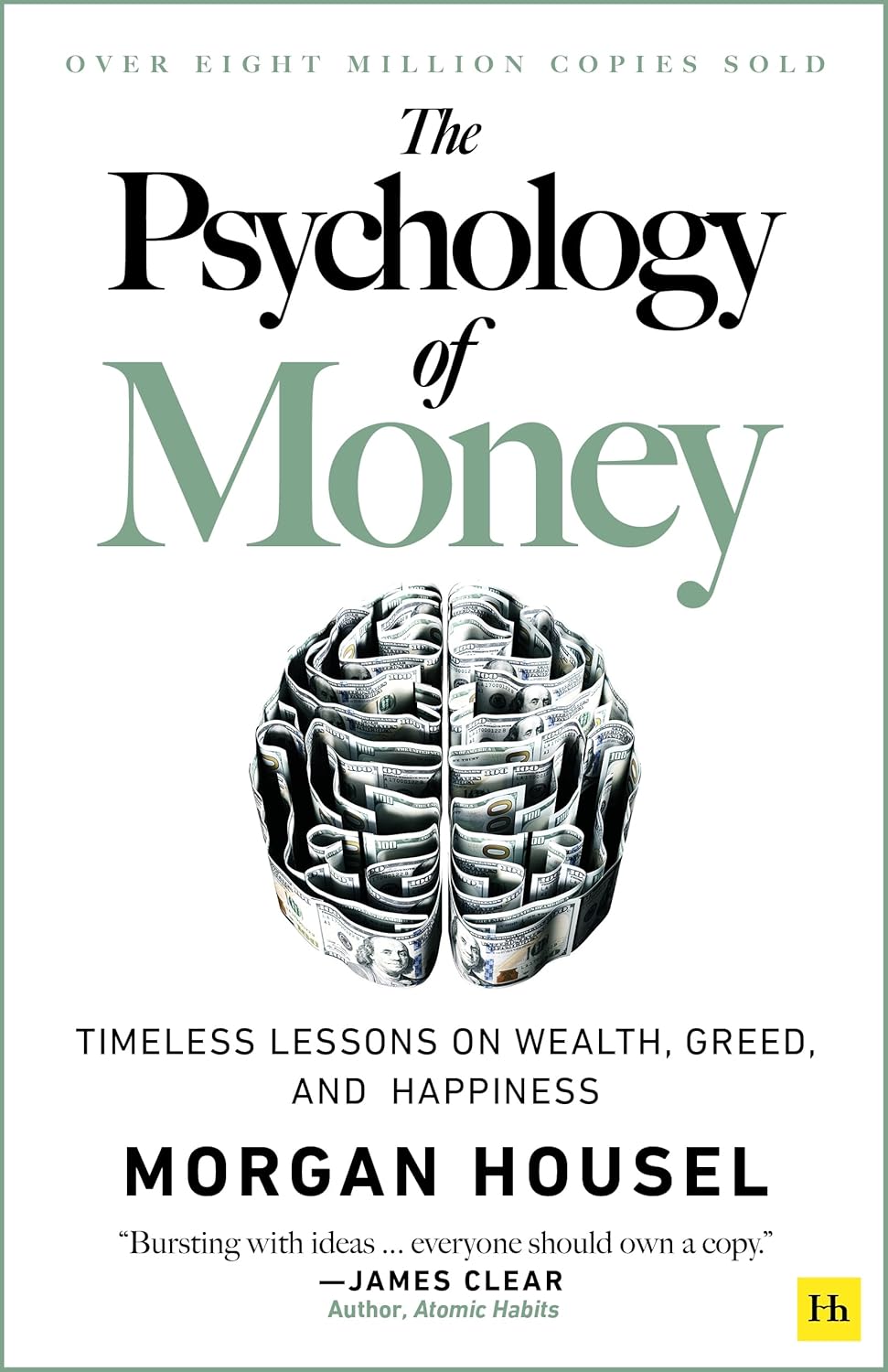
About The Psychology of Money by Morgan Housel: Simple Lessons for Smarter Money Choices
Money is part of almost every life. We earn it, save it, spend it, worry about it, and make plans with it. Yet knowing a lot about money does not always mean we make good money choices. The Psychology of Money by Morgan Housel looks at why. It shows that money is not only about numbers. It is also about habits, fear, hope, patience, pride, luck, and the way we see the world.
Morgan Housel uses short stories and clear ideas to explain why two smart people can face the same money problem and choose very different answers. The book is for readers who want to understand money in a useful way without getting lost in hard formulas.
Why smart people still make bad money choices
Many finance books teach rules, charts, plans, or investment methods. But real life is not always neat. A person can know the right rule and still make the wrong choice because of fear, greed, stress, ego, or pressure from other people.
This is the problem The Psychology of Money tries to solve. Instead of asking only, “What is the best financial plan?” Housel also asks why people act the way they do.
That makes the book useful in daily life. It helps you look at your own habits. You begin to see why saving can be hard, why people chase more even when they have enough, why market fear can lead to poor choices, and why patience can matter more than trying to look clever.
A different kind of personal finance book
The Psychology of Money is built around 19 short stories about the ways people think about money. The official publisher explains that financial choices are shaped by personal history, individual views, ego, pride, marketing, and incentives, not only by math.
The lessons cover wealth, greed, happiness, risk, saving, investing, and long-term thinking. Housel does not try to turn every reader into a market expert. He focuses on ideas that can stay useful even when markets, jobs, incomes, and economic conditions change.
One of the book’s strongest ideas is that being good with money is often a behavior skill. You may know many facts and still struggle if you cannot control your choices. A person with simple knowledge may do better by being patient, careful, and consistent.
Lessons that can stay with you
The book explains why getting wealthy and staying wealthy are not always the same skill. Taking risk may help you grow, but protecting what you already have also matters.
Housel also looks at compounding. Small gains may not look exciting at first, but time can make them powerful. This is why patience can be one of the most useful tools in money.
Another key idea is that wealth is often what you do not see. A costly car, watch, or house can show spending, but it does not always show how much money someone has kept. Financial strength may look quieter: savings, freedom, time, and the ability to handle a bad surprise.
The book also talks about leaving “room for error.” Life does not always follow a plan. Jobs change. Markets fall. Costs rise. A strong money plan leaves some space for things to go wrong.
A better way to think about success
It is easy to compare your life with someone else. Social media, ads, friends, and work can make it feel like you always need more income, more things, and more status.
The Psychology of Money asks you to think about what “enough” means for you. A money goal with no finish line can become a trap.
The book also connects money with freedom. Money can buy things, but one of its greatest uses is giving you more control over your time. Savings can help you make choices without panic. They can give you room to wait, change jobs, take a break, or deal with a hard time.
That is why this book is not only for people who want to become rich. It is also for people who want a calmer and more useful relationship with money.
Who may enjoy this book?
The book can work well for beginners because the ideas are explained through stories instead of heavy math. It can also help people who already invest, save, run a business, or work with money but want to understand the human side of financial decisions.
It may be a good choice for:
-
Students who want to learn money thinking early.
-
Young adults starting work, saving, or investing.
-
Business owners who make choices under risk.
-
Investors who want to control fear and short-term thinking.
-
Parents who want useful money ideas to discuss at home.
-
Readers who enjoy psychology, business, self-development, and personal finance.
-
Anyone who feels unsure about saving, spending, or planning.
You do not need advanced finance knowledge before reading it. The main ideas are about behavior, so they are easy to connect with normal life.
Short chapters, big ideas
The short-story format makes the book easy to read in small parts. Each section focuses on a clear idea, such as luck and risk, compounding, saving, freedom, uncertainty, or the danger of always wanting more.
Harriman House lists the first edition as published on September 8, 2020, with 256 pages. This makes it a fairly compact book for a topic as large as money and human behavior.
It is also a book you can return to later. A lesson about risk may feel different after you start investing. A lesson about saving may feel different after you begin earning. The same chapter can become more useful as your life changes.
Made for comfortable reading
At Bookish Wonderland, this edition is made for readers who want a copy they can read often and keep for a long time.
-
Premium eye-soothing cream paper helps make reading more comfortable.
-
Crystal-clear printing keeps the text sharp and easy to follow.
-
High-quality stitched and glue binding is designed for stronger page holding and longer use.
These details are useful for a book that many readers may want to mark, revisit, or read more than once.
Best Sellers Rank of This Book
-
#43 in Books
-
#1 in Macroeconomics (Books)
-
#1 in Occupational & Organizational Popular Psychology
-
#1 in Wealth Management (Books)
Why order from Bookish Wonderland?
Bookish Wonderland offers delivery inside Dhaka, outside Dhaka, and across the country. Cash on Delivery is available nationwide, so you can pay when the order arrives.
For readers in Dhaka who need the book quickly, a fast or urgent delivery option is also available. This can help when you need a gift, want to begin reading soon, or simply do not want a long wait.
If you are checking The Psychology of Money by Morgan Housel book price in Bangladesh, see the current product price before ordering. Prices can change, so the product page is the best place to check the latest selling price.
This book can also make a useful gift for a student, young professional, investor, business owner, or anyone trying to build better money habits. It does not promise a magic way to get rich. It gives the reader a clearer way to think before making money choices.
If you require any customization or have any questions, please inbox us via FB or Insta.
| Primary Specification | |
| Author | Morgan Housel |
| Narrator | Chris Hill |
| Genre | Personal Finance, Behavioral Finance, Psychology, Self-Help, Business & Economics |
| ISBN-13/ISSN | 978-0857197689 |
| ISBN-10 | 0857197681 |
| Publisher | Harriman House |
| Publishing Date | September 8, 2020 |
| Edition | Printed book |
| Language | English |
| Reading Age | 16+ years |
| Physical Specification & Quality | |
| Paper Quality | Premium eye-soothing cream paper |
| Binding Quality | High quality stitched and glue binding (for longevity) |
| Print Quality | Crystal-clear print |
| Pages | 256 pages |
| Country | UK |
| Logistics Information | |
| Weight | 259g |
| Length | 8.5 inch |
| Width | 5.6 inch |
| Height | 0.7 inch |