

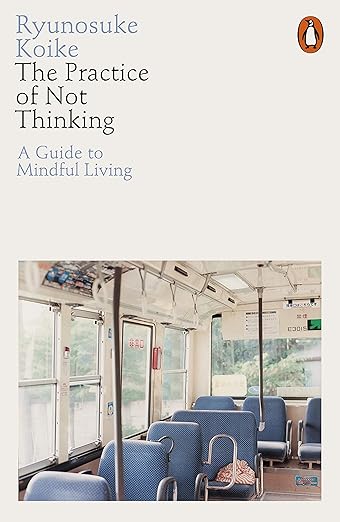
About The Practice of Not Thinking by Ryunosuke Koike – A Simple Zen Guide for a Calmer Mind
Some days, the body is still but the mind is running everywhere. You think about work, money, old talks, new problems, messages, mistakes, and things that may never happen. Even when nothing is wrong, the brain can keep making noise. The Practice of Not Thinking by Ryunosuke Koike is for people who want to step out of that noise and notice life more clearly.
Koike does not ask you to stop using your brain. His idea is more practical. He shows how attention to seeing, hearing, touching, breathing, speaking, and other simple actions can pull the mind away from useless thought loops. The book brings Zen ideas into daily life, so the lessons can be used during normal moments, not only during meditation.
When your mind feels too full
Overthinking can make a small problem feel much bigger. You may replay one sentence again and again. You may worry about what someone thinks of you. You may open your phone without knowing why. You may be tired, yet your mind keeps talking when you want to sleep.
This book starts with a simple idea: the mind often spends too much energy on thoughts that do not help us. Koike asks readers to notice where attention goes and bring it back to direct experience. Instead of fighting every thought, you learn to notice your senses and actions more carefully.
It is not a medical guide and it does not promise that every worry will disappear. It is a practical mindfulness book built around awareness, attention, and Zen teaching.
What you will find inside
The Practice of Not Thinking: A Guide to Mindful Living was published in English by Penguin in 2021. The English translation is by Eriko Sugita. Ryunosuke Koike, a Japanese author and former Buddhist monk, explains how the five senses can help us return to the present moment.
The book looks at normal parts of life, including how we listen, speak, look, feel, breathe, laugh, love, work, and sleep. The aim is simple: notice what you are doing while you are doing it.
One of its main ideas is that too much mental noise can weaken our attention. When the mind is busy judging, comparing, wanting, or worrying, we can miss what is happening in front of us. Koike encourages small acts of attention, such as listening closely to a sound, noticing the body, or speaking with more care.
Small practices, not big promises
Many self-help books give long plans. This one is short and direct. Penguin lists the paperback at 144 pages, so it can suit readers who want useful ideas without a very large book.
The value comes from trying the ideas slowly. Read a few pages, stop, and test one practice. You may pay more attention while eating. You may listen more closely when someone talks. You may notice your hand reaching for your phone because you feel bored. You may catch a thought before it turns into a long chain.
These small moments are the real heart of the book. It is less about collecting clever lines and more about changing how you notice normal life.
Why it can stay useful after the last page
The ideas are easy to return to because they are linked to things you already do every day. You breathe, hear sounds, talk to people, and feel stress, comfort, anger, boredom, or joy. Koike turns these ordinary moments into simple practice.
That gives the book good rereading value. One week, you may focus on listening. Another week, you may think more about speech or sleep. A student may use it to reduce distraction before study. A worker may use it to notice stress before reacting. Someone who spends too much time scrolling may use it as a reminder to return attention to the room and body.
It is also a friendly starting point for readers who are curious about Zen but do not want a hard academic text.
A reading copy made for regular use
At Bookish Wonderland, this printed copy is prepared for readers who want a book they can open again and again.
- Premium eye-soothing cream paper helps make longer reading more comfortable.
- Crystal-clear print keeps the words sharp and easy to follow.
- High-quality stitched and glue binding is made for better strength and longer use.
- The clean printed format works well for home reading, study, gifting, and personal collections.
These details matter because this is the kind of book you may return to many times. A clear, durable copy makes rereading easier.
Who may enjoy this book
This book may suit you if your mind often feels busy, if you want to learn simple mindfulness, or if you are curious about Zen ideas without wanting a difficult introduction. It can also fit readers who like self-development books based on daily habits instead of big theories.
Students may use it when focus is hard. Office workers may read it when work stress follows them home. People trying to spend less time on their phones may find its attention exercises useful. It can also make a thoughtful gift for readers interested in meditation, calm living, psychology, self-awareness, or Buddhist thought.
You do not need to be Buddhist to read it. The main ideas deal with attention, senses, habits, and the way thoughts can pull us away from the present.
Simple ways to use it in daily life
You do not have to finish the book in one sitting. A slower pace may work better.
Read a short part in the morning and choose one idea to notice during the day. Keep it near your desk and read a page when your mind feels crowded. Use it on a quiet weekend when you want less screen time. You can also pair it with a journal and write down one habit you noticed.
For a reading group, the book can start useful talks about attention, stress, speech, relationships, technology, and how people react without thinking.
Looking for this book in Bangladesh?
If you are searching for The Practice of Not Thinking by Ryunosuke Koike book price in Bangladesh, Bookish Wonderland gives you an easy way to order a premium printed copy.
Cash on Delivery is available across Bangladesh. Delivery is available inside and outside Dhaka. Readers in Dhaka can also ask about fast or urgent delivery before placing an order.
Bookish Wonderland carries a large collection of durable English books, so readers can also explore more titles on mindfulness, psychology, self-help, classics, fiction, and other subjects.
Best Sellers Rank of This Book
- #176,919 in Books (See Top 100 in Books)
- #94 in Zen Spirituality
- #720 in Meditation (Books)
- #6,628 in Psychology & Counseling
Why choose this book now
A calmer day does not always begin with a huge change. Sometimes it starts with noticing one breath, one sound, one feeling, or one thought before it takes over.
The Practice of Not Thinking gives readers simple ideas for doing that. It can help you question the habit of always reacting, checking, judging, and filling silence. The book asks you to pay attention to what is already here.
If you enjoy books that give you something to practise after you close the cover, this one can be a strong choice. It is short enough to feel easy to begin, while its ideas can stay useful long after you finish reading.
If you require any customization or have any questions, please inbox us via FB or Insta.
| Primary Specification | |
| Author | Ryunosuke Koike |
| Translator | Eriko Sugita |
| Narrator | Susan Momoko Hingley |
| Genre | Self-help, Mindfulness, Zen Buddhism, Meditation, Personal Development. The rights catalogue specifically classifies it as Zen, Self-Help and Meditation. |
| ISBN-13/ISSN | 978-0141994611 |
| ISBN-10 | 0141994614 |
| Publisher | Penguin |
| Publishing Date | June 10, 2021 |
| Language | English |
| Reading Age | 16+ |
| Format | Printed book |
| Physical Specification & Quality | |
| Paper Quality | Premium eye-soothing cream paper |
| Binding Quality | High quality stitched and glue binding (for longevity) |
| Print Quality | Crystal-clear print |
| Pages | 128 pages |
| Country | Japan |
| Logistics Information | |
| Weight | 132 gm |
| Length | 8.5 inch |
| Width | 5.6 inch |
| Height | 0.31 inch |