

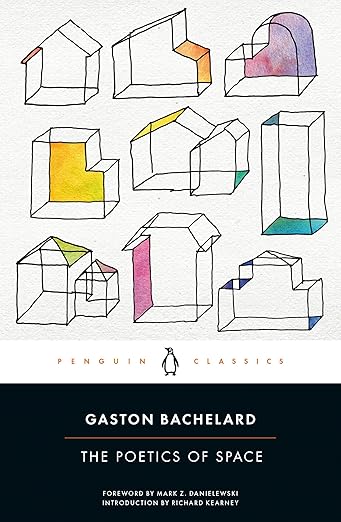
About The Poetics of Space by Gaston Bachelard: Discover the Hidden Life of Home
What makes one room feel safe while another feels cold? Why can a small corner hold a big memory? Why do old homes stay inside our minds long after we leave them? The Poetics of Space by Gaston Bachelard looks at these quiet questions in a new and beautiful way.
This is not a book about floor plans or building rules. He shows how these simple spaces can hold dreams, fear, comfort, hope, and memory. A home is more than walls and a roof in this book. It can be a place where the mind grows and the past stays alive.
First published in French in 1958, this work became important to readers of philosophy, design, art, literature, psychology, and architecture. Its ideas are deep, but they begin with things that everyone knows: a bedroom, a closed drawer, a hidden corner, or a house from childhood. That is why the book can feel both wise and close to daily life.
When Familiar Places Start to Feel Empty
We use rooms every day, but we do not always notice what they do to us. A house may become only an address. A bedroom may become only a place to sleep. A corner may look useless. Fast life can make us pass through these places without seeing the feelings stored in them.
Bachelard offers a way back. He asks you to slow down and look again. Through poetry, stories, images, and careful thought, he shows that even a tiny place can open a large world in the mind. His answer is not a quick rule. It is a new way of paying attention.
After reading, you may see your home in a different light. The stairs may carry a mood. A cupboard may bring back a person. Rain against a roof may make a room feel more safe. The book helps ordinary places feel full again. It gives names and ideas to feelings that are often hard to explain.
A House Can Hold a Whole Inner World
At the heart of the book is a simple thought: the places where we live help shape the way we dream, remember, and imagine. Bachelard does not study a house only as a thing that can be measured. He studies how a person lives it from the inside.
He starts with the house and moves from the cellar to the attic. The cellar can feel dark, deep, and linked to fear. The attic can feel light, clear, and linked to thought. These are not fixed rules for every home. They are ways to see how height, depth, light, and darkness work inside the mind.
The house also gives shelter. It keeps the body safe, but Bachelard says it can shelter dreams too. A childhood home may remain in memory even when it no longer exists or when we live far away. We may build it again in the mind. A room, smell, sound, or piece of furniture can bring the whole place back.
This makes the book very personal. You are not only reading Bachelard’s ideas. You may begin to remember your own first room, a grandparent’s house, a quiet stair, or a place where you once hid. The text invites you to place your own life beside its ideas.
Small Things Become Doors to Big Ideas
The journey does not stop with the house. Bachelard looks inside drawers, chests, and wardrobes. These closed spaces keep objects out of sight. They can hold order, secrets, surprise, and care. Opening them is not the same as looking at an open shelf. The act carries a small sense of discovery.
He also thinks about nests and shells. These are small forms of shelter made or used by living things. A nest can suggest warmth, return, and fragile safety. A shell can suggest a hard outside and a soft life within. Through these images, the book asks what it means to have a safe place of one’s own.
Corners receive attention too. A corner can be a place to pull away from noise. It can feel still and private. A child may turn it into a little world. An adult may use it to read, think, or rest. The space is small, but the feeling inside it may be large.
The book also explores tiny things, great open space, inside and outside, and round forms. Each topic helps Bachelard ask how an image reaches us. He is less interested in proving one hard fact than in showing what a strong image can wake inside a reader.
Philosophy That Speaks Through Pictures
Many philosophy books begin with hard terms. This one often begins with a picture: a lamp in a window, a lonely hut, a nest, a wardrobe, or a room under a roof. Bachelard uses poems and literary writing to study what these pictures do in the mind.
His method is linked to phenomenology. In simple words, he pays close attention to an experience as it is felt. He does not ask only, “What is a house made of?” He also asks, “What is it like to live, dream, hide, remember, and feel safe there?”
This does not make the book a light or fast read. Some parts are rich and abstract. A page may need a second reading. Yet the images give the reader something clear to hold. You can pause after a short part and think about your own life. There is no need to race.
Readers who feel tired of dry theory may find this approach fresh. The book joins thought with feeling. It treats imagination as something important, not as a waste of time. It shows that poetry can help us understand parts of life that numbers and plans cannot fully explain.
What This Book Is—and What It Is Not
The Poetics of Space is philosophical nonfiction. It is also a work about imagination, poetry, art, home, and lived space. It is not a novel, so there is no single plot or hero to follow. It is not a poetry collection, though Bachelard uses poems and poetic images. It is not a simple guide to decorating a room, and it does not teach technical architecture.
Instead, it is a set of connected meditations. Each chapter turns an image around and looks at it from many sides. You can read the chapters in order to follow the full movement of the book. You can also return to one theme, such as corners or nests, when it fits your work or mood.
The pace is calm. The value comes from stopping, marking a line, and letting an idea stay with you. Readers who want action on every page may find it slow. Readers who enjoy reflection may find that its ideas keep opening long after the book is closed.
A Strong Choice for Many Kinds of Readers
Architects and interior designers can use the book to think beyond size, shape, and use. It asks them to consider safety, memory, wonder, and private life. A good space does more than work well. It can help a person feel at home.
Writers can use Bachelard’s ideas to make settings feel alive. A room can carry fear, love, age, or hope. Artists and filmmakers may also find fresh ways to show shelter, light, distance, and small objects.
Students and teachers of philosophy, architecture, and literature can use a chapter to begin talks about home, childhood, or place. General readers need no expert knowledge. Anyone who has loved a room, missed a house, kept a private box, or felt safe in a quiet corner can find a way into the book.
Ideas You Can Carry Into Daily Life
This book may change the way you look at your own space. You may start asking why one seat feels right, why a closed box feels special, or why a small reading corner brings peace. These questions can help you build a home that feels more personal.
It may also deepen your memories. You may remember not only what happened, but where it happened: the light, the window, the floor, or the object kept in a drawer. Place becomes part of the story.
For creative work, use the images as prompts. Write about your first room. Draw a house from a dream. Photograph a window that feels watchful. Plan a quiet corner around the feeling you want it to hold. A few pages can support solo reading, study groups, and creative classes.
Made for Slow, Comfortable Reading
Bookish Wonderland gives this thoughtful work a physical form made for regular reading and keeping. The page and binding choices support long sessions, notes, and return visits without taking attention away from the words.
- Premium eye-soothing cream paper gives the pages a soft look and helps make long reading more comfortable.
- Crystal-clear printing keeps the text sharp and easy to follow.
- High-quality stitched and glue binding adds strength for repeated reading and better shelf life.
- A clean, durable finish makes the book suitable for a personal shelf, study desk, or gift.
These details matter for a book that is often read slowly. You may move back to an earlier chapter, compare two ideas, or reopen a marked page months later. A comfortable copy makes that habit easier.
How to Get More From Each Chapter
Read this book in small parts. Give one image enough time to grow. Ten careful pages may be better than a rushed chapter. If a line feels hard, look for the clear image inside it. Think of a real room, box, nest, shell, or corner that you know.
Keep a notebook nearby. Write one memory after each reading session. Mark the ideas that connect with your study, design work, or writing. When Bachelard names a poem or writer, you may explore it later, but you can still follow the main path without extra study.
Do not worry if every part does not feel clear at once. This is a book to return to. A chapter may mean one thing now and something new after you move home, begin a design, write a story, or remember a lost place. Its slow growth is part of its value.
Best Sellers Rank of This Book
- #20,916 in Books
- #3 in Architectural Criticism
- #6 in Phenomenological Philosophy
- #10 in Residential Architecture
Why This Book Stays With You
The interesting part of this book is how it makes you think about places you usually take for granted. A bedroom is not just a bedroom. A quiet corner is not just an empty space. Even an old drawer or a childhood home can hold memories you did not realize were still with you.
Gaston Bachelard looks at these familiar places and asks why they matter so much. His ideas connect homes with memories, dreams, and the need to feel safe. That gives you something to think about long after you finish a chapter.
If you require any customization or have any questions, please inbox us via FB or Insta.
| Primary Specification | |
| Author | Gaston Bachelard |
| Translator | Maria Jolas |
| Genre | Philosophy, Architecture and Literary Criticism. |
| ISBN-13/ISSN | 978-0143107521 |
| ISBN-10 | 0143107526 |
| Publisher | Penguin Classics |
| Publishing Date | December 30, 2014 |
| Language | English |
| Reading Age | 16+ |
| Format | Printed Book |
| Physical Specification & Quality | |
| Paper Quality | Premium eye-soothing cream paper |
| Binding Quality | High quality stitched and glue binding (for longevity) |
| Print Quality | Crystal-clear print |
| Pages | 304 pages |
| Country | USA |
| Logistics Information | |
| Weight | 334 gm |
| Length | 8.5 inches |
| Width | 5.6 inches |
| Height | 0.68 inch |