

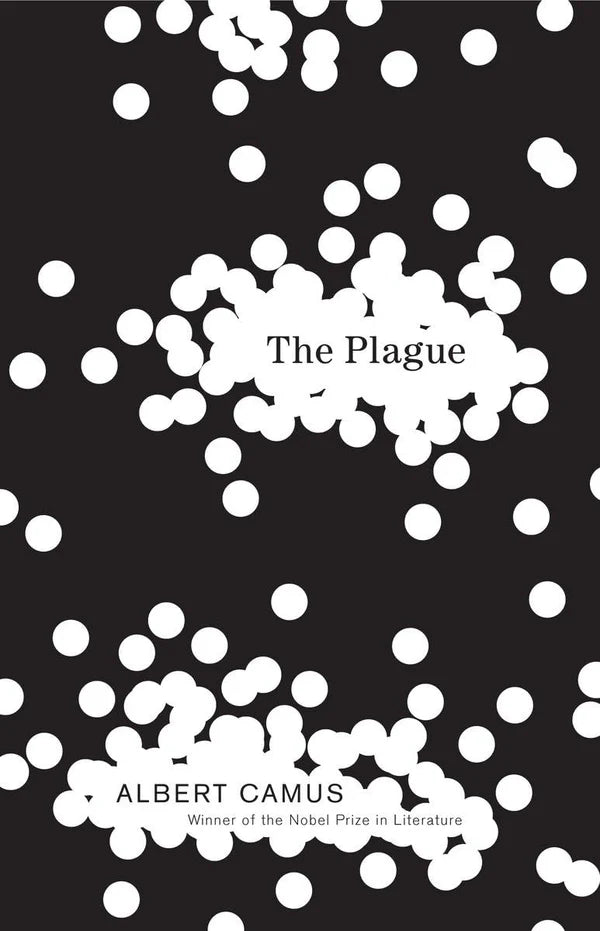
The Plague by Albert Camus – A Timeless Story of Fear, Courage, and Human Strength
Some books tell a story and then end. The Plague by Albert Camus stays in your mind because it asks simple but powerful questions: What do people do when normal life suddenly stops? How do we act when fear spreads faster than hope? And what does it mean to be a good person when no choice feels easy?
First published in French as La Peste in 1947, The Plague is set in Oran, Algeria. The city begins to notice dead rats. Soon, sickness spreads, gates close, families are separated, and everyday life changes. At the center of the story is Dr. Bernard Rieux, a doctor who keeps working while the people around him face fear, loss, anger, loneliness, and uncertainty.
Camus does not make the book powerful by using complicated action. He makes it powerful by showing people under pressure. Some try to escape. Some wait for life to return to normal. Some search for meaning. Others simply decide to help.
When Life Changes Without Warning
Many readers want a classic that gives them more than an old story. They want a book that helps them think about life, people, fear, duty, and hope.
The Plague offers a different kind of reading experience. Its main situation is easy to understand: a city is trapped by a deadly outbreak. From that simple situation, Albert Camus builds deeper questions about freedom, responsibility, suffering, friendship, love, and courage.
You do not need to be a philosophy student to understand the heart of the book. The people in Oran want the same things most people want. They want safety. They want family. They want freedom. They want tomorrow to be better. Watching them respond to danger makes the story human before it becomes philosophical.
This makes The Plague a strong choice for readers who want a serious classic without needing a story built around kings, wars, fantasy worlds, or difficult historical detail.
Step Inside the Closed City of Oran
The story begins with strange signs that many people do not take seriously. Dead rats appear around Oran. Then people begin to fall ill. As the danger becomes clear, the city is closed.
That one decision changes everything.
People who planned to travel cannot leave. Loved ones become separated. Work changes. Streets feel different. News becomes important. Time begins to feel slow. The people of Oran are forced to live with something they cannot control.
Dr. Rieux becomes one of the most important figures in this struggle. He does not wait for a perfect answer. He treats the sick and continues doing the work in front of him. Around him, other characters respond in very different ways. Their choices create the real force of the novel.
Instead of giving the reader one simple hero and one simple villain, Camus shows many kinds of people. This gives the story room to explore how fear can change behavior and how ordinary actions can become meaningful during a crisis.
A Classic About More Than Disease
The Plague is often described as a novel about an epidemic, but disease is only the surface of the story.
Under it, the book asks what people owe one another.
When danger comes, should a person think only about personal safety? Is helping others still worth doing when the final result is uncertain? Can people remain kind when they are tired, afraid, and cut off from the life they knew?
Camus does not turn these questions into a classroom lesson. He places them inside the lives of people who must make real choices.
That is one reason readers continue to discuss the novel. A person can read it as a story about illness and quarantine. Another reader may see a story about resistance to evil. Someone else may focus on loneliness, death, friendship, duty, or the strange nature of life itself.
The same pages can give different readers different things to think about.
Why The Plague Still Feels Relevant
Readers today know how quickly normal life can change.
That does not mean The Plague is only useful during a health crisis. Its larger message is about how people respond when they cannot control what is happening around them.
The book shows that courage does not always look dramatic. Sometimes it looks like doing your job. Sometimes it is staying beside another person. Sometimes it is choosing not to become careless or cruel. Sometimes it is accepting that you cannot fix everything, but still deciding to do what you can.
This quiet form of courage gives the novel much of its emotional power.
It can lead to conversations about society, personal responsibility, leadership, human nature, faith, love, loss, and hope.
Clear Ideas Inside a Serious Story
Albert Camus is known for writing about the absurd, a way of thinking about the gap between our wish for clear meaning and a world that does not always give us clear answers.
That idea may sound difficult, but The Plague makes it easier to feel through the story.
The people in Oran want to know why this is happening. They want to know when it will end. They want life to make sense again. But the plague does not give them fair answers.
The important question becomes what they will do anyway.
That is where the book becomes deeply human. It suggests that even when life is uncertain, a person can still choose care, effort, honesty, and solidarity. The story does not need easy hope to show the value of human action.
Readers who like thoughtful fiction can enjoy the novel on this deeper level, while readers who mainly want a strong story can follow the events and characters without studying philosophy first.
A Reading Experience That Rewards Attention
The Plague is not designed like a fast action thriller. Its strength comes from mood, observation, ideas, and the slow pressure placed on the people of Oran.
For the right reader, that makes the book more rewarding.
You see how a whole city changes over time. You notice how people speak differently when hope rises or falls. You watch personal plans become less important as the crisis grows. Small actions begin to carry more weight.
This slower style gives readers space to think.
It also works well for literature students who need a text with strong themes and many possible areas for discussion.
Made for Readers Who Want a Better Physical Copy
A great classic deserves a copy that feels comfortable to read and strong enough to keep.
Bookish Wonderland offers this edition with premium eye-soothing cream paper, crystal-clear print, and high quality stitched and glue binding designed for longevity. These choices are useful for a book like The Plague because many readers will want to mark important ideas, revisit chapters, or keep the book as part of a long-term classic literature collection.
The cream paper gives the page a softer look than bright white paper. Clear printing helps the text remain easy to follow. The stitched and glue binding adds strength for regular reading and shelf storage.
What You Get From Reading This Book
The biggest benefit of The Plague is not one lesson. It is the number of important questions the book can open.
You can read it to understand how people react under pressure. You can use it to explore ideas about duty and freedom. You can study how a writer turns one city into a picture of a much larger human problem. You can also read it simply because you want a classic story with emotional weight.
The book can help readers build patience with slower, deeper fiction. It can also introduce philosophical literature in a story-based form instead of a pure theory book.
For students, it provides useful material for essays, class talks, literary analysis, theme study, and character discussion. For general readers, it can become a book that changes meaning as life experience grows.
A teenager, university student, teacher, serious reader, or classic collector may notice different things in the same chapter. That is part of the lasting value of the novel.
Who Will Enjoy The Plague Most?
Choose The Plague if you enjoy classic literature with a strong moral and philosophical side.
It is especially suitable for readers interested in human psychology, social behavior, crisis stories, existential thought, French literature, twentieth-century classics, and books that create discussion.
It may also suit readers who enjoyed works that ask large questions without giving simple answers. The story is serious, and its subject includes illness, death, separation, fear, and grief, so readers looking only for light entertainment may find it heavy.
Good Ways to Read and Use This Book
You can read The Plague in several ways.
Read it slowly as a personal classic and take time to think after each chapter. Use sticky notes for lines about fear, courage, duty, freedom, or human nature. If you are a student, keep a small list of the main characters and write down how each person reacts to the outbreak.
For a book club, the novel gives many natural discussion topics. Members can compare the choices of the characters, talk about whether people are naturally selfish or helpful during danger, and discuss why ordinary work becomes so important in the story.
Teachers can use it for lessons on symbolism, setting, character, moral choice, historical context, and philosophical fiction.
Collectors can place it beside other major works by Camus or other twentieth-century classics, while first-time readers can use it as an entry point into serious philosophical fiction.
The Plague by Albert Camus Price in Bangladesh
If you are searching for The Plague by Albert Camus price in Bangladesh, Bookish Wonderland gives readers a convenient way to order a premium printed copy without searching across many stores.
The goal is simple: make an important English classic easier to buy, easier to receive, and more satisfying to own.
Cash on Delivery is available across Bangladesh. Delivery is available inside and outside Dhaka, and readers in Dhaka can also ask about fast or urgent delivery options when available.
This makes the book suitable for personal orders, student reading lists, gifts, classroom use, or building a home library.
Why Buy From Bookish Wonderland?
Bookish Wonderland focuses on English books for readers who care about both the story and the physical reading experience.
When you choose The Plague from Bookish Wonderland, you are not only choosing a famous title. You are choosing a copy prepared for comfortable reading and long-term use.
The store also makes ordering simple for readers across the country. You can order from home, choose Cash on Delivery, and receive the book without needing to visit several physical shops.
Best Sellers Rank of This Book
- #99,062 in Books
- #62 in French Literature (Books)
- #1,006 in Classic Literature & Fiction
- #1,035 in Psychological Fiction (Books)
Add a Classic With Real Weight to Your Shelf
It gives you a closed city, a frightening crisis, unforgettable human choices, and questions that do not disappear when the final page ends. It asks what courage looks like when people are afraid, what duty means when success is uncertain, and why helping others can still matter in a difficult world.
If you require any customization or have any questions, please inbox us via FB or Insta.
| Primary Specification | |
| Author | Albert Camus |
| Translator | Laura Marris |
| Narrator | James Jenner |
| Editor | Soonyoung Kwon |
| Genre | Philosophical Fiction, Absurdist Fiction, Existential Fiction, Classic Literature, Psychological Fiction, Literary Fiction |
| ISBN-13/ISSN | 978-0679720218 |
| ISBN-10 | 0679720219 |
| Publisher | Knopf Doubleday Publishing Group |
| Publishing Date | May 7, 1991 |
| Language | English |
| Reading Age | 16+ years |
| Format | Printed book |
| Physical Specification & Quality | |
| Paper Quality | Premium eye soothing cream paper |
| Binding Quality | High quality stitched and glue binding (for longevity) |
| Print Quality | Crystal clear print |
| Pages | 320 pages |
| Country | New York |
| Logistics Information | |
| Weight | 323 gm |
| Length | 8.5 inch |
| Width | 5.6 inch |
| Height | 0.67 inch |