

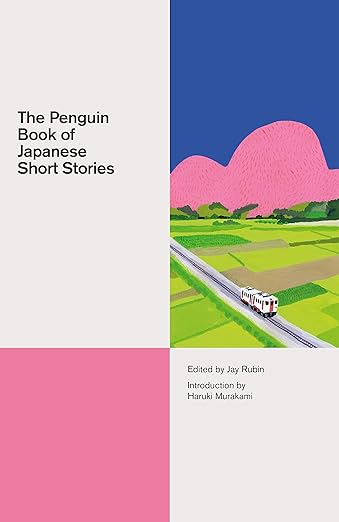
About The Penguin Book of Japanese Short Stories by Jay Rubin
The Penguin Book of Japanese Short Stories by Jay Rubin opens a wide door into Japanese life, history, fear, love, memory, and imagination. Edited by noted translator Jay Rubin and introduced by Haruki Murakami, this anthology brings together 33 works from major writers and voices that may be new to English readers. The stories move from the early years of modern Japanese writing to recent times, showing how the country and its people changed across many years.
Every new story offers a fresh place, mood, and way of seeing the world. One piece may feel quiet and tender. Another may be funny, strange, frightening, or deeply sad. Some stories focus on family and private feelings. Others look at war, earthquakes, modern cities, old values, and Japan’s changing relationship with the West.
Readers can meet famous writers such as Ryūnosuke Akutagawa, Yukio Mishima, Yasunari Kawabata, Jun’ichirō Tanizaki, Haruki Murakami, and Banana Yoshimoto. They can also discover writers whose work is less often found in English. Together, these voices make the book feel like a guided journey rather than a narrow lesson.
One book makes Japanese literature easier to explore
Many readers want to begin Japanese literature but do not know which writer to choose. Buying many separate books can be costly, and choosing only a famous name may hide the full range of Japanese storytelling. This collection solves that problem by placing different generations, styles, and subjects in one carefully edited volume.
You can sample a writer before looking for more of their work. If one story does not match your mood, the next may feel completely different. Short pieces also make reading easier on busy days. You can finish a full experience without needing weeks for a long novel.
Jay Rubin does more than gather familiar names. His choices show that Japanese fiction cannot be placed inside one simple box. The book includes realism, horror, myth, comedy, family drama, strange fantasy, war writing, disaster stories, and thoughtful memories. It helps readers move past common ideas that all Japanese stories are quiet, magical, or the same.
What kind of stories are inside?
The anthology is arranged by theme instead of publication date. This choice allows older and newer writers to speak beside one another. It also helps readers notice how the same question can appear in very different periods.
The opening group looks at Japan and the West. These works explore travel, identity, language, education, and the feelings created when different cultures meet. Another group turns to loyal warriors and old ideas about duty. Stories about men and women examine love, marriage, desire, power, loneliness, and the difficult spaces between people.
Nature and memory become the centre of another section. Here, places, fruit, houses, songs, and past moments can carry strong feelings. Modern life then brings office habits, city pressure, absurd events, and sharp comedy. The section called “Dread” enters darker ground through fear, strange bodies, cruel art, and events that are hard to explain.
The final large section considers disasters made by nature and people. Earthquakes, war, atomic bombing, social change, and nuclear danger leave marks on bodies, homes, families, and memory. These pieces do not give one easy answer. They let different writers show how people survive, remember, hide pain, or rebuild.
Famous names and unexpected discoveries
Readers familiar with Haruki Murakami can find his work beside writers from other periods. His introduction also gives the collection a personal doorway, helping readers think about what makes a short story work. Jay Rubin, known for translating Murakami and other Japanese authors, edits the volume and provides notes. He also gives fresh English translations of several selections.
The book includes “Hell Screen” by Ryūnosuke Akutagawa, a dark story about art, power, and cruelty. Yukio Mishima’s “Patriotism” examines duty, death, and intense personal belief. Yūko Tsushima’s “Flames” and Banana Yoshimoto’s “Bee Honey” bring different views of relationships and emotional life.
Other pieces move into surprising territory. Shin’ichi Hoshi offers imaginative modern fiction. Yuten Sawanishi presents the strange image of a woman filling with sugar. Yōko Ogawa, Mieko Kawakami, Aoko Matsuda, Kafū Nagai, Natsume Sōseki, and many others add their own voices. The mix helps new readers find authors they may want to read next.
A book full of changing moods
This anthology never stays in one emotional place for too long. Fear can sit beside charm. Beauty can appear during loss. A comic moment can reveal a serious truth. An ordinary room can become strange through one small change.
That variety makes the book useful for readers who become tired of one repeated style. You can choose a story that fits your day. Read a short, unusual piece when time is limited. Choose a longer, slower work when you want to settle into a different life. Return to a difficult story after learning more about its time and place.
The changes in tone also make the collection good for discussion. Two readers may love completely different sections. One may prefer social history and realistic family life. Another may remember the horror, myth, or surreal events. The book creates many honest questions without forcing every reader toward the same answer.
Translation that connects two languages
The original works were written in Japanese, and the anthology presents them in English through several skilled translators. Translation allows readers in Bangladesh and around the world to meet stories they might not otherwise access. It also carries a difficult task: keeping the meaning, mood, rhythm, and cultural detail clear in another language.
Jay Rubin translated several selections, but he is not the only translator represented. The book also includes work translated by specialists such as Ted Goossen, Royall Tyler, Rachel DiNitto, David Boyd, and others. Different writers and translators create different English voices, which adds to the range of the collection.
Helpful notes give context when a name, event, or cultural detail may be unfamiliar. Readers do not need expert knowledge of Japan before beginning.
Why the short-story form works so well
A short story must create a complete effect with limited space. A writer may use one meeting, one memory, one disaster, or one strange image to open a much larger world. This makes short fiction powerful for readers who like meaning without unnecessary length.
The format also supports a flexible reading habit. One story can fit into a bus ride, a lunch break, or a calm evening. You can pause between pieces without losing one continuing plot. Each ending offers a natural place to rest, think, or write down a response.
For students and new readers, short stories make comparison easier. You can look at how two writers create fear, describe a city, remember war, or show a relationship. For writers, the collection offers lessons in opening lines, character, mood, structure, and endings.
A friendly way to begin
You do not have to read this book from the first page to the last. The thematic order is meaningful, but every selection can stand as its own experience. Start with a writer you already know, or choose a title that sounds interesting.
Readers who enjoy dark fiction may begin with “Hell Screen” or the stories in “Dread.” Murakami fans can look for his pieces and then move to nearby voices. Readers interested in history can begin with the disaster section. Those who prefer relationships, nature, or modern life can follow those themes.
After each story, pause for a moment. Ask what changed, what remained hidden, and which image stayed in your mind. If the ending feels unclear, that does not mean you failed. Many literary stories leave space for the reader to think and form a personal view.
Made for a smooth physical reading experience
Bookish Wonderland offers this premium edition for readers who want strong everyday quality in a large English book.
- Premium eye-soothing cream paper gives each page a soft tone that feels comfortable during long reading sessions.
- Crystal-clear printing keeps the English text sharp, clean, and easy to follow.
- High-quality stitched and glue binding helps hold the pages firmly through repeated opening and careful rereading.
These features support the way an anthology is used. Readers often move between sections, return to favourite stories, and keep the book for future study. A comfortable page, readable text, and secure binding help the collection remain useful instead of becoming a one-time read.
What readers gain from this collection
The book offers more than entertainment. It introduces important Japanese writers, major historical experiences, different kinds of fiction, and many ways of viewing daily life. Readers can build knowledge without feeling trapped inside a textbook.
Regular reading can strengthen English vocabulary, attention, and confidence with translated literature. The notes and themed structure help readers understand links between stories. The wide time range also shows that Japanese culture is not fixed. Values, cities, homes, work, family life, and writing styles change across the collection.
The anthology may lead you toward a new favourite author. A single piece by Kawabata, Tsushima, Yoshimoto, Ogawa, Akutagawa, or Murakami can become the first step toward another book. In that way, one purchase can open many future reading paths.
Who should add this book to their shelf?
This collection suits readers of literary fiction, Japanese literature, translated writing, short stories, history, horror, myth, and modern culture. It is a useful choice for university students, teachers, book clubs, writers, and curious general readers.
It also makes a thoughtful gift for someone who enjoys Haruki Murakami but wants to meet more Japanese authors. Fans of compact stories can enjoy the changing voices, while collectors can add a broad Penguin anthology to their library.
Some stories contain war, death, suicide, violence, sexual themes, disaster, and emotional pain. The book is best for mature teen and adult readers. People who want only light or simple stories may find some selections challenging, but readers open to different moods will find much to consider.
Useful at home, in class, or with friends
Read one story each week and keep a small journal of favourite lines, questions, and new authors. A book club can choose one theme each month and compare the stories inside it. Students can study how history changes personal lives or how translators carry cultural meaning into English.
Teachers can select individual works for lessons on voice, memory, conflict, symbolism, or setting. Writers can use the anthology to see how much a short form can hold. Casual readers can simply choose a story whenever they want a complete literary experience without starting a long novel.
The book also works well for slow reading. There is no need to rush through all 33 selections. Giving each story space can make the whole collection more rewarding.
Best Sellers Rank of This Book
- #172,772 in Books
- #25 in Japanese Literature
- #1,132 in Short Stories Anthologies
- #2,055 in Short Stories (Books)
Bring many sides of Japan into one reading journey
Readers checking The Penguin Book of Japanese Short Stories by Jay Rubin Book price in Bangladesh can find the current offer at Bookish Wonderland. This single anthology gives you 33 chances to discover a voice, feeling, idea, or part of Japanese history that may be new to you.
Choose it when you want variety without losing depth. Read it to meet major authors, uncover less familiar talent, enjoy expert English translation, and understand how short fiction can hold an entire world. Order your copy today and let the first story guide you toward the next.
If you require any customization or have any questions, please inbox us via FB or Insta.
| Primary Specification | |
| Author | Jay Rubin |
| Translator | Jay Rubin and multiple contributing translators |
| Editor | Jay Rubin |
| Genre | Japanese Literature, Literary Fiction, Short Stories, Historical Fiction, Horror, Myth, Magical Realism, Speculative Fiction, Contemporary Fiction |
| ISBN-13/ISSN | 978-0241311905 |
| ISBN-10 | 024131190X |
| Publisher | Penguin Classics |
| Publishing Date | September 11, 2018 |
| Language | English |
| Reading Age | 18+ |
| Format | Printed Book |
| Physical Specification & Quality | |
| Paper Quality | Premium eye-soothing cream paper |
| Binding Quality | High quality stitched and glue binding (for longevity) |
| Print Quality | Crystal-clear print |
| Pages | 576 pages |
| Country | Japan |
| Logistics Information | |
| Weight | 584g |
| Length | 8.5 inch |
| Width | 5.6 inch |
| Height | 1.4 inch |