

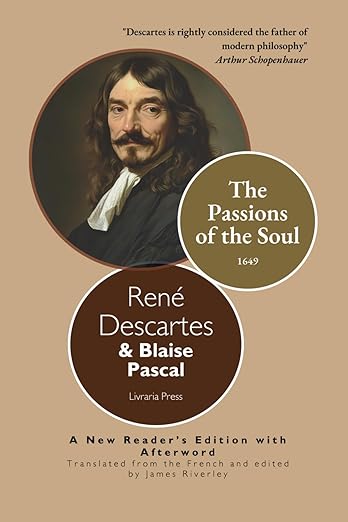
About The Passions of the Soul by Rene Descartes
Joy can lift your whole day. Fear can stop you from acting. Anger can push you to speak too quickly. Love can change what you notice, choose, and value.
But where do these feelings come from? Why does the body react before the mind has time to think? Can reason guide emotion without destroying it?
The Passions of the Soul by Rene Descartes explores these questions with care. Descartes studies what people once called passions, a word that covers many experiences we now call emotions.
A Famous Thinker Looks Closely at Emotion
René Descartes is widely known for his work on doubt, knowledge, mind, and body. In this book, he turns his attention toward daily emotional life.
He does not treat emotion as a small or unimportant topic. Feelings affect attention, memory, desire, action, and the way people understand what helps or harms them.
Descartes tries to explain these experiences in an orderly way. He separates complex feelings into simpler parts and asks how the soul, body, brain, nerves, and will may be connected.
Emotions Are Not Simply Enemies
People often assume that reason and emotion must fight each other. If a person is rational, they may think, that person should feel less.
Descartes offers a more careful view.
Passions can help human beings notice what appears useful, harmful, important, new, or worthy of attention. They can prepare a person to act and keep that person focused on a goal.
The main problem is not that emotions exist. Trouble begins when they are misunderstood, misused, or allowed to grow beyond proper limits.
Six Basic Passions Behind Many Feelings
Descartes identifies six simple or basic passions: wonder, love, hatred, desire, joy, and sadness.
He argues that many other passions arise from these six, combine them, or appear as different forms of them.
This gives the reader a map for studying a large emotional world. Instead of treating every feeling as completely separate, Descartes looks for basic patterns beneath them.
The Stanford Encyclopedia of Philosophy confirms this six-part classification and explains how Descartes connects each passion to what a person sees as beneficial, harmful, present, absent, or unusual.
Wonder Opens the Door to Learning
For Descartes, wonder comes first. It arises when something seems new, rare, or unexpected.
Wonder makes the mind stop and pay attention. It can help a person study an object, remember it, and learn something that was not known before.
This insight still feels familiar. A surprising question can begin a lesson. A strange result can lead to discovery. A new idea can hold attention longer than a familiar one.
Yet wonder also needs direction. If people chase every unusual thing without judgment, attention can become scattered. The goal is not endless surprise, but useful learning.
Love, Hatred, and What We Move Toward
Love draws a person toward something seen as good or connected to their well-being. Hatred pushes a person away from something seen as harmful.
Descartes does not use these words only for romance or strong personal dislike. He studies them as broad ways in which people relate to objects, ideas, goals, and other people.
Why do we join ourselves to certain values? Why do we avoid what seems dangerous? What happens when our first view of good or harm is mistaken?
Desire Looks Toward the Future
Desire concerns what a person wants to gain, keep, change, or avoid in the future.
It can create movement and give action a direction. A student desires knowledge. A worker desires success. A parent desires safety for a child.
Desire can be useful, but it can also become confused. People sometimes want things that will not truly help them, or they may want a good result through a harmful method.
By studying desire, readers can think more clearly about goals, expectations, and the reasons behind daily choices.
Joy and Sadness Show What Matters
Joy appears when people experience something they see as good. Sadness appears when they experience loss, harm, or something understood as bad.
These passions reveal the values hidden inside a person’s reactions.
If a result brings joy, what good does the person believe it contains? If an event brings sadness, what loss does it represent?
Descartes invites readers to look beneath the surface of feeling. This does not make pain disappear, but it can make emotional experience easier to understand.
That is one reason the book remains useful for discussions about human nature.
How Can Mind and Body Affect Each Other?
One of the book’s central questions concerns the connection between an immaterial mind or soul and a physical body.
People feel emotion through both. Fear may involve a thought about danger, but it can also bring a faster heartbeat, tense muscles, or a strong urge to move.
Descartes attempts to explain how bodily events produce sensations and passions in the soul, and how willing can lead the body to act.
This question became part of the famous mind-body problem and still matters in philosophy, even though scientific knowledge has changed greatly since Descartes wrote.
A Historical Theory, Not Modern Medical Advice
Descartes gives special importance to the pineal gland and describes bodily movement through what he calls animal spirits.
These ideas belong to seventeenth-century physiology. They should be read as part of the history of science, not as correct modern explanations of the nervous system or medical treatment.
The Internet Encyclopedia of Philosophy explains Descartes’s historical theory of the pineal gland, nerves, animal spirits, sensation, and bodily motion.
Recognizing the theory’s limits does not remove the book’s value. It helps readers see how thinkers once tried to connect physical processes with conscious experience.
Reason Can Guide Without Erasing Feeling
This book does not ask readers to become cold or emotionless.
Instead, it examines how clear thoughts, firm choices, and trained habits can reduce emotional disorder. A passion may arise quickly, but a person can still learn how to respond.
That difference matters.
You may not choose the first feeling that appears, yet you can reflect on what it represents. You can question a mistaken belief, delay a harmful action, or strengthen a better response.
For Descartes, freedom involves learning to use the will wisely within emotional life.
Generosity Becomes a Moral Strength
Descartes gives an important place to generosity. Here, generosity is not limited to giving money or gifts.
It includes understanding the proper value of human freedom and using that freedom well. A generous person respects the power of good choice in both themselves and others.
This attitude can support honest self-respect without pride. It can also reduce envy, uncontrolled anger, and the wish to look superior.
The idea connects emotion with ethics. Understanding feelings is not only about explaining what happens inside us. It can help shape how we live with other people.
Built in Short, Focused Articles
The treatise is organized into three broad parts and 212 short articles.
It begins with passions in general and Descartes’s account of mind and body. It then studies the number and order of the passions, including the six basic ones. The final part examines more particular passions.
This structure gives readers natural stopping points.
You can read a few articles, pause, and think about the central claim before continuing. That approach is often easier than rushing through the whole work as if it were a modern story.
Read It as Philosophy and Intellectual History
As philosophy, it asks serious questions about emotion, motivation, freedom, virtue, and the mind-body relationship.
As intellectual history, it shows how a leading seventeenth-century thinker tried to combine moral reflection with the science available in his time.
Some answers are historically outdated. Other questions remain open and important.
Reading both sides carefully helps students understand how knowledge develops. A classic does not need to be correct about everything to remain deeply worth studying.
A Helpful Book for Philosophy Students
Students can use this work to explore rationalism, Cartesian dualism, early modern ethics, theories of emotion, and the history of psychology.
Because the book deals with technical ideas, beginners may benefit from reading slowly and keeping a short list of key terms. Wonder, passion, will, soul, body, generosity, and animal spirits are useful words to track.
The short-article format makes close reading and classroom discussion easier.
A Fresh Choice for Curious General Readers
Anyone curious about emotion can ask the book’s central questions. Why do feelings move us? How are emotion and action connected? Can habits change our response? What makes a desire wise or unwise?
The language and ideas require attention, especially in older translations. Still, patient readers can discover a clear system beneath the unfamiliar terms.
This is a strong choice for readers who prefer deep ideas over quick motivational advice.
Part of a Conversation With Princess Elisabeth
Descartes’s later moral thought developed through his correspondence with Princess Elisabeth of Bohemia. She pressed him on difficult questions about mind, body, happiness, and human life.
The Internet Encyclopedia of Philosophy explains that this exchange helped lead toward the moral discussion found in The Passions of the Soul.
Knowing this background makes the book feel less like an isolated lecture. It grew from serious questions raised in an intellectual conversation.
Readers can therefore see the work as an answer to real problems about how thinking beings live through bodily and emotional experience.
A Premium Printed Copy for Careful Reading
Bookish Wonderland offers a carefully prepared physical copy for readers who value clarity and durability.
- Premium eye-soothing cream paper provides a softer page color for focused reading.
- Crystal-clear printing keeps detailed terms and short articles sharp and easy to follow.
- High-quality stitched and glue binding supports regular study and long-term shelf use.
The copy works well for personal study, university reading, thoughtful gifting, and a growing philosophy collection.
Best Sellers Rank of This Book
- #807,272 in Books
- #674 in Ethics
- #976 in History of Philosophy
- #1,479 in Modern Western Philosophy
Find a Meaningful Philosophy Book in Bangladesh
If you are comparing The Passions of the Soul by Rene Descartes book price in Bangladesh, Bookish Wonderland offers a convenient way to order a premium English copy.
This book is a thoughtful choice for students, teachers, philosophy readers, and anyone interested in emotion, ethics, psychology, or the history of ideas.
It also makes a meaningful gift for someone who enjoys asking difficult questions about what it means to be human.
Convenient Ordering From Bookish Wonderland
Delivery is available inside Dhaka and throughout Bangladesh. Cash on delivery is available nationwide, giving customers a familiar payment choice.
Readers in Dhaka can also ask about fast or urgent delivery when a copy is needed sooner.
Bookish Wonderland brings together premium and durable English books so readers can build a library with confidence.
Begin a Deeper Study of Human Emotion
Feelings are part of every life, but people do not always stop to understand them.
Descartes offers a structured way to examine emotion, bodily response, judgment, freedom, and moral character. His science belongs to another age, yet his questions can still encourage careful thought.
If you are searching for The Passions of the Soul by Rene Descartes book price in Bangladesh, order your copy from Bookish Wonderland and begin exploring one of philosophy’s enduring studies of emotional life.
If you require any customization or have any questions, please inbox us via FB or Insta.
| Primary Specification | |
| Author | Rene Descartes |
| Translator | Stephen H. Voss |
| Genre | Philosophy, Ethics, History of Philosophy, Modern Western Philosophy, Philosophy of Mind, Philosophy of Emotion |
| ISBN-13/ISSN | 978-0199684137 |
| ISBN-10 | 0199684138 |
| Publisher | Oxford University Press |
| Publishing Date | January 1, 2016 |
| Language | English |
| Reading Age | 18+ |
| Format | Printed Book |
| Physical Specification & Quality | |
| Paper Quality | Premium eye-soothing cream paper |
| Binding Quality | High quality stitched and glue binding (for longevity) |
| Print Quality | Crystal-clear print |
| Pages | 400 pages |
| Country | France |
| Logistics Information | |
| Weight | 407g |
| Length | 8.5 inch |
| Width | 5.6 inch |
| Height | 5 inches |