

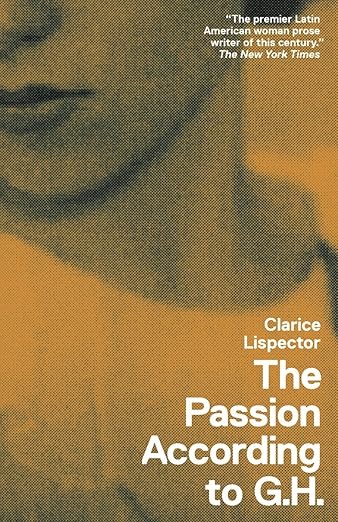
About The Passion According to G.H. by Clarice Lispector
Some books tell you what happened. This book asks what it means to be alive. The Passion According to G.H. by Clarice Lispector begins with a small event inside a quiet home in Rio de Janeiro. G.H., a rich sculptor, walks into the room of a maid who has left. She expects to clean and move on with her day. Instead, she sees a cockroach. Her fear makes her act fast. What follows breaks open the safe life she thought she knew.
The room becomes more than a room. The insect becomes more than an insect. G.H. begins to question her name, her place, her body, her faith, and the walls she has built around herself. The outer action is small, yet the inner journey is vast. Clarice Lispector turns one strange meeting into a bold study of fear, truth, class, God, and the self.
When Normal Stories No Longer Feel Deep Enough
Many novels are easy to enjoy but easy to forget. The plot moves, the problem ends, and the reader walks away without seeing life in a new way. Thoughtful readers may want more. They may want a story that does not hand them one neat answer. They may want words that make them stop, return to a line, and ask a new question.
The Passion According to G.H. offers that deeper test. It takes a common fear and follows it until every old idea begins to shake. G.H. has money, art, order, and a clear social place. Yet one bare room shows her how little she knows about herself. Her trouble is not solved by leaving the room. She must face the part of life that she finds ugly, strange, and hard to name.
A Small Room That Opens Into a Huge World
At first, G.H. sees herself as a calm woman with a good home and a set life. The maid’s room does not fit that image. It is bright, dry, and almost empty. It also holds signs of a person G.H. never truly knew. That fact starts to disturb her. The room shows a gap between the way she sees herself and the way another person may have seen her.
Then the cockroach appears. G.H. tries to control it, just as she controls her home and her public face. But the creature will not stay a simple thing she can push away. As she looks at it, her old sense of being above other forms of life begins to fail. The moment becomes physical, spiritual, and deeply strange.
The power of the book comes from this change in scale. A tiny creature leads to huge questions. What remains when social rank, beauty, taste, and even a name lose their power? Is the human self a true core, or a shape we make to feel safe? Can a person accept life before it becomes clean, useful, or beautiful? Lispector lets these questions rise in plain images and strong waves of thought.
Why This Modern Classic Feels So Different
Clarice Lispector writes from inside the moment of change. She does not stand far away and explain G.H. in a cold voice. The reader hears thought being made, broken, and made again. One idea may seem sure, then turn into its own opposite. This movement gives the novel its living pulse.
The language moves between simple objects and large ideas. A bed, a door, a wall, and an insect carry more weight with each page. The room begins to feel like a test site for the soul. Yet the book never becomes a normal puzzle with one hidden key. Its meaning changes as the reader changes.
The Questions Waiting Inside the Story
At its heart, the novel asks what happens when a person loses the story she tells about herself. G.H. is known by initials, not a full name. Her social life gives her a shape, but that shape begins to feel thin. When it falls away, she meets something more basic than her usual self.
The book also looks at class. The crisis starts in the former maid’s room, a place G.H. had not truly seen. The room quietly points to the distance between the owner of the home and the worker who served her. G.H. must face the limits of her own view. This part gives the novel a social edge as well as a spiritual one.
Fear and disgust are also central. Most people move away from what repels them. G.H. cannot. She looks until disgust loses its simple meaning. The book asks whether life can be accepted only when it looks kind and lovely, or whether real acceptance must reach what we would rather reject.
Faith enters without becoming a clear sermon. G.H. searches for a kind of truth beyond her old words. She thinks about God, love, matter, and the deep life shared by all living things. Readers do not have to agree with her. The value lies in seeing how far one mind can travel when its normal guards fall.
What You Will Find in This Book
- A short outer story with a large inner journey.
- A first-person voice that feels close, urgent, and honest.
- A Rio de Janeiro setting shaped by a home, a maid’s room, and sharp social distance.
- Deep questions about identity, fear, class, faith, the body, and life.
- A bold meeting with an insect that changes the meaning of the whole day.
- Rich images that invite slow thought and more than one reading.
- A modern classic first published in Portuguese in 1964.
- A standalone novel that can be read without any book before it.
The single voice makes every turn personal. The lack of an easy answer gives readers room to form their own view. The short time span makes the crisis feel immediate, while the ideas reach far beyond one day.
What This Reading Experience Can Give You
This novel can help you notice how a writer turns a small event into a full world. It is a strong choice for readers who want to study voice, inner speech, symbol, and the link between form and meaning. Writers may learn from the way Lispector keeps tension alive with thought rather than constant action.
The book is also rich for talk. Two readers may finish with very different views of G.H. One may see a spiritual awakening. Another may see a mind under great strain. A third may focus on class, control, or the way people make distance between themselves and other forms of life. Each view can lead to a strong discussion.
Most of all, the novel gives a rare form of wonder. It asks you to look at an unwanted thing until the border between self and world feels less firm. That feeling may be uneasy, but it can also be freeing. The book does not promise comfort. It promises a meeting with ideas that are hard to forget.
Who Will Most Enjoy The Passion According to G.H.?
Choose this book if you enjoy literary fiction that cares more about thought than action. It suits readers of modern classics, translated fiction, philosophical novels, and stories with a strong inner voice. It may also appeal to people who like books about faith, identity, the body, social class, or moments that change how a person sees the world.
It is a good pick for university students, literature clubs, teachers, writers, and serious solo readers. A book club can use it to talk about the meaning of the cockroach, the empty room, G.H.’s initials, and the person she imagines holding her hand. A student can study how place and symbol carry the plot. A writer can watch how one voice holds an entire novel.
This is not the best match for someone seeking a light romance, fast mystery, or action-filled escape. The pace is slow, the mood is intense, and some images may feel disturbing. The novel also moves in circles on purpose. It returns to ideas as G.H. tries to understand them. Readers who know this before starting are more likely to enjoy the book on its own terms.
A Better Way to Read This Unusual Novel
Give the book quiet time. Read a short part, pause, and let the idea settle. There is no prize for rushing. Mark the lines that pull you in, even if you cannot explain why. When a passage feels hard, look for the simple image at its center. It may be a hand, a room, salt, a face, or the body of the insect.
This book also works well beside a notebook. Write one short question after each reading time. Ask what G.H. fears, what she gives up, or why a common object suddenly feels sacred. If you read with friends, let each person bring one image and one question. The talk will often show how many books can live inside this one book.
Made for Readers Who Value a Lasting Copy
At Bookish Wonderland, the physical reading experience is made to support long, thoughtful sessions. The book uses premium eye-soothing cream paper, which gives the page a soft look and helps reading feel calm. Crystal-clear print keeps the text sharp and easy to follow. High-quality stitched and glue binding gives the book added strength, helping the pages stay secure through repeat reading and shelf use.
This care matters for a novel you may want to mark, revisit, and discuss. A strong copy can remain part of your shelf instead of becoming a one-time read. It can also make a thoughtful gift for a reader who likes world literature, bold women writers, or books that open large questions from a small scene.
Best Sellers Rank of This Book
- #25,142 in Books
- #1,691 in Literary Fiction (Books)
Easy Ordering Across the Country
Readers looking for The Passion According to G.H. by Clarice Lispector price in Bangladesh can order from Bookish Wonderland with delivery inside Dhaka and across the country. Cash on Delivery is available nationwide, so you can place an order without paying online first. If you need the book quickly in Dhaka, ask about the fast or urgent delivery option before confirming your order.
The Book price in Bangladesh should reflect the full buying experience. Bookish Wonderland brings service, simple ordering, and careful handling together. You receive a novel that is easy to purchase, easy to receive, and worthy of a place on your shelf. It is a simple way to add one of Clarice Lispector’s most discussed works to your collection.
Bring Home a Book That Will Keep Speaking to You
Some books end when the last event is over. This one keeps moving in the mind. A white room, a closed door, and one small creature can begin questions that follow you into daily life. You may agree with G.H., resist her, feel shocked by her, or return to her words years later with a new view. That open space is part of the novel’s lasting power.
Order The Passion According to G.H. by Clarice Lispector from Bookish Wonderland today. Read it for its daring voice, its deep questions, its place in modern literature, or the strange pull of a story unlike the usual. Take your time with it. Let it disturb easy ideas. Let it show how a single moment can open a world.
If you require any customization or have any questions, please inbox us via FB or Insta.
| Primary Specification | |
| Author | Clarice Lispector |
| Translator | Idra Novey |
| Narrator | Sofia Willingham |
| Genre | Literary Fiction, Philosophical Fiction, Psychological Fiction, Existential Fiction, Modernist Fiction |
| ISBN-13/ISSN | 978-0811219686 |
| ISBN-10 | 9780811219686 |
| Publisher | New Directions |
| Publishing Date | June 13, 2012 |
| Language | English |
| Reading Age | 18+ |
| Format | Printed Book |
| Physical Specification & Quality | |
| Paper Quality | Premium eye-soothing cream paper |
| Binding Quality | High quality stitched and glue binding (for longevity) |
| Print Quality | Crystal-clear print |
| Pages | 220 pages |
| Country | Brazil |
| Logistics Information | |
| Weight | 228g |
| Length | 8.5 inch |
| Width | 5.6 inch |
| Height | 0.6 inch |