

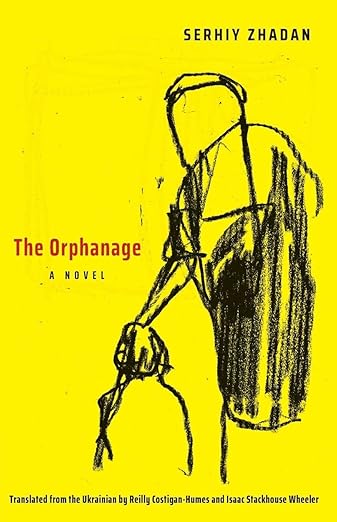
About The Orphanage by Serhiy Zhadan: A Powerful Journey Through War, Fear, and Family
A man wakes to a world that no longer feels safe. Roads are blocked. Buildings are broken. Armed men control the streets, and no one knows which way the danger will come from next.
In the middle of this fear, Pasha has one clear job: he must find his nephew and bring him home.
The Orphanage by Serhiy Zhadan follows an ordinary teacher through a place torn apart by war. Pasha is not a soldier. He has no special power, weapon, or plan. He is a quiet man who has spent much of his life trying not to choose a side. But when Sasha is trapped at an orphanage in occupied land, staying away is no longer possible.
This is a dark, moving novel about what war does to normal people. It shows fear in the streets, doubt in the heart, and the small acts of care that help people remain human when the world around them is falling apart.
One Child Is Waiting, and Pasha Cannot Stay Home
Pasha is thirty-five years old and works as a Ukrainian-language teacher. He lives near the front line in eastern Ukraine. The fighting has grown close, and the nearby city has fallen under hostile control.
His young nephew, Sasha, is still inside a residential school known as the orphanage. The roads are unsafe, the border keeps moving, and every trip can end badly. Yet Sasha needs someone to come for him.
Pasha leaves the little safety he has and walks into the combat zone. He passes checkpoints, damaged streets, tired families, armed groups, and people who do not know where they belong anymore.
The goal sounds simple: reach the orphanage, find Sasha, and return home. War turns each part of that goal into a fight for life.
The official Yale University Press description presents the book as a story about civilians caught in the conflict in eastern Ukraine. It follows Pasha as he crosses changing borders and forms uneasy bonds while trying to save his nephew.
A Rescue Story Without an Easy Road
Many war stories follow trained soldiers. This book follows a teacher who would rather avoid trouble. That choice makes the danger feel close and real.
Pasha does not understand every group he meets. He cannot tell who will help him and who may hurt him. Rules change from one street to another. A safe road can become deadly within minutes. Even the weather, dirt, smoke, and cold seem to work against him.
He must keep moving despite hunger, fear, and confusion. At times, his own wish to stay apart from politics becomes part of the problem. He begins to see that refusing to choose does not always keep a person safe. Sometimes silence allows danger to come closer.
The trip changes Pasha because it makes him look at the people around him. He sees children, old people, parents, workers, and strangers trying to survive. Each person carries a private fear, but everyone is trapped in the same broken place.
This turns a rescue trip into something larger. Pasha is not only trying to bring Sasha home. He is learning what home, duty, and loyalty truly mean.
War Is Shown Through Daily Life
People look for food. They wait for transport that may never arrive. They listen for shells and try to guess how close each sound is. They carry bags because they may need to leave at any moment. They ask questions but rarely receive clear answers.
The novel also shows how quickly a neighbor can begin to look like a stranger. Old friendships become unsure. Words, accents, and small choices may place a person in danger. No one knows what tomorrow will bring, so even kindness can feel risky.
Yet people still help one another. A shared seat, a warning, a little food, or a hand offered at the right moment can matter greatly. These acts give the story a small light without hiding its pain.
Pasha Is Not a Perfect Hero
Pasha is one of the most interesting parts of the novel because he does not begin as a brave hero. He often waits, avoids hard choices, and hopes that the fighting will pass without asking anything from him.
His weakness makes him believable. Most people do not know how they will act when real danger arrives. They may freeze, look away, or tell themselves that the problem belongs to someone else.
Sasha gives Pasha a reason to move. Every hard step forces him to care about something beyond his own comfort. He may still feel afraid, but fear no longer has the final word.
Readers can watch his sense of duty grow during the journey. He begins to understand that love is more than a warm feeling. Love may mean walking into danger because a child is waiting for you.
This change is quiet, not magical. Pasha does not become fearless. He becomes willing to act while afraid. That makes his journey feel human and gives the story its strong emotional center.
The Bond Between an Uncle and His Nephew
At the heart of the book is the connection between Pasha and Sasha. Their relationship is not made sweet or simple. War has changed the child as well as the adult.
Sasha has seen things no child should have to see. He must understand danger quickly, trust carefully, and keep moving when his body wants to stop. His experience shows how children are forced to grow up when adults break the world around them.
Pasha wants to protect him, but getting to the orphanage is only the first part of the task. They still have to make the return trip through the same ruined land.
As they travel, the usual roles can shift. The adult does not always have every answer. The child may notice danger first. Both must learn to listen to each other.
This bond gives readers a clear reason to keep turning pages. You want them to reach shelter. You want Sasha to feel safe again. You want Pasha to become the person his nephew needs.
A Story About Ukraine, Told From the Ground
The original Ukrainian novel was published in 2017 under the title Internat, a word that can refer to a boarding or residential school. The story grew from the conflict in the Donbas region of eastern Ukraine.
This is a novel, not a news report or history book. Its people and scenes are shaped through fiction. Still, the fear, damage, and hard choices reflect the real experience of civilians living near a front line.
Zhadan keeps many political labels and place names unclear inside the story. This puts the reader close to Pasha, who often does not know who controls the next road or what will happen at the next checkpoint.
The book does not offer a simple lesson about war. It shows how confusing war feels to someone standing inside it. Facts may be hidden, rumors spread fast, and survival can become more urgent than understanding the whole map.
Powerful Writing in English Translation
The English edition was translated from Ukrainian by Reilly Costigan-Humes and Isaac Stackhouse Wheeler. Their work carries Zhadan’s sharp images, fast movement, and strong sense of place into English.
The writing can feel rough, cold, and dreamlike because that matches Pasha’s journey. Smoke hides the road. Sounds come from unseen places. Tired people move through ruined spaces, never sure whether they are walking toward safety.
Some parts are slow and heavy by design. The reader feels the long road, the cold air, and the weight of fear. Other moments move quickly when danger appears without warning.
The English translation won the 2022 EBRD Literature Prize. The award is shared with both the author and translators, showing how important the translation is to the book’s power.
Why This Book Stays With You
The Orphanage does not try to make war exciting. It shows war as dirty, tiring, frightening, and deeply unfair.
The people who suffer most are often those who did not begin the fight. A teacher, a child, a family, or an old person may lose everything because armed men have changed the rules of daily life.
This honest view can be hard to read, but it gives the novel meaning. It asks what one person owes another. It asks whether anyone can stay neutral when a child needs help. It asks what remains of home after fear enters every room.
When the final page ends, readers may continue thinking about courage. The book suggests that courage is not always loud. Sometimes it is a tired person who keeps walking because turning back would leave someone alone.
Is The Orphanage an Easy or Light Read?
No. This is serious literary fiction with scenes of war, injury, death, fear, damaged homes, and children in danger. The mood is often dark and tense.
The book is best for mature readers who are ready for a painful story. It may not suit someone looking for a cheerful romance, a simple adventure, or a relaxing bedtime read.
However, the language does not require expert knowledge of politics or military history. You can follow Pasha’s goal from the start: he needs to find Sasha and bring him home.
That clear goal makes the novel easy to understand even when the world around the characters becomes confusing. Readers should simply be prepared for heavy themes and strong emotional scenes.
Who Will Get the Most From This Novel?
This book is a good choice for readers who enjoy serious historical or political fiction, translated literature, modern European writing, and stories about ordinary people in extreme danger.
It can also help book clubs begin thoughtful talks about duty, family, fear, courage, identity, and the human cost of war. Different readers may disagree about Pasha’s early choices, which can make the discussion more meaningful.
Students and teachers studying modern literature may value its close look at civilian life. Readers trying to understand Ukraine through art and personal stories may also find it useful.
It can be given as a thoughtful gift to someone who values powerful writing more than easy comfort. The novel is especially suited to a reader who wants a book that asks difficult questions and does not offer a soft answer.
A Premium Copy for Focused Reading
Bookish Wonderland offers a premium copy made for readers who want comfort and durability. The eye-soothing cream paper feels gentle during long reading sessions, while crystal-clear printing keeps every line sharp and easy to follow.
High-quality stitched and glue binding helps the pages remain secure through regular reading. It is a useful choice if you plan to mark important scenes, share the book with a reading group, use it for study, or keep it in a personal collection.
The physical quality lets you focus on Pasha and Sasha’s journey without weak pages, unclear words, or a loose spine getting in the way.
Best Seller Rank of This Book
- #166,216 in Books
- #11,042 in Literary Fiction (Books)
These are the ranking figures supplied for this product listing. Live store rankings may change over time.
Why This Story Is Hard to Put Down
The biggest pull is not knowing whether Pasha will reach his nephew before the fighting gets worse. He is not a soldier or a hero. He is simply a teacher walking through a city where every road, stranger, and passing car could bring trouble.
That gives you two reasons to keep reading: you want to know if Pasha can find Sasha, and you want to see whether they can make it home together.
As they move through broken streets and meet people caught in the same war, Pasha starts to understand that staying out of trouble is not always possible when someone you love needs help.
The Orphanage is a complete standalone novel, so you get the whole story in one book.
If you require any customization or have any questions, please inbox us via FB or Insta.
| Primary Specification | |
| Author | Serhiy Zhadan |
| Translator | Reilly Costigan-Humes, Isaac Stackhouse Wheeler |
| Narrator | Matthew Lloyd Davies |
| Genre | Literary fiction, war fiction, contemporary fiction, and Ukrainian literature |
| ISBN-13/ISSN | 978-0300243017 |
| ISBN-10 | 0300243014 |
| Publisher | Yale University Press |
| Publishing Date | February 23, 2021 |
| Language | English |
| Reading Age | 16+ |
| Format | Printed Book |
| Physical Specification & Quality | |
| Paper Quality | Premium eye-soothing cream paper |
| Binding Quality | High quality stitched and glue binding (for longevity) |
| Print Quality | Crystal-clear print |
| Pages | 336 pages |
| Country | Ukraine |
| Logistics Information | |
| Weight | 354 gm |
| Length | 8.5 inches |
| Width | 5.6 inches |
| Height | 0.81 inch |