

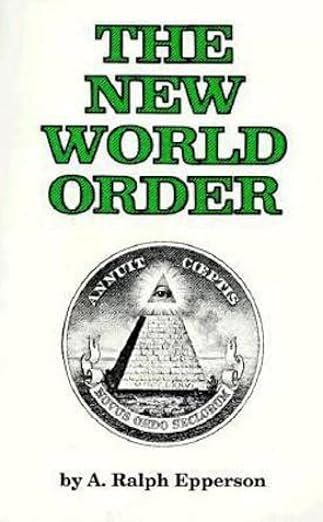
About The New World Order by Ralph Epperson
What if the symbols printed on money carried a story most people never stopped to question? The New World Order by Ralph Epperson begins with that simple idea and builds a wide argument about politics, power, secret groups, religion, education, money, and world government. First published by Publius Press in 1990, the book studies the Great Seal of the United States and then connects its symbols to Epperson’s larger view of history.
This is not a calm school textbook or a simple timeline of events. It is a strong, controversial work in which the author argues that powerful people and private groups have guided major changes from behind the scenes. Readers do not have to agree with every claim to find the book worth exploring. Its value lies in seeing how Epperson builds his case, which sources he selects, and how he links symbols, people, movements, and political ideas.
If you enjoy books that challenge accepted views and make you ask new questions, this title can give you many topics to examine, discuss, and check for yourself.
Look Again at a Familiar American Symbol
The back of the American one-dollar bill shows part of the Great Seal of the United States. It contains an unfinished pyramid, an eye, the year 1776, and Latin words. Millions of people have seen these images, but few stop to study their history. Epperson uses these details as the starting point for his argument.
He gives special attention to the phrase “Novus Ordo Seclorum.” Epperson connects it to his idea of a planned New World Order and a hidden future for society. Official United States sources, however, translate the phrase as “a new order of the ages” and explain it as the beginning of a new American era in 1776. This difference is important. The book presents Epperson’s interpretation, not the only accepted meaning of the seal.
That disagreement is one reason the book remains interesting. It gives readers a chance to compare a controversial claim with standard historical explanations and decide which evidence is strong, weak, incomplete, or open to debate.
The Main Argument Inside the Book
Epperson argues that history is not shaped only by public leaders, elections, wars, and open decisions. He believes secret societies and powerful networks have also worked for many years to change governments, financial systems, religion, education, private property, family life, and national independence.
The book connects this argument with subjects such as the Illuminati, Freemasonry, humanism, Marxism, ancient mysteries, political leaders, world government, and religious ideas. It also discusses the pyramid and eye on the Great Seal, obelisks, stars, serpents, and other symbols. Epperson treats these parts as pieces of one large plan.
These links are the author’s claims and interpretations. Many historians and official sources do not accept his conclusions. Reading the book with that fact in mind gives you a more useful experience. You can understand what Epperson believes while still checking dates, quotations, translations, and historical context through other dependable works.
A Book for Questions That Simple News Cannot Answer
News reports often focus on what happened today. They may tell you who won an election, which law changed, or why a market moved. They rarely ask why certain ideas return across many years or why people believe hidden groups guide world events.
The New World Order offers one answer to that problem. It gathers Epperson’s ideas in one long argument, allowing readers to see his full line of thought rather than small pieces shared online. This can be useful in a time when short videos and social posts often remove context.
Instead of accepting a dramatic claim from a random post, you can read the author’s actual case. You can see the names he uses, the symbols he studies, and the conclusions he draws. You may agree, disagree, or remain unsure. In every case, you will understand the argument better than someone who knows it only from a quote, image, or headline.
Follow the Author’s Trail Through History
The book moves through a large range of subjects. It begins with ideas about future rulers and the New Age movement, then travels through ancient mysteries, secret societies, religious symbols, the Pyramid of Giza, obelisks, the Illuminati, Marx, Hitler, Freemasonry, humanism, education, property, nationalism, and modern American politics.
This wide path is one of the book’s main features. Epperson tries to show that events normally studied apart are connected. He uses quotations, names, historical references, symbols, and his own explanations to build that connection.
Readers should know that a large number of references does not automatically prove a conclusion. A quotation can be real while the meaning drawn from it remains disputed. A symbol can have several meanings in different times and cultures. Keeping these points in mind helps you read carefully without missing the force of the author’s argument.
Read It with an Open but Careful Mind
The best way to approach this book is neither blind belief nor quick rejection. Start by asking what Epperson claims. Then ask what evidence he gives, whether the source is complete, what other explanations exist, and whether the final conclusion follows from the facts.
This method turns a controversial book into a tool for critical thinking. Keep a notebook beside you. Write down names, dates, groups, books, and quotations that you want to check. Compare the author’s translation of words with official or academic sources. Look for the full context of any speech or statement that seems important.
Reading this way gives you two benefits. First, you understand an influential type of political and conspiracy writing from its own point of view. Second, you build the habit of testing claims before sharing them. That skill is useful far beyond this one book, especially when online information is fast, emotional, and hard to verify.
Why Readers Continue to Seek This Title
The New World Order speaks to a question that never fully disappears: who holds power, and how can ordinary people know what happens behind closed doors? Epperson gives a direct and dramatic answer. Even readers who challenge his ideas may want to understand why this view attracts attention.
The book also offers a deeper look at symbols many people see but rarely study. It encourages readers to ask how images, mottos, institutions, and stories shape public belief. Its wide subject range can lead to further reading in American history, political thought, religion, symbolism, media studies, and conspiracy culture.
For some readers, the strongest appeal is the mystery. For others, it is the political warning. Students and researchers may value it as an example of how an alternative history is built. Book clubs may enjoy the debate because different readers can reach very different judgments from the same chapters.
What You Gain from Reading It
This book gives you more than a list of secret groups or strange symbols. It shows a complete way of viewing history. Understanding that framework helps you recognize similar claims in videos, speeches, websites, and modern political debate.
You can also improve your ability to separate a source from an interpretation. Epperson may quote a real person or describe a real symbol, but the link he makes between them is a separate step. Learning to notice that step is a valuable reading skill.
The book can expand your research list as well. Each unfamiliar name, movement, event, or phrase can become a starting point for further study. Rather than finishing with one fixed answer, careful readers may finish with better questions. That is a meaningful benefit for anyone who wants to understand how beliefs about hidden power are formed and spread.
Who Will Find This Book Most Useful?
This title is best for adult readers interested in alternative history, political power, secret societies, symbolism, conspiracy literature, religion, and world-government theories. It may also suit students of media, politics, history, or sociology who want to examine a controversial primary example of conspiracy-based writing.
The language is direct, but the book covers many people and ideas. Readers should be ready to slow down, take notes, and check other sources. It is not the best first choice for someone seeking a neutral, widely accepted history of the Great Seal or modern politics.
Choose it if you enjoy testing bold arguments rather than receiving easy answers. It can work well for solo study, a discussion group, or a reading project in which each chapter is compared with mainstream historical research. The result can be a richer and more balanced understanding of both the book and the public debate around its claims.
A Practical Choice for Study and Discussion
The chapter-based structure makes this book easy to use in several ways. You can read it from beginning to end to follow Epperson’s full argument, or choose topics such as the Great Seal, Freemasonry, humanism, education, property, and nationalism for focused study.
For a book club, assign a small group of chapters and ask each reader to bring one supporting source and one source that challenges the author. For personal research, create two columns in your notes: “documented fact” and “author’s interpretation.” This simple method can make difficult sections easier to understand.
The book can also support essays or classroom discussions about persuasion. Look at the words Epperson uses, the order in which he presents evidence, and the way fear, urgency, faith, and freedom appear in his argument. These details show how nonfiction writing can shape a reader’s response as strongly as the information itself.
A Physical Copy Made for Focused Reading
Long research-based reading feels better when the page is clear and comfortable. This Bookish Wonderland copy uses premium eye-soothing cream paper that is gentle during extended reading sessions. Crystal-clear printing keeps names, dates, quotations, and chapter text sharp, helping you follow the author’s detailed argument without fighting faded letters.
High-quality stitched and glue binding provides added strength for repeated use. You can read, annotate, revisit chapters, and carry the book while keeping the pages more secure. The durable finish also makes it suitable for a personal collection, study shelf, or thoughtful gift for a reader interested in political and historical debate.
When checking the book price in Bangladesh for The New World Order by Ralph Epperson, consider the full reading experience: comfortable paper, clean print, lasting binding, and access to the complete work in a form you can study away from online distractions.
Easy Ordering from Bookish Wonderland
Bookish Wonderland makes it simple to order English books from anywhere in Bangladesh. Nationwide delivery is available both inside and outside Dhaka, so readers do not need to search many local shops for a less common title.
Cash on Delivery is available across the country, giving you the option to pay when the order arrives. Customers in Dhaka can also request fast or urgent delivery when the book is needed sooner. Delivery time can depend on the exact location and service selected.
You also receive support if you need help before ordering. Whether you are buying for yourself, a student, a researcher, or a friend who enjoys controversial nonfiction, Bookish Wonderland offers a smooth way to add this debated political title to your shelf.
Best Sellers Rank of This Book
- #221,449 in Books
Start Reading, Questioning, and Checking
The New World Order is not a book to read and forget. It asks you to look again at familiar symbols, question common explanations, and consider the possibility of hidden influence. At the same time, its strongest claims deserve careful checking against official records, full quotations, and trusted historical research.
Make the experience active by following Epperson’s argument and testing it. Decide where the evidence is clear, where links feel weak, and where more research is needed. Order your copy today and begin a debate-filled journey through power, history, symbols, and belief, one chapter at a time.
If you require any customization or have any questions, please inbox us via FB or Insta.
| Primary Specification | |
| Author | Ralph Epperson |
| Genre | Conspiracy theory, alternative history, political nonfiction, secret societies, symbolism |
| ISBN-13/ISSN | 978-1592324781 |
| ISBN-10 | 1592324789 |
| Publisher | African Tree Press |
| Publishing Date | July 7, 2016 |
| Language | English |
| Reading Age | 18+ |
| Format | Printed book |
| Physical Specification & Quality | |
| Paper Quality | Premium eye-soothing cream paper |
| Binding Quality | High quality stitched and glue binding (for longevity) |
| Print Quality | Crystal-clear print |
| Pages | 382 pages |
| Country | United States |
| Logistics Information | |
| Weight | 391g |
| Length | 8.5 inch |
| Width | 5.6 inch |
| Height | 0.96 inch |