

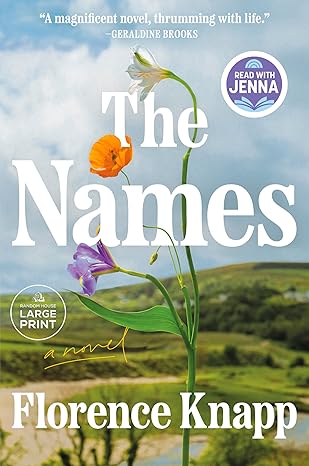
About The Names by Florence Knapp
What if one choice could create three very different lives?
The Names by Florence Knapp begins in England in 1987, after a terrible storm. Cora is walking with her nine-year-old daughter, Maia, to register the birth of her baby boy. Her husband expects the child to be named Gordon, following an old family tradition. But Gordon is not only a respected doctor. At home, he is controlling, frightening and violent.
Cora does not want her son to carry the name of a man she fears. She thinks about Julian, the name she loves. Maia suggests Bear, hoping her little brother will grow up to be soft, kind, brave and strong.
At the registration office, Cora must choose.
From that single moment, the novel opens into three possible lives. In one, the boy is Bear. In another, he is Julian. In the third, he is Gordon. Each name changes how the family responds, what happens next and who the child may become.
The story moves through thirty-five years, visiting each version of the family at seven-year points. It explores domestic abuse, identity, family bonds, inherited pain, personal freedom and the hope of healing.
Three Names and Three Possible Futures
The special structure of The Names gives readers three connected stories in one novel.
Bear is the name chosen by Maia. She wants her brother to have a name that feels warm, brave and full of possibility. This name gives the child space to grow without carrying his father’s identity.
Julian is Cora’s choice. She wants her son to become his own person instead of living under a family tradition. The name represents her hope that he can rise above the harmful behaviour passed down through the men in Gordon’s family.
Gordon is the name demanded by the baby’s father. It connects the boy to a line of men who all carry the same name. It also creates questions about expectation, family influence and whether a child can escape the image placed upon him.
These three boys are not simply copies with different labels. Their homes, relationships and experiences begin changing from the moment Cora makes her decision. The people around them respond differently, and each boy develops under different pressures.
Yet the novel does not claim that a name controls every part of life. Chance, love, fear, family and personal choices also matter. Florence Knapp uses the three names to ask a larger question: How much of our life is shaped by what happens to us, and how much can we shape for ourselves?
A Story About a Mother Searching for Freedom
At the centre of all three lives is Cora.
To people outside the home, Gordon appears successful and respectable. Inside the family, he uses fear and control. Cora understands that even a small act of resistance may bring serious consequences. Naming her child is therefore not a simple task. It is one of the few moments when she may be able to make a choice for herself.
Many readers will understand why leaving a harmful relationship is not always easy. Fear, money, children, shame and public opinion can make a person feel trapped. When an abusive partner is respected by others, asking for help can become even harder.
The novel treats Cora’s situation with care. She is not weak because she is afraid. She is a mother trying to protect two children while living under constant pressure.
Her decision at the registration office becomes an act of hope. In each timeline, that hope faces a different test. Some paths bring immediate change, while others create pain that lasts for years. The book shows that freedom may not arrive in one clean moment. It can take courage, support, time and many difficult choices.
Maia’s Place in the Family
Maia is more than the older sister who suggests the name Bear. She is an important part of the emotional heart of the novel.
At nine years old, she already understands that something is wrong inside her home. She watches her father’s moods and worries about her mother. She also feels a deep connection to her baby brother.
The name Bear shows what Maia wants for him. She hopes he can be gentle without being weak and strong without becoming cruel. Her choice comes from love rather than family pride.
As the timelines move forward, Maia’s relationship with her brother changes. Their different experiences affect how close they become and how easily they share their feelings. In some versions, love appears open and natural. In others, fear and trauma build walls between them.
The novel does not show family love as perfect. Brothers, sisters, parents and children may care deeply for one another while still causing hurt or misunderstanding. People may want to help but not know how. They may stay silent because they are scared or because they have learned to hide their feelings.
Through Maia, the story shows how domestic abuse affects every child in a home, including children who are not the direct target.
Can a Name Really Shape a Person?
A name is one of the first things given to a child. It may carry family history, religion, culture, hope or memory. Other people often hear a name before meeting the person, and that name may create an idea in their minds.
Florence Knapp has explained that she wanted Bear to feel open and expansive. It could suggest someone cuddly and kind, but also brave and powerful. Gordon feels traditional and carries the weight of family inheritance. Julian gives Cora a way to honour the idea of a father while still hoping her son will rise above the troubled men before him.
The Names does not provide a simple yes-or-no answer. A name may affect how a child sees himself. It may also change how family members treat him. But each person eventually begins to make choices beyond the name.
That idea gives the book hope. We may be shaped by our childhood, family or mistakes, but we are not only those things. The boys grow into adults who can question their past and decide what kind of people they want to be.
A Different Kind of Family Novel
The Names is a family story, but its form makes it feel fresh and surprising.
Instead of telling readers what happened after Cora’s choice, the novel shows what could happen after each possible choice. The timelines alternate, allowing readers to compare the three versions as the years pass.
This structure creates strong emotional questions. Which child receives the happiest life? Which family finds safety? Does one name produce a better person? Can love survive in every version?
The answers are not always what readers may expect. One path may appear safe but carry hidden pain. Another may begin badly yet still offer room for growth. Happiness does not arrive in the same form for every character.
Each timeline adds meaning to the others. A small object, memory or relationship may appear differently in another version. Readers slowly see how one changed moment can send many lives in new directions.
Although the structure is clever, the writing remains focused on people rather than tricks. The three paths are easy to recognise because each boy has his own name. Once the reading pattern becomes clear, the story moves smoothly.
A Painful Story with Real Hope
The Names deals with domestic violence, coercive control, grief and childhood trauma. Some moments may be difficult for readers who have lived through similar experiences.
However, the novel is not only about suffering.
It is also about the many forms of love that help people continue. There is love between a mother and her children, between siblings, between partners and between friends. Some relationships fail, while others provide safety at the moment it is needed most.
The story shows that healing does not erase the past. A painful childhood may still shape an adult’s fears, habits and relationships. Yet healing can help that person understand the past without allowing it to control every future choice.
Hope appears through small acts: someone listening, someone believing another person, a child offering comfort, or an adult choosing not to repeat the harm learned at home.
The author has said that hope is the main feeling she wants readers to carry away. Bear, Julian and Gordon are all shaped by their circumstances, but each one can eventually choose the person he wants to become.
Writing That Keeps You Emotionally Close
Florence Knapp writes in a clear yet deeply emotional way. She brings readers close to Cora, Maia and the three possible versions of the boy without making the novel feel too hard to follow.
The story moves forward in seven-year jumps. This means readers do not see every ordinary day. Instead, they visit the family during important stages of life and discover what has changed since the last section.
This method creates curiosity. You may finish one timeline at a tense moment and then move to another version before learning what happens next. The alternating stories encourage you to keep reading and compare each path.
The language gives space to fear, tenderness, anger, love and regret. The emotional scenes feel powerful because the characters have been allowed to grow over many years.
Readers who normally find literary fiction too slow may enjoy the strong central idea and clear structure. At the same time, readers who love thoughtful family stories will find many details to consider after finishing the book.
Who Should Read The Names?
The Names by Florence Knapp is an excellent choice for readers who enjoy:
- Emotional family stories
- Literary fiction with an unusual structure
- Parallel lives and alternative timelines
- Books about mothers, children and siblings
- Stories about identity and the meaning of names
- Women’s fiction focused on courage and freedom
- Novels about surviving and healing from domestic abuse
- Character-driven stories that cover many years
- Book-club novels with strong discussion topics
- Hopeful stories that do not hide life’s painful parts
This is an adult novel because it contains domestic violence, coercive control, emotional abuse, grief and other serious family issues. Sensitive readers should consider these themes before starting.
It can also be a meaningful choice for university students studying family life, women’s writing, identity, trauma, narrative structure or the relationship between choice and fate.
Why Book Clubs Will Have Plenty to Discuss
The Names is made for discussion because it never gives readers an easy answer.
A book club can ask whether Cora truly controls the family’s future when she chooses a name. Readers may disagree about which version of the boy has the best life and whether any one timeline should be seen as the “right” path.
Groups can also discuss whether people can fully escape the influence of their parents. Gordon’s behaviour affects the family in every timeline, but it does not affect each child in the same way.
Another strong topic is the meaning of courage. Does courage mean leaving immediately, secretly planning for safety, asking for help or simply surviving until change becomes possible?
Readers can compare Bear, Julian and Gordon at the same ages. They can examine how love, fear, loss and expectation change each personality.
The book also creates important conversations about how communities view respected people. Gordon’s public position makes his private abuse harder for others to see. This asks readers to think carefully about whom society chooses to believe.
Premium Quality for a Comfortable Reading Experience
Bookish Wonderland offers this book in a premium, durable format made for enjoyable reading and long-term use.
- Premium eye-soothing cream paper: The soft cream colour reduces harsh glare and feels gentle during longer reading sessions.
- Crystal-clear print: Sharp, clean text makes every chapter easy to follow without faded or blurred letters.
- High-quality stitched and glue binding: The combined binding helps keep the pages firmly attached through regular reading.
- Comfortable physical reading: The neat text and quality paper support smooth reading at home, during travel or in a study space.
- Long-lasting shelf value: With proper care, the book can remain in your personal collection and be shared with other readers.
To protect the book, keep it away from water, strong sunlight and damp storage areas. Avoid folding the cover backward or pressing the spine too hard.
A Thoughtful Gift for the Right Reader
The Names is a meaningful gift for someone who enjoys emotional and intelligent fiction. Its central question is simple to understand, but its ideas stay with the reader for a long time.
It can be a good gift for a mother, sister, close friend, university student or book-club member. It may also speak strongly to readers who have rebuilt their lives after a hard family experience.
Because the novel focuses on serious domestic abuse, it may not suit every gift occasion. Consider the reader’s comfort before choosing it for someone who may be sensitive to this subject.
For the right person, however, the book offers more than sadness. It shows the strength of love, the value of personal choice and the possibility of becoming more than the life other people planned for us.
Best Sellers Rank of This Book
- #16,026 in Books
- #49 in Women's Friendship Fiction
- #62 in Women's Divorce Fiction
- #90 in Family Life Fiction (Books)
Find The Names by Florence Knapp Book Price in Bangladesh
If you are searching for The Names by Florence Knapp Book price in Bangladesh, Bookish Wonderland makes ordering simple and convenient.
Nationwide delivery is available across the country, including addresses inside and outside Dhaka. Cash on Delivery allows you to receive the book before making payment. Customers in Dhaka may also request fast or urgent delivery, depending on location and service availability.
Bookish Wonderland carries a large collection of premium and durable English books for personal reading, academic use, gifting and book-club collections. You can order from home and have the book sent directly to your preferred address.
Choose Which Life You Will Follow First
Bear. Julian. Gordon.
Three names begin three versions of one life, but each story asks the same deep question: Are we controlled by our past, or can we still choose who we become?
The Names by Florence Knapp turns one mother’s decision into an unforgettable family journey across thirty-five years. It is painful, warm, clever and full of hope. Each timeline shows a different path, yet every path reveals the lasting power of love, courage and human choice.
This is the kind of book you may finish quickly but continue thinking about for weeks. You may also find yourself asking what small choices shaped your own life and who you might have become if one moment had gone differently.
Order your copy from Bookish Wonderland today and enter three possible futures created by a single name.
If you require any customization or have any questions, please inbox us via FB or Insta.
| Primary Specification | |
| Author | Florence Knapp |
| Narrator | Dervla Kirwan |
| Editor | Pam Dorman |
| Genre | Literary fiction, contemporary fiction, domestic fiction, family life fiction, psychological fiction |
| ISBN-13/ISSN | 978-0593833902 |
| ISBN-10 | 0593833902 |
| Publisher | Pamela Dorman Books |
| Publishing Date | May 6, 2025 |
| Language | English |
| Reading Age | 16+ |
| Format | Printed book |
| Physical Specification & Quality | |
| Paper Quality | Premium eye-soothing cream paper |
| Binding Quality | High quality stitched and glue binding (for longevity) |
| Print Quality | Crystal-clear print |
| Pages | 336 pages |
| Country | United Kingdom |
| Logistics Information | |
| Weight | 342g |
| Length | 8.5 inch |
| Width | 5.6 inch |
| Height | 1.12 inch |