

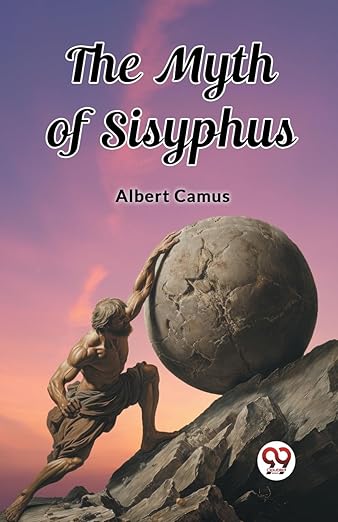
About The Myth of Sisyphus by Albert Camus
What happens when life feels like the same day again and again? You wake up, work, solve problems, rest, and then begin once more. You may ask why any of it matters. The Myth of Sisyphus by Albert Camus begins with that hard feeling and turns it into one of the most important questions in modern philosophy: if the world gives us no clear meaning, how should we live?
Camus does not offer a sweet answer or an easy promise. He asks readers to look at life with open eyes. People want order, purpose, and clear answers, but the world often stays silent. Camus calls this clash “the absurd.” It does not mean that everything is silly. It means that our deep need for meaning meets a world that does not explain itself.
From that starting point, Camus builds a bold answer. We do not need to escape life. We can face it, choose it, and live it fully. Through the Greek figure of Sisyphus, who must push a rock uphill forever, Camus shows how struggle can still hold freedom. The result is a serious yet life-affirming book about courage, awareness, choice, and the power to keep going.
When Life Feels Like the Same Hill
Many people know the feeling of doing work that never seems complete. A student finishes one exam and prepares for another. A worker clears one list and receives a new one. A parent cleans a room that soon becomes messy again. Even a good life can sometimes feel like a wheel turning in the same place.
The problem becomes deeper when old answers no longer feel certain. You may not know what success means, which path is right, or whether the future will reward your effort. Empty advice such as “stay positive” may not help because it does not face the real question.
Camus offers a different way to think. He asks you to become aware of doubt. When you stop demanding that the universe explain everything, you can pay closer attention to the life in front of you. Your limits remain real, but so do your choices. The book turns repeated struggle from a reason for despair into a place where freedom can begin.
Understanding the Absurd in Simple Words
The absurd is born from a meeting. On one side is the human mind, hungry for reason and unity. On the other side is a vast world that gives no final reply. Neither side alone is the absurd. It appears in the distance between what we want to know and what we can truly know.
This idea may sound dark, but Camus does not use it to say that life has no value. He separates value from a fixed cosmic plan. If no final answer is handed to us, each moment becomes more immediate. A meal, a friendship, a walk, a task, a work of art, or a brave choice matters because it is lived, not because it earns a prize beyond life.
Camus values clear awareness. He wants readers to avoid false comfort, but he also rejects hopeless surrender. His answer has three linked parts: revolt, freedom, and passion. Revolt means refusing to give up. Freedom means living without waiting for a final rule to approve every choice. Passion means meeting life with full attention and energy.
Why Camus Begins with the Question of Suicide
The book opens with a direct discussion of suicide, so readers should know that this subject is central to the essay. Camus treats it as a philosophical question, not as a dramatic trick. If life seems to lack final meaning, he asks, does that make life not worth living?
His answer is no. Camus does not present suicide as the solution to the absurd. He argues that ending life removes the very human awareness that makes the question possible. Instead, he supports living with the tension. We can know that certainty is limited and still choose to experience, create, love, think, and act.
This part can feel intense, especially for a reader facing grief or emotional pain. The book is philosophy, not mental-health care. Anyone in personal danger should seek immediate help from a trusted person or qualified professional. For other readers, Camus’s argument can offer a powerful idea: the absence of a perfect answer does not cancel the value of being alive.
The Man Who Pushes the Stone
In Greek myth, Sisyphus is punished by the gods. He must push a heavy stone to the top of a mountain. Just before he completes the task, the stone falls back down. He must walk down and begin again, with no final success waiting for him.
Camus sees Sisyphus as an image of the human condition. We work, lose, rebuild, and repeat. Time carries every victory away. Yet Camus focuses on the moment when Sisyphus walks back toward his stone. In that pause, he understands his fate. His awareness belongs to him, and that awareness makes him greater than his punishment.
The famous final idea asks us to imagine Sisyphus happy. This does not mean that pain is pleasant or unfair work is good. It means that Sisyphus no longer depends on the gods to give his effort meaning. The struggle is his own. By seeing his life clearly and still choosing his next step, he gains an inner freedom that punishment cannot fully take away.
Different Ways of Living Without Illusion
Camus tests his idea through several human types. He considers the lover who seeks many experiences, the actor who lives many lives on stage, the conqueror who acts within history, and the artist who creates without claiming to solve the world. These figures are examples for thought, not simple heroes to copy.
Camus also examines writers and thinkers who came close to the absurd but then made what he sees as a leap toward faith or a final answer. Readers may agree or disagree with him. That disagreement is part of the value. The essay trains you to notice where an argument changes direction and to ask whether hope is honest, necessary, or used to avoid uncertainty.
A Book That Challenges Without Talking Down to You
The Myth of Sisyphus is not a storybook, and it is not a quick list of life tips. It is a philosophical essay that moves through ideas, examples, literature, and myth. Some pages are clear at once. Others may need a second reading. That effort is normal and can make the experience more rewarding.
For an easier reading experience, take one short section at a time. Underline a sentence that stands out. After each part, ask what Camus is rejecting and what he is protecting. You do not have to agree with every claim. The goal is to understand the question clearly enough to form your own answer.
Ideas You Can Carry into Daily Life
This book can change the way you see repeated work. The same task may still be tiring, but you can separate its worth from a distant final reward. You can focus on how you do it, what you learn, whom you help, and what kind of person you choose to be while doing it.
It can also make uncertainty less frightening. Many people delay living because they are waiting for complete proof: the perfect career, the correct belief, the safe choice, or a promise that effort will succeed. Camus reminds us that full certainty may never come. Action can still be honest when it begins with clear limits.
The essay also supports independent thought. Camus asks you to test comforting ideas rather than accept them because they feel good. This can strengthen reading, debate, writing, and decision-making. The benefit is not a fixed answer to every problem. It is a sharper mind and a braver way of meeting questions that have no simple end.
Made for Focused and Comfortable Reading
Bookish Wonderland prepares this printed edition for readers who want a clean and lasting copy of an important philosophical work.
-
Premium eye-soothing cream paper gives each page a softer look and helps reduce harsh brightness during long study sessions.
-
Crystal-clear printing keeps Camus’s arguments sharp, neat, and easy to follow.
-
High-quality stitched and glue binding helps the pages remain secure through repeated reading, marking, and careful study.
These features make the book suitable for regular reading, classroom use, personal notes, and a long-term home library. Philosophy often rewards returning to the same paragraph months or years later, so a durable physical copy gives you room to build a lasting relationship with the text.
Who Should Read This Book?
This is a strong choice for students of philosophy, literature, ethics, cultural studies, and modern thought. It also suits readers who enjoyed Camus’s novels and want to understand the ideas behind his fiction. Reading The Stranger before this book can create useful links, but it is not required.
You may enjoy it if you think deeply about purpose, routine, death, freedom, faith, or personal choice. It can also speak to workers, artists, business owners, and students who sometimes wonder why daily effort matters. No formal philosophy degree is needed, but patience will help.
Useful Ways to Read and Share It
Read it alone with a pencil when you want time to think. Use it in a university course to discuss absurdism, existential thought, ethics, or twentieth-century European writing. Bring it to a reading group where each person can explain what freedom, revolt, and happiness mean to them.
Writers can study how Camus joins an old myth with a modern problem. Teachers can use short passages to open careful debate. Readers of The Stranger, The Plague, or The Rebel can compare how similar questions appear in essays and fiction. It also makes a thoughtful gift for someone who prefers ideas that challenge rather than advice that quickly fades.
This is not a book that must be finished in one sitting. A few pages before bed, one section each weekend, or a focused read during a study break can all work well. The best use is the one that gives you time to pause and respond.
Best Sellers Rank of This Book
-
#1,321 in Books
-
#2 in Existentialist Philosophy
-
#7 in Essays (Books)
-
#7 in Philosophy of Ethics & Morality
A Small Book for Life’s Biggest Question
The Myth of Sisyphus does not remove hard work, uncertainty, or loss. It offers something more useful: a way to face them without hiding. Camus asks you to see the world as it is, refuse despair, and live with energy inside the time you have.
For the latest The Myth of Sisyphus by Albert Camus book price in Bangladesh, check the current product price at Bookish Wonderland. Nationwide delivery and Cash on Delivery are available across the country. Customers can order inside or outside Dhaka, and fast or urgent delivery may be requested in Dhaka when the book is needed sooner.
Choose this book for study, deep personal thought, or a meaningful gift. Keep it close for the days when routine feels heavy and easy answers feel weak. Each return can reveal a new line, a new question, or a new reason to push the stone with open eyes. Order your copy from Bookish Wonderland and begin one of modern philosophy’s most lasting conversations.
If you require any customization or have any questions, please inbox us via FB or Insta.
| Primary Specification | |
| Author | Albert Camus |
| Translator | Justin O’Brien |
| Narrator | Edoardo Ballerini |
| Genre | Philosophy, absurdism, existentialist philosophy, ethics, essays |
| ISBN-13/ISSN | 978-0525564454 |
| ISBN-10 | 0525564454 |
| Publisher | Vintage |
| Publishing Date | November 6, 2018 |
| Language | English |
| Reading Age | 14+ |
| Format | Printed book |
| Physical Specification & Quality | |
| Paper Quality | Premium eye-soothing cream paper |
| Binding Quality | High quality stitched and glue binding (for longevity) |
| Print Quality | Crystal-clear print |
| Pages | 160 pages |
| Country | France |
| Logistics Information | |
| Weight | 166g |
| Length | 8.5 inch |
| Width | 5.6 inch |
| Height | 0.53 inch |