

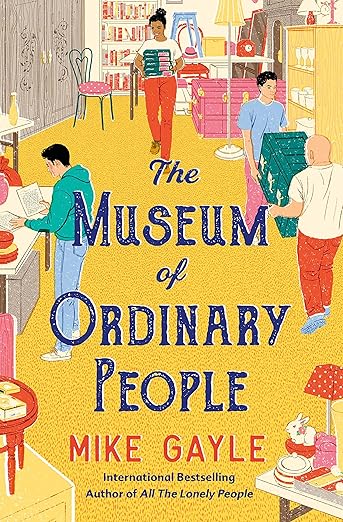
About The Museum of Ordinary People by Mike Gayle
What happens to the small things we love when there is no room to keep them? The Museum of Ordinary People by Mike Gayle begins with this simple question and turns it into a warm, moving story about memory, grief, family, and hope. Jess has lost her mother and must clear the home where she grew up. Every room holds a part of the life they shared, so deciding what to save feels almost impossible.
One set of old encyclopedias matters more than anything else. Other people may see books that are out of date, but Jess sees her mother’s love and the future she once dreamed of having. While looking for a safe home for them, she finds a hidden collection of letters, photographs, keepsakes, and curious objects. It is called the Museum of Ordinary People. There she meets Alex, the quiet owner of the warehouse, and finds a purpose that may change both of their lives.
This is a story for anyone who has ever held an old object and felt a whole person come back for one moment. Mike Gayle shows that an ordinary life is never truly ordinary. Every cup, note, toy, photo, and book can carry a story worth saving.
When Letting Go Feels Too Hard
Clearing a loved one’s home can feel like losing that person again. A useful object may be easy to give away, but a personal item is different. Its money value may be small while its heart value is huge. Jess faces this pain after the sudden death of her mother. She wants to move forward, yet she cannot bear the thought that meaningful parts of their life may simply become rubbish.
The novel gives this common problem a gentle and beautiful answer. Not every object must stay in one home forever to keep its meaning. A story can be written down, shared, displayed, and passed to someone new. The museum becomes a place where items that seem unimportant to the world are treated with care. It also gives Jess room to face her grief instead of hiding from it.
Readers who have kept a faded letter, an old school prize, a broken watch, or a family recipe will understand her at once. The book does not laugh at people for holding on. It shows why we form deep bonds with things and how those things help us remember love.
Meet Jess at a Turning Point
Jess is not a perfect hero with every answer. She is tired, sad, unsure, and pulled between the safe life she knows and the life she once hoped to build. That makes her easy to care about. Her mother wanted her to have a bright future, and the encyclopedias stand for that wish. Saving them is not only about saving paper. It is about protecting a promise and finding the brave young Jess she used to be.
Her search brings her to the warehouse and to Alex. He has his own reasons for staying quiet and keeping people at a distance. At first, the strange collection creates more questions than answers. Who saved all these objects? Why were they chosen? What happened to the people who owned them? As Jess and Alex look deeper, each item opens a door into another life.
Step Inside a Museum Like No Other
This is not a grand building filled with gold, crowns, or famous paintings. The Museum of Ordinary People is an unusual archive hidden inside a warehouse. Its shelves hold letters, photographs, household items, and personal collections. These things may look simple, yet each one was part of someone’s real life.
That idea gives the novel its special charm. Most museums tell us about leaders, artists, wars, and great events. This museum asks us to notice the people who rarely enter history books. A person does not need to be rich or famous to leave something meaningful behind. A small object can show love between a parent and child, a dream that never came true, a friendship that lasted, or a choice that changed a family.
As Jess helps care for the collection, her old dream of working with museums begins to wake again. The work gives her more than a task. It gives her a way to use her skills, honor other people, and think about the future. Readers get the joy of watching an idea grow while wondering whether this fragile place can survive.
Every Object Holds a Human Story
One reason the book stays in the mind is that it changes how you look at daily things. After reading it, an old key, postcard, dress, or music record may no longer look like clutter. You may start asking who held it, why they saved it, and what memory lives inside it.
The objects in the museum connect people across years and places. Jess and Alex do not only sort shelves. They trace stories, follow clues, and learn why certain items mattered. Some discoveries are sad. Some are sweet. Others bring surprise or comfort. Together, they show how memory can travel even after the person who made it is gone.
This makes the novel rich without making it hard to follow. The main story moves forward, while the smaller histories add feeling and wonder. Each new object gives the reader another reason to turn the page. At the same time, the museum slowly reveals links to Jess and Alex that feel much closer than expected.
A Gentle Look at Grief and Hope
The Museum of Ordinary People does not pretend grief can be fixed in one day. Jess misses her mother in quiet moments, hard choices, and familiar rooms. Her sadness is not treated as a problem that must quickly disappear. It is part of her love, and she learns to carry it in a new way.
Even so, the book is not hopeless. It is warm, kind, and full of chances to begin again. Jess discovers that moving forward does not mean forgetting. She can protect what her mother gave her while also making choices for herself. The museum helps her turn pain into care for other people’s memories.
This balance makes the novel a comforting choice for readers who want emotion without endless darkness. There are hard moments and hidden truths, but there is also friendship, purpose, humor, and human goodness. The story leaves space for tears while guiding the reader toward light.
Friendship, Trust, and New Beginnings
Jess does not rebuild her life alone. Her best friend Luce gives her support and helps point her toward the museum. Alex becomes her partner in caring for the strange collection, even though both of them have things they do not easily share. Their bond grows through time spent working, talking, searching, and learning to trust.
The people around Jess also help show the difference between a life that merely feels safe and a life that feels true. She must think about her work, her home, her relationship, and the dreams she put aside. These choices give the story a strong personal heart. They also make it easy for adult readers to see parts of their own lives in Jess.
The novel asks a useful question: if a door to your old dream opened again, would you walk through it? Jess has good reasons to fear change. Yet the museum gives her a chance to become more fully herself. Watching her take small, brave steps creates a deep sense of hope.
What You May Take from the Book
This novel can help readers see their own memories with fresh eyes. It may inspire you to ask older family members about a photograph, write the story behind a keepsake, or think carefully before throwing away something you do not understand. It shows that saving a story can be as important as saving an object.
It can also bring comfort to anyone facing change. Jess cannot return to the life she had before her mother died, but she can build a life that honors the past without being trapped by it. Her journey shows that purpose may appear in an unexpected place and that a dream can wait without dying.
Most of all, the book reminds us to notice people. A stranger may carry years of love, regret, joy, and courage that we cannot see. The museum gives those hidden lives a place of respect. By the end, “ordinary” feels less like a small word and more like something precious.
Who Will Enjoy This Novel
The Museum of Ordinary People is a strong choice for readers who enjoy warm, character-led fiction. It will suit fans of family stories, gentle mysteries, emotional journeys, and books about fresh starts. Readers who love museums, archives, old letters, photographs, family history, or meaningful objects may feel especially close to its world.
No special knowledge is needed. The language is clear, the central idea is easy to understand, and the human feelings cross cultures. You can read it during a quiet weekend, on a daily trip, or a few chapters before bed. It works well when you want a book that is gentle but still has secrets and emotional weight.
A Premium Copy for Comfortable Reading
Bookish Wonderland prepares this copy for readers who want a smooth reading experience and a book that can stay on the shelf for years.
-
Premium eye-soothing cream paper offers a soft page color that feels comfortable during long reading sessions.
-
Crystal-clear print keeps every line sharp, clean, and easy to read.
-
High-quality stitched and glue binding helps the pages stay secure through regular reading and careful rereading.
These physical features make the copy suitable for personal reading, study notes, book club use, or truly thoughtful gifting. The book feels pleasant in the hand and is made for readers who care about both the story and the quality of the copy they receive.
Easy Ordering from Bookish Wonderland
Bookish Wonderland offers a large collection of premium and durable English books, making it simple to add this touching novel to your shelf. Cash on Delivery is available nationwide, so customers across Bangladesh can order with greater ease and pay when the parcel arrives.
Delivery is available inside and outside Dhaka. If you need the book quickly within Dhaka, a fast or urgent delivery option may also be arranged. This gives students, gift buyers, book club members, and busy readers a choice that fits their time and location.
When checking the book price in Bangladesh, look at the full value of your order: reading comfort, lasting build, clear service, payment choice, and delivery reach. The current listed price for The Museum of Ordinary People by Mike Gayle can be checked on this product page before you place your order.
Best Sellers Rank of This Book
-
#82,660 in Books
-
#200 in City Life Fiction (Books)
-
#1,093 in Black & African American Women's Fiction (Books)
-
#1,093 in Mothers & Children Fiction
Give These Memories a Home
Some books entertain you for a few hours. Others quietly change what you notice. The Museum of Ordinary People can make you look again at the small things in your home and the people connected to them. Through Jess, Alex, and a room full of forgotten objects, Mike Gayle creates a tender reminder that every person leaves a story behind.
Choose this book when you want a moving read with grief, mystery, friendship, and hope. Keep it for a calm weekend, share it with your reading group, or give it to someone who understands why an old object can feel priceless. The story is warm without being empty and emotional without losing its light.
Order The Museum of Ordinary People by Mike Gayle from Bookish Wonderland today. Open the first page, enter the hidden museum, and discover why the smallest things can hold the biggest parts of a life.
If you require any customization or have any questions, please inbox us via FB or Insta.
| Primary Specification | |
| Author | Mike Gayle |
| Narrator | Witney White |
| Editor | Nick Sayers |
| Genre | Contemporary fiction, domestic fiction, family life fiction, friendship fiction, uplifting fiction |
| ISBN-13/ISSN | 978-1538740842 |
| ISBN-10 | 1538740842 |
| Publisher | Grand Central Publishing |
| Publishing Date | May 30, 2023 |
| Language | English |
| Reading Age | 22+ |
| Format | Printed book |
| Physical Specification & Quality | |
| Paper Quality | Premium eye-soothing cream paper |
| Binding Quality | High quality stitched and glue binding (for longevity) |
| Print Quality | Crystal-clear print |
| Pages | 336 pages |
| Country | United Kingdom |
| Logistics Information | |
| Weight | 343g |
| Length | 8.5 inch |
| Width | 5.6 inch |
| Height | 1.15 inch |