

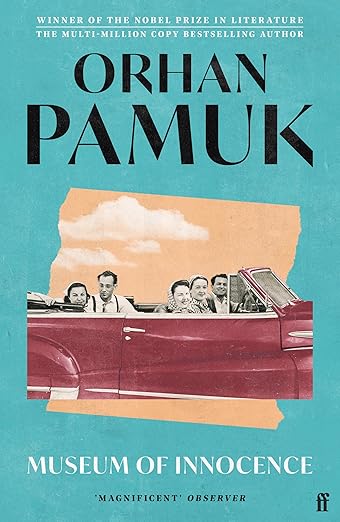
About The Museum of Innocence by Orhan Pamuk
What happens when love does not end, even after the relationship is lost? The Museum of Innocence by Nobel Prize winner Orhan Pamuk follows Kemal, a wealthy businessman living in Istanbul in 1975. His life seems ready for a happy future. He is about to become engaged to Sibel, a woman from a respected family. Then he meets Füsun, a shopgirl and distant relative, and the safe life he planned begins to fall apart.
Kemal’s feelings soon grow into a deep and painful obsession. As years pass, he starts collecting small objects linked to Füsun. A lost earring, a glass, a saltshaker, a cigarette end, or an old photograph becomes precious because it holds a moment he cannot bring back. Through this unforgettable story, Pamuk asks whether objects can protect memory, whether love can excuse selfish choices, and whether happiness lives in the moment or only in the stories we tell later.
When a Perfect Future Starts to Break
Kemal appears to have everything. He comes from money, moves through fashionable Istanbul society, and is preparing to marry a suitable woman. His future has already been approved by his family and social circle. Yet one meeting changes the direction of his life. When he sees Füsun working in a boutique, desire becomes stronger than duty, good sense, and the plans made for him.
That struggle gives the book its power. It does not offer a quick lesson or a perfect hero. It shows a flawed man trying to give meaning to what he has truly lost. You may feel sympathy for Kemal in one chapter and anger toward him in the next. That mixed feeling keeps the story alive. It turns the reader from a silent watcher into a judge, witness, and emotional companion.
Kemal and Füsun Are More Than a Romance
At the centre of the novel is Kemal’s love for Füsun, but their bond is shaped by more than emotion. Kemal is older, wealthy, and protected by social standing. Füsun is young and comes from a lower-middle-class family. Their choices are not judged in the same way, and they do not carry the same risks.
Pamuk uses this difference to show how class and gender affect love. Wealth can open doors, hide mistakes, and give one person more control. Social rules can ask women to protect a family’s honour while allowing men more freedom. Kemal often calls his actions love, but the reader is invited to ask whether he truly sees Füsun as a complete person with dreams of her own.
When Love Slowly Becomes Obsession
Kemal does not simply remember Füsun. He builds his days around her. He returns to places connected with her, waits for small signs, and finds comfort in objects she has touched. The collection grows as his ordinary life becomes smaller. What begins as a love affair turns into a long study of obsession.
The novel never asks you to accept every action as romantic. Instead, it lets you see how obsession can feel beautiful to the person living inside it while appearing painful or unhealthy from the outside. Kemal believes his objects protect happiness. They may also protect him from change. By holding the past so tightly, he risks losing the life still available to him.
Istanbul Is a Living Part of the Story
The Museum of Innocence is also a wide portrait of Istanbul from the 1970s onward. The city is not just a background. Its streets, homes, shops, cinemas, restaurants, television shows, family dinners, and old neighbourhoods shape every relationship.
Kemal moves between two social worlds. One is the wealthy, Western-looking Istanbul of engagement parties, clubs, business families, and homes beside the Bosphorus. The other is made of smaller rooms, modest meals, crowded streets, and people trying to build better lives. Pamuk treats both worlds with close attention. He shows their beauty, limits, habits, and quiet sadness.
As the city changes, older customs meet modern hopes. People want Western freedom but still fear public shame. Families welcome new goods and fashions while holding tight to old rules about marriage, virginity, and respect. These tensions make the novel useful for anyone interested in Turkey, city life, social history, or the meeting of East and West.
You do not need to know Istanbul before reading. Pamuk helps you see it through repeated journeys and small details. By the end, certain streets and rooms may feel like places you have visited. The city becomes another form of memory, holding what its people cannot keep.
Small Objects Carry Large Feelings
One of the most original parts of this novel is the way common objects gain emotional weight. Kemal sees each item as proof that a moment happened. When words fail, a thing can seem honest. It can be held, placed in order, and protected from time.
This idea changes how the story works. A dress is not only a dress. A cup is not only a cup. Each object connects a person, place, feeling, and memory. As the collection grows, the reader sees how a private life can be told through things that other people might throw away.
Pamuk developed the novel and a real museum together. The Museum of Innocence opened in Istanbul in 2012 and displays objects connected with the fictional world of Kemal and Füsun. You do not need to visit the museum to understand the book, and you do not need to read the novel before visiting. Still, knowing that the museum exists makes the reading experience feel wonderfully close to real life.
The book therefore offers something rare. It is a novel, a love story, a social portrait, and the idea behind a physical museum. Fiction moves beyond the page, while everyday objects become part of art.
A Story That Rewards Patient Readers
Some readers want a short plot that moves quickly from one event to another. This book offers a different pleasure. It takes time with meals, visits, streets, gestures, thoughts, and objects. The repeated details show how obsession changes the meaning of time. A single evening can feel endless, while several years may pass under the shadow of one memory.
If you have ever felt that fast romance novels finish before their characters become real, this book offers a solution. It gives you enough time to understand the social world, notice contradictions, and form your own view. The reward is not only finding out what happens. It is understanding how a person can turn love into a lifelong story.
What You May Carry Away from the Book
The novel can change how you look at memory. We often believe that the past remains fixed, but Kemal keeps arranging it. He chooses objects, gives them meaning, and tells his story in a way that supports the life he wants others to see. The museum preserves memories, yet it also edits them.
Readers may also gain a sharper view of romantic language. Calling something love does not remove questions about honesty, consent, responsibility, or power. Pamuk allows beauty and criticism to exist together. That balance makes the novel ideal for thoughtful discussion.
Who Should Read This Novel
The Museum of Innocence is a strong choice for readers of literary fiction, historical romance, translated literature, and long character-driven novels. It will especially appeal to people who enjoy stories about memory, lost love, obsession, social class, family pressure, and changing cities.
Fans of Orhan Pamuk will find many of his best-known interests here: Istanbul, identity, East and West, art, objects, and the stories people build around themselves. New readers can also begin with this book because it is a complete standalone novel. Maureen Freely translated it into English.
It is suitable for adult book clubs, university reading groups, literature students, travellers interested in Istanbul, and readers who like taking notes. Couples may discuss whether Kemal’s devotion is loving or selfish. Friends may disagree about Füsun’s choices and the limits placed on her. A class can study how objects, setting, and narration work together.
Read It Slowly and Let the Details Grow
This is not a novel to rush only for the ending. Read a few chapters at a time and notice which objects return. Watch how Kemal explains himself. Ask what he leaves unsaid. Think about how Füsun’s life may look from outside his story.
The book works well for quiet evening reading, weekend sessions, study, or a monthly book club. Keep a notebook nearby if you enjoy recording lines, themes, or questions. After finishing, you may want to look at the official museum and compare its display boxes with the pictures created in your mind.
The story becomes richer when you allow uncertainty. You do not have to admire Kemal to be moved by his loneliness. You do not have to call the relationship healthy to understand its power over him. The novel asks for attention, and it gives lasting ideas in return.
A Premium Copy for a Long and Detailed Novel
Bookish Wonderland prepares this edition for comfortable reading and dependable use. The quality features are listed once here so you know what to expect:
-
Premium eye-soothing cream paper provides a softer background for long reading sessions.
-
Crystal-clear print keeps the detailed text sharp, clean, and easy to follow.
-
High-quality stitched and glue binding helps the pages remain secure through regular reading.
These features matter for a long literary novel that readers may carry, study, underline, and revisit. The book feels suitable for a personal library and can make a meaningful gift for an Orhan Pamuk reader, a student, or anyone who loves world literature.
Why Buy from Bookish Wonderland
Bookish Wonderland makes English books easier to order for readers across the country. The store offers a large collection of premium and durable English titles, including translated fiction and modern classics.
Cash on Delivery is available nationwide. Delivery is offered inside and outside Dhaka, so readers in different districts can order with ease. If you need the book quickly, a fast or urgent delivery option may be arranged in Dhaka. You can also contact the store through Facebook or Instagram when you need ordering help, more information, or customization.
The Museum of Innocence by Orhan Pamuk Book Price in Bangladesh
Book price in Bangladesh matters, but real value goes beyond the number alone. A good copy should also offer comfortable paper, readable printing, firm binding, helpful service, and delivery that reaches your area. Check the current listed price at Bookish Wonderland and choose the delivery option that suits your location.
This novel offers lasting value because it can be read in many ways. Enjoy it first as a story of lost love. Return to it as a portrait of Istanbul. Study it as a book about collecting, memory, class, or gender. Discuss it with friends, or keep it beside other important works of world literature.
Best Sellers Rank of This Book
-
#12,258 in Books
-
#7 in French Literature (Books)
-
#69 in Biographical Historical Fiction
-
#145 in Historical British & Irish Literature
Bring This Unforgettable Museum Home
The Museum of Innocence by Orhan Pamuk turns love into a room filled with objects, memories, excuses, and questions. It shows how one person can spend years trying to protect a moment that has already passed. It also gives readers a deep view of Istanbul as families, streets, customs, and dreams change with time.
Choose this book if you want a romance with more depth, a city that feels alive, and characters who remain open to debate. Kemal’s collection may begin with Füsun, but the story soon becomes a mirror for every reader who has kept a small object because throwing it away felt like losing part of the past.
Order The Museum of Innocence by Orhan Pamuk from Bookish Wonderland today. Open the first page, enter 1970s Istanbul, and discover how ordinary things can hold an extraordinary life.
If you require any customization or have any questions, please inbox us via FB or Insta.
| Primary Specification | |
| Author | Orhan Pamuk |
| Translator | Maureen Freely |
| Narrator | John Lee |
| Editor | George Andreou |
| Genre | Literary fiction, historical romance, psychological fiction |
| ISBN-13/ISSN | 978-0307386243 |
| ISBN-10 | 0307386244 |
| Publisher | Vintage |
| Publishing Date | October 5, 2010 |
| Language | English |
| Reading Age | 18+ |
| Format | Printed book |
| Physical Specification & Quality | |
| Paper Quality | Premium eye-soothing cream paper |
| Binding Quality | High quality stitched and glue binding (for longevity) |
| Print Quality | Crystal-clear print |
| Pages | 531 pages |
| Country | Turkey |
| Logistics Information | |
| Weight | 539g |
| Length | 8.5 inch |
| Width | 5.6 inch |
| Height | 0.94 inch |