

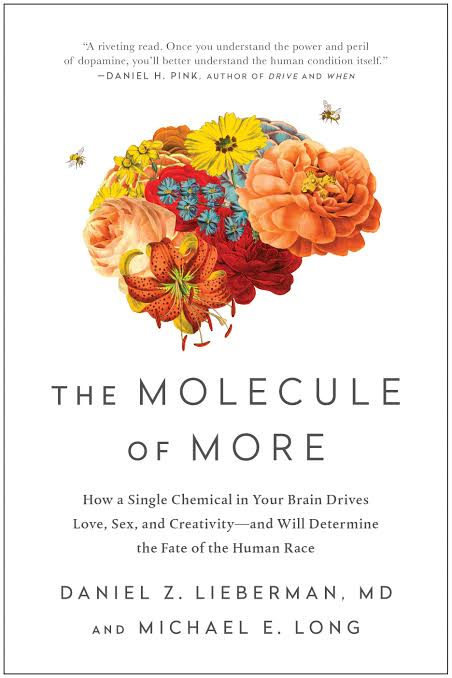
About The Molecule of More by Daniel Z. Lieberman and Michael E. Long—Why We Keep Wanting What Comes Next
Why does getting what you want not feel enough?
You wait for a new phone, a better job, a loving partner, or a big win. Thinking about it feels exciting. Then you finally get it. For a short time, you feel happy. Soon, your mind starts looking for the next thing. Why does this happen?
The Molecule of More by Daniel Z. Lieberman and Michael E. Long explores this strange part of human life through dopamine. The authors show how this brain chemical is linked with desire, hope, motivation, learning, and the search for something new. Their main idea is simple: dopamine often cares less about what you already have and more about what may come next.
This book takes a hard science topic and turns it into a lively story about everyday life. It looks at love, work, money, addiction, creativity, politics, and progress. As you read, you may begin to see why people dream, chase, build, risk, and still ask for more.
When popular advice does not explain your desire
This book gives you a new lens. It connects those feelings to systems in the brain that notice promise, change, and possible reward. You do not need to know biology before you start. The authors use clear stories and familiar examples, so a difficult idea becomes easier to hold.
Dopamine is not simply happiness
Dopamine is often called the “pleasure chemical,” but that short name can be misleading. The book focuses on its strong link with wanting, looking ahead, and moving toward a possible reward. It helps explain why the promise of something can feel more exciting than owning it.
The thrill often lives before the reward
Have you ever enjoyed planning a trip almost as much as taking it? Have you spent days thinking about a purchase, only to lose interest after buying it? The authors use patterns like these to show how anticipation works.
Love changes after the first spark
New love can feel bright and urgent. A message can change your whole day. A short meeting can fill your mind for hours. The other person is still partly unknown, so hope and imagination have room to grow.
The Molecule of More explores what happens when that early rush changes. A lasting relationship cannot live on surprise alone. It also needs trust, care, touch, shared time, and attention to the person who is here now. The book contrasts future-facing desire with the quieter value of present experience.
Ambition can build a life and consume it
Dopamine-linked drive can help a person study, practise, invent, save, compete, and lead. It gives energy to plans that do not yet exist. Without the wish for something better, many dreams would remain only thoughts.
Why some habits keep asking for more
Some rewards arrive with strong signals, fast change, or an uncertain result. A new notification, another game round, a shopping offer, or a chance to win may keep attention locked on what could happen next. The wanting can stay active even when the real joy becomes small.
The book discusses addiction and repeated behaviour through this drive for more. Its examples can help readers understand why willpower alone may not explain every struggle. However, this is a popular science book, not medical care. Anyone facing addiction or a serious mental health problem should seek help from a qualified professional.
That boundary matters. The book can offer language and insight, but it cannot diagnose or treat a person. Read it to understand ideas, notice patterns, and begin better questions—not as a replacement for proper support.
Creativity begins with something that is not here yet
An artist sees a picture before it is on the page. A builder sees a home before the first brick is placed. A writer hears a voice that no reader has met. Creativity depends on the power to imagine what does not yet exist.
The authors connect this future-looking power with dopamine. Curiosity, new links, bold ideas, and the wish to make something can all grow from looking beyond the present. This part of the book is especially enjoyable for writers, designers, founders, students, and anyone who likes to solve problems.
The same drive can shape groups and nations
The book moves from private life to public life. It asks how people with different views of change, control, risk, and the future may think about politics. It also considers how desire can influence leaders, voters, groups, and social plans.
Progress always brings a second question
This tension gives the book its wide reach. Dopamine-linked desire is not shown as simply good or bad. It can open a door, and it can stop us from seeing the room we are already in. It can create progress, and it can make “enough” feel impossible.
The book invites readers to think about balance. What should we keep chasing? What should we protect? When does hope improve life, and when does it pull attention away from life? These questions make the book useful long after its last page.
What makes this book worth your time
- A clear look at dopamine, desire, motivation, and anticipation
- Simple stories that make brain science easier to follow
- Examples from love, work, addiction, art, politics, and progress
- A useful explanation for why getting more may not feel like enough
- Ideas that can help you notice patterns in daily choices
- Rich topics for study, book clubs, and thoughtful discussion
- A complete standalone read with no earlier book required
The chapters connect one central idea to many parts of life. This makes the book easy to discuss and easy to remember. Instead of giving you a long list of facts, it gives you a lens that you can try on real moments.
What you may gain from reading it
You may become better at spotting the difference between wanting and liking. You may notice why waiting for a reward can feel so strong. You may also understand why a goal that once looked perfect can become ordinary after you reach it.
That awareness can support wiser questions. Do I truly value this, or do I only love the chase? Is this goal helping my life, or moving the finish line again? Am I giving enough care to people and experiences that are already here?
The book does not promise that these questions will remove every urge. Its benefit is clearer understanding. A good idea can help you pause, see a pattern, and choose with more care. For many readers, that shift in view is the most useful result.
Who will enjoy this book?
Choose this title if you enjoy psychology, neuroscience, self-understanding, or human behaviour. It suits curious readers who want brain ideas explained without a heavy textbook style. Students may use it as a friendly starting point before reading more technical work.
Founders, marketers, teachers, artists, and leaders may enjoy its examples about motivation and new ideas. Couples may find the chapters on early desire and lasting love interesting. Readers working on habits may value its explanation of anticipation, while keeping in mind that serious problems need expert care.
It is also a thoughtful gift for someone who often asks why people do what they do. The subject is broad enough for a general reader, yet rich enough to start deep conversations.
Read it in the moments that fit you
Read a chapter during your daily commute, then watch for the idea in your own day. Keep a notebook nearby and write down moments when anticipation felt stronger than the result. Use the book in a reading group and ask where each person sees the pull of “more.”
You can also read it before setting a large goal. It may help you think about what success will mean after the first excitement passes. Creative readers can use it while starting a project, especially when the bright first idea must become steady work.
This is not a workbook, so there are no strict daily tasks. Its best use is slow attention. Read, pause, test the claim against life, and decide which ideas feel useful to you.
A helpful model, not the whole story of the brain
The book offers an engaging framework, but real neuroscience is more complex than one chemical controlling one feeling. Research links dopamine with motivation, learning, reward prediction, movement, value, and attention to important events. Different brain areas and cells can play different roles.
For that reason, it is better to read “the molecule of more” as a memorable doorway into the topic, not a final rule for every choice. Biology also works with experience, health, society, memory, and many other brain systems.
This careful view does not make the book less interesting. It makes it more useful. You can enjoy the authors’ clear model, question its limits, and use it as a starting point for further learning.
A comfortable copy for focused reading
Bookish Wonderland offers a reading copy made for long sessions. Premium cream paper is gentle on the eyes. Crystal-clear printing keeps the text sharp, while stitched and glue binding helps the pages stay secure through regular use.
The simple reading experience suits a book you may underline, revisit, or discuss. Keep it on your psychology shelf, take it to class, or give it to a curious friend.
Quick answers before you order
Is this a self-help book? It has ideas that may help you understand yourself, but it is mainly a popular science book about dopamine and human behaviour.
Do I need a science background? No. The authors use stories and everyday examples to make the main ideas easy to follow.
Does the book say dopamine is bad? No. It shows how future-focused desire can support love, ambition, invention, and progress, while also bringing risk and restlessness.
Is it medical advice? No. It is educational reading and does not replace a doctor, therapist, or addiction specialist.
Is it part of a series? No. This book stands on its own and can be read without another title.
Check the latest price and delivery options
Looking for The Molecule of More by Daniel Z. Lieberman and Michael E. Long price in Bangladesh? See the current amount on the Bookish Wonderland product page before ordering. This will show you the latest store price and any active offer.
Cash on Delivery is available across the country. Bookish Wonderland delivers inside and outside Dhaka. If you need urgent delivery in Dhaka, message the store before confirming your order so the team can tell you what is possible.
For questions about the copy or a customization request, contact Bookish Wonderland through Facebook or Instagram. The team will help you before you buy.
Take a closer look at what drives you
The next goal, message, purchase, or big dream may feel powerful for a reason. This book gives you a clear and memorable way to explore that pull without turning the answer into a dull lesson.
Order The Molecule of More by Daniel Z. Lieberman and Michael E. Long from Bookish Wonderland today. Read it for personal insight, add it to your psychology shelf, share it with a study group, or gift it to someone who never stops asking “why?” Open the book and discover why the promise of more can move a person, a relationship, and even a whole society.
If you require any customization or have any questions, please inbox us via FB or Insta.
| Primary Specification | |
| Author | Daniel Z. Lieberman |
| Narrator | Tom Parks |
| Editor | Vince Hyman |
| Genre | Popular science, psychology and neuroscience |
| ISBN-13/ISSN | 978-1948836586 |
| ISBN-10 | 1948836580 |
| Publisher | BenBella Books |
| Publishing Date | September 3, 2019 |
| Language | English |
| Reading Age | 16+ |
| Format | Printed Book |
| Physical Specification & Quality | |
| Paper Quality | Premium eye-soothing cream paper |
| Binding Quality | High quality stitched and glue binding (for longevity) |
| Print Quality | Crystal-clear print |
| Pages | 240 pages |
| Country | USA |
| Logistics Information | |
| Weight | 264 gm |
| Length | 8,.5 inches |
| Width | 5.6 inches |
| Height | 0.67 inch |