

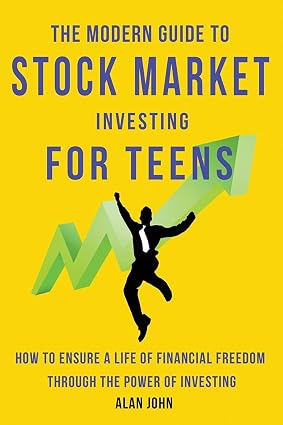
About The Modern Guide to Stock Market Investing for Teens by Jon Law: Start Building Money Skills Early
Money touches almost every part of adult life, yet many young people finish school without knowing how saving, investing, or the stock market works. The Modern Guide to Stock Market Investing for Teens by Jon Law gives beginners a simple place to start. It introduces key ideas without assuming that the reader already knows difficult financial words.
The book explains why starting early can matter. When money stays invested for a long time, growth may build on earlier growth. This is called compounding. A teenager has something very valuable: time. Even a small amount saved and invested regularly can teach patience, planning, and careful decision-making. The aim is not to become rich overnight. The aim is to build useful habits that can last for years.
Jon Law writes for teens, but adults new to investing can also use the lessons. Readers learn clearly how the market joins a wider money plan of earning, budgeting, and saving.
Why money can feel confusing at first
Words such as shares, risk, return, dividend, portfolio, and market may sound hard when no one explains them. Social media can make the subject even more confusing. One person promises fast money. Another shares a winning trade but hides every loss. A new learner may feel excited, scared, or unsure about whom to trust.
This book slows the subject down. It begins with the reasons people invest and then moves toward the basic tools and ideas. Instead of asking a teen to copy random trades, it helps the reader understand the language first. That change matters. A person who knows the meaning of risk can ask better questions before using real money.
The guide also connects investing with daily habits. A person needs money to invest, so budgeting and saving come first. Learning to control spending, set a goal, and keep part of an income can create a stronger base. The book presents these steps as parts of one journey rather than separate subjects.
A clear path from saving to investing
The book is divided into six broad parts. The first explains the possible benefits of investing. The second helps readers get started. The third builds stock-market literacy, which means knowing common terms and how the market works. The fourth introduces strategy. The fifth looks at investing in practice through real-life examples. The final part points readers toward resources and further information.
This order gives beginners a useful path. Readers first learn why the subject matters, then build the knowledge needed to make sense of it. They do not have to jump straight into charts or company numbers. Each stage prepares them for the next one.
The guide also introduces personal budgeting, saving money, and making money. These topics help teens see that investing is not magic. It starts with the choices made before any stock is bought. How much money comes in? How much goes out? What amount can stay untouched for a longer goal? These simple questions form the base of a healthy plan.
Understand what owning a stock means
A stock is a small ownership share in a company. When people buy shares, they are not buying a number that moves on a screen. They are buying a small part of a real business. That business may sell food, build software, make medicine, run shops, or provide another service.
The value of a share can rise or fall. A company may grow and earn more money, or it may face problems. News, interest rates, the economy, and investor feelings can also move prices. This is why investing always includes risk. No book, expert, app, or influencer can promise that every choice will make money.
Understanding ownership changes how a beginner looks at the market. Instead of asking only, “Will this price rise tomorrow?” the reader can begin asking better questions. What does the company do? How does it earn money? Does it have debt? Is its business strong? What could go wrong? These questions support calmer and more informed thinking.
Learn why time can be a teen's advantage
Starting early does not mean taking large risks. It means having more years to learn, save, and allow long-term growth to work. A teen who begins with basic knowledge can make small practice decisions before facing larger adult choices.
Compounding is one reason time matters. If an investment earns a return, future growth may happen on both the starting money and earlier gains. Results are never guaranteed, and values can fall, but the basic lesson is powerful: regular action over many years can matter more than trying to find one perfect trade.
The book encourages readers to see investing as a long journey. This can reduce the pull of quick-profit stories. A thoughtful beginner can focus on learning, setting goals, and building discipline. Those skills remain useful even when markets change.
Important lessons covered in the book
- Why teenagers can benefit from learning about investing early.
- How budgeting and saving support a future investment plan.
- Common stock-market words and ideas explained for beginners.
- The role of risk, patience, research, and long-term thinking.
- Basic approaches that can help readers form a strategy.
- Real-life examples that connect lessons with practical situations.
- Ideas and wisdom linked to successful investors.
- Further resources for readers who want to continue learning.
Build skills that go beyond the market
The greatest benefit of this guide may not be one stock-market fact. It may be the habits that grow while learning. Readers practise planning before acting. They learn that reward and risk often come together. They begin to see why a goal needs time, money, and steady effort.
The book can also improve money conversations at home. A teen and parent can talk about needs, wants, saving goals, and safe ways to learn. These talks may make money feel less secret or frightening. They also give adults a chance to explain family rules and local financial limits.
Another benefit is stronger judgment online. Once a young reader knows basic terms, false promises become easier to notice. Claims such as “guaranteed profit” or “no-risk return” should raise concern. A learner can pause, check the source, and ask a trusted adult before sending money or sharing personal details.
Useful for more than one kind of reader
Teenagers can read the book alone as a first finance guide. A parent can read it with a son or daughter and discuss one chapter each week. Teachers may use selected ideas to begin classroom talks about saving, business, risk, and long-term goals. Tutors can turn key terms into short exercises or quizzes.
The book may also help university students and adults who have never studied investing. Its simple approach can build a base before they move to deeper books on company analysis, funds, economics, or portfolio planning. A beginner does not need to feel embarrassed about starting with the basics. Clear foundations make later learning easier.
Turn each chapter into a practical lesson
Reading about money becomes more useful when the reader takes action in a safe way. Start with a notebook. Write down new words and explain each one in simple language. Add questions that need more research. This creates a personal finance dictionary that can grow over time.
Next, make a practice budget. List money received and normal spending. Choose a small saving goal. The learner can then build a pretend portfolio without using real money. Pick a few known companies, record their prices, and follow what happens. Write why each company was chosen and what risks it may face.
Families can hold a short weekly money talk. Discuss one lesson, one news story, or one business. The goal is not to predict tomorrow's price. The goal is to practise asking good questions. This method keeps learning active while protecting the teen from rushed decisions.
A smart first step, not a promise of profit
Every investment can lose value. A good beginner book teaches ideas, but it cannot know a reader's income, goals, age, legal position, or ability to handle loss. This title should be used for education. It is not personal financial advice and does not replace help from a licensed professional.
Teen readers should involve a parent or guardian before opening any account or using real money. They should never borrow money to follow a hot tip. They should also protect passwords, identity papers, bank details, and one-time codes. A real broker or bank will still involve rules, fees, documents, and risks.
Readers in Bangladesh should check which investment products and accounts are legally available to them. Rules for minors, taxes, brokers, exchanges, and account opening may differ from examples written for another country. Local facts should be confirmed with a regulated financial service or qualified adviser before money is committed.
A comfortable copy for study and notes
Bookish Wonderland prepares this printed edition for readers who want a book that feels good in the hand and stays useful through repeated study. Premium eye-soothing cream paper gives each page a softer look. Crystal-clear print keeps numbers and words easy to follow, while high-quality stitched and glue binding helps the pages remain secure.
A useful addition to a young reader's shelf
Many gifts entertain for a day. A clear money guide may remain useful as life changes. A teen can read it before earning a first income, revisit it while saving for a goal, and return again when ready to explore investing more deeply.
The Modern Guide to Stock Market Investing for Teens by Jon Law is especially suitable for curious beginners who want plain explanations. It may appeal to readers interested in business, money, entrepreneurship, or building better habits. The short lessons and practical focus make it easier to begin without feeling lost.
It also gives parents an easy way to open an important talk. You do not need to know every market answer. You can learn together, check unfamiliar claims, and focus on safe habits. That shared process may be more valuable than choosing any single investment.
Check the value before you order
When comparing The Modern Guide to Stock Market Investing for Teens by Jon Law book price in Bangladesh, look beyond the cover price. Paper comfort, print clarity, binding strength, delivery options, and seller support all affect the value of a study copy.
Bookish Wonderland delivers inside and outside Dhaka, with Cash on Delivery available nationwide. Readers in Dhaka can ask about fast or urgent delivery when the book is needed quickly. Stock and delivery time may vary, so contact the team before ordering if you have a deadline.
Questions about the edition, order, or any special request can be sent through Facebook or Instagram. The team can also help readers explore a large collection of durable English books.
Help a beginner make sense of money
A young person does not need a large income to begin learning. The first step can be understanding one new word, making one small budget, or asking one careful question. Knowledge gained early can guide many choices later.
Order The Modern Guide to Stock Market Investing for Teens by Jon Law from Bookish Wonderland today. Choose Cash on Delivery anywhere in Bangladesh, or ask about fast delivery in Dhaka. Give a teen, student, or new investor a friendly starting point for budgeting, saving, stock-market knowledge, and long-term financial thinking.
If you require any customization or have any questions, please inbox us via FB or Insta.
| Primary Specification | |
| Author | Jon Law |
| Genre | Young Adult Nonfiction; Business & Economics; Finance & Investing |
| ISBN-13/ISSN | 978-1087879338 |
| ISBN-10 | 1087879337 |
| Publisher | Alan John |
| Publishing Date | April 18, 2020 |
| Language | English |
| Reading Age | 13-18 years |
| Format | Printed Book |
| Physical Specification & Quality | |
| Paper Quality | Premium eye-soothing cream paper |
| Binding Quality | High quality stitched and glue binding (for longevity) |
| Print Quality | Crystal-clear print |
| Pages | 132 pages |
| Country | USA |
| Logistics Information | |
| Weight | 154 gm |
| Length | 8.5 inches |
| Width | 5.6 inches |
| Height | 0.31 inch |