

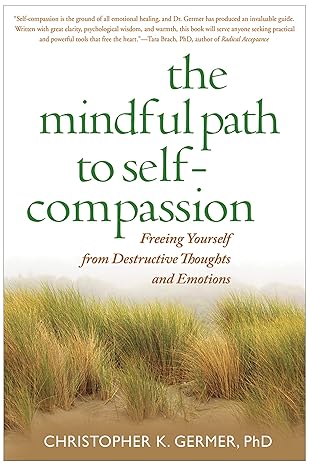
About The Mindful Path to Self-Compassion by Christopher K. Germer
Do you speak kindly to your friends but judge yourself when you make a mistake? Do worry, shame, sadness, anger, or fear sometimes take over your mind? The Mindful Path to Self-Compassion by Christopher K. Germer shows how to face these hard feelings with care instead of blame.
This practical self-help book brings mindfulness and self-compassion together. It explains that pain is a normal part of life, but fighting pain or attacking yourself can make it harder to bear. Christopher K. Germer offers another path: notice what you feel, accept that the feeling is present, and respond to yourself with the same warmth you would offer someone you love.
The book is written for ordinary readers, not only for psychologists or meditation experts. Its ideas are explained through real-life examples, clear lessons, guided practices, and reflection exercises. You can read it slowly, practise one idea at a time, and return to useful chapters whenever life feels difficult.
At Bookish Wonderland, this meaningful title comes in a reader-friendly physical edition with premium eye-soothing cream paper, crystal-clear printing, and strong stitched and glue binding. It is made for comfortable reading and long-term use.
When Your Inner Voice Becomes Too Harsh
Many people believe that being strict with themselves will help them improve. After a mistake, they may think, “I am not good enough,” “I always fail,” or “Why can’t I be stronger?” Such thoughts may feel like a form of discipline, but they can increase shame, fear, and emotional pressure.
Avoiding difficult feelings does not always solve the problem either. A person may stay busy, hide sadness, or try not to think about an upsetting event. The feeling can still remain under the surface. It may return during a quiet moment, before sleep, or when a new problem appears.
This book offers a kinder response. Instead of running from emotional pain or turning it into self-hate, Germer teaches readers to meet it with awareness and compassion. The goal is not to pretend that everything is fine. It is to see the truth of the moment without adding cruel judgment.
For example, after making a mistake, you can admit what went wrong while remembering that every person makes mistakes. You can learn from the event without deciding that one failure defines your whole life. This simple shift can create room for calm thinking, wise action, and healthy change.
A Clear Guide to Mindfulness and Self-Compassion
Mindfulness means paying attention to the present moment without quickly judging it. Self-compassion means treating yourself with care when you are struggling. Germer shows how these two skills can work together.
Mindfulness helps you notice a painful thought or feeling. Self-compassion helps you decide how to respond to it. One skill brings clear awareness; the other brings kindness. Together, they can help you stay present without becoming lost in harsh thoughts.
The book begins by exploring what it means to be kind to yourself. It then looks at the connection between emotions and the body. Readers learn to notice how fear, anger, stress, or sadness may appear as tight muscles, fast breathing, heaviness, or discomfort.
Later chapters introduce loving-kindness practices and ways to care for both yourself and other people. The final part helps readers adjust these practices to fit their own needs. This matters because one method will not feel right for everyone. Some readers may connect with gentle words, while others may prefer breathing, body awareness, writing, or quiet meditation.
The official contents divide the book into three main parts: discovering self-compassion, practising loving-kindness, and customising self-compassion. It also contains extra exercises, emotion words, further reading, notes, and an index. The book has a foreword by meditation teacher Sharon Salzberg.
What You Will Explore in This Book
The lessons move from understanding to practice, helping readers explore ideas such as:
-
Being kind to yourself during failure, stress, or embarrassment
-
Listening to the body when emotions become strong
-
Allowing difficult feelings to exist without fighting them
-
Understanding what self-compassion means in daily life
-
Discovering different paths to a kinder inner voice
-
Practising loving-kindness for yourself and others
-
Finding a healthy balance between acceptance and action
-
Choosing exercises that match your needs and personality
-
Noticing progress without demanding perfection
-
Building a practice that can grow over time
These ideas are not presented as a quick trick that removes every problem. Instead, the book invites you to create a new relationship with your thoughts and feelings. With practice, you may become better able to pause before reacting and offer yourself support during hard moments.
Practical Help You Can Use in Daily Life
One of the main strengths of The Mindful Path to Self-Compassion is its practical style. It does more than explain why self-kindness matters. It gives readers exercises and methods they can try in real situations.
You may use a practice after receiving criticism, before an important exam, during a family disagreement, or when thinking about a past mistake. You can also practise during normal days, which may make the skills easier to remember when life becomes stressful.
The exercises encourage you to notice emotions rather than push them away. Some practices use gentle words. Others focus on breathing, physical sensations, loving-kindness, or understanding a difficult experience in a wider human context.
The official publisher describes these strategies as scientifically grounded and says that free audio downloads of meditation exercises are available through the author’s website. The same publisher lists the book as a 306-page title first published in 2009 by Guilford Press.
Why Self-Compassion Is Not Self-Pity
Some readers worry that self-compassion means feeling sorry for themselves. This book helps explain the difference. Self-pity can make a person feel alone inside a problem. Self-compassion remembers that struggle, failure, and pain are parts of being human.
Self-compassion also does not mean ignoring bad choices. You can take responsibility while speaking to yourself with respect. In fact, a calmer and less defensive mind may be more willing to admit a mistake and repair the harm.
It does not mean giving up either. Being kind to yourself can include taking a difficult step, setting a boundary, asking for help, or changing an unhealthy habit. Compassion is not always soft comfort. Sometimes it means protecting your well-being and doing what is needed.
This balanced message makes the book useful for people who fear that kindness will weaken their motivation. Germer’s approach shows that care and growth do not have to be enemies.
Made for Real People with Real Feelings
You do not need to be skilled at meditation before reading this book. The ideas begin at an accessible level, and the practices can be explored gradually. If sitting quietly feels difficult, you can start with a short exercise or simply notice the way you speak to yourself.
The book may be valuable for readers who experience:
-
A harsh or highly critical inner voice
-
Shame after making mistakes
-
Worry about failure or rejection
-
Difficulty accepting painful emotions
-
Loneliness or sadness
-
Stress caused by perfectionism
-
Trouble offering themselves the care they give others
-
Interest in mindfulness and emotional well-being
-
A wish to understand their feelings more clearly
This is a general self-help and psychology book. It is not a replacement for professional medical or mental-health care. Anyone facing severe or lasting distress should seek help from a qualified professional.
A Book to Read Slowly and Practise
This is not the kind of book that must be finished in one sitting. Its lessons can be more useful when you pause, think, and try the exercises. You might read one chapter each week, write down the ideas that speak to you, and practise them during daily life.
Keeping a notebook nearby may help. You can record moments when your inner voice becomes harsh, the emotion you notice, and the compassionate response you want to practise. Over time, this may help you see patterns in your thoughts.
Readers can also return to a specific chapter when they face a matching problem. A section about difficult emotions may help during stress, while a loving-kindness practice may be useful when relationships feel painful. The appendices provide more material for continued practice.
Because the book combines explanation with exercises, it can serve as both a guided reading experience and a reference for later use.
Helpful for Personal Reading and Shared Learning
The Mindful Path to Self-Compassion can fit many reading situations. You can use it:
-
During a quiet morning or evening routine
-
As part of a personal mindfulness practice
-
While working through perfectionism or self-criticism
-
For journaling and thoughtful reflection
-
In a reading group focused on psychology or well-being
-
As supporting reading for students of counselling or social work
-
To understand a loved one who struggles with shame
-
As a caring gift for someone interested in personal growth
-
During a stressful study or work period
-
When learning to respond to difficult emotions more gently
Mental-health professionals, counsellors, teachers, caregivers, and social-work students may also find its ideas helpful for general learning. However, readers do not need professional training to understand its central message.
Lessons That Can Support Everyday Growth
The book can help readers build awareness of how self-criticism works. Once you notice that voice, you have a better chance of changing your response. Instead of accepting every harsh thought as a fact, you can pause and look at it more clearly.
Another possible benefit is stronger emotional understanding. The book encourages readers to notice where feelings appear in the body and to name what they are experiencing. This can make a confusing moment easier to understand.
The practices may also support patience. Emotional habits rarely change overnight. Germer encourages a gradual process in which readers learn what works for them. Progress does not require perfect meditation or constant calm.
The wider lesson is simple but powerful: you deserve care even when you are imperfect. This does not remove responsibility. It gives you a healthier place from which to learn, repair, and move forward.
Quality That Supports Comfortable Reading
A thoughtful book deserves a physical form that feels comfortable in your hands. Bookish Wonderland provides a premium reader-friendly edition designed for regular use.
-
Premium eye-soothing cream paper: The soft cream shade feels gentle during long reading sessions.
-
Crystal-clear print: Sharp, clean text makes each chapter easy to follow.
-
Stitched and glue binding: The strong binding helps the pages remain secure through repeated reading.
-
Durable construction: Suitable for highlighting, note-taking, study, and long-term shelf storage.
-
Comfortable reading experience: A practical choice for readers who want to work through the book slowly.
The exact publisher, ISBN, page count, dimensions, and cover design may vary if Bookish Wonderland supplies a different printing or edition. Customers who need edition-specific details should confirm them before ordering.
Why Buy This Book from Bookish Wonderland?
Bookish Wonderland brings English books to readers across the country with a focus on quality, convenience, and dependable service. You can order from Dhaka or from another district without visiting a physical store.
Cash on Delivery is available across Bangladesh, making the ordering process simple for customers who prefer to pay when the parcel arrives. Nationwide delivery covers addresses inside and outside Dhaka, while fast or urgent delivery may be available in Dhaka depending on the location and order time.
If you are checking The Mindful Path to Self-Compassion by Christopher K. Germer book price in Bangladesh, Bookish Wonderland gives you an easy way to review the current price and place an order online. Price and stock can change, so the live product page should be checked for the latest information.
You also receive the reading quality expected from Bookish Wonderland: premium cream paper, clear printing, and durable stitched and glue binding. These features make the book suitable for personal reading, study, gifting, and repeated practice.
Order your copy from Bookish Wonderland and begin exploring mindfulness without harsh judgment. Enjoy premium cream paper, crystal-clear print, durable stitched and glue binding, Cash on Delivery, and nationwide delivery across Bangladesh. For quick service in Dhaka, ask about the available fast or urgent delivery option. Start reading today and discover what can change when your inner voice becomes a source of care rather than pain.
If you require any customization or have any questions, please inbox us via FB or Insta.
| Primary Specification | |
| Author | Christopher K. Germer |
| Narrator | Stephen R. Thorne |
| Genre | Self-Help, Psychology, Mindfulness, Mental Health, Personal Growth, Emotional Well-Being |
| ISBN-13/ISSN | 978-1593859756 |
| ISBN-10 | 9781593859756 |
| Publisher | The Guilford Press |
| Publishing Date | April 29, 2009 |
| Edition | 1st |
| Language | English |
| Reading Age | 18+ years |
| Format | Paperback |
| Physical Specification & Quality | |
| Paper Quality | Premium eye-soothing cream paper |
| Binding Quality | High quality stitched and glue binding (for longevity) |
| Print Quality | Crystal-clear print |
| Pages | 306 pages |
| Country | United States of America |
| Logistics Information | |
| Weight | 321 gm |
| Length | 8.5 inches |
| Width | 5.6 inches |
| Height | 0.79 inch |