

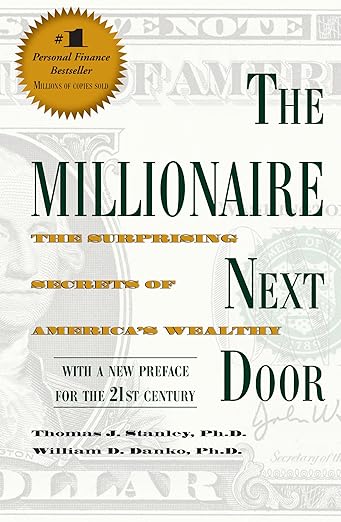
About The Millionaire Next Door by Thomas J. Stanley
What does a millionaire look like? You may picture a person with a huge house, a new luxury car, costly clothes, and a life full of expensive trips. The Millionaire Next Door asks you to look again. Many wealthy people do not try to look rich. They live in normal homes, drive practical cars, plan their spending, save a large part of what they earn, and make careful choices with money.
The Millionaire Next Door: The Surprising Secrets of America’s Wealthy was written by Thomas J. Stanley and William D. Danko. The authors studied wealthy people and looked for the habits that helped them build and keep their money. The book presents seven common traits found among people who successfully accumulated wealth. Its central lesson is simple: earning a high income and owning great wealth are not the same thing. What matters is how much of your income you keep and use wisely.
This is not a book about getting rich in one night. It does not promise a secret shortcut or a lucky result. Instead, it shows how patience, planning, hard work, simple living, and steady saving can create strong financial progress over time. The message is clear enough for beginners, yet useful for business owners, professionals, students, families, and anyone who wants to understand money better.
You May Earn Well but Still Feel Financially Stuck
A good salary can make life easier, but it does not always create wealth. A person may earn a large amount every month and still have very little saved. Rent or home payments, cars, clothes, food, social events, loans, and small daily purchases can quietly consume most of that income.
This creates a common problem: people look successful from the outside but feel worried inside. They may own costly things but have little money ready for an emergency. They may feel pressure to keep spending so that friends, family members, or coworkers continue to see them as successful.
The book challenges this way of thinking. It explains that real wealth is not the value of the things you show. Real wealth is what you own after your debts are removed. A costly car may look impressive, but it can lose value. Money that is saved and invested has the chance to grow.
Stanley and Danko compare people who are good at turning income into wealth with those who earn well but save too little. This idea helps readers ask a much better question. Instead of asking, “How rich do I look?” they can ask, “How much financial safety am I building?”
A Practical Answer to the Pressure of Looking Rich
The solution offered in The Millionaire Next Door is simple living with a clear purpose. The book does not tell readers to stop enjoying life. It asks them to decide what is more important: showing wealth today or building freedom for tomorrow.
The wealthy people examined by the authors often follow a basic pattern. They spend less than they earn, plan their budgets, give time to financial decisions, choose suitable work, and avoid buying things only to gain social praise. The official publisher describes hard work, careful saving, and living below one’s means as central parts of the book’s view of wealth building.
Living below your means does not simply mean buying the cheapest item every time. It means keeping your lifestyle at a level you can truly afford. If your income rises, you do not have to raise every part of your spending with it. The gap between what you earn and what you spend can become savings, investments, business capital, or an emergency fund.
This lesson can be powerful for readers in any country. The examples focus mainly on wealthy Americans, so the exact prices, taxes, and investment choices may not match Bangladesh. However, the main habits—planning, saving, avoiding waste, and thinking long term—can still help readers examine their own financial lives.
Discover the Quiet Side of Wealth
The book begins by questioning the popular image of a millionaire. Many people believe that most wealthy individuals live in famous areas, wear designer clothing, and spend freely. Stanley and Danko found a different pattern among many of the people they studied. The official description explains that a large number of truly wealthy people live in ordinary communities rather than the places normally linked with the rich.
That difference matters because visible spending can hide financial weakness. A person may drive a luxury car with large monthly payments. Another person may use a simple car but own investments, savings, and a profitable business. The second person may look less wealthy, but their financial position can be much stronger.
As you read, you meet ideas about budgeting, choosing work, family money habits, buying vehicles, managing time, and raising children. These areas may appear separate, but they all connect to one main question: does this choice help you build lasting value, or does it mainly help you display success?
The book also discusses the danger of giving too much financial help to adult children. Support given with love can sometimes reduce independence when it becomes a regular habit. This subject may feel challenging, but it encourages families to think about the long-term effect of financial decisions rather than only the short-term comfort.
Another important idea is that wealth building needs attention. The people described in the book do not simply hope that money will remain at the end of the month. They make plans. They know where their money goes. They give time to saving, investing, and making major purchases. Their progress is not magic. It is usually the result of many small choices made again and again.
Seven Traits Behind Strong Financial Lives
The book is organised around seven broad traits found among successful wealth accumulators. These principles give readers a useful way to review their habits:
-
They live below their means instead of spending everything they earn.
-
They use their time, energy, and money in ways that help them build wealth.
-
They believe financial freedom is more important than showing high social status.
-
Their parents did not continue giving them large financial support as adults.
-
Their adult children learn to become financially independent.
-
They notice and use good opportunities in the market.
-
They choose suitable careers or businesses that can support long-term progress.
These are not seven quick tricks. They are connected parts of a lifestyle. For example, a person who cares deeply about looking rich may spend more on cars and clothing. That leaves less money to save. With less saved money, the person may have fewer choices and more stress. A person who cares more about independence may make simpler purchases and build a stronger financial base.
The ideas can help you see where change is possible. You may not be able to increase your income at once, but you may be able to track spending. You may not understand every investment yet, but you can begin learning. You may not own a business, but you can still build useful skills and avoid unnecessary debt.
Lessons You Can Apply in Daily Life
One strength of the book is that it can change how you view normal purchases. Before buying something costly, you may begin to ask whether it gives lasting value. You may compare the joy of owning it today with the freedom that saving the same money could give later.
The book can also encourage simple actions:
-
Write down your monthly income and important expenses.
-
Decide on a savings amount before spending on wants.
-
Build emergency savings for unexpected needs.
-
Take time before making a large purchase.
-
Avoid upgrading your lifestyle only because your income rises.
-
Learn the difference between income, assets, debts, and net worth.
-
Choose financial goals that matter to your own family.
-
Review your progress regularly instead of depending on guesswork.
These actions sound basic, but basic habits can have a large effect when they continue for years. A single careful choice will not normally make someone wealthy. Many careful choices, repeated for a long time, can change a person’s position.
Readers should remember that this is an educational book, not personal financial advice. It was first published in 1996, and some examples reflect American life and the financial conditions of that period. Tax rules, investment products, prices, and economic conditions can change. Use the book to learn principles, but consider current local rules and qualified advice before making major financial decisions.
Why This Book Can Change Your View of Success
Many people connect success with visible goods. They think a better life must include a bigger home, a newer car, and more costly possessions. The Millionaire Next Door offers another definition. Success can mean having savings, low financial stress, control over your time, and the power to make choices without depending on the next payment.
This change in thinking is one of the book’s greatest benefits. It can remove some of the pressure to impress other people. When you stop using spending as proof of success, you can give more attention to your own goals.
The book may help you:
-
Understand why a high salary does not always produce wealth.
-
Notice spending habits that slow down financial growth.
-
Develop a simpler and more useful idea of success.
-
Make budgets and saving plans with a clear reason.
-
Think carefully about cars, homes, careers, and family support.
-
Value financial freedom more than social display.
-
Build patience instead of searching for fast money.
-
Discuss saving and spending more openly with your family.
The message can also give hope to people who do not earn a very large income. The authors do not claim that income is unimportant. A higher income can certainly make saving easier. However, their research-based argument is that the way people manage income plays a major role in whether they accumulate wealth.
A Useful Read for Students and Young Professionals
Young readers can gain special value from this book because money habits often become stronger with time. Learning to plan before taking on large debts or costly lifestyle commitments can prevent future stress.
A university student may use the book to understand the importance of career choice, skills, and early saving. A new employee may learn not to spend every pay increase. A freelancer can use its ideas to create a better plan for irregular income. A young couple may use the lessons to talk about shared goals before making major purchases.
You do not need to be a millionaire to read it. In fact, the best time to study these ideas may be before you have built wealth. The book gives you a way to think about the habits you are creating now.
A Smart Guide for Business Owners
Entrepreneurs and small-business owners may also find the book valuable. Running a business does not always mean becoming personally wealthy. A business can have strong sales while the owner has weak savings, too much debt, or poor control over personal spending.
The book encourages owners to separate appearance from real value. An impressive office or costly vehicle may support a business in some cases, but it should not be purchased only to look successful. Money used carefully can support stock, equipment, training, marketing, staff, or a safety reserve.
Business owners may also connect with the book’s discussion of career and market opportunities. Building wealth is not only about cutting small costs. It is also about choosing useful work, serving real needs, and making decisions that can create lasting income.
Helpful for Families Who Want Better Money Talks
Money can be hard to discuss at home. Parents may disagree about spending. Children may see costly items online and believe everyone else owns them. Family members may measure love through gifts or financial support.
This book can start a healthier conversation. Families can discuss what wealth means, why saving matters, and how support can be balanced with independence. Parents can show children that a simple lifestyle is not a sign of failure. It may be part of a careful plan.
Couples can also read the book together and compare their goals. One person may value safety while the other enjoys spending. Instead of blaming each other, they can create shared rules for needs, wants, savings, and future plans.
Made for Comfortable, Long-Term Reading
Bookish Wonderland offers this book for readers who want a dependable physical copy for regular use. Personal finance books are often read more than once because useful ideas become clearer when you return to them at a new stage of life.
This edition features premium eye-soothing cream paper for comfortable reading. The softer page colour helps reduce the harsh glare that bright white paper can create. Crystal-clear printing keeps the words sharp and easy to follow, even during longer reading sessions.
High-quality stitched and glue binding gives the book added strength for repeated reading. You can underline key ideas, add notes, mark useful pages, and keep it as part of your personal finance collection. These quality features make the book suitable for home reading, study, gifting, or discussion in a business and learning group.
Why Buy It from Bookish Wonderland?
Bookish Wonderland makes English books easy to order for readers across the country. Cash on Delivery is available nationwide, allowing customers to pay when the order arrives. Delivery service is available both inside and outside Dhaka.
Readers in Dhaka may also request a fast or urgent delivery option when available. This can be helpful when you need the book quickly for a gift, class, business discussion, or personal reading plan.
Bookish Wonderland also focuses on premium and durable books. The comfortable paper, clear print, and strong binding are chosen for readers who want a copy that can remain useful for a long time.
If you are searching for The Millionaire Next Door by Thomas J. Stanley price in Bangladesh, check the current product price and delivery information on this page before placing your order, as prices and delivery charges may change.
Order your copy from Bookish Wonderland today and begin building a healthier relationship with money. Cash on Delivery is available across Bangladesh,, with delivery inside and outside Dhaka and fast delivery options available in Dhaka. If you need help or want to ask about the current book price, send Bookish Wonderland a message through Facebook or Instagram.
If you require any customization or have any questions, please inbox us via FB or Insta.
| Primary Specification | |
| Author | Thomas J. Stanley |
| Narrator | Cotter Smith |
| Genre | Personal Finance, Wealth Management, Business, Economics, Self-Help, Financial Psychology, Nonfiction. |
| ISBN-13/ISSN | 978-1589795471 |
| ISBN-10 | 1589795474 |
| Publisher | Taylor Trade Publishing |
| Publishing Date | November 16, 2010 |
| Language | English |
| Reading Age | 18+ years |
| Format | Paperback |
| Physical Specification & Quality | |
| Paper Quality | Premium eye-soothing cream paper |
| Binding Quality | High quality stitched and glue binding (for longevity) |
| Print Quality | Crystal-clear print |
| Pages | 272 pages |
| Country | United States |
| Logistics Information | |
| Weight | 295 gm |
| Length | 8.5 inches |
| Width | 5.6 inches |
| Height | 0.85 inch |