

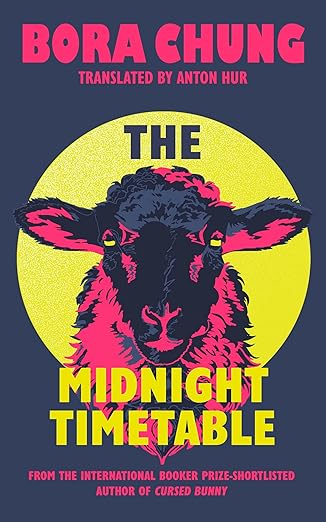
About The Midnight Timetable by Bora Chung—A Strange and Haunting Novel in Ghost Stories
Some workplaces are tiring. Some are confusing. The Institute in The Midnight Timetable by Bora Chung is far worse: its halls hide cursed objects, restless spirits, strange rooms, and stories that refuse to stay in the past.
An unnamed worker begins the night shift inside this mysterious research centre. The building exists to study and contain objects touched by supernatural forces. Ordinary workplace rules suddenly feel important. A closed door may disappear after someone walks through it. Footsteps may follow a worker through an empty hall. A simple object inside a room may hold years of grief, anger, or violence.
During each shift, an experienced senior worker shares another unsettling story. These tales explain the objects and people connected to the Institute, but they also create new questions. Are the stories warnings meant to keep the new worker safe? Are they lessons about the Institute? Or are they confessions from people who know much more than they admit?
Translated from Korean into English by Anton Hur, this book has been described by its publisher as a “novel in ghost stories.” Its connected tales are built around the same mysterious workplace, with people, objects, and events crossing from one story into another.
When Common Horror Stories No Longer Feel Scary
Many horror books depend on the same ideas: a dark house, a loud noise, a frightening creature, or someone running from danger. Such stories can be fun, but experienced readers may know what will happen before the final page.
The Midnight Timetable by Bora Chung offers a different kind of fear. It places horror inside an ordinary workplace filled with rooms, guards, rules, reports, and night duties. The setting feels normal enough to be believable, yet every part of it may hide something impossible.
The book does not only ask whether ghosts are real. It asks why certain memories return, how cruelty leaves a mark, and what happens when suffering is ignored. Its supernatural objects carry emotional histories. Behind every strange event is a person, an injustice, a loss, or a choice that cannot be undone.
This approach gives readers more than quick shocks. The stories are eerie, but they are also thoughtful, sad, strange, and sometimes darkly funny. Horror becomes a way to explore human behaviour and the hidden dangers inside systems that treat living beings as objects.
If you want a book that can frighten you while also making you think, this collection offers an unusual answer.
Enter the Institute After Midnight
The story begins with a new employee learning how to survive the night shift at the Institute. This is no ordinary research centre. It stores supernatural objects and investigates the strange events connected to them. The building has its own unsettling rhythm, and the rules followed by its workers suggest that something terrible has happened there before.
An experienced guard guides the new worker through the Institute. As the long nights pass, the guard tells stories about the objects kept in different rooms. Each tale opens another door into the building’s history.
A handkerchief once owned by the mother of two sons becomes connected to rivalry and destructive desire. A stolen sneaker refuses to leave its thief alone. A cat in Room 206 remembers disturbing events from its former home. Elsewhere, unusual sheep, endless passages, missing employees, and people marked by violence become part of the Institute’s growing mystery. These details appear in the publisher’s official account of the book and in professional reviews.
At first, the stories may feel separate. Slowly, however, people and objects begin to connect. Something mentioned briefly in one tale may become important later. A strange item may appear before readers learn how it reached the Institute. These links reward careful reading and make the book feel like one large puzzle built from several ghost stories.
The deeper the worker travels into the Institute, the harder it becomes to separate everyday life from the supernatural. The building begins to feel watchful. Its objects do not seem safely locked away. They appear to be waiting for the right person, the right moment, or the right weakness.
Horror with Anger, Heart, and Meaning
Bora Chung uses ghosts and cursed objects to tell stories about more than death. The Institute becomes a place where human pain is collected, labelled, and stored. Yet pain cannot always be controlled like an object in a glass case.
The connected stories examine grief, revenge, family conflict, loneliness, abuse, harmful experiments, unfair treatment, and the pressure of working inside a system that does not care enough about people. The publisher specifically identifies themes including animal testing, conversion therapy, domestic abuse, and the harsh effects of modern capitalism.
These are serious subjects, but the book does not read like a lesson book. Bora Chung lets strange events carry the meaning. A haunted object may express anger that its former owner could not speak aloud. A supernatural creature may reveal the cruelty of a person who looked respectable. A frightening room may reflect the trapped feeling of someone living under fear or control.
The result is horror that works on two levels. On the surface, readers receive ghosts, curses, disappearing doors, unexplained footsteps, and dangerous objects. Underneath those events are questions about power, suffering, memory, and responsibility.
The stories suggest that the most frightening thing is not always a ghost. Sometimes it is the way people hurt others and continue living as though nothing happened.
A Clever Story Shape That Keeps You Curious
This book is presented as a novel made from connected ghost stories rather than a traditional novel with one straight plot. That structure makes it easy to read one tale at a time while still enjoying a larger mystery.
Every story adds something to the Institute. Some reveal the history of an object. Others focus on an employee, a victim, an animal, or a person who enters the wrong place. Small details return later and gain new meaning. The reader gradually learns how the Institute works without receiving a simple guide to all its secrets.
This form is ideal for readers who enjoy short stories but also want the satisfaction of a connected world. You can pause after a section without losing the full experience. When you continue, the familiar building and repeated details pull you back into the same eerie atmosphere.
The simple movement from room to room also creates strong curiosity. What is hidden behind the next door? Why is a certain object being guarded? Which workplace rule exists because somebody once broke it? How much does the senior worker truly know?
Each answer creates another question, encouraging readers to keep turning the pages.
What Makes This Book Stand Out
- A mysterious central setting: The connected stories take place around an Institute that studies and stores cursed objects.
- Interlinked ghost stories: Each tale can offer its own haunting experience while also adding clues to the larger narrative.
- Korean speculative fiction in English: Anton Hur translates Bora Chung’s original Korean storytelling for English-language readers.
- Different kinds of fear: The horror includes supernatural events, emotional pain, strange humour, social cruelty, and psychological unease.
- Memorable haunted objects: Handkerchiefs, shoes, rooms, animals, and other seemingly ordinary things receive dangerous histories.
- A night-shift atmosphere: Empty halls, humming lights, confusing rules, and unexplained footsteps create steady tension.
- Social meaning beneath the scares: The stories explore how violence, abuse, unfair systems, and ignored suffering continue to affect lives.
- A manageable reading experience: The linked-story structure makes the book suitable for both short reading sessions and a long weekend read.
What You May Feel While Reading
The greatest benefit of The Midnight Timetable by Bora Chung is its ability to create several emotions at once. A scene may be frightening, sad, clever, and strangely funny. That variety keeps the experience fresh.
Readers who like mysteries can search for links between the stories. Horror fans can enjoy the cursed objects, spirits, and dangerous rooms. Readers of literary fiction can explore the deeper ideas behind each haunting. Fans of translated fiction can experience the imagination of a major Korean speculative-fiction writer through Anton Hur’s English translation.
The book may also stay in your mind after you close it. Everyday objects can begin to feel less innocent. A quiet office corridor may seem a little longer. Footsteps behind you may become harder to ignore.
Most importantly, the book gives its supernatural events emotional weight. These ghosts do not exist only to jump out of the dark. Their stories grow from love, anger, cruelty, regret, and memories that have never found peace.
Is The Midnight Timetable Very Frightening?
The book creates fear mainly through atmosphere, strange ideas, cursed objects, and disturbing human behaviour. It is not simply a nonstop stream of sudden shocks. Much of its power comes from the slow feeling that the Institute is wrong in ways the characters cannot fully understand.
Some readers may find the themes more upsetting than the supernatural events. The book deals with abuse, violence, death, harmful treatment, and discrimination. It may therefore be better suited to mature readers who are comfortable with dark literary horror.
Readers who avoid extreme horror but enjoy eerie, thoughtful stories may still find it approachable. The connected format also gives readers natural places to pause between tales.
Who Will Enjoy This Book Most?
This book is a strong choice for readers who enjoy:
- Literary horror with deeper meaning
- Korean fiction translated into English
- Connected short stories
- Haunted buildings and cursed objects
- Supernatural workplace mysteries
- Dark humour and strange situations
- Social commentary told through fiction
- Books that mix horror, fantasy, and science fiction
- Unusual stories that encourage discussion
- Bora Chung’s earlier books, including Cursed Bunny and Your Utopia
You do not need to read Bora Chung’s earlier work first. The Midnight Timetable tells its own complete story and is not listed as part of a numbered series.
Readers who enjoyed the author’s earlier mixture of horror, absurd ideas, emotional pain, and social criticism may recognise a similar creative spirit here. However, the Institute and its connected ghost stories create a new setting with their own rules and mysteries.
A Good Pick for Different Reading Moments
For a quiet night: Read one story when the house is silent and let the Institute’s empty halls create the mood.
For a weekend reading session: Follow the stories together and notice how objects, people, and events connect.
For a book club: Discuss which haunting was most effective and what real human problem it may represent.
For a translated-fiction collection: Add a contemporary work of Korean speculative fiction translated by Anton Hur.
For a horror gift: Choose it for someone who prefers strange, intelligent, atmospheric horror instead of a simple monster story.
For readers in a slump: The connected-story structure offers regular changes in character, object, and mystery while maintaining one central setting.
A Reading Experience Made to Last
A powerful story deserves a physical form that remains enjoyable through many reading sessions. Bookish Wonderland provides this title for readers who care about comfort, clear presentation, and lasting shelf quality.
The edition offered by Bookish Wonderland includes:
- Premium eye-soothing cream paper that creates a soft reading surface and reduces the harsh look of bright white pages.
- Crystal-clear print that keeps the text sharp, clean, and easy to follow.
- High-quality stitched and glue binding designed to support the pages and improve the book’s longevity.
These qualities make the book suitable for careful personal reading, gifting, collecting, and keeping on a bookshelf after the final story ends. The physical features listed here describe Bookish Wonderland’s offered product and should not be confused with the specifications of every international edition.
Why Order from Bookish Wonderland?
Bookish Wonderland brings together a large collection of premium and durable English books for readers across the country. The goal is to make good books easier to order while providing a dependable buying experience.
Customers can enjoy:
- Nationwide delivery across Bangladesh
- Delivery inside and outside Dhaka
- Cash on Delivery across Bangladesh
- Fast or urgent delivery options in Dhaka
- Premium cream paper for comfortable reading
- Clear and readable printing
- Strong stitched and glue binding
- Support through Facebook or Instagram for questions and customization
If you are searching for The Midnight Timetable by Bora Chung price in Bangladesh, Bookish Wonderland gives you a convenient way to check the current price and place your order. Because prices may change, the live product-page price should be treated as the current selling price.
Bring the Institute’s Darkest Stories Home
The doors of the Institute should probably remain closed. Its objects should remain untouched. Its rules should never be broken.
Fortunately, readers can enter its strange halls without taking the night shift.
The Midnight Timetable by Bora Chung offers an imaginative mixture of ghosts, cursed objects, workplace mystery, dark humour, and serious human questions. Its linked tales turn common things into sources of dread while showing how anger, sorrow, and injustice can survive long after an event appears to be over.
This is a book for readers who want horror with purpose. It can unsettle you with an empty corridor, surprise you with an impossible object, and then leave you thinking about the real pain hidden beneath the supernatural event.
Check The Midnight Timetable by Bora Chung book price in Bangladesh, place your order from Bookish Wonderland, and prepare for a night shift filled with stories you may not easily forget.
Cash on Delivery is available across Bangladesh. Fast or urgent delivery may also be requested in Dhaka, subject to location and availability.
Order your copy today. If you need customization or want to ask a question before ordering, inbox Bookish Wonderland through Facebook or Instagram.
If you require any customization or have any questions, please inbox us via FB or Insta.
| Primary Specification | |
| Author | Bora Chung |
| Translator | Anton Hur |
| Narrator | Greta Jung |
| Genre | Literary Horror, Ghost Stories, Speculative Fiction, Korean Literature, Absurdist Fiction |
| ISBN-13/ISSN | 978-1643756639 |
| ISBN-10 | 164375663X |
| Publisher | Algonquin Books |
| Publishing Date | September 30, 2025 |
| Language | English |
| Reading Age | 18+ years |
| Format | Paperback |
| Physical Specification & Quality | |
| Paper Quality | Premium eye-soothing cream paper |
| Binding Quality | High quality stitched and glue binding (for longevity) |
| Print Quality | Crystal-clear print |
| Pages | 208 pages |
| Country | South Korea |
| Logistics Information | |
| Weight | 225 gm |
| Length | 8.5 inches |
| Width | 5.6 inches |
| Height | 0.53 inch |