

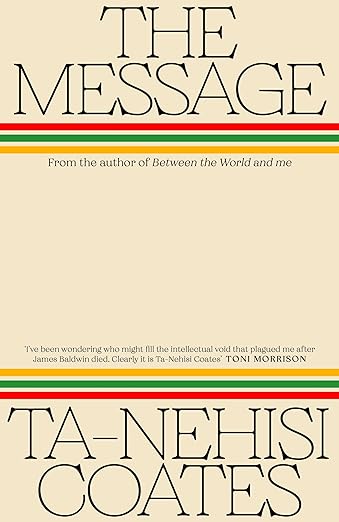
About The Message by Ta-Nehisi Coates: A Powerful Book About Truth, Stories, and the World We See
What if the stories we hear every day are shaping our minds without our knowledge? What if some stories help us see the truth, while other stories hide it? The Message by Ta-Nehisi Coates is a bold and thoughtful nonfiction book that asks readers to look closely at the words, ideas, and images used to explain our world.
Coates first planned to write a book about the craft of writing. His journey soon led him toward a much larger question: How do stories influence what people believe about history, race, justice, identity, and power? He explores this question through personal memories, travel writing, social study, and honest reflection.
The book brings together three connected essays inspired by Coates’s experiences in Dakar, Senegal; South Carolina in the United States; and Israel and Palestine. These places may appear very different, but Coates links them through one central idea: the stories told by powerful people can shape how whole groups are seen and treated.
This is not a long academic textbook filled with hard words. It is a direct and personal work written in a clear literary voice. Coates speaks to his former writing students, but his message is also meant for readers, teachers, young writers, journalists, and anyone who wants to understand how language can reveal or cover up the truth.
Some Stories Show the World—Others Hide It
People often receive history as a finished story. We learn the names of heroes, the dates of major events, and the ideas that a country wants to remember. Yet every story is created through choices. Someone decides whose voice will be heard, whose pain will be shown, and whose life will be left outside the frame.
That is the problem at the heart of The Message.
A story can make injustice appear normal. A beautiful national myth can hide the suffering of real people. News reports can focus on one side while leaving another side almost invisible. Even a writer with good aims can become trapped inside an incomplete story.
Coates offers a way to resist this problem: look carefully, visit real places, question familiar ideas, and listen to people whose voices are often ignored. He asks writers to value facts over comforting myths. He also shows that writing is not only about making sentences sound beautiful. It carries a serious duty because words can change how readers understand other human beings.
The book does not promise simple answers to every political or historical question. Instead, it helps readers develop a better habit: examine the story before accepting the message. This makes the book useful far beyond its three main locations. Its ideas can help readers think more clearly about books, school lessons, speeches, advertisements, social media posts, and daily news.
A Journey Through Three Very Different Places
The first major journey takes Coates to Dakar, Senegal. He had grown up around Afrocentric ideas that gave him a proud and almost dreamlike picture of Africa. Yet he had never visited the African continent before this trip. When he finally arrives, he must face the difference between the Africa he imagined and the living place before him.
Dakar is not merely a symbol from the past. It is a modern city filled with people, work, movement, old traditions, new machines, beauty, and difficulty. Coates begins to understand that even a positive myth can prevent someone from seeing a place as it really is.
His visit to Gorée Island, connected with the history of the Atlantic slave trade, adds deep emotional weight to this part of the book. He thinks about his ancestors, his family, Black identity, and the human desire to find a noble beginning. But he also questions the idea that human worth must come from ancient kings, great kingdoms, or grand buildings. The dignity of a person does not depend on royal blood or a glorious empire.
The second journey leads to South Carolina. There, Coates meets Mary Wood, a teacher who faced opposition after using his earlier work, Between the World and Me, in her class. This section explores book challenges, classroom freedom, race, history, and the fear that can grow when students meet ideas that question an accepted national story.
Why would people become afraid of a book? Coates suggests that words have real power. A book can give readers another way to see the past. It can place a missing voice inside a public discussion. It can ask students to think instead of simply accepting what they have been told.
The South Carolina section makes The Message especially meaningful for teachers, students, parents, and readers concerned about access to books. It shows that a classroom is not only a place where facts are remembered. It can also be a place where young people learn to compare views, ask fair questions, and develop their own understanding.
The final and longest part of the book follows Coates’s journey through Israel and the occupied Palestinian territories. He writes about what he saw during a ten-day visit in 2023, including separation, armed control, unequal movement, and the daily lives of Palestinians. He also examines how past trauma, national stories, journalism, and political language affect the way this region is presented to the world.
This is the book’s most intense and widely discussed section. Coates compares what he witnesses with systems of racial control familiar from American history. At the same time, he admits that he is a visitor and cannot fully tell the Palestinian story for the people living it. That honest limit becomes part of his larger point: writers must know when to speak, when to question themselves, and when to make room for others.
Writing That Feels Personal and Urgent
The Message blends memoir, travel writing, social commentary, reportage, and advice about writing. These forms work together rather than appearing as separate lessons. One moment may focus on Coates’s childhood or family ideas. The next may examine a public argument, a school dispute, or something he saw while travelling.
Coates frames the book as a message to students he taught at Howard University. This gives the writing an intimate feeling, as if a teacher has returned with a lesson shaped by real experience. The three pieces grew from an assignment he had promised that class, and the finished book speaks more widely to young writers who want their work to face injustice.
The prose asks readers to slow down and think. It may challenge some beliefs, especially in the section about Israel and Palestine. The aim is not to provide easy comfort. The book asks readers to examine why certain stories feel natural, who benefits from them, and what facts may have been pushed aside.
Readers do not need to agree with every comparison or conclusion to gain value from the book. In fact, The Message can create a strong discussion because it gives readers clear claims to examine. It invites questions about evidence, responsibility, national memory, reporting, and the duty of a writer.
What Makes This Book Worth Reading?
The Message is short enough to read without committing to a very large volume, but its questions may remain in the mind for a long time. It encourages active reading. You may stop, reread a paragraph, test an idea, or search for more history after finishing a section.
One of the book’s greatest strengths is the way it connects writing with real human lives. Words are not treated as decoration. A story can support power, fight power, spread fear, protect dignity, or help readers notice a person they were taught not to see.
The book also shows the value of self-questioning. Coates does not present himself as a person who has always understood everything correctly. He revisits some of his own earlier ideas and admits where his view was limited. That openness is important for readers who want to grow. Learning is not only the act of gaining new facts; it may also require changing an old belief.
The Message can be especially useful for readers who feel confused by the large amount of news and opinion shared online. Social media often turns difficult subjects into short slogans. Coates shows why readers should look beyond a simple message and ask what history, fact, voice, or human experience has been removed.
A Strong Choice for Thoughtful Readers
This book is a good fit for readers interested in social justice, race, politics, journalism, education, history, travel writing, and the craft of storytelling. It is also suitable for book clubs because each essay can create a different discussion.
Writers can use the book to think about their responsibility to readers and the people they describe. Journalism students can consider the difference between reporting and repeating a popular narrative. Teachers may find useful ideas about books, classroom debate, and the importance of allowing students to meet difficult subjects.
Readers of Between the World and Me may recognize Coates’s personal voice and his interest in race, history, and the body. However, The Message moves across a wider international space. It connects Black American identity with Africa, educational conflict in the United States, and Palestinian life under occupation.
New readers can also begin here. Understanding the book does not require reading Coates’s earlier titles first. When an earlier work becomes important to the South Carolina essay, the needed situation is explained within the discussion.
This is an adult nonfiction title dealing with painful history, racism, oppression, political conflict, and human suffering. Mature teenagers may also find it valuable with suitable guidance from a parent or teacher.
Three Essays with One Clear Purpose
Although the book moves between three places, it does not feel like a normal travel guide. Coates is less interested in tourist details than in what each journey teaches him about story and power.
Senegal asks what happens when an imagined homeland meets a real country.
South Carolina asks why people try to control which histories students may read.
Palestine asks what becomes visible when a writer walks through a place instead of viewing it only through common media stories.
Together, these parts show how myths are formed and why direct observation matters. They also show that seeing a place does not make a visitor the owner of its story. Careful writing requires both courage and humility.
This design gives the book a clear reading flow. Each part adds another layer to the main idea. By the final pages, “the message” is not a single slogan. It is a call to pay attention, search for truth, question the stories of powerful groups, and respect the lives hidden behind public language.
A Premium Reading Copy from Bookish Wonderland
A serious book deserves a comfortable physical form. Bookish Wonderland offers this printed edition for readers who want both meaningful content and dependable book quality.
The pages use premium, eye-soothing cream paper. The softer page colour is comfortable for long reading sessions and reduces the harsh look that bright white paper can have. Crystal-clear printing keeps every line sharp and easy to follow.
High-quality stitched and glue binding gives the book added strength. The combined binding method helps keep the pages secure through repeated reading, note-taking, study sessions, and careful shelf storage. This makes the copy suitable for personal libraries, classrooms, book clubs, or meaningful gifts.
These features are especially useful for a reflective book. Readers may want to return to important passages, compare ideas across the three essays, or mark questions for later discussion. A durable copy allows the book to remain part of the reader’s collection after the first reading is complete.
How This Book Can Be Used
Read The Message alone when you want a thoughtful and challenging nonfiction experience. Keep a notebook nearby and record the claims that surprise you, the ideas you question, and the topics you want to study further.
Use it in a book club to discuss how personal experience affects political writing. Each reader may respond differently to the three locations, giving the group several clear starting points for conversation.
Teachers can use selected ideas to begin discussions about storytelling, censorship, media, historical memory, and responsible writing. Students can compare how the author’s role changes as he moves between personal memory, travel observation, and public argument.
Writers may read it as a lesson in purpose. It asks them to consider who is missing from their work, whether their preferred story agrees with the facts, and how their words might affect real people.
It can also be given as a gift to readers of modern essays, political nonfiction, cultural criticism, or books that challenge widely accepted ideas. The compact structure makes it approachable, while the subject matter gives it lasting value.
Find The Message by Ta-Nehisi Coates Price in Bangladesh
Readers searching for The Message by Ta-Nehisi Coates price in Bangladesh can order this premium printed copy from Bookish Wonderland. Cash on Delivery is available nationwide, making the ordering process simple and convenient.
Delivery is available both inside and outside Dhaka. Customers in Dhaka may also request a fast or urgent delivery option, subject to location and availability. These choices help students, teachers, gift buyers, and general readers receive their books in the way that suits them best.
Bookish Wonderland offers a large collection of premium and durable English books. The Message is a valuable addition for anyone who wants a book that does more than pass the time. It encourages readers to ask better questions, look beyond easy stories, and think carefully about the relationship between words and power.
Let This Book Change the Way You Read the World
The Message by Ta-Nehisi Coates is for readers who believe that words matter. It shows that stories can build identity, protect a national myth, challenge injustice, or make human pain easier to ignore. Through Senegal, South Carolina, and Palestine, Coates asks readers to look beyond the story they already know.
This book may challenge you, move you, or lead you to disagree. Most importantly, it asks you to pay attention. That is what makes it a strong choice for readers who want honest, serious, and socially aware nonfiction.
Order your copy from Bookish Wonderland today and begin a reading journey that may change how you understand writing, history, news, and the stories surrounding everyday life. With premium cream paper, crystal-clear print, durable stitched and glue binding, nationwide delivery, and Cash on Delivery, your next important read is only an order away.
If you require any customization or have any questions, please inbox us via FB or Insta.
| Primary Specification | |
| Author | Ta-Nehisi Coates |
| Narrator | Ta-Nehisi Coates |
| Genre | Nonfiction, Essays, Memoir, Travel Writing, Social Commentary, Politics, Race and Ethnic Studies |
| ISBN-13/ISSN | 979-8217014248 |
| Publisher | Random House Large Print |
| Publishing Date | October 8, 2024 |
| Edition | Large Print |
| Language | English |
| Reading Age | 18+ years |
| Format | Printed book |
| Physical Specification & Quality | |
| Paper Quality | Premium eye-soothing cream paper |
| Binding Quality | High quality stitched and glue binding (for longevity) |
| Print Quality | Crystal-clear print |
| Pages | 240 pages |
| Country | United States |
| Logistics Information | |
| Weight | 255 gm |
| Length | 0.61 inch |
| Width | 8.5 inches |
| Height | 5.6 inches |