

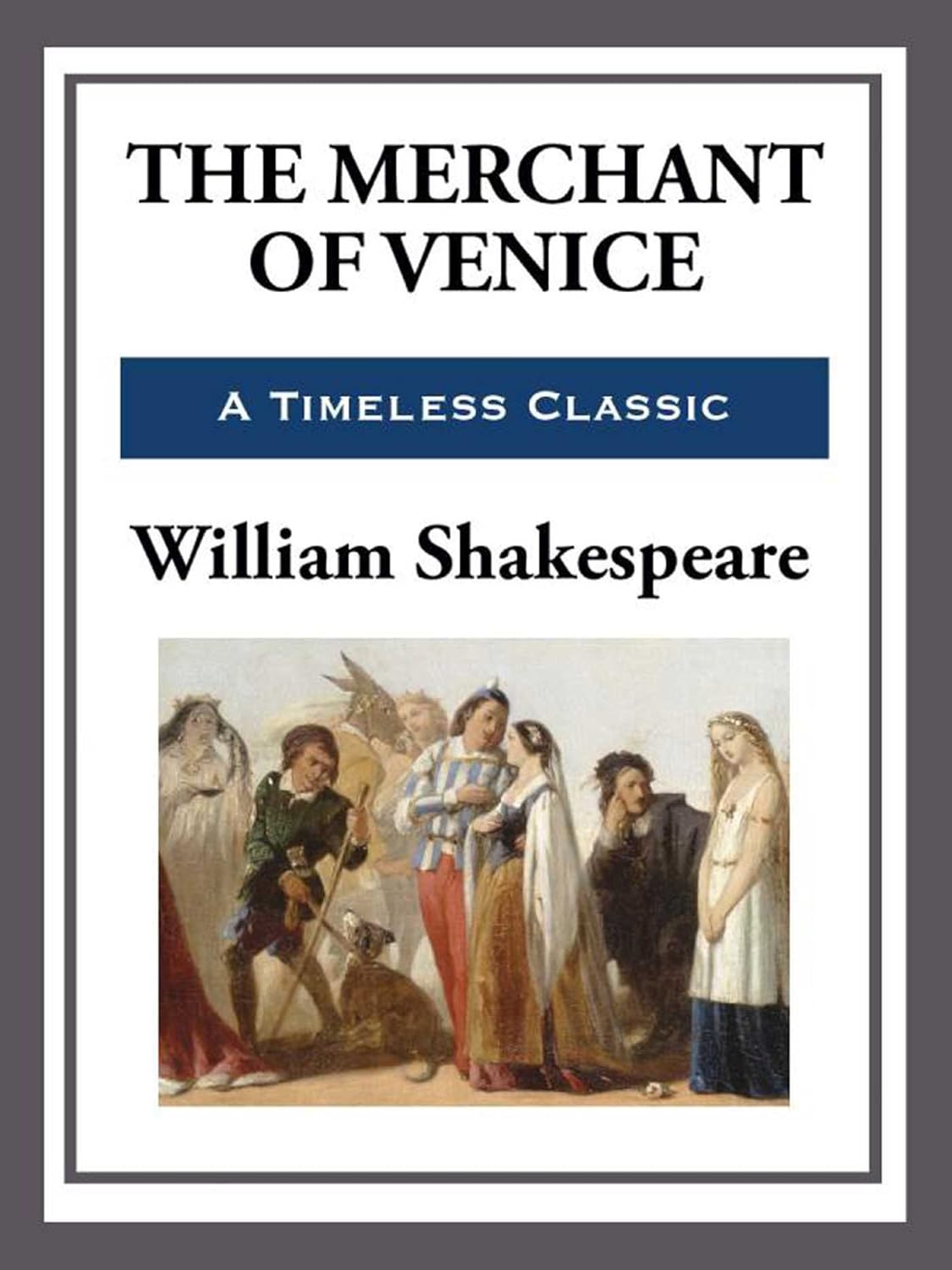
About The Merchant of Venice Play by William Shakespeare: A Classic Story of Friendship, Mercy, and One Dangerous Promise
A friend needs money. A merchant wants to help. A lender offers a deal that sounds strange but simple. If the money is not paid on time, the lender can claim one pound of the merchant's flesh.
That single promise turns The Merchant of Venice Play by William Shakespeare into a story filled with love, danger, hard choices, and a court case that can change everything. It begins with a small act of help and grows into a powerful question: when the law allows something cruel, should mercy matter more?
This famous English play moves between busy Venice and peaceful Belmont. Along the way, readers meet loyal friends, a smart young woman, a hurt moneylender, and people whose choices carry a heavy cost.
Whether you are reading Shakespeare for school, learning about classic English drama, or choosing a meaningful book for your shelf, this play gives you a story worth thinking about long after the last scene.
A simple favor becomes a life-changing risk
Bassanio hopes to win the hand of Portia, a wealthy woman living in Belmont. He needs money to travel and appear ready for marriage, but he cannot afford the journey alone.
He turns to Antonio, his close friend and a merchant in Venice. Antonio wants to help, yet his money is tied up in ships sailing at sea. Because he does not have ready cash, he agrees to borrow money from Shylock, a Jewish moneylender.
Shylock remembers the cruel words and poor treatment he has faced from Antonio. He offers a loan with an unusual condition. If Antonio cannot repay it on time, Shylock may take a pound of flesh from Antonio's body.
Antonio trusts that his ships will return before the loan is due. He accepts the agreement. But when bad news arrives from the sea, what seemed like a strange deal becomes a real threat to his life.
Three boxes stand between Bassanio and Portia
Portia cannot simply choose the man she wants to marry. Her late father's will says that every man seeking her hand must pick one of three caskets: gold, silver, or lead.
Only one box holds Portia's picture. The man who chooses that box may marry her. Those who choose wrongly must leave.
The test asks more than which box looks best. It shows how easily people can be fooled by wealth, bright surfaces, and proud words. A plain choice may hide something far more valuable.
As Bassanio faces the three caskets, readers feel two kinds of tension at once. Will he choose wisely? And if he wins Portia, will there still be time to save the friend who made his journey possible?
Why Antonio's promise matters so much
Antonio does not borrow money for his own comfort. He puts himself at risk because Bassanio needs help. That choice makes their friendship one of the strongest parts of the play.
Yet the story does not treat loyalty as a simple answer. Antonio signs a bond without fully facing what could happen. His wish to help is kind, but the danger is real.
Readers can ask questions that still matter today. How far should someone go for a friend? Can a good reason excuse a careless promise? What happens when trust meets a contract that cannot easily be broken?
These questions make the play useful beyond the classroom. Its people face money problems, unfair treatment, family rules, and pressure from others. Their world may be old, but many of their struggles still feel familiar.
Shylock is more than a simple villain
Shylock is one of the most discussed characters in Shakespeare's work. He demands the payment written in his agreement, but his anger does not appear without a cause.
He has faced insults and unfair treatment because he is Jewish. The play shows how prejudice can hurt a person and how that hurt can grow into bitterness and a wish for revenge.
At the same time, his demand for Antonio's flesh creates fear and raises serious questions about justice. Readers are invited to think about both the harm Shylock receives and the harm he wants to cause.
Modern readers should know that the play includes harmful prejudice against Jewish people. That history deserves careful thought, especially when discussing whether the people who ask for mercy show the same kindness themselves.
This is one reason the story remains important. It does not leave readers with only one easy feeling. It asks them to notice pain, power, unfairness, and the cost of treating other people as less human.
Jessica adds another layer to the story
Jessica, Shylock's daughter, has her own place in the play. Her choices connect the story of love with questions about family, belonging, and the pain that can follow a broken relationship.
She wants a different life and forms a bond with Lorenzo. Their story may seem lighter than Antonio's dangerous agreement, but it also affects how readers understand Shylock's loneliness and loss.
This smaller story matters because the play does not focus on just one kind of bond. It looks at promises between friends, links between parents and children, hopes between lovers, and written agreements between people who do not trust each other.
Venice and Belmont also offer different moods. Venice is shaped by trade, loans, public rules, and the pressure of the court. Belmont feels calmer, yet its marriage test shows that wealth and family rules can limit freedom there too.
Together, these settings make the play feel alive. Each change of place brings another view of what people owe one another and what happens when love, duty, money, and pride pull in different directions.
Portia brings courage and clear thinking to the story
Portia first appears as a woman whose future depends on her father's rules. She cannot freely choose her husband, even though she is thoughtful and capable.
When Antonio's life is in danger, Portia becomes central to the action. She uses her knowledge, quick thinking, and courage to step into a world where women are not expected to lead.
Her role in the court scene makes her one of the play's most memorable characters. She asks the court to consider mercy, then studies the exact words of the bond with great care.
Readers who enjoy clever solutions will want to see how she responds when the law appears to protect a cruel demand. Her actions also open questions about fairness, power, disguise, and whether a legal victory always brings true justice.
The court scene keeps the pages turning
The trial is the moment toward which the whole story moves. Antonio cannot meet the terms of the loan. Shylock wants the payment promised in the bond. Bassanio offers money, but the danger does not disappear.
The court must decide whether the agreement can be enforced. Every word matters. One small detail may stand between life and death.
What makes this scene so strong is that the conflict is not solved by physical power. The battle happens through language, law, and the meaning of a promise.
Even readers who usually avoid older books can become absorbed in the outcome. The question is clear: can Antonio be saved without breaking the law that everyone must respect?
A classic comedy with serious questions inside
The Merchant of Venice is traditionally grouped among Shakespeare's comedies. It includes romance, marriage, mistaken identity, humor, and a story that moves toward reunion.
Still, this is not a light story from start to finish. The threat to Antonio, the treatment of Shylock, and the court's final decisions give the play a darker side.
That mix makes it a strong choice for readers who want more than a simple happy ending. You can enjoy the romance while also thinking about prejudice, justice, friendship, mercy, wealth, and revenge.
The play also shows that the word comedy in Shakespeare does not always mean constant jokes. It describes a dramatic form that can hold both celebration and serious human pain.
Helpful for school, college, and independent reading
Students can use this book to follow the full story, understand the main characters, and prepare for class discussions about its ideas. It is also useful when studying Shakespearean drama, English literature, and well-known courtroom scenes.
Teachers can draw on the play when discussing friendship, moral choices, religious prejudice, contracts, and the difference between justice and mercy. Reading groups can compare how different people view Antonio, Shylock, Portia, and Bassanio.
Drama students may enjoy reading scenes aloud and noticing how the words guide action on stage. General readers can approach it as a story about promises, danger, and a clever response under pressure.
Parents and gift buyers can choose it for older students or readers building a collection of important English classics. Because the play contains prejudice and serious threats, thoughtful guidance can help younger readers understand its context.
Made for comfortable reading and long use
A good story is easier to enjoy when the book feels comfortable in your hands. Bookish Wonderland offers a premium printed copy designed for readers who want clear pages and a book they can keep.
The eye-soothing cream paper helps make longer reading sessions more comfortable. Sharp, crystal-clear printing keeps the text easy to follow, whether you are reading at home, studying between classes, or returning to a favorite scene.
High-quality stitched and glue binding helps the pages stay secure through regular use. That strong finish makes the book a practical choice for students, careful collectors, and anyone who plans to read the play more than once.
Instead of buying a copy that quickly feels worn, you can choose a premium edition made to stay useful on your shelf. The printed format also makes it easy to pause, revisit scenes, and share the book with another reader.
Why this play still feels close to real life
People still lend money, make risky promises, judge others too quickly, and struggle to forgive. They still face moments when following a rule does not feel the same as doing what is right.
The play brings those problems into one connected story. Antonio wants to protect a friend. Bassanio wants a new future. Portia wants the freedom to act. Shylock wants the law to recognize his claim and his pain.
No reader needs to agree with every character to care about the outcome. Each person wants something clear, and those needs push the story toward a difficult decision.
This is what makes the book worth owning. You can read it first for the danger and return later for the questions hidden beneath the story.
Best seller rank of this book
- #5,231 in Shakespeare Dramas & Plays
Why this play is still worth reading
The story begins with a friend trying to help another friend, but one risky promise changes everything. Antonio borrows money from Shylock, knowing that if he cannot repay it, the price will be a pound of his flesh.
That gives you plenty to think about as you read. Will Antonio survive? Can Portia find a way around the agreement? And is Shylock simply cruel, or is there more behind his anger?
These questions make the play interesting for students and anyone who enjoys a story with difficult choices, strong characters, and a tense courtroom scene.
To check The Merchant of Venice Play by William Shakespeare Book price in Bangladesh, visit the Bookish Wonderland product page. Delivery is available nationwide with Cash on Delivery, and readers in Dhaka can ask about fast delivery.
If you require any customization or have any questions, please inbox us via FB or Insta.
| Primary Specification | |
| Author | William Shakespeare |
| Genre | Shakespearean comedy, romantic comedy, and tragicomedy |
| ISBN-13/ISSN | 978-1480225022 |
| ISBN-10 | 1480225029 |
| Publisher | CreateSpace Independent Publishing Platform |
| Publishing Date | October 30, 2012 |
| Language | English |
| Reading Age | 13+ |
| Format | Printed Book |
| Physical Specification & Quality | |
| Paper Quality | Premium eye-soothing cream paper |
| Binding Quality | High quality stitched and glue binding (for longevity) |
| Print Quality | Crystal-clear print |
| Pages | 128 pages |
| Country | UK |
| Logistics Information | |
| Weight | 146 gm |
| Length | 8.5 inches |
| Width | 5.6 inches |
| Height | 0.29 inch |