

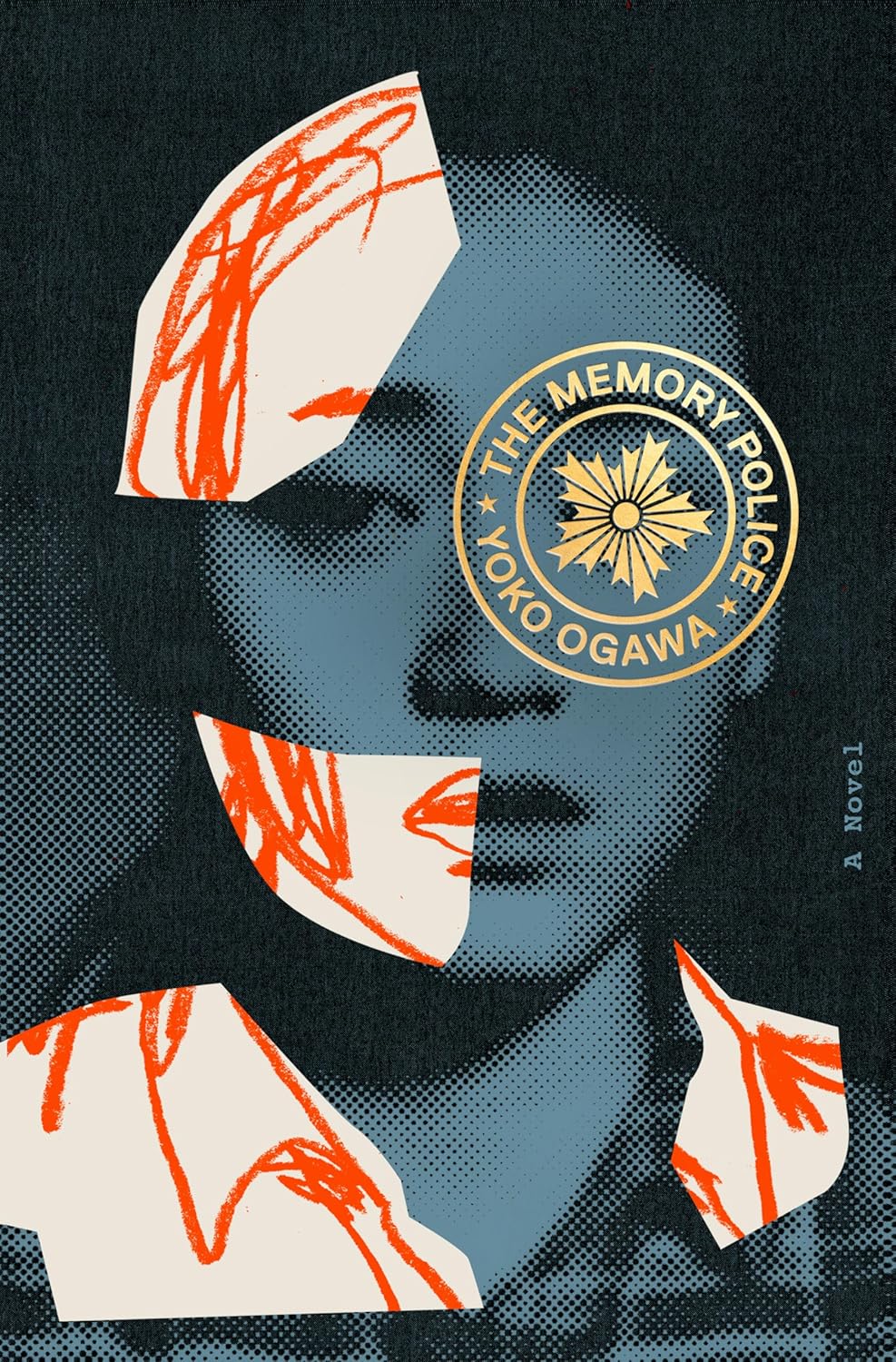
About The Memory Police Novel by Yoko Ogawa: A Haunting Story About Lost Memories and Hidden Truths
Imagine waking up one morning and finding that birds no longer matter. People clear away feathers, cages, and pictures without asking why. A few days later, another familiar thing disappears. Then another. Soon, the island where you live begins to feel empty, even though everyone around you carries on as if nothing has changed.
The Memory Police Novel by Yoko Ogawa begins with this strange and troubling idea. On an unnamed island, ordinary things vanish, and most people slowly forget that they ever existed. A powerful group called the Memory Police makes sure the missing things stay gone. Anyone who still remembers faces serious danger.
At the centre of the story is a young woman who writes novels. When she discovers that her editor can remember what others have lost, she decides to hide him. That choice puts both of them at risk and turns a quiet life into a secret struggle to protect one person, one story, and whatever pieces of the past remain.
An island where forgetting becomes normal
The island in The Memory Police has no clear name, and its rules are never fully explained. That mystery is part of what makes the story so unsettling. One day, people know what a hat, ribbon, bird, or rose means. After a disappearance, the object becomes strange and unimportant to them.
The islanders remove these things from their homes, burn them, throw them away, or hand them over. Many do not fight back because the memory itself fades. They cannot fully miss something once they no longer understand what it was.
But not everyone forgets. A small number of people keep their memories, and that makes them a threat to the Memory Police. They may be watched, questioned, or taken away. The more the island loses, the harder it becomes to tell whether the real danger is the police, the disappearances, or the way people learn to accept both.
The woman who chooses to protect a memory
The narrator is a novelist living under the same strange rules as everyone else. She is not a fearless action hero. She is an ordinary person trying to work, remember her family, and make sense of a world that keeps changing around her.
Her editor, known as R, is different. He can still remember the objects and ideas that have vanished. Because the Memory Police hunt people like him, the narrator decides that keeping him safe matters more than following the rules.
With help from an old family friend, she creates a hidden room inside her home. R must stay out of sight while the world outside grows more uncertain. Their quiet talks, shared fears, and growing trust give the story its human heart.
The question is not only whether the police will find him. It is also whether two people can protect memory when the whole world around them is learning to forget.
Why the Memory Police feel so frightening
The Memory Police do not need to appear on every page to create fear. Their power can be felt in the way people act. Neighbours become careful. Homes can be searched. A hidden object or an old memory may suddenly become a reason for suspicion.
What makes the danger worse is that the rules keep changing. Nobody knows what will disappear next. Something that feels normal today may become forbidden tomorrow, and the people who remember it may have nowhere safe to turn.
This creates a steady kind of tension. The story does not rely on loud action or constant violence. Instead, fear grows through small moments: a knock at the door, an unfamiliar sound, or a question that may reveal too much.
Readers who enjoy suspense built through mood and uncertainty will find plenty to hold their attention. Each chapter makes the island feel less complete and the hidden room more important.
A story about more than missing objects
The things that disappear are important, but the deeper question is what their loss does to people. A bird is not only an animal. It may remind someone of a parent, a childhood day, or a feeling that cannot be named once the bird is gone.
As more objects vanish, the islanders also lose parts of their shared history. Their world becomes smaller, and their ability to ask questions grows weaker. The novel invites readers to think about what connects memory with identity, love, grief, and freedom.
The book can also be read as a story about control. If a powerful group can decide what people remember, it may also shape what they believe is possible. The Memory Police shows how fear and silence can make unfair rules seem normal.
At the same time, the novel is deeply personal. It asks what happens when a person loses the small details that make life feel real. It also asks whether kindness, friendship, and writing can protect something meaningful when everything else begins to fade.
That idea can feel close to everyday life. People lose touch with old places, family stories, traditions, and the words they once used without noticing what has changed. The novel turns that slow loss into a world you can see. It asks whether remembering is only a private act or a way to protect the people and histories that shape us. Even small objects begin to carry meaning, because each one holds a link to a life that might otherwise disappear.
The hidden story inside the novel
The narrator continues working on a novel of her own while the island changes around her. Parts of that inner story appear within the main book, creating another layer of meaning.
Her writing follows a woman whose voice begins to disappear. This smaller story echoes the larger world of the island, where people lose objects, memories, and the freedom to speak openly. The connection between the two stories becomes clearer as the narrator struggles to hold on to her own work.
This is one reason The Memory Police stays with readers. It is not only about what happens outside the narrator’s home. It is also about how fear enters the mind and how a story can become a way to resist forgetting.
You do not need to understand every symbol to enjoy the novel. The feelings are easy to follow: fear of loss, care for another person, and the wish to keep something precious from disappearing.
A quiet book that grows more intense
The Memory Police is not a fast action story. Its pace is calm, and its language is simple, but the pressure builds as the island loses more of what once made life familiar.
Some readers are drawn in by the strange rules. Others stay for the bond between the narrator, R, and the old man who helps them. There is also the ongoing question of whether anything can stop the disappearances.
The ending does not tie every mystery into a neat answer. Yoko Ogawa leaves room for the reader to think about what the story means. For people who enjoy clear explanations for every event, this may feel unusual. For readers who like thoughtful fiction, it can make the book even more memorable.
This is the kind of novel that may lead you to pause after a chapter and look differently at simple things in your own life.
From Japanese literature to readers around the world
Yoko Ogawa first published The Memory Police in Japan in 1994. The English translation by Stephen Snyder appeared in 2019, bringing the novel to a wider international audience.
The book was a finalist for the 2019 National Book Award for Translated Literature. It was also shortlisted for the 2020 International Booker Prize. These honours helped more readers discover a story that combines Japanese literary fiction with dystopian ideas and quiet emotional depth.
Stephen Snyder’s translation makes the novel available to English readers while preserving its careful, dreamlike tone. The result is a story that feels both simple and strange. It can be read as political fiction, literary fiction, speculative fiction, or a moving novel about memory and loss.
Although one supplied bestseller category mentions science fiction short stories, The Memory Police is a complete novel, not a short story collection.
Who may enjoy this book most
This novel is a good choice for adults and older teenagers who enjoy thoughtful stories, strange settings, and books that ask difficult questions. It may appeal to readers interested in Japanese literature, dystopian fiction, hidden rooms, state control, and the power of memory.
It can also suit someone who wants a break from loud, action-heavy thrillers. The tension here comes from quiet fear, personal risk, and the slow loss of familiar things. Readers who enjoy discussing symbols, open endings, and the meaning behind a story may find plenty to explore.
The book works well for personal reading, book club talks, literature classes, and thoughtful gifts. It can also be a good first step into translated Japanese fiction because its central idea is easy to understand even when its deeper questions remain open.
A premium printed copy for comfortable reading
Bookish Wonderland offers The Memory Police as a premium-quality printed book made for readers who want a clear, durable copy.
-
Premium eye-soothing cream paper gives the pages a softer look and supports a more comfortable reading experience.
-
Crystal-clear printing keeps the words sharp, clean, and easy to follow throughout the novel.
-
High-quality stitched and glue binding helps hold the pages firmly and supports long-term book durability.
This quality suits a novel that readers may want to revisit. A well-made physical copy also looks at home in a collection of literary fiction, Japanese novels, or carefully chosen translated books.
Best Sellers Rank of This Book
The bestseller rankings supplied for this listing are:
-
#3,982 in Books
-
#45 in Political Fiction (Books)
-
#52 in Censorship & Politics
-
#73 in Science Fiction Short Stories
These rankings are shown exactly as provided. Bestseller positions can change over time, and the categories reflect the supplied listing rather than a promise that the novel belongs to a book series or short story collection.
Why this can become your next unforgettable read
The biggest pull is the feeling that the world is changing while almost nobody can see what has been lost. The narrator knows her editor is in danger, but she is also losing the memories that help her understand why saving him matters. Every vanished object makes their hiding place feel more fragile.
That gives you two reasons to continue. You want to know whether R can remain hidden from the Memory Police, and you want to understand what will happen when the island has almost nothing left to remember. The answer is not delivered through noise or sudden action. It grows through small choices, quiet fear, and the bond between people who refuse to leave each other alone.
If you are checking The Memory Police Novel by Yoko Ogawa Book price in Bangladesh, visit the product page for the current listed price. Bookish Wonderland delivers inside Dhaka, outside Dhaka, and across the country. Cash on Delivery is available nationwide, and fast or urgent delivery may be arranged in Dhaka after confirmation.
Choose this book if you want a story that feels strange at first and deeply human by the end. Order your copy from Bookish Wonderland and step into an island where remembering one small thing may become the bravest choice of all.
If you require any customization or have any questions, please inbox us via FB or Insta.
| Primary Specification | |
| Author | Yoko Ogawa |
| Translator | Stephen Snyder |
| Narrator | Traci Kato-Kiriyama |
| Editor | Maria Carella |
| Genre | Dystopian fiction, speculative fiction, literary fiction and science fiction |
| ISBN-13/ISSN | 978-1101911815 |
| ISBN-10 | 1101911816 |
| Publisher | Vintage |
| Publishing Date | July 28, 2020 |
| Edition | 1st |
| Language | English |
| Reading Age | 16+ |
| Format | Printed Book |
| Physical Specification & Quality | |
| Paper Quality | Premium eye-soothing cream paper |
| Binding Quality | High quality stitched and glue binding (for longevity) |
| Print Quality | Crystal-clear print |
| Pages | 288 pages |
| Country | USA |
| Logistics Information | |
| Weight | 304 gm |
| Length | 8.5 inches |
| Width | 5.6 inches |
| Height | 0.83 inch |