Skip to product information
1 of 1

Bookish Wonderland

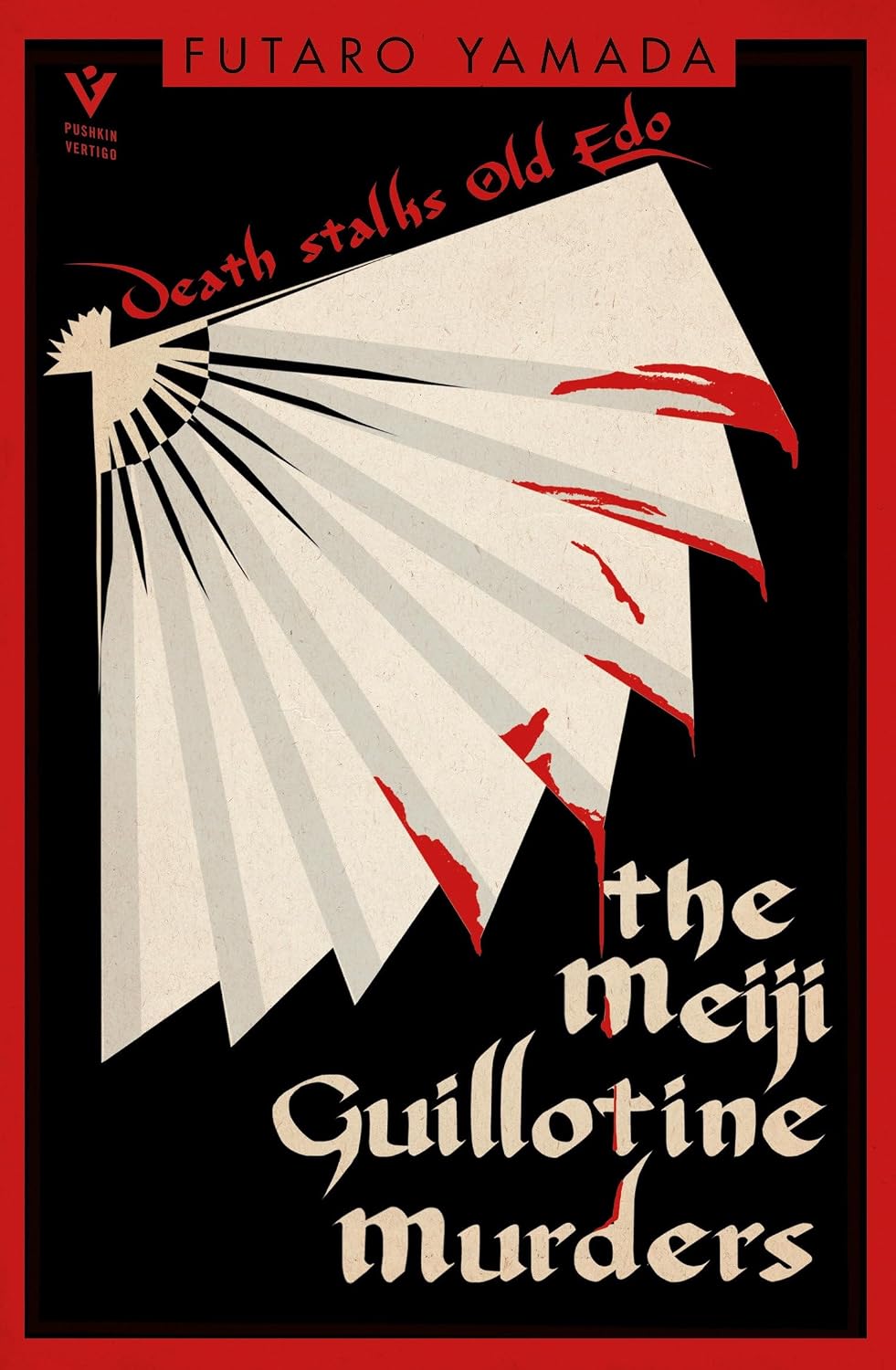
The Meiji Guillotine Murders by Futaro Yamada

The Meiji Guillotine Murders by Futaro Yamada

Regular price Tk 258.00 BDT
Regular price Sale price Tk 258.00 BDT
Sale Sold out
Book cover type
Quantity

Set in Tokyo in 1869, shortly after the Meiji Restoration, The Meiji Guillotine Murders follows police inspectors Kazuki and Kawaji as they investigate a series of baffling murders. Japan is undergoing rapid political and social change, with former samurai, government officials, and ordinary citizens struggling to adjust to a new era. As the detectives move through drinking dens, grand hotels, and the Imperial Palace, each case reveals hidden motives and tensions beneath the country’s transformation. The deeper they investigate, the clearer it becomes that the murders may be connected to forces threatening Japan’s fragile new order. The novel combines intricate crime investigations with a detailed portrait of nineteenth-century Japanese history. Read More

View full details

About The Meiji Guillotine Murders by Futaro Yamada: A Japanese Historical Mystery Set Among Hidden Crimes, Rival Detectives, and the Changing Streets of Tokyo

Tokyo, 1869. A war has ended, but peace has not reached every street. Old rulers have lost power. New leaders are trying to take charge. Strange ideas are arriving from the West, and a deadly machine from France is about to become part of the city's story.

Then the bodies begin to appear.

The Meiji Guillotine Murders by Futaro Yamada brings together murder, history, hidden motives, and two sharp investigators who must find the truth in a city full of secrets. Every case points toward a bigger question: when a country is changing fast, who decides what justice should look like?

This is a book for readers who enjoy clever crime stories but also want a setting that feels different from the usual modern police mystery. Here, every clue comes with a piece of Japan's past.

A murder mystery in a city learning new rules

The story begins at the start of Japan's Meiji era, when the country was moving away from older forms of rule and trying to build a new future. Samurai power was changing, Western ideas were entering daily life, and public order was far from settled.

For ordinary people, this meant confusion. Who could be trusted? Which old rules still mattered? Were the new leaders making life safer, or were they simply finding new ways to control it?

Into this uncertain world step Chief Inspectors Kazuki and Kawaji. They face strange deaths, unclear motives, and people who may be hiding more than they admit.

Their work takes them through different parts of Tokyo, from rough drinking places to grand hotels and the world around the Imperial Palace. Each location adds another layer to a city where the past and the future are fighting for space.

Meet the two men trying to make sense of the crimes

Keishiro Kazuki and Toshiyoshi Kawaji are both clever, but they do not always see the world in the same way. Their different views make the investigation more interesting than a simple race to catch a killer.

Kazuki is drawn to new ideas and believes that strong action can help build a better society. Kawaji also wants order, but he is less willing to assume that the people in power will always use it fairly.

Their shared work brings them close to corruption, public fear, and the hard choices behind the creation of a new police force. Sometimes they agree. Sometimes their views pull them in opposite directions.

Kawaji was based on a real historical figure linked to the growth of modern policing in Japan. Kazuki is a fictional character. That mix of fact and invention gives the novel a special kind of tension.

You are not only asking who committed each crime. You are also watching two men argue, in their own ways, about the future of their country.

Why a French guillotine appears in nineteenth-century Japan

The word guillotine may make you expect every murder to involve a falling blade. That is not how this book works. The machine matters, but it is not the answer to every case.

A guillotine is brought from France during a time when Japan is looking closely at Western tools and ideas. Some people see it as a modern way to carry out punishment. Others may wonder whether a new machine can make a violent act any less cruel.

That question sits beneath the mystery. If a country calls something progress, does that always mean it is better? Can a tool arrive with the promise of order while still creating fear?

The guillotine gives the book its dark image, but the real story reaches further. It is about change, power, public justice, and the uneasy meeting between old Japanese customs and new foreign influence.

Esmeralda brings a strange turn to the investigation

The inspectors are not the only people drawn into the mystery. Esmeralda, a young woman connected to a French family of executioners, becomes one of the book's most unusual figures.

Her place in the story links the French guillotine with Japanese shrine traditions. She adds a spiritual and unsettling side to a world that is also trying to embrace modern ideas and rational police work.

At times, her role makes the line between the living and the dead feel less clear. That gives the investigations a mood you will not find in every historical detective novel.

Esmeralda matters because she does not fit neatly into the new world or the old one. She stands between cultures, beliefs, and ways of explaining the truth.

Her presence gives you another reason to keep reading. What does she know? Why does she appear so important to these cases? And how much of the answer lies beyond the usual search for clues?

Several strange cases lead toward one bigger answer

The Meiji Guillotine Murders does not follow only one simple murder from beginning to end. It moves through a set of connected cases, each with its own strange details and questions.

One death may appear impossible. Another may involve a person who seems to have a strong alibi. A body, a witness, or a piece of new technology may turn out to mean something different from what the inspectors first believe.

This structure keeps the story fresh. When one mystery begins to make sense, another case opens a new path. Small details that seem separate can take on greater meaning as the book continues.

The final parts bring the threads closer together. Readers who enjoy following clues across several cases will have plenty to notice, question, and try to solve before the full picture appears.

The history is part of the mystery

You do not need to be an expert in Japanese history to understand why this setting matters. The main idea is simple: the country is changing, and change creates room for both hope and danger.

The Meiji period began after major political conflict. Older systems were being replaced, and new public bodies were taking shape. Some people welcomed the changes. Others feared what they might lose.

The novel uses this moment to show how crimes can grow out of confusion, wounded pride, weak rules, and the fight for control.

Real people and events appear beside invented characters and mysteries. That does not make the story a history textbook. It means the murders happen in a world shaped by genuine change.

The detectives cannot use modern police tools, so they must question witnesses, test alibis, and look past misleading appearances. That older setting makes each answer feel tied to the city, its customs, and its politics.

If you enjoy learning about another country while following a strong story, this book gives you both at once. You can enjoy the puzzle while also seeing how Tokyo was becoming a different kind of city.

A mystery that takes its time

This is not a nonstop action story that moves from one chase to the next. Futaro Yamada spends time on historical details, the changing city, and the ideas that divide the characters.

That slower approach helps the setting feel real. You see how people lived, what worried them, and why a new police system could seem both useful and dangerous.

The book still offers murder, hidden plans, surprising turns, and difficult clues. However, it asks you to enjoy the world around the crimes as much as the final answer.

If you prefer a quick thriller with very little background, the pace may feel more thoughtful than expected. If you enjoy historical mysteries that give you plenty to think about, that extra detail becomes part of the pleasure.

A Japanese classic available in English

Futaro Yamada originally published this novel in Japanese in 1979. The English translation by Bryan Karetnyk gives more readers access to its unusual mix of crime, history, and social change.

The English-language edition from Pushkin Press places the book among translated mysteries from around the world. Its setting, structure, and ideas make it a strong choice for readers looking beyond familiar British or American detective stories.

Reading a translated Japanese mystery also lets you experience a different style of storytelling. The clues, public fears, and historical details all grow from a time and place that many readers may not have explored before.

You do not need to speak Japanese or know the Meiji era in detail. The story gives you an entry into that world through its characters and their investigations.

Who is likely to enjoy this book?

The Meiji Guillotine Murders by Futaro Yamada suits readers who enjoy historical crime fiction, Japanese literature, detective stories, strange cases, and mysteries with a wider social background.

It can also appeal to people interested in samurai history, early police work, political change, and the meeting of Japanese and Western cultures.

Book clubs may enjoy discussing whether the guillotine represents progress, how the inspectors differ, and what the story suggests about fair government.

Because the novel includes murder, executions, injury, and dark subjects, it is better suited to adults and older readers who are comfortable with violent crime fiction.

It also makes a thoughtful gift for a mystery reader who has already worked through common detective series and wants a book with a different setting and mood.

Why this story can keep you reading

The biggest pull is that nothing feels fully settled. One murder raises questions about a second. A helpful witness may not be telling the whole truth. A new tool may bring more danger instead of solving a problem.

Kazuki and Kawaji are trying to protect a city that has not yet decided what it wants to become. Esmeralda adds another layer of mystery, while the guillotine stands as a warning that modern ideas do not always arrive gently.

That gives you more than one reason to continue. You want to know who is behind the crimes, how the separate cases connect, and whether the two inspectors can agree on what justice means.

The story keeps its attention on the people, the place, and the hidden links between them. It is a good choice when you want a mystery that offers both clever questions and a strong sense of history.

A premium printed copy made for long reading sessions

Bookish Wonderland offers this title as a premium printed book with eye-soothing cream paper and crystal-clear text. The gentle page colour and sharp printing make it easier to follow the many names, clues, and historical details.

High-quality stitched and glue binding helps the pages stay secure through regular reading and long-term shelf storage.

This durable physical copy suits readers who like to return to earlier chapters, check a clue again, or keep a favourite mystery in their personal book collection.

Best seller ranks of this book

  • #609,777 in Books
  • #3,170 in International Mystery & Crime (Books)
  • #145,884 in Genre Literature & Fiction

Your next mystery can begin in old Tokyo

If you are searching for “The Meiji Guillotine Murders by Futaro Yamada Book price in Bangladesh,” check the Bookish Wonderland product page for the current price before ordering.

Bookish Wonderland delivers inside Dhaka, outside Dhaka, and across Bangladesh. Cash on Delivery is available nationwide, so you can pay when your copy reaches you.

If you live in Dhaka and need the book quickly, ask about the fast or urgent delivery option before placing your order.

Choose this novel when you want more than a familiar murder case. Follow two inspectors into a changing city, meet a mysterious woman tied to a French executioner, and work through crimes that lead toward a much larger secret.

Order your copy from Bookish Wonderland and find out what the streets of Meiji-era Tokyo have been hiding.

If you require any customization or have any questions, please inbox us via FB or Insta.
Primary Specification
AuthorFutaro Yamada
TranslatorBryan Karetnyk
EditorTetragon
GenreHistorical Mystery, Crime Fiction, Detective Fiction, Murder Mystery, Japanese Historical Fiction
ISBN-13/ISSN978-1782278887
ISBN-101782278885
PublisherPushkin Vertigo
Publishing DateJune 4, 2024
LanguageEnglish
FormatPrinted Book
Physical Specification & Quality
Paper QualityPremium eye-soothing cream paper
Binding QualityHigh quality stitched and glue binding (for longevity)
Print QualityCrystal-clear print
Pages384 pages
CountryJapan
Logistics Information
Weight409 gm
Length8.5 inches
Width5.6 inches
Height1.14 inch
What is The Meiji Guillotine Murders by Futaro Yamada about?

The Meiji Guillotine Murders follows detectives Kazuki and Kawaji as they investigate a series of strange and violent deaths in nineteenth-century Tokyo. With help from a mysterious shrine maiden, they search for the connection between crimes that appear almost impossible to explain. The story combines murder investigations with the political tension and social changes of early Meiji-era Japan.

How many books are in The Meiji Guillotine Murders series by Futaro Yamada, and what are they?

There is 1 book in the provided list. The Meiji Guillotine Murders is a standalone historical mystery, not an official multi-book series.

  • The Meiji Guillotine Murders by Futaro Yamada (Book 1)
What genre is The Meiji Guillotine Murders, and when does the story take place?

The book is a Japanese historical mystery and crime novel with elements of locked-room murder fiction. It takes place in Tokyo in 1869, during the early Meiji period, when Japan was experiencing major political and social changes. Readers can expect a combination of detective work, historical background, and unusual criminal cases.

The book is a Japanese historical mystery and crime novel with elements of locked-room murder fiction. It takes place in Tokyo in 1869, during the early Meiji period, when Japan was experiencing major political and social changes. Readers can expect a combination of detective work, historical background, and unusual criminal cases.

Bryan Karetnyk translated The Meiji Guillotine Murders from Japanese into English. The translation makes the story accessible to English-language readers, although its historical references, character names, and connected investigations may require careful attention. Readers interested in Japanese history and detailed mysteries are likely to appreciate its slower, more thoughtful approach.

Is The Meiji Guillotine Murders suitable for younger readers?

The book is better suited to adults and mature older teenagers because it includes murder, executions, violent crimes, and unsettling subject matter. Its detailed historical setting and complicated investigations also make it more appropriate for readers who are comfortable with serious crime fiction.

Is The Meiji Guillotine Murders available as a premium edition?

Yes. Bookish Wonderland offers The Meiji Guillotine Murders as a premium-quality printed book suitable for regular reading and personal collections. It is a practical choice for customers looking for a carefully presented English-language edition of this Japanese historical mystery.

What kind of paper is used in The Meiji Guillotine Murders?
The book is printed on premium eye-soothing cream paper. Its softer page color helps create a more comfortable reading experience, especially when following longer investigations, historical details, and the many characters involved in the story.
Will the binding remain strong after repeated reading?
Yes. The book features high-quality stitched and glue binding designed to keep the pages secure and support long-term use. This makes it suitable for readers who revisit important clues, reread selected chapters, or keep their books as part of a growing collection.
Is the print quality clear enough to read comfortably?

Yes. The Meiji Guillotine Murders features crystal-clear printing with sharp, clean text. This makes it easier to follow the detectives’ investigations, distinguish character names, and read comfortably without struggling with faded or unclear lettering.

Can I order The Meiji Guillotine Murders anywhere in Bangladesh?

Yes. Bookish Wonderland delivers The Meiji Guillotine Murders inside Dhaka, outside Dhaka, and across Bangladesh. Customers can order online and have the book delivered to their preferred address.

Is Cash on Delivery available, and can I request urgent delivery in Dhaka?

Cash on Delivery is available throughout Bangladesh, allowing customers to pay when their order arrives. If you are in Dhaka and need the book sooner, you can ask about the available fast or urgent delivery option before placing your order.

Where can I check The Meiji Guillotine Murders book price in Bangladesh, and why choose Bookish Wonderland?

You can find the current price of The Meiji Guillotine Murders by Futaro Yamada on its Bookish Wonderland product page. The store also offers a large collection of premium English books, making it easier for readers to discover Japanese mysteries, historical fiction, and other crime novels in one place.