

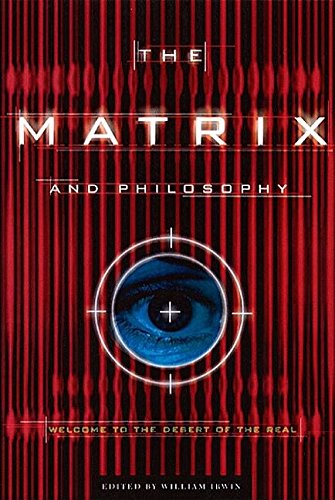
About The Matrix and Philosophy by William Irwin: A Clear Guide to Reality, Choice, and the Mind
What if the world around you was not real? What if every sound, face, road, and meal came from a machine? The Matrix made these questions exciting on screen. The Matrix and Philosophy by William Irwin takes the next step. It uses the film to help you think about truth, freedom, the mind, faith, happiness, and what it means to be human.
This is not a hard textbook that asks you to know big ideas before you start. It is a collection of short essays written by different thinkers and edited by William Irwin. Each writer looks at the film from a new side. One asks how we can know what is real. Another looks at Neo and Socrates. Other writers explore free will, Buddhism, religion, machines, false worlds, and the choice between a safe lie and a painful truth.
The story you know opens a much bigger door
Neo thinks he lives a normal life. Then he learns that the world he knows is a made-up system called the Matrix. His body is somewhere else, and machines feed a false life into his mind. Morpheus gives him a choice: stay with the easy story or wake up to a hard truth.
The book starts from this simple but strong idea. It does not retell the whole film. Instead, it asks what the film can teach us. Can our eyes fool us? Is a pleasant dream better than a painful real life? Are our choices truly free? Can a mind exist without a body? Do smart machines have value? If a person does the right thing only because fate says so, was it still a free act?
When a great film leaves you with questions
This book gives those questions room to grow. Twenty essays bring different views together in one place. The writers do not all give the same answer. That is part of the value. You can read one view, test it against another, and decide what makes sense to you.
The result is a bridge between film and philosophy. The action gives you a place to start. The essays help you slow down, look again, and name the ideas inside the story. Instead of saying, “That scene felt deep,” you can understand why it felt deep and what problem it raises.
Easy to enter, rich enough to read again
You do not need a degree in philosophy to enjoy this book. A little knowledge of the first Matrix film will help because the essays speak about its people, events, and key choices. If you have not watched the movie for a long time, a quick rewatch can make the reading even better.
The book is arranged as a set of essays, so you do not have to read it like a novel. You can begin at the first page, or you can choose a topic that pulls you in. Read about reality today, free will tomorrow, and ethics at the weekend. This form is useful for busy readers because each essay gives you a fresh start.
See the film through the eyes of great thinkers
One of the book’s strongest ideas links Neo with Socrates. Socrates asked people to question what they thought they knew. Neo also learns that the life he trusted may be false. The well-known image of people trapped in Plato’s cave fits the film too: people may take shadows for the whole world until someone turns toward the light.
Other essays move into doubt and knowledge. They ask how you can prove that your world is real. Your senses feel strong, but a dream can also seem true while it lasts. The Matrix makes that old problem easy to picture because its false world looks, sounds, and feels normal to the people inside it.
Truth, comfort, and the choice that changes everything
Cypher wants to go back into the Matrix. He knows it is false, but he wants comfort, taste, ease, and a life without the pain of the real world. His choice creates one of the book’s most useful questions: is it better to know a hard truth or enjoy a happy lie?
There is no small answer. Truth can set a person free, but freedom can bring fear and duty. Comfort can feel good, but it may depend on being controlled. The essays help you look at both sides without turning the issue into a simple good-versus-bad rule.
Freedom, fate, faith, and human value
Neo is told that he may be “the One,” yet he still has to act. This raises a hard problem. If his path is known before he takes it, is he free? If the Oracle can see what comes next, do his choices matter? The book uses the story to explore fate, foreknowledge, and free will in a way that readers can picture.
Religion also appears in many forms. The story has sacrifice, rebirth, belief, and a promised figure who may save others. One essay looks at Buddhism and the idea that the world we hold onto may not be what it seems. Other essays ask how different faiths and views can meet inside one story.
The human and machine conflict adds another layer. Are people more valuable simply because they are human? Can a machine think, feel, or deserve care? The book does not give one final rule. It shows the paths that different thinkers may take, then leaves room for your own view.
What you will find inside
This 2002 Open Court title is Volume 3 in the Popular Culture and Philosophy series. The commonly listed English paperback has 280 pages. William Irwin is the editor, and the book brings together essays by several philosophers rather than one long argument by a single author.
Inside, readers will find:
- Twenty essays grouped around major questions raised by The Matrix.
- Clear links to Socrates, Plato, skepticism, and the search for truth.
- Ideas about the mind, the body, matter, identity, and simulated life.
- Debate about fate, freedom, choice, happiness, and moral duty.
- Views connected with Buddhism, religion, existentialism, nihilism, Marx, and postmodern thought.
- Different voices that can be read alone, in order, or discussed with others.
- An index and references that help readers return to a topic or explore it further.
This range keeps the reading fresh. If one essay does not match your taste, the next may use a very different idea and style.
Why this book can change your next viewing
After reading, small parts of the film can feel new. A line that once sounded cool may carry a question about knowledge. A fight may show a struggle over control. The red and blue pills may become more than famous objects; they can stand for two ways of living.
That deeper view is the main benefit. You are not only collecting facts about a movie. You are learning how to look closely, compare ideas, spot hidden claims, and form your own answer. These skills can help with other films, books, classes, and real choices.
The book can also make philosophy feel less far away. Names such as Plato, Socrates, Kant, Sartre, and Marx can seem hard when met in a plain lesson. Here, their questions connect with a world you can see. The film becomes a map. You still have to think, but you do not have to begin in the dark.
A good match for many kinds of readers
Choose this book if you enjoy science fiction that makes you stop and think. It is a strong fit for fans who want more than plot notes or behind-the-scenes facts. It focuses on ideas, so it suits readers who enjoy asking “why” after the action ends.
Students can use it to see how a big idea works inside a familiar story. A teacher or book club can choose one essay and build a talk around it. Friends can read the same chapter and compare answers. Film lovers can use it before or after a rewatch. It can also be a thoughtful gift for someone who loves The Matrix, philosophy, artificial intelligence, virtual reality, or deep questions about life.
This is not the best pick for a reader who wants a new Matrix adventure, a script, or a simple guide to the plot. It is nonfiction and idea-led. The joy comes from thinking, not from finding extra scenes. Knowing this before buying helps you choose with confidence.
Read in the way that suits you
For the fullest path, watch the 1999 film first and then read the essays in order. The early pieces focus on knowledge and reality, giving you a base for later talks about ethics, faith, society, and meaning.
Keep a pencil or note page near you. Write one line after each essay: “I agree because…” or “I disagree because…” This simple habit turns reading into active thought. You can also mark scenes to watch again. When you return to the film, see whether the writer’s idea changes what you notice.
A comfortable copy made for regular reading
Bookish Wonderland offers a premium edition for readers who want a clean and lasting copy. The crystal-clear print helps each line stay sharp and easy to follow. Premium, eye-soothing cream paper gives the pages a softer look during long reading. High-quality stitched and glue binding helps the book stay firm through repeated use.
These details matter for an essay collection. You may open the same chapter more than once, move between sections, or keep the book ready for a film study talk. A durable binding supports that kind of use, while calm paper and clear text make longer reading sessions more pleasant.
Its neat layout also helps you find your place quickly, so short reading breaks do not become a struggle when you return to the page later at home.
Best Sellers Rank of This Book
- #901,529 in Books
- #518 in Philosophy Metaphysics
- #1,675 in Modern Western Philosophy
- #1,973 in Movie History & Criticism
These ranks are shown exactly as supplied for this product listing. Sales ranks can move over time, but they help show the kinds of shelves where readers find the book: philosophy, modern thought, and film study.
Bring a deeper question to your shelf
The Matrix and Philosophy is for the moment after you say, “I know the scene, but what does it mean?” It helps turn wonder into thought without taking away the fun of the film. You can read it for a class, share it with a friend, use it for a film night, or enjoy one essay at a time on your own.
If you are checking The Matrix and Philosophy by William Irwin Book price in Bangladesh, view the current price on the Bookish Wonderland product page before ordering. You can choose delivery inside or outside Dhaka, and Cash on Delivery is available across the country. Readers in Dhaka can ask about fast or urgent delivery when time matters.
Order your copy from Bookish Wonderland today and take the next step down the rabbit hole. Read the questions behind the action, test the answers for yourself, and return to The Matrix with a sharper eye. The choice to look deeper is yours.
If you require any customization or have any questions, please inbox us via FB or Insta.
| Primary Specification | |
| Author | William Irwin |
| Narrator | Oliver Wyman, Rick Adamson, Jennifer Jay Myers |
| Editor | William Irwin |
| Genre | Philosophy, nonfiction, film criticism and popular-culture studies |
| ISBN-13/ISSN | 978-0812695021 |
| ISBN-10 | 081269502X |
| Publisher | Open Court |
| Publishing Date | August 28, 2002 |
| Edition | First Edition |
| Language | English |
| Reading Age | 16+ |
| Format | Printed Book |
| Physical Specification & Quality | |
| Paper Quality | Premium eye-soothing cream paper |
| Binding Quality | High quality stitched and glue binding (for longevity) |
| Print Quality | Crystal-clear print |
| Pages | 320 pages |
| Country | USA |
| Logistics Information | |
| Weight | 343 gm |
| Length | 8.5 inches |
| Width | 5.6 inches |
| Height | 0.75 inch |