

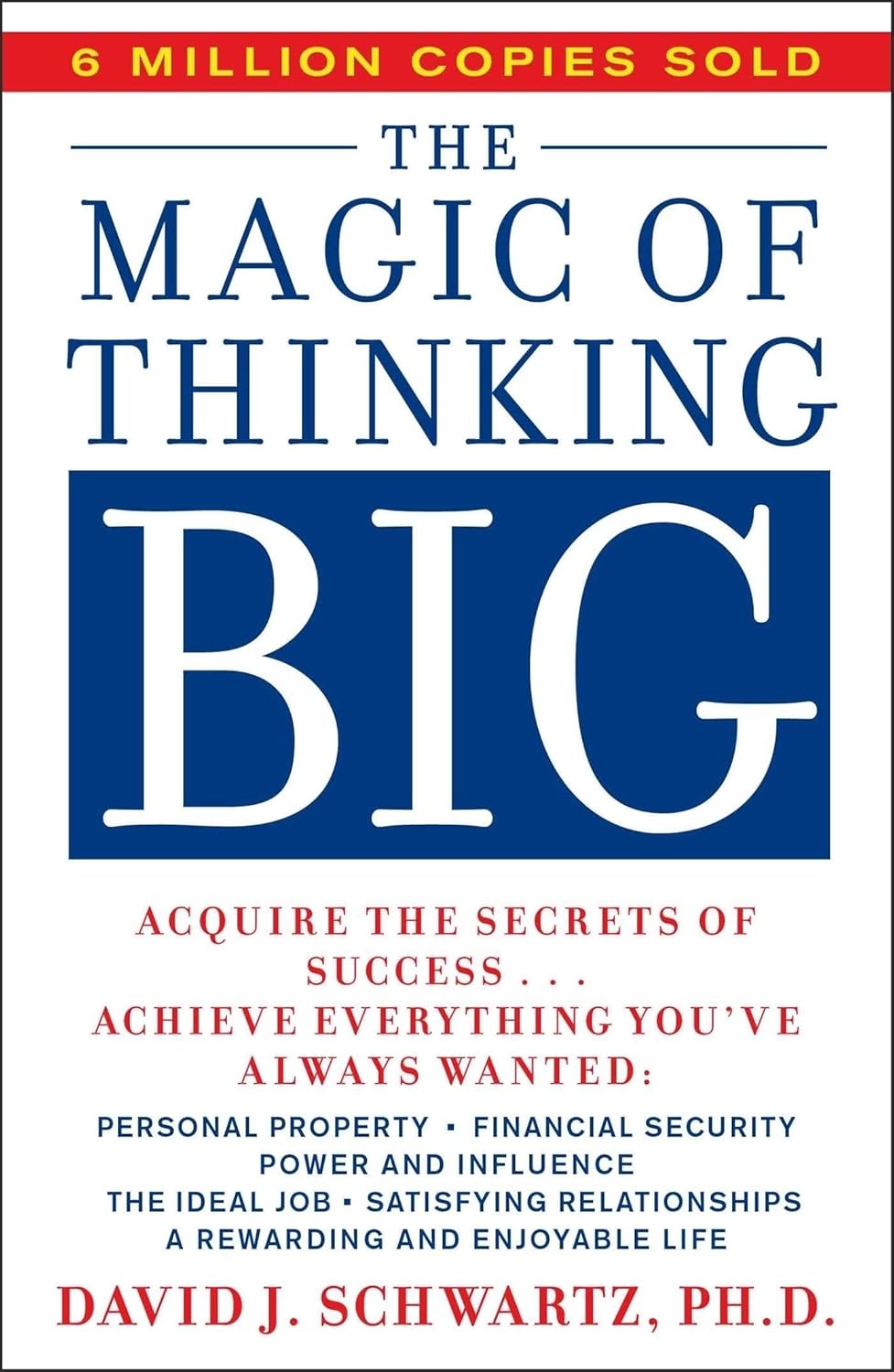
About The Magic of Thinking Big by David J. Schwartz
Big change often begins with one small thought: maybe I can do more than I believe. The Magic of Thinking Big by David J. Schwartz is a practical self-help classic for people who want more confidence, better goals, stronger action, and a more useful way to face work and life. It explains that success is not reserved only for people with great wealth, rare talent, or perfect luck. Ordinary people can improve their results by changing how they think, speak, plan, and act.
The title may sound like it promises a secret trick, but the lesson is more realistic. Thinking big is not sitting still and wishing for success. It means refusing to make yourself small before you begin. It means seeing what could be done, building belief, choosing a clear goal, and taking the next useful step. Schwartz uses simple examples from business, family life, leadership, sales, and daily relationships to show how thoughts can guide behaviour.
This book is for the person who has a dream but keeps delaying it. It is for the student who fears failure, the worker who feels unseen, the new business owner who doubts every move, and the leader who wants people to grow. Its message is clear: when your thinking becomes larger, your actions can become stronger too.
When You Keep Holding Yourself Back
Many people do not fail because they have no ability. They stop because they expect to fail. They look at a large goal and quickly list every reason it cannot work. They may say they are too young, too old, too busy, not clever enough, or unlucky. These thoughts feel safe because they protect a person from trying, but they also keep that person in the same place.
Fear can create the same trap. You may avoid speaking in a meeting because you fear looking foolish. You may delay starting a business because you fear losing money. You may not apply for a better role because you believe someone else must be more qualified. Waiting may reduce pressure for one day, yet it often makes the fear grow.
Schwartz offers a direct answer: replace excuses with action. Study the problem, prepare well, and do something useful now. The book does not say that every risk will succeed. It teaches that a person who believes improvement is possible is more likely to search for a plan, ask for help, practise a skill, and keep working after a setback.
Belief Is the Place Where Action Starts
One of the book’s main lessons is that belief changes what the mind looks for. When you believe a goal is possible, you begin asking how to reach it. When you decide it is impossible, your mind collects reasons to quit. Belief does not complete the work, but it helps release the energy needed to begin.
This is different from empty wishful thinking. You cannot simply repeat a sentence and wait for money, skill, or success to appear. Real belief leads to preparation. It makes you learn, test ideas, meet people, and improve your work. The value of confidence is that it supports useful behaviour.
Leave Excuses and Look for Answers
The book uses the word “excusitis” for the habit of building excuses. Common excuses may involve health, intelligence, age, or luck. Some limits are real and must be treated with care. Schwartz’s point is that people often turn one difficulty into a full reason to stop trying.
A better question is, “What can I do with what I have?” A young person may lack experience but bring energy and fresh ideas. An older person may have less time for a new path but bring judgment, patience, and strong contacts. A person who lacks one skill can learn it, find a partner, or choose another method.
Build Confidence by Moving Toward Fear
Confidence is not the complete absence of fear. It grows when you act while fear is present and discover that you can handle the result. Schwartz encourages readers to use action as a treatment for fear. If you fear making a call, prepare and make it. If you fear meeting people, begin one simple conversation. If a task feels huge, divide it into a first step you can complete today.
The book also shows how memory can feed either confidence or doubt. If you replay every embarrassing moment, you make fear stronger. If you remember what you learned, what went well, and how you recovered, your mind receives a fairer picture of your ability.
See Possibility Before Other People See It
Thinking big means looking beyond what something is today and seeing what it could become. A small shop can become a trusted brand. A weak student can become a skilled learner. A simple service can solve a larger customer problem. This kind of thinking helps people add value instead of only accepting the present shape of things.
Schwartz encourages creative thinking through a useful question: “How can I do better?” You do not need to invent a machine or create a world-changing idea. Creativity can mean saving time, explaining something more clearly, serving a customer better, improving a class, or finding a kinder way to solve conflict.
Make Your Attitude Work for You
People respond not only to what you know but also to the feeling you bring. Interest, respect, and honest enthusiasm can make work easier to share. A poor attitude can make even a strong idea difficult to accept. Schwartz therefore treats attitude as a tool that can be trained.
Enthusiasm grows when you learn more about a subject and find why it matters. A task that seems dull may feel different when you understand whom it helps or what skill it builds. Showing other people that they matter also strengthens trust. Remembering a name, listening carefully, and giving fair credit can improve both personal and professional relationships.
Turn “Someday” into a Real Action Habit
A good idea has little value if it never leaves your mind. The book repeatedly brings readers back to action. There will rarely be a perfect time when every doubt is gone and every detail is ready. Strong doers prepare enough, begin, and improve while moving.
This lesson is especially helpful for people who overthink. Planning matters, but planning can become another hiding place. Schwartz suggests using action to create fresh information. Make the first call, write the first page, visit the customer, start the lesson, or test the small version. The result will show what to change next.
Learn from Defeat Without Living Inside It
Every large goal includes mistakes, delays, and rejection. The difference between defeat and final failure is what you do next. Schwartz asks readers to study setbacks, take responsibility where needed, and search for a better method. Blame may protect pride for a moment, but learning creates another chance.
Constructive self-review is important. Ask what worked, what failed, and what one change could improve the next attempt. This is not the same as attacking yourself. Harsh shame makes people hide. Honest review turns pain into information.
The book also supports persistence with change. Repeating the same failed move forever is not strength. Keep the worthy goal, but experiment with the route. A rejected offer may need a clearer message. A weak exam result may require a new study system. A slow business may need a better product, market, or customer experience.
Use Goals to Give Your Effort Direction
Thinking big becomes useful when it has a target. The book encourages readers to decide where they want to go in work, family life, community, and personal growth. A clear goal helps you judge which tasks deserve time and which distractions can be ignored.
Long goals should connect with short action. A dream for the next few years needs a step for this month and a task for today. This link keeps ambition from becoming fantasy. It also makes a large aim feel less frightening because you only need to complete the next part.
Goals can increase energy when they are meaningful. They give effort a reason and make progress easier to see. Yet goals should not make you blind to people or health. The strongest plan supports a full life and leaves room to learn when new facts appear.
Think Like a Leader at Any Level
Leadership is not limited to a job title. A student can lead a group project. A parent can guide a family decision. A worker can improve a process before becoming a manager. Schwartz presents leadership as a way of thinking that respects people and looks for progress.
A useful leader tries to see a situation through another person’s eyes. This does not mean agreeing with everything. It means understanding what the other person needs, fears, or values before asking for action. People respond better when they feel seen rather than pushed.
A Comfortable Copy for Regular Use
Bookish Wonderland prepares this printed edition for readers who want to study, underline, revisit, and keep the book for a long time.
- Premium eye-soothing cream paper offers a soft page colour for comfortable reading.
- Crystal-clear print keeps the text sharp, clean, and easy to follow.
- High-quality stitched and glue binding helps the pages stay secure through repeated use.
These physical features suit a book built around practice. You may return to one lesson before a meeting, review the goal-setting ideas at the start of a month, or reread the action chapter when delay returns. A durable copy makes that regular use easier.
Who Can Use These Lessons?
Students can use the book to fight fear, plan larger goals, and take more responsibility for learning. Job seekers can apply its confidence and communication ideas before interviews. Employees can use it to improve initiative, relationships, and leadership habits.
Entrepreneurs and sales professionals may value the focus on service, belief, action, and creative problem-solving in a changing market today. Managers can use the people-focused lessons to guide teams with more respect. Content creators and freelancers can apply the action habit when perfection keeps work unpublished.
The book can also help outside business. Anyone beginning a course, building a healthy routine, planning a move, or returning after disappointment may find a useful push. Some examples reflect the time in which the book was written, but its central habits remain easy to connect with modern life.
Best Sellers Rank of This Book
- #6,056 in Books
- #66 in Motivational Management & Leadership
- #66 in Business Motivation & Self-Improvement (Books)
- #82 in Self-Esteem (Books)
Give Your Next Goal More Room to Grow
This book cannot do your work for you, and it does not promise that positive thoughts control every result. Its value is practical: it helps you notice small thinking, challenge weak excuses, choose a larger direction, and act with more confidence. Read it with a pencil, select one idea, and test it in real life.
To check The Magic of Thinking Big by David J. Schwartz book price in Bangladesh, view the latest price at Bookish Wonderland. Nationwide delivery and Cash on Delivery are available across the country. Customers can order inside or outside Dhaka, while fast or urgent delivery may be requested in Dhaka when the book is needed sooner.
Choose it for your own growth or give it to a student, new professional, entrepreneur, manager, or dreamer who needs a strong push toward action. Order your copy from Bookish Wonderland today, open the first chapter, and let one bigger thought lead to one better step.
If you require any customization or have any questions, please inbox us via FB or Insta.
| Primary Specification | |
| Author | David J. Schwartz |
| Narrator | Jason Culp for the unabridged audiobook, David J. Schwartz for the abridged audiobook |
| Genre | Self-help, personal development, motivation, business success, leadership, self-esteem |
| ISBN-13/ISSN | 978-0593713235 |
| ISBN-10 | 0593713230 |
| Publisher | Tarcher |
| Publishing Date | October 10, 2023 |
| Language | English |
| Reading Age | 18+ |
| Format | Printed book |
| Physical Specification & Quality | |
| Paper Quality | Premium eye-soothing cream paper |
| Binding Quality | High quality stitched and glue binding (for longevity) |
| Print Quality | Crystal-clear print |
| Pages | 320 pages |
| Country | United States |
| Logistics Information | |
| Weight | 327g |
| Length | 8.5 inch |
| Width | 5.6 inch |
| Height | 0.66 inch |