

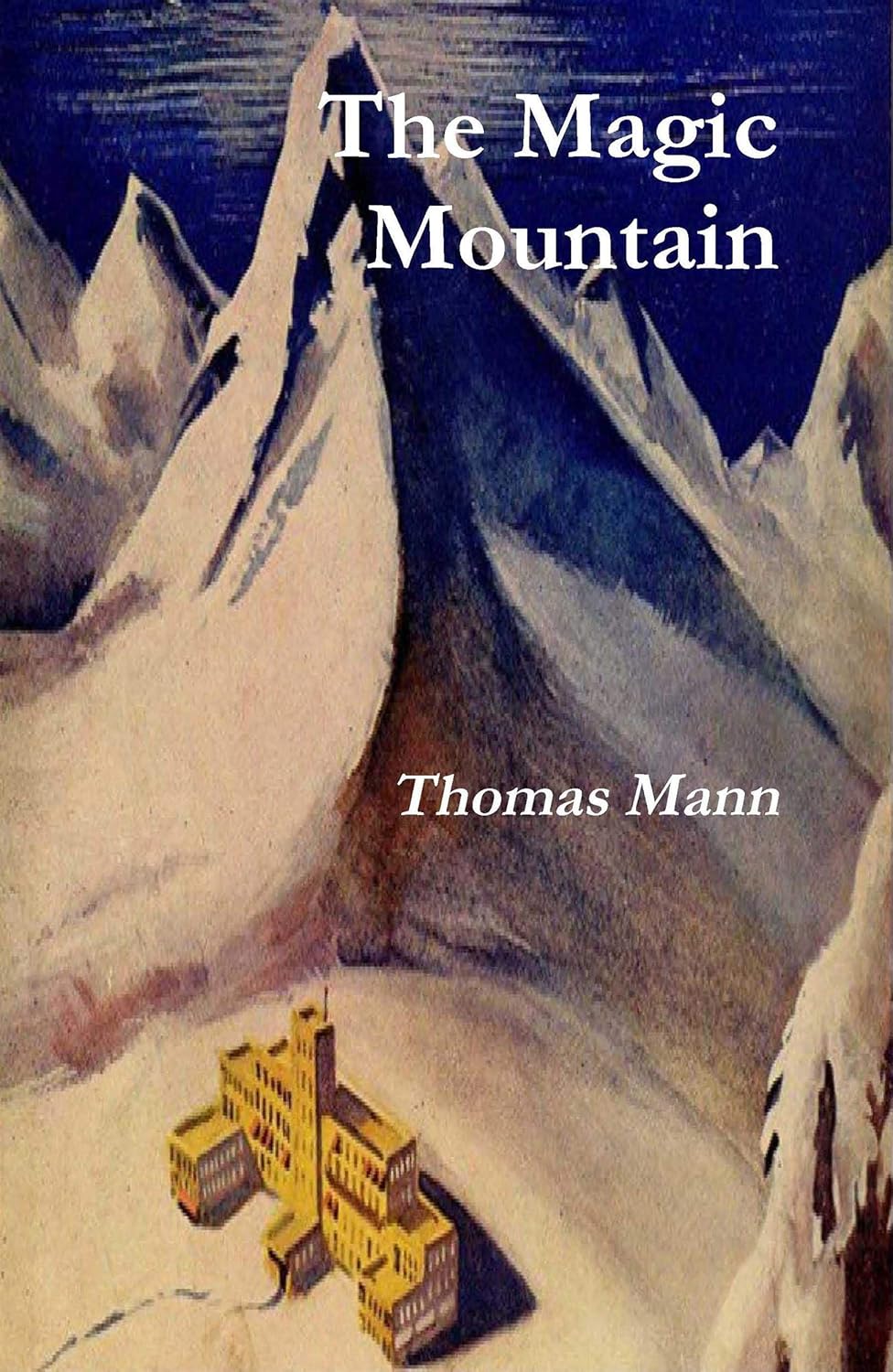
About The Magic Mountain Novel by Thomas Mann
First published in 1924, The Magic Mountain follows a young man into a strange, hidden world. Hans Castorp plans to visit his sick cousin for only three weeks. A health concern keeps him at the sanatorium, and those weeks grow into seven years. He meets people with strong beliefs, falls under the spell of a mysterious woman, and begins to see time, illness, love, and death.
Thomas Mann turns one mountain hospital into a picture of Europe before the First World War. Meals, talk, medical checks, and walks carry a question. What makes life worth living? Does reason guide us, or do feelings rule us? Can a person grow while standing apart from normal life? The novel never gives one easy answer. It lets many voices speak, then asks you to think with Hans.
This is not a quick adventure built around constant action. It is a rich, slow, thoughtful classic. Its reward comes from the ideas, people, mood, and details that gather power as pages turn. Readers who enjoy deep books will find a world waiting on the mountain.
A Three-Week Visit That Changes Everything
Hans Castorp is a young engineer. He visits Joachim Ziemssen at the Berghof sanatorium near Davos in the Swiss Alps. Joachim wants to recover and return to his military life. Hans expects a trip home. Instead, the mountain starts to hold him.
Life at the sanatorium follows its own rules. Patients measure fever, rest on balconies, eat long meals, and talk about their bodies. Days appear calm, yet fear is always near. A cough may mean little or everything. A medical report can change a future. Hans stops feeling like a guest and becomes part of this community.
That change creates the novel's central pull. Hans has left life, but has he escaped it, delayed it, or entered a deeper form of it? As his stay grows longer, the reader feels how easily routine can reshape a person. The mountain becomes both a place and a test.
When Everyday Life Feels Too Fast
Modern life can feel loud and rushed. Work and study can fill the hours, leaving little room to ask what matters. The Magic Mountain offers another pace. It places the reader where time stretches, habits become visible, and conversation can change how life looks.
If you want a book that does more than pass time, this novel gives you space to slow down. It does not tell you what to think. It presents opposing ideas through memorable people and lets you judge them. You may pause, disagree, return to a page, or notice that your view has changed.
Its answer is not a simple rule. It is attention. By watching Hans listen, desire, fear, learn, and make mistakes, you become alert to your use of time. The book can turn reading into a private conversation about how to live.
Its questions stay open, inviting every reader to bring experience into the journey with Hans.
Time Moves Differently on the Mountain
One of the novel's great subjects is time. A first day can feel long because everything is new. Later, months may pass at once because each day looks the same. Mann builds this feeling into the story. Readers do not only hear ideas about time; they feel it speed up, slow down, and blur.
Hans's seven-year stay becomes more than a plot point. It shows how people lose track of life when one day copies another. It also shows how memory, change, and attention shape duration. A clock counts equal hours, but the heart does not feel each hour equally.
This remains close to real life. A holiday can vanish. A waiting room can feel endless. Years can pass inside one routine. The novel gives shape to that common mystery.
A Small Europe Inside One Sanatorium
The Berghof gathers people from many countries and groups. They eat, watch one another, argue, flirt, rest, and wait. Life above the valley forms a model of Europe before the First World War.
History is moving toward danger. Patients debate culture, freedom, faith, science, power, and progress. Their talks carry the hopes and fears of an age. The mountain looks cut off, yet the world's tensions are already there.
You do not need to be a history expert. The conflict is clear: people want different futures, and each believes something important is at risk. Knowing war is near adds weight to their words. The calm halls and snowy views feel fragile.
Ideas Become Living Characters
Two of Hans's teachers are Lodovico Settembrini and Leo Naphta. Settembrini speaks for reason, dignity, education, freedom, and progress. He wants Hans to think clearly and return to useful life. His concern can inspire, but his speeches can sound proud or limited.
Naphta challenges him with extreme ideas about faith, authority, suffering, and social order. He is sharp, learned, and difficult. Their debates pull Hans between different views of the world. Neither man is an answer key. Both can be clever, moving, unfair, or dangerous.
Mynheer Peeperkorn brings another kind of influence. His force does not come mainly from clear argument. It comes from personality, mood, and presence. Through these men, Mann shows that people are moved not only by facts. Style, confidence, feeling, and desire can also decide which idea seems true.
Love in a World of Waiting
Hans becomes drawn to Clawdia Chauchat, a patient whose appearance captures his attention. She is not a reward at the end of a romance. She is tied to his longing, memory, illness, and wish to step beyond safe rules.
Their connection brings heat to the cold mountain setting. A glance across the dining room can matter as much as a large event. Mann shows desire as something beautiful, comic, risky, and hard to control. Hans may believe he understands his feelings, yet longing often carries him into uncertainty.
Readers looking for a normal love story should expect something more thoughtful. The romance grows inside a book about time and mortality. That makes each moment feel vivid and temporary. Love is not separate from fear; it makes life feel urgent.
Illness, Death, and the Wish to Live
Because the story takes place in a tuberculosis sanatorium, sickness is part of life. Medical talk becomes routine, even when the subject is serious. Patients live beside danger. Some treat illness as an identity, some resist it, and some use the mountain as shelter from duties below.
The book asks whether illness can teach without becoming something to worship. Hans gains sympathy and knowledge, but protected life can make him passive. This keeps the novel honest. Suffering may deepen attention, yet life calls for choice and action.
Death appears often, but the novel is not empty or hopeless. It searches for a humane answer: to look at darkness clearly while still choosing care, courage, love, and life. That hard-won balance gives the story its lasting emotional strength.
Serious Questions with Wit and Satire
The Magic Mountain is famous for big ideas, but it can also be funny. Mann gently mocks social manners, medical habits, proud speeches, romantic dreams, and the odd rules of sanatorium life. Hans himself can be innocent, stubborn, curious, and amusing.
The humor keeps the book human. It stops thinkers from becoming dry symbols and reminds us that people can look grand and foolish. Even learned arguments happen between bodies that need food, rest, warmth, and attention.
This mix of irony and care is one reason the novel stays alive. It can challenge an idea without flattening the person who holds it. The result is satire with depth, not a row of easy jokes.
A Long Book Worth Reading Slowly
This novel is long and demanding. Some chapters move through detailed debates or careful descriptions rather than fast plot. That is part of its design. Mann wants readers to experience the mountain's altered pace and to notice how small events collect meaning.
The best way to read it is in steady parts. Try one chapter or several pages each day. Keep a note of characters if that helps. Do not worry about understanding every reference. Follow Hans, notice which ideas attract or disturb you, and let the shape grow slowly.
It is also a fine book for rereading. A scene that first looks comic may later seem sad. A speech that sounds wise may reveal a hidden weakness. Each return can uncover another link between time, politics, desire, illness, art, and responsibility.
What This Reading Journey Can Give You
The Magic Mountain rewards patience with more than a famous title. It can sharpen attention, build comfort with difficult questions, and help you compare arguments without rushing toward an answer.
The novel also offers an unforgettable setting. Snow, balconies, dining rooms, quiet corridors, and changing seasons form a mood that can stay in the mind for years. Its characters are large enough to represent ideas but strange and human enough to feel alive.
Students can use the book to explore modernism, European history, symbolism, satire, and the growth of a young person. Book clubs can discuss whether the mountain educates Hans or traps him. Independent readers can simply enjoy entering a complete world and coming back with new questions.
Made for a Comfortable, Lasting Read
Bookish Wonderland prepares this English book for readers who want comfort through a long classic. Premium eye-soothing cream paper gives the pages a soft look under normal light. Crystal-clear print keeps the text sharp and easy to follow. High-quality stitched and glue binding adds strength, helping the book hold together through steady reading and careful rereading.
These details matter in a novel that asks you to spend real time with it. A comfortable page supports focus, while durable construction makes the copy suitable for a personal shelf, study collection, or thoughtful gift.
Who Will Enjoy This Classic Most?
Choose this book if you enjoy literary fiction that explores the mind as deeply as events. It suits readers of philosophical novels, modernist classics, European fiction, historical settings, and stories about personal growth. It is especially rewarding for patient adult readers and advanced students who enjoy reflection.
It may not suit someone seeking a fast thriller. Its pleasures come from atmosphere, character, irony, and ideas. Read it during a quiet season, use it for a literature course, or share it with a book club.
As a gift, it works well for a serious reader, a classic-book collector, a teacher, or someone interested in how Europe changed before the First World War. It is a book to live with, mark thoughtfully if desired, and remember.
Best Sellers Rank of This Book
- #26,472 in Books
- #1 in Modernism Literary Criticism (Books)
- #16 in German Literature (Books)
- #267 in Fiction Satire
Bring the Mountain to Your Bookshelf
For readers comparing The Magic Mountain by Thomas Mann book price in Bangladesh, Bookish Wonderland offers a premium, durable copy with a simple ordering experience. Delivery is available across Bangladesh, both inside and outside Dhaka. Cash on Delivery is available nationwide, so you can order with ease. If you need the book quickly in Dhaka, ask about the fast or urgent delivery option before placing your order.
Open this classic when you are ready for a book that will not rush you. Follow Hans up the mountain and watch three planned weeks open into an education. The story asks for patience, but gives back beauty, humor, feeling, and questions that last beyond the final page.
Order The Magic Mountain today from Bookish Wonderland and begin one of modern literature's most remarkable journeys.
If you require any customization or have any questions, please inbox us via FB or Insta.
| Primary Specification | |
| Author | Thomas Mann |
| Translator | H. T. Lowe-Porter |
| Narrator | David Rintoul |
| Genre | Literary fiction, philosophical fiction, modernist fiction, Bildungsroman, satire, allegorical fiction |
| ISBN-13/ISSN | 978-0679772873 |
| ISBN-10 | 9780679772873 |
| Publisher | Vintage |
| Publishing Date | October 1, 1996 |
| Language | English |
| Reading Age | 16+ |
| Format | Printed book |
| Physical Specification & Quality | |
| Paper Quality | Premium eye-soothing cream paper |
| Binding Quality | High quality stitched and glue binding (for longevity) |
| Print Quality | Crystal-clear print |
| Pages | 720 pages |
| Country | Germany |
| Logistics Information | |
| Weight | 727g |
| Length | 8.5 inch |
| Width | 5.6 inch |
| Height | 1.28 inch |