

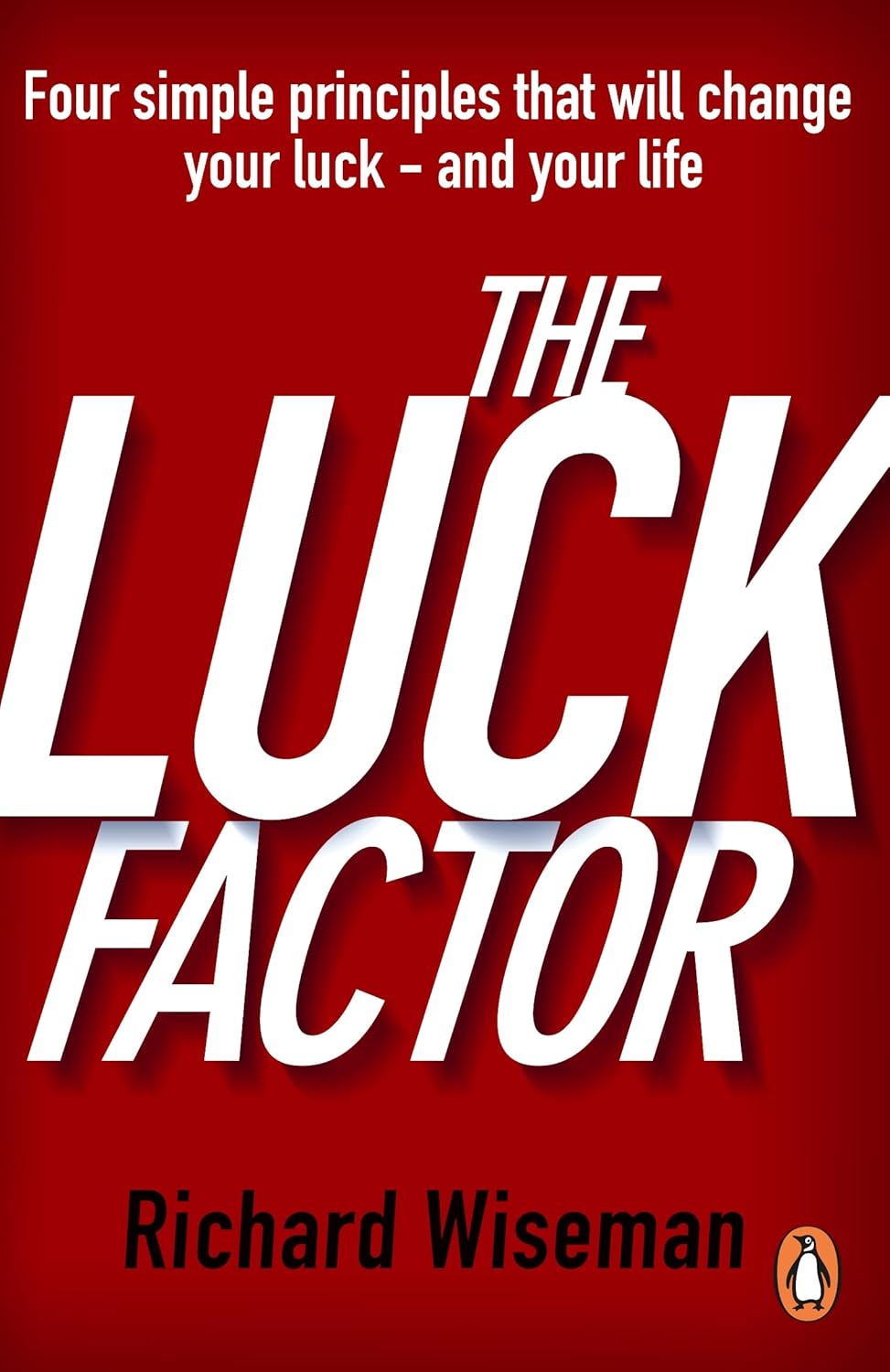
About The Luck Factor Book by Dr. Richard Wiseman
Do some people really have more luck than others? The Luck Factor Book by Dr. Richard Wiseman gives a hopeful answer. Lucky people often think and act in ways that help them notice chances, meet people, make useful choices, and recover when life goes wrong. This book shows how you can practise those habits.
Dr. Richard Wiseman is a psychologist who studied hundreds of people who called themselves lucky or unlucky during a ten-year project. From their habits, he found four main principles behind a lucky life. The result is a self-help guide with psychology, examples, and simple exercises.
This is not a book about magic, charms, or waiting for a miracle. It is about seeing more, trying more, trusting useful signals, and taking control after a setback. If you often say, “Nothing good happens to me,” this book can help you look at your choices again. It cannot promise a perfect life, but it shows practical ways to welcome opportunity.
Why Luck May Feel Out of Reach
Bad days can slowly change the way you see the world. After a missed job, a failed plan, or a painful loss, you may stop trying. You may enter a room and look only for danger. You may avoid talking to new people because you expect rejection. When this becomes a habit, good chances can pass by without being seen.
The Luck Factor offers a useful way out of this circle. It asks you to notice how attention, expectation, intuition, and response shape what happens next. A person who feels unlucky may wait for life to improve first. Wiseman turns that idea around: small changes in thought and action can help create better conditions for useful events. You begin with what you can control, one step at a time.
The message feels warm because it does not blame you for every hard event. Random problems still happen. The book simply shows that your response matters. You can look for another road, learn from the moment, speak to someone new, or try again with a better plan. This gives readers hope without making false promises.
The First Principle: Notice More Chances
The first principle is to maximise chance opportunities. Lucky people tend to create, notice, and act on unexpected openings. They often build wider social circles, stay more relaxed, and welcome new experiences. These actions give chance more room to work.
Think about two people at the same event. One looks only at a phone and speaks to nobody. The other smiles, asks a simple question, and starts a friendly talk. The second person has not controlled fate. Yet that small action may lead to a new friend, idea, customer, teacher, or job. The book helps you understand why open behaviour can increase the number of useful moments you meet.
The Second Principle: Hear Your Inner Voice
The second principle is to listen to lucky hunches. We often call this feeling intuition or a gut feeling. It can come from small details that the mind has noticed before we can explain them in words. Wiseman explores how lucky people give these signals space and use calm moments to hear them better.
This does not mean making every major choice from a sudden feeling. Good decisions can still need facts, time, and advice. The useful lesson is balance. If something feels wrong, pause and look again. If an idea keeps returning, ask why. Quiet thinking, rest, and a clear mind may help you understand what your attention is trying to tell you.
Readers who feel rushed by work, study, family needs, or online noise may find this part helpful. It gives them permission to slow down before choosing. A short pause can reveal fear, excitement, or a detail that was missed. The skill is not magic. It is careful self-awareness.
The Third Principle: Expect Good Fortune
The third principle is to expect good fortune. When people believe a useful result is possible, they may keep going longer, speak with more confidence, and treat others more positively. Those actions can change the response they receive. Hope can therefore become part of a helpful cycle.
The book does not ask you to smile at every problem or deny real risk. Instead, it shows why expectation can guide behaviour. If you expect a conversation to fail, you may speak less and leave early. If you believe it may go well, you may listen, ask another question, and give the other person time. Your belief does not control the world, but it can shape your effort.
The Fourth Principle: Turn Bad Luck Around
The fourth principle is to turn bad luck into good. Lucky people face pain and disappointment too. The difference often appears in what they do afterward. They may imagine how the event could have been worse, avoid thinking about it forever, search for a useful lesson, and take control of the next step.
This idea can be powerful when a plan breaks. A cancelled trip may create time for family. A rejected application may show which skill needs work. A wrong turn may reveal a better place. Not every loss has a hidden gift, and the book does not make sadness wrong. It teaches you to feel the event, then ask whether any value, warning, or new direction can be taken from it.
That shift can reduce the feeling of being trapped. Instead of asking only, “Why did this happen to me?” you can also ask, “What can I do now?” The second question gives your energy somewhere useful to go.
Easy Ideas You Can Put Into Practice
Many self-help books give big advice but leave readers unsure about the first move. The Luck Factor is more practical. Its ideas can become small personal experiments. You might start a conversation, change a routine, keep note of good events, picture a goal going well, or look for one useful result after a hard day.
These activities make the book suitable for slow reading. Finish a part, try the idea, and watch what changes. You can write notes in a separate journal and return after a week. Ask which action felt natural, which one was hard, and which chance you might have missed before. This turns reading into active learning.
Keep it nearby and return whenever you need a fresh view of hard days or decisions.
The language connects research with everyday life, so you do not need to study psychology first. Stories help explain the main points, while the four-part structure makes the message easy to remember. Readers can use one principle at a time instead of trying to rebuild life in a single day.
What This Book Can Help You Build
The greatest benefit is a stronger sense of possibility. You may become more alert to useful people, places, and ideas. You may make decisions with better awareness. You may keep trying when an early result is poor. You may also learn to separate an unlucky event from the belief that your whole life is unlucky.
The lessons can support confidence because they focus on actions within reach. You cannot order a perfect future, but you can send an application, join a class, ask for help, prepare well, and notice a new path. Each action creates another point where something useful may begin.
The book may also improve the way you talk to yourself. A fixed label such as “I am unlucky” can make every setback feel like proof. A flexible view asks what happened, what was learned, and what could be tried next. That kinder and more active voice can help at work, in study, in relationships, and during change.
Who Will Enjoy The Luck Factor?
This book is a strong choice for adults and older teens who enjoy practical psychology, personal growth, habits, decision-making, and true stories about human behaviour. It suits readers starting a career, building a business, looking for new direction, or trying to feel hopeful after a difficult season.
It can also help people who like books about mindset but want more than cheerful quotes. Wiseman connects the subject to research and clear principles. The tone makes big ideas feel friendly, giving curious readers a simple entry into psychology without a heavy textbook style.
Read it during a quiet weekend, a daily commute, or a short morning routine. Use it alone as a personal guide, discuss it with friends, or take one principle into a team session. It can create useful talks about opportunity, fear, hope, and the small choices that shape daily experience.
A Thoughtful Gift for a Fresh Start
The Luck Factor makes a meaningful gift for someone beginning university, changing jobs, moving to a new place, or recovering from a plan that did not work. It does not tell them to wait for good fortune. It offers a kind message: new chances may appear when we learn to look, connect, decide, and respond in a different way.
It is also a good gift for readers who love surprising studies and ideas they can share. The four principles are easy to discuss at home, at work, or over tea. A single chapter may lead to a helpful talk about why two people can meet the same event but see very different possibilities.
Made for Comfortable, Regular Reading
Bookish Wonderland prepares this copy for readers who want a pleasant book in their hands. The pages use premium, eye-soothing cream paper, which feels gentle during longer reading times. Crystal-clear printing keeps the words sharp and easy to follow. High-quality stitched and glue binding gives the book strong support, helping it stay together through regular reading and careful rereading.
This quality makes the copy useful for readers who plan to mark lessons with removable notes, revisit the exercises, or keep the title in a personal growth collection. It is made to be read, used, shared with care, and placed back on the shelf for another day.
Best Sellers Rank of This Book
- #1,245,498 in Books
- #8,859 in Personal Transformation Self-Help
Find the Right Book Price in Bangladesh
If you are searching for The Luck Factor Book by Dr. Richard Wiseman price in Bangladesh, Bookish Wonderland offers an easy way to order this useful psychology and self-help title. You can shop from Dhaka or any other district and have the book sent to your address.
Nationwide delivery is available across Bangladesh, including service inside and outside Dhaka. Cash on Delivery is available throughout the country, so you can pay when your order arrives. Readers in Dhaka may also request fast or urgent delivery when they need the book sooner. Delivery time and charge can depend on the location and selected service.
Before buying, check the current Book price in Bangladesh on the product page. This helps you see the latest listed amount and available order options. With a large collection of durable English books, Bookish Wonderland makes it simple to add a practical personal growth title to your reading list.
Give Better Chances Room to Find You
Waiting for luck can make life feel small. Learning how lucky people think and act can help you take a more active role. The Luck Factor gives you four memorable tools: notice chances, hear useful hunches, expect good results, and find a way forward after trouble. Each tool is simple enough to try in ordinary life.
Choose this book if you want a hopeful guide that respects both chance and choice. Read one idea, test it, and notice what becomes possible. A new life may not arrive in one grand moment. It may begin with a calmer mind, an open question, a different route, or the courage to try once more.
Order The Luck Factor Book by Dr. Richard Wiseman from Bookish Wonderland today. Bring home a book that may change how you see opportunity, setbacks, and your next step.
If you require any customization or have any questions, please inbox us via FB or Insta.
| Primary Specification | |
| Author | Dr. Richard Wiseman |
| Narrator | Peter Noble |
| Genre | Self-help, psychology, personal development, motivational and inspirational |
| ISBN-13/ISSN | 978-1401359416 |
| ISBN-10 | 1401359418 |
| Publisher | Miramax |
| Publishing Date | August 18, 2004 |
| Language | English |
| Reading Age | 18+ |
| Format | Printed book |
| Physical Specification & Quality | |
| Paper Quality | Premium eye-soothing cream paper |
| Binding Quality | High quality stitched and glue binding (for longevity) |
| Print Quality | Crystal-clear print |
| Pages | 240 pages |
| Country | United Kingdom |
| Logistics Information | |
| Weight | 248g |
| Length | 8.5 inch |
| Width | 5.6 inch |
| Height | 1 inch |