

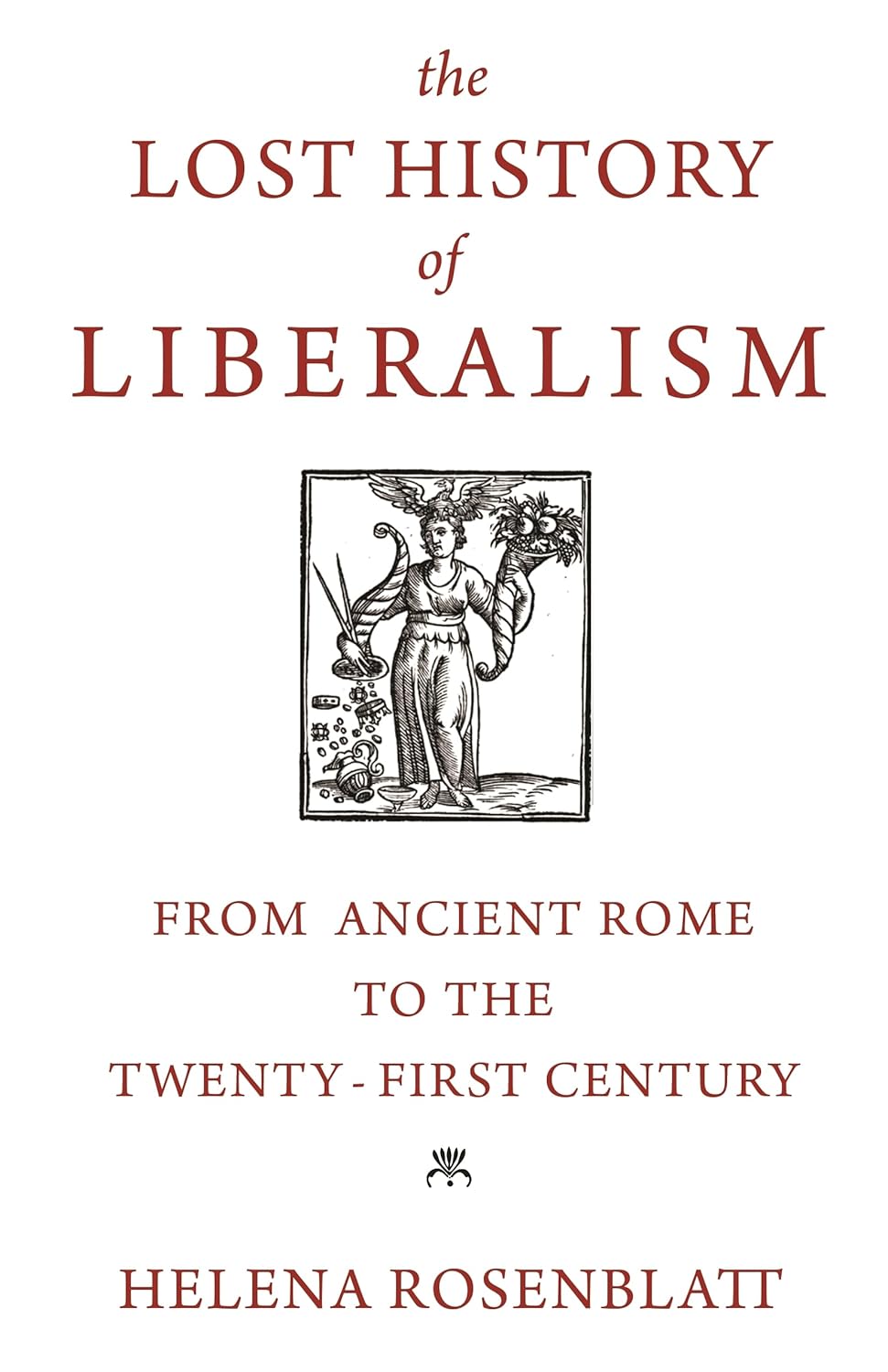
About The Lost History of Liberalism by Helena Rosenblatt: See a Familiar Idea in a New Way
What does “liberal” really mean? Ask five people and you may hear five answers. One may think of personal freedom; another, big government. Others connect it with free markets, social change, or Western politics. The word is common, yet people often use it differently.
The Lost History of Liberalism by Helena Rosenblatt opens that puzzle across many centuries. Its main question is simple: how did the words “liberal” and “liberalism” change over time? Rosenblatt takes readers from ancient Rome through the French Revolution, nineteenth-century Europe, modern democracy, and the Cold War. She shows that liberalism did not begin as the clear, fixed idea many people now imagine. Its story is wider, stranger, and more human.
This is a choice for anyone who wants to understand political words. It does not tell you what party to support.
When one word causes many arguments
Modern political talk can feel like a room where everyone speaks, but nobody listens. People defend liberalism, blame it, or announce its death without agreeing on what it is. That confusion makes debate louder and less useful.
Rosenblatt offers a way into the problem. Instead of pushing a modern definition backward, she studies how people used the words in their own time. This shows why a “liberal” in older thought was not the same as one in present-day America, France, or elsewhere. Meaning grew through debate, war, revolution, religion, law, and social change.
The result is not a short dictionary answer. It is a map. Once you see where the word has travelled, modern arguments become easier to understand. You can notice when two speakers use one label for different ideas and ask: which kind of liberalism are we discussing?
A simple view of the book’s main idea
The book begins far before liberalism became the name of a political belief. In the older meaning, to be liberal was closely tied to being generous, noble in spirit, educated, and useful to the wider community. Rosenblatt traces this language back to the Roman world and shows how the idea of liberality stayed alive through later periods.
She then turns to the French Revolution and its aftermath. Her central case is that modern liberalism was not born as a British or American project based only on individual rights. France helped give liberalism its political form, while German thinkers later reshaped it. This returns important European people and debates to a history often told through John Locke, Adam Smith, and John Stuart Mill.
Early liberals often joined rights with duties. Many discussed moral character, family, religion, education, social care, and the common good. Rosenblatt argues that the modern focus on the free individual became dominant much later, especially when liberalism was remade as an American creed during the Cold War.
Travel from Cicero to the modern age
The journey begins with the meaning of being “liberal” from Cicero to Lafayette. It enters the French Revolution, when old rulers, new rights, and reform changed political life. Readers meet Madame de Staël and Benjamin Constant, who gave new force to liberal language. They faced a hard question: how could society protect freedom after violent revolution and strong rule?
The story moves into the July Revolution of 1830 and the Revolutions of 1848. Liberalism meets democracy and the “social question”: poverty, workers, voting, inequality, and government duty. The book explains why many nineteenth-century liberals feared that mass democracy could be captured by a popular ruler and become despotism.
Later chapters bring in Napoleon III, Abraham Lincoln, William Gladstone, and Otto von Bismarck. Rosenblatt explores public education, religion, national strength, old and new liberalisms, and the word’s slow arrival in American politics. The book becomes a history of an argument that never stopped changing.
The surprise at the heart of the history
Many readers begin with a common picture: liberalism means individual choice, private rights, limited control, and freedom from interference. Rosenblatt does not say those ideas are unimportant. She asks us to see that they are not the whole story and were not always at the centre.
Earlier liberal language often attacked selfishness rather than celebrating it. A liberal person was expected to care about others, act with generosity, and serve the public good. Political freedom needed citizens with good character. Rights stood beside duties. Some liberals also believed religion could help improve society, and many placed great value on family and moral education.
This is the part that can change how a reader sees the present. If liberalism once carried a stronger language of duty, respect, tolerance, justice, and shared life, then today’s narrow definitions are choices made by history, not timeless facts. The book does not give an easy plan for modern politics. It gives readers something more basic: forgotten ideas that can make future discussion richer.
Important people become part of one clear story
A long history of political thought can sound difficult, but Rosenblatt uses real arguments and turning points. Famous names appear, yet this is not a list to memorize. It shows ideas moving between people and countries.
Lafayette connects American liberty with French reform. Madame de Staël and Benjamin Constant answer revolution and Napoleon with new liberal language. Tocqueville faces democracy’s promise and danger. John Stuart Mill joins a larger European discussion. Lincoln, Gladstone, and Bismarck show liberal claims meeting nation building, war, leadership, and state power.
The book also covers workers, women, voting, education, churches, and empire. Political ideas do not live only in books; they affect who may speak, learn, vote, rule, and belong. By placing thinkers inside events, Rosenblatt shows why definitions changed and why that mattered.
What kind of reading experience should you expect?
This is serious nonfiction, but it reads as guided history, not a dry list of theories. Each part builds on the last. The reader follows one word across time as new meanings gather around it, making a large subject easier to hold.
You need not agree with every conclusion to gain value. Read with a pencil, sticky notes, or notebook. Mark where an older meaning differs from one you know. List figures or events to explore later. Compare Rosenblatt’s case with your school lessons or news habits.
Interested general readers can follow the book, but it asks for attention. Some parts cover dense political and religious debates. Reading one chapter at a time is better than rushing. The reward is a clearer view of how language shapes thought.
Who is this book for?
The Lost History of Liberalism is a good fit for university students of history, political science, philosophy, law, international relations, and social studies. It can help with essays, class talks, reading lists, and research because it connects major thinkers with the changing use of a central political term.
Teachers and curious readers can use it to build a wider timeline of modern political thought. Journalists, writers, debaters, and policy readers may find it useful because public arguments often depend on labels that are never explained. Anyone reading about democracy, conservatism, socialism, nationalism, rights, or the modern West can gain helpful context here.
It is also suitable for readers who feel tired of party slogans. Rosenblatt does not reduce the subject to left against right. She shows that liberal traditions contained disagreement from the beginning. That makes the book useful for readers who want history before judgment and careful meaning before a quick opinion.
Ways to use it beyond one reading
Read from start to finish for the full path, or use chapter topics for a course. A student can make a timeline showing how “liberal” changed from a moral quality into a political identity. A group can discuss one chapter each week and compare old debates with current news. A teacher can pair sections with writings by Cicero, Constant, Tocqueville, or Mill.
The book can sharpen media reading. When someone calls a policy liberal or illiberal, ask what meaning is being used. Are they discussing rights, markets, democracy, moral duty, social reform, or state size? This habit can reveal hidden disagreement.
This work sits well beside books on democracy and political ideas. It is not only about the past; it helps you read the language of the present with care.
A premium copy made for long reading
Bookish Wonderland offers this printed English book for readers who want a clean, comfortable copy they can return to. The physical features are chosen for practical reading:
- Premium eye-soothing cream paper gives the page a softer look and helps long study sessions feel more comfortable.
- Crystal-clear print keeps names, dates, notes, and arguments sharp and easy to follow.
- High-quality stitched and glue binding adds strength, helping the pages stay secure through study, rereading, and shelf storage.
These details matter for a book that invites marking, checking earlier chapters, and returning to key ideas. It can serve as a study copy, a reference book, or a thoughtful gift for someone interested in history and politics.
Easy ordering from Bookish Wonderland
If you are checking The Lost History of Liberalism by Helena Rosenblatt book price in Bangladesh, see the current price shown on this product page. Bookish Wonderland makes ordering simple for readers across the country.
Cash on Delivery is available nationwide, both inside and outside Dhaka. Standard delivery reaches customers across Bangladesh, while a fast or urgent delivery option may be available in Dhaka. You can order for yourself, send the book as a gift, or add it to a university reading collection.
Bookish Wonderland also carries a large collection of premium, durable English books. This makes it easier to build a shelf around political history, philosophy, democracy, and related subjects in one place. For delivery help or customization questions, contact the store through Facebook or Instagram before ordering.
Why this history matters now
Political words are powerful because they can gather hope, fear, praise, and blame. They are also dangerous when their meaning is treated as obvious. Liberalism remains part of arguments about democracy, rights, government, markets, religion, and community. Yet the same word can point in opposite directions in different countries.
Rosenblatt gives readers the patience to look behind the label. Her history shows that ideas are made by people responding to real problems. They change when nations rise, revolutions fail, wars begin, voters enter politics, schools spread, and old beliefs face new pressure. Knowing that history does not end disagreement, but it can make disagreement more honest.
The book’s deepest appeal is the feeling of discovery. A familiar word slowly becomes unfamiliar, then clearer. You begin to notice the parts of its past that modern talk has dropped. You also see that liberalism was never one simple thing owned by one nation or party. It was a living debate about freedom, duty, character, justice, and the kind of society people should build together.
Add a clearer voice to your political reading
Choose this book when you want more than another loud opinion. Choose it when you want to know why one of the world’s most used political words carries so many meanings. The Lost History of Liberalism by Helena Rosenblatt offers a wide historical view, memorable thinkers, and a strong challenge to a familiar story.
Place your order from Bookish Wonderland today and begin the journey from ancient Rome to modern political life. Check the listed price, select the delivery option that suits you, and use Cash on Delivery wherever you live in Bangladesh. Open the first chapter, follow the word through time, and discover how much history can hide inside one name.
If you require any customization or have any questions, please inbox us via FB or Insta.
| Primary Specification | |
| Author | Helena Rosenblatt |
| Narrator | Xe Sands |
| Editor | Brigitta van Rheinberg and Amanda Peery |
| Genre | Nonfiction; Intellectual history, political history and political philosophy |
| ISBN-13/ISSN | 978-0691203966 |
| ISBN-10 | 0691203962 |
| Publisher | Princeton University Press |
| Publishing Date | February 4, 2020 |
| Language | English |
| Reading Age | 16+ |
| Format | Printed Book |
| Physical Specification & Quality | |
| Paper Quality | Premium eye-soothing cream paper |
| Binding Quality | High quality stitched and glue binding (for longevity) |
| Print Quality | Crystal-clear print |
| Pages | 368 pages |
| Country | USA |
| Logistics Information | |
| Weight | 385 gm |
| Length | 8.5 inches |
| Width | 5.6 inches |
| Height | 1 inch |