

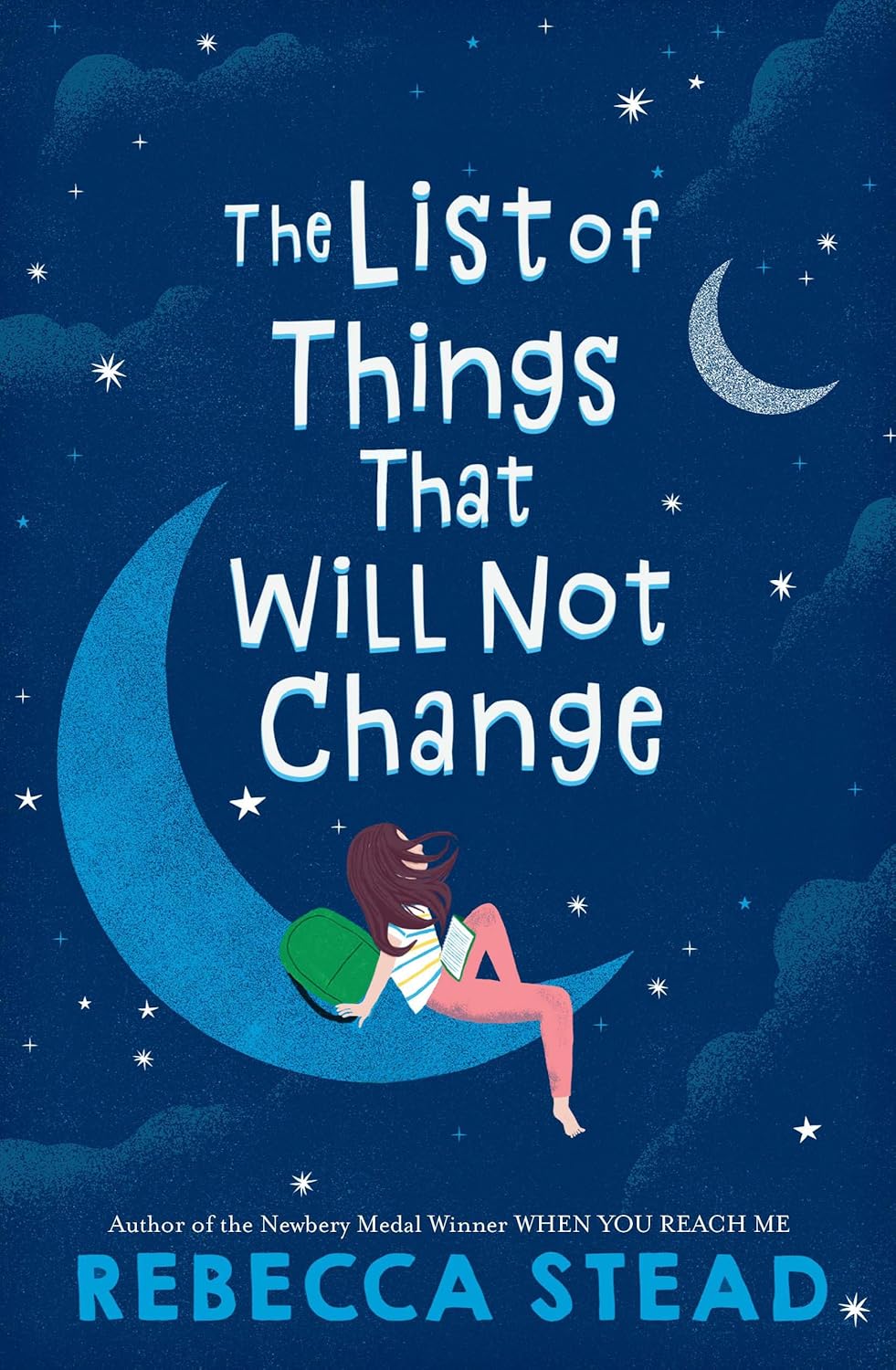
About The List of Things That Will Not Change by Rebecca Stead
Some parts of life can change very quickly. Parents may separate, people may move to new homes, and a family may begin to look different. For a child, these changes can feel scary and hard to understand. The List of Things That Will Not Change by Rebecca Stead tells a warm and honest story about finding safety when life does not stay the same.
Bea lives between two homes after her parents’ divorce. Many things are now different, but her parents give her a green notebook containing a special list. The list reminds Bea of the important things that will never change. Most of all, both her mother and father will always love her.
When Bea learns that her father and his boyfriend, Jesse, are going to marry, she feels very happy. Jesse has a daughter named Sonia, which means Bea may finally have the sister she has always wanted. Bea dreams of a perfect new family, but real people do not always behave the way we imagine. As the wedding comes closer, Bea faces new feelings, old worries and a secret from her past.
This is a gentle middle-grade novel about divorce, blended families, anxiety, anger, guilt, forgiveness and unconditional love. The language is clear, the chapters are manageable, and Bea’s voice feels natural. The official paperback edition is recommended for readers aged 8–12 and Grades 3–7.
When Family Changes Feel Frightening
Children often want life to stay safe and familiar. When parents divorce or remarry, a child may have many questions. Will both parents still love me? Where will I live? Will my family ever feel normal again? What happens when new people become part of the family?
This book does not pretend that these questions have quick or perfect answers. Instead, it gives young readers a caring character who is trying to understand them too.
Bea’s green notebook becomes a source of comfort. It helps her remember that some truths remain steady, even when her daily life changes. Her parents live apart, but they both care for her. Her family has a new shape, but love has not disappeared. This simple idea makes the story comforting for readers who are facing change in their own lives.
Rebecca Stead also shows that children can feel several emotions at once. Bea can be happy about the wedding while still feeling worried. She can love her family while becoming angry with them. She can be excited about gaining a sister while feeling unsure about how the relationship will work. These mixed feelings make her believable and easy to understand.
Young readers may see parts of themselves in Bea. Adults may also gain a clearer view of the worries children sometimes hide.
Meet Bea and Her Changing Family
Bea is thoughtful, caring and full of strong feelings. She wants to do the right thing, but she sometimes acts before thinking. She also carries guilt about something she did in the past. Her mistake does not make her a bad person, but she must learn to face it honestly.
After her parents’ divorce, Bea begins moving between their two homes. Her family gives her a list of things that will remain true. The first and most important promise is that her mother and father will always love her.
Later, Bea’s father announces that he will marry Jesse. Bea already loves Jesse, and she is thrilled by the idea of gaining a stepsister. Jesse’s daughter, Sonia, lives far away, and Bea has never met her. Still, Bea creates a bright picture of their future in her mind. She believes they will immediately become close sisters.
Sonia, however, has her own thoughts and fears. She does not experience the coming marriage in exactly the same way as Bea. Through their relationship, the story shows that two children can face similar events but feel very differently about them.
The wedding brings the family together, but it also brings hidden problems to the surface. Bea must listen to other people, accept that she cannot control every result and understand that love does not make every difficult feeling disappear.
The story follows this emotional journey without becoming too dark or too hard to read. It contains serious ideas, but it also offers humour, joy, family warmth and hope.
A Story About the Things Love Can Hold Together
At the centre of The List of Things That Will Not Change is a simple truth: a family can change without losing its love.
Bea’s parents are divorced, but they continue to care about her happiness. Her father is building a new life with Jesse, yet this does not remove Bea’s mother from her world. Sonia may become Bea’s sister through marriage, but the girls still need time and honesty to build a real relationship.
The book helps readers understand that families do not all look the same. Some children live with both parents. Others move between two homes. Some have stepparents, stepsiblings or two fathers. What makes a family strong is not one fixed shape. It is love, respect, truth and the willingness to care for one another.
The story also speaks about fear and worry. Bea attends therapy and slowly learns better ways to understand her emotions. Therapy is shown as a normal source of help, not something shameful. Bea is allowed to be imperfect, confused and sometimes angry.
This makes the novel useful for conversations about emotional health. It can help children name feelings that are difficult to explain. It can also help parents and teachers discuss how people can take responsibility for mistakes without believing they are forever bad.
Kirkus highlights the novel’s treatment of divorce, therapy, a gay parent, homophobia, eczema and anger while praising its accessible voice and balanced approach.
Why Bea Feels So Real
Bea is not written as a perfect child. She worries, becomes jealous, loses her temper and makes choices she later regrets. At the same time, she is loving, hopeful and eager to bring people together.
Her imperfections are one of the book’s greatest strengths.
Children sometimes believe that making a mistake means they are bad. Bea’s story offers a kinder and more useful lesson. A good person can still do something hurtful. What matters is being honest, accepting responsibility, apologising and trying to grow.
Bea’s physical discomfort also forms an important part of her life. She has eczema, and her skin problems can become painful and stressful. This detail helps show how feelings and physical discomfort can affect one another. It may also help children with eczema or another visible condition feel represented.
Rebecca Stead writes about these experiences through Bea’s direct voice. Readers enter her thoughts and understand why she makes certain choices, even when those choices are not wise. The result is a character who feels like a real child rather than a lesson placed inside a story.
Publishers Weekly praised the book’s believable young voice and its exploration of Bea’s inner life, anxiety, resilience and relationships.
What Young Readers Can Learn
The book offers valuable lessons without sounding like a school lecture.
Readers learn that change is not always the same as loss. A new home, a remarriage or a blended family can feel strange at first, but new love and joy may grow from that change.
They also learn that another person’s feelings may be different from their own. Bea wants Sonia to become her perfect sister immediately. She must learn that Sonia has her own memories, needs and worries. Friendship and family bonds cannot be forced. They grow through patience and trust.
The story teaches the value of speaking honestly. Bea keeps difficult feelings and a painful memory inside herself. Hiding them does not make them disappear. When truth finally comes forward, she has a chance to understand what happened and begin healing.
Another important lesson is that adults do not always have perfect answers. Bea’s parents and other family members are loving, but they are human. They make choices, feel pain and sometimes misunderstand one another. The book shows young readers that families can remain caring even when their members are imperfect.
Most importantly, the novel gives children hope. Life may not follow the plan they imagined, but they can still find safety, connection and happiness.
Gentle LGBTQ+ Family Representation
Bea’s father is gay, and he is preparing to marry Jesse. Their relationship is presented as a loving and natural part of Bea’s family life.
The story does not turn Bea’s father into a symbol. He is a parent who cooks, cares for his daughter, plans a wedding and tries to help his family. Jesse is also more than simply his partner. He is an important person in Bea’s life and the father of Sonia.
The book acknowledges that prejudice exists, but its main focus is family. Bea loves her father and Jesse, and she looks forward to their marriage. Her biggest dream is to gain a sister through their new family.
This representation can help children from LGBTQ+ families feel seen. It can also introduce other readers to a family that may look different from their own while sharing the same needs for love, trust and belonging.
The novel fits naturally into home, classroom and library collections that value kind, age-appropriate stories about different family structures.
Easy to Read but Rich in Meaning
The writing is clear enough for young independent readers, yet the emotional ideas are deep enough to interest adults.
The official Yearling paperback lists an age range of 8–12 years, Grades 3–7 and a Lexile level of 680L. That edition contains 240 pages, while the original hardcover contains 224 pages, so page totals can differ by edition.
Short scenes and Bea’s friendly voice help the story move smoothly. Readers are not given long or difficult explanations. Instead, they learn about Bea through family talks, memories, therapy visits, school experiences and preparations for the wedding.
The story can be read for simple enjoyment, but it also rewards careful thought. A younger reader may focus on Bea’s wish for a sister and the coming wedding. An older reader may notice the deeper questions about guilt, forgiveness, anxiety and personal growth.
This balance makes it a good choice for family reading. Children and adults can enjoy the same book and then discuss it from different points of view.
Features That Make This Book Special
-
A warm and believable first-person story told through Bea’s eyes
-
A thoughtful look at divorce and life between two homes
-
Positive representation of a loving LGBTQ+ family
-
Honest discussion of anxiety, anger, guilt and therapy
-
A realistic blended-family and stepsister relationship
-
Clear language suitable for middle-grade readers
-
Short, engaging scenes that support independent reading
-
Strong themes of love, honesty, empathy and forgiveness
-
A hopeful message for children facing family changes
-
A meaningful story for parents, teachers and school libraries
-
A Time selection among the ten best YA and children’s books of 2020
How This Story Can Help Its Reader
A good children’s book can do more than fill free time. It can give a child words for an emotion they could not explain before.
A reader whose parents are divorced may feel less alone when Bea moves between two homes. A child joining a blended family may understand that excitement and fear can exist together. Someone who feels guilty about a mistake may learn that honest action can lead to forgiveness and growth.
The novel can also build empathy. Readers see that Bea and Sonia react differently to the same marriage. Neither child’s feelings are meaningless. Each needs to be heard.
Parents can use the book to begin gentle conversations about family change, worry, therapy and personal responsibility. Teachers may use it when discussing realistic fiction, character growth, point of view or diverse families. Counsellors and caregivers may find its central list useful as an idea: a child can write down the safe and dependable things in their own life.
The book does not promise that every problem will vanish. Its comfort comes from something more truthful. People can live through difficult change when they have love, support and the courage to speak honestly.
A Beautiful Choice for Many Reading Moments
The List of Things That Will Not Change by Rebecca Stead works well for:
-
Independent reading by children aged 8–12
-
Shared reading between a parent and child
-
School and classroom reading
-
Family discussions about divorce or remarriage
-
Conversations about blended and LGBTQ+ families
-
Lessons about empathy and emotional awareness
-
Readers who enjoy gentle, realistic stories
-
Children learning to accept and repair mistakes
-
Birthday or holiday gifts for thoughtful young readers
-
School, home and community library collections
-
Book clubs focused on family, identity and growing up
-
Adults who enjoy sensitive middle-grade fiction
The story is especially valuable for readers who prefer emotional books without fantasy battles, complicated worlds or frightening action. Its drama comes from ordinary life: a family meeting, a wedding, a hoped-for sister, a hidden mistake and the need to tell the truth.
Those ordinary moments become powerful because they matter so much to Bea.
Premium Reading Quality from Bookish Wonderland
A touching story deserves a physical copy that feels comfortable to read and strong enough to keep.
Bookish Wonderland offers this title with premium eye-soothing cream paper. The soft cream colour helps reduce the harsh look that bright white pages can create during long reading sessions. Crystal-clear printing keeps the letters sharp, clean and easy to follow.
The high-quality stitched and glue binding is made for better longevity. It helps the pages remain secure during repeated reading, careful classroom use and long-term shelf storage. The durable build also makes the book suitable as a gift.
These quality choices create a smoother reading experience for both children and adults. Readers can focus on Bea’s story without being distracted by weak printing, uncomfortable paper or loose pages.
Bookish Wonderland also carries a large collection of premium and durable English books, making it easier for readers to find meaningful stories for home, school or gifting.
Order Easily from Anywhere in the Country
Searching for The List of Things That Will Not Change by Rebecca Stead price in Bangladesh becomes easier with Bookish Wonderland. Customers can order online and receive delivery inside or outside Dhaka.
Nationwide Cash on Delivery is available, allowing customers to pay when the book arrives. Readers in Dhaka may also request a fast or urgent delivery option when they need the book quickly. Delivery time and availability can depend on the address and current stock.
This service is helpful for parents buying a thoughtful book for a child, teachers adding new reading material to a classroom or readers who want a warm and meaningful family story without visiting a physical shop.
Order your premium copy from Bookish Wonderland today. Enjoy clear printing, comfortable cream paper, durable binding, nationwide delivery and Cash on Delivery across Bangladesh. Let Bea’s green notebook remind a young reader that even when life changes, love can remain.
If you require any customization or have any questions, please inbox us via FB or Insta.
| Primary Specification | |
| Author | Rebecca Stead |
| Narrator | Rachel L. Jacobs |
| Editor | Wendy Lamb |
| Genre | Middle Grade Fiction, Realistic Fiction, Contemporary Fiction, Family Fiction, LGBTQ+ Fiction, Coming-of-Age Fiction |
| ISBN-13/ISSN | 978-1101938126 |
| ISBN-10 | 1101938129 |
| Publisher | Yearling |
| Publishing Date | April 5, 2022 |
| Language | English |
| Reading Age | 8–12 years |
| Format | Paperback |
| Physical Specification & Quality | |
| Paper Quality | Premium eye-soothing cream paper |
| Binding Quality | High quality stitched and glue binding (for longevity) |
| Print Quality | Crystal-clear print |
| Pages | 240 pages |
| Country | United States |
| Logistics Information | |
| Weight | 261 gm |
| Length | 8.5 inches |
| Width | 5.6 inches |
| Height | 0.57 inch |