

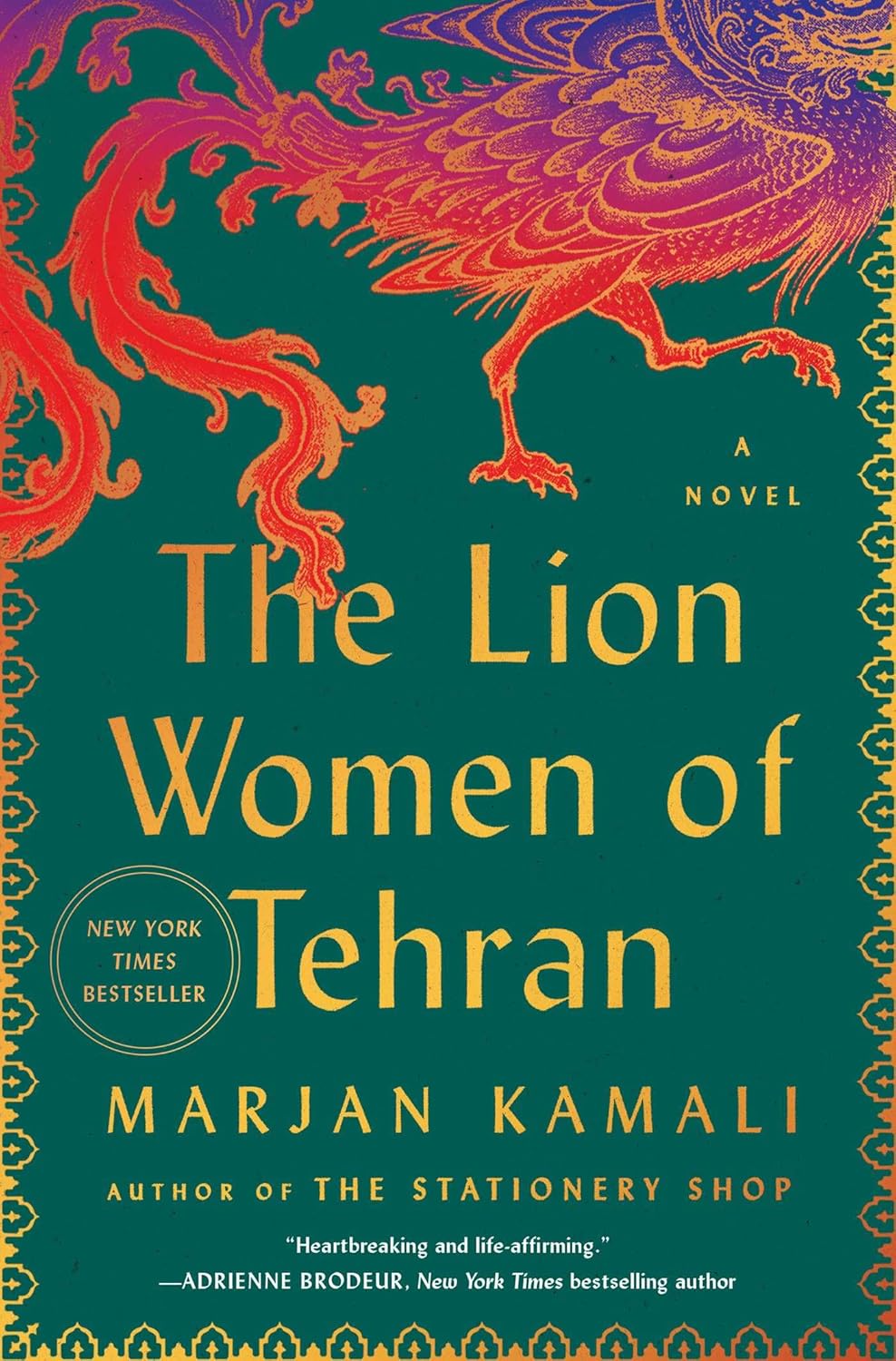
About The Lion Women of Tehran Book by Marjan Kamali
Some friends enter our lives and change us forever. Even when years, distance, pain, and hard choices pull them away, their place in our hearts remains. The Lion Women of Tehran Book by Marjan Kamali is a moving historical novel about this kind of friendship. It follows Ellie and Homa, two Iranian girls from very different homes who dream of growing into brave “lion women.”
Their story begins in 1950s Tehran. Ellie once lived a rich and comfortable life, but everything changes after her father dies. She and her mother must leave their old home and move to a small house in a poorer part of the city. Ellie feels lonely and lost until she meets Homa at school.
Homa is warm, bold, caring, and full of hope. She welcomes Ellie into her home and heart. Together, the girls explore Tehran’s Grand Bazaar, learn to cook in Homa’s family kitchen, share dreams, and promise to become strong women. Yet life slowly takes them in different directions. When Ellie returns to a richer part of society, their friendship begins to weaken.
Years later, Ellie and Homa meet again. They are older, and Iran is changing around them. Political unrest is growing, women are fighting for their rights, and every personal choice carries a greater risk. Then one terrible act of betrayal changes both women’s lives.
Marjan Kamali tells a story filled with friendship, family, social class, political struggle, guilt, love, courage, and forgiveness. It is emotional without losing its sense of hope. Readers who enjoy meaningful stories about women, history, and lasting human bonds may find this book difficult to put down. The official publisher describes it as a novel set across three transformative decades in Tehran and centred on friendship, feminism, and political activism.
When You Want More Than a Simple Historical Story
It can be hard to find a novel that teaches you about history while also giving you characters who feel real. Some historical books contain many facts but little emotion. Other novels tell a touching story without helping readers understand the time or place in which it happens.
The Lion Women of Tehran brings these two parts together. It introduces readers to a changing Iran through the lives of Ellie and Homa. Large political events are shown through homes, schools, friendships, marriages, protests, fear, and everyday choices. This makes the history easier to understand because readers see how it affects ordinary people.
The story does not treat Iran as a simple background. Tehran feels alive through its busy streets, markets, food, family customs, homes, schools, and deep social differences. Readers can see how wealth gives Ellie certain choices while Homa’s life creates a different kind of strength and awareness.
The novel also answers an important emotional question: can a friendship survive a serious betrayal? Ellie cannot simply forget what happened. She must live with the results of her choices. Homa must carry pain that affects far more than herself. Their story explores whether forgiveness can exist when the harm cannot be undone.
This makes the book a strong choice for anyone tired of shallow characters or easy answers. It offers emotional depth, historical meaning, and difficult moral questions in one readable story.
Meet Ellie and Homa
Ellie is seven years old when her safe world falls apart. After losing her father, she moves with her mother to a small home in downtown Tehran. Her mother is unhappy about their new life, and Ellie has no close friend to comfort her.
Then Ellie meets Homa.
Homa has a bright and fearless spirit. She gives Ellie the friendship she needs. The two girls play together, visit the Grand Bazaar, learn family recipes, and speak about their future. Homa’s family home offers Ellie warmth during a painful time. Their friendship becomes one of the strongest parts of Ellie’s childhood.
The girls call the brave women they hope to become “lion women.” To them, a lion woman is strong enough to follow her dreams and stand against unfair rules. However, growing up makes that dream much harder than it first appeared.
Ellie later gets the chance to return to her former wealthy life. She enters a better school, becomes popular, and slowly grows distant from Homa. Their different social positions begin to shape their ideas and choices. When Homa returns to Ellie’s life, the old connection is still there, but so are the differences between them.
Homa becomes deeply interested in justice and women’s rights. Ellie wants safety and acceptance. Neither woman is without fear, but they respond to fear in different ways. This difference creates the emotional centre of the novel.
The reader watches their friendship develop, break, and change over many years. It becomes clear that childhood love can remain powerful even after people hurt each other. Their bond is not perfect, which is exactly why it feels human.
A Story Spread Across a Changing Iran
The novel begins in the 1950s and follows Ellie and Homa through several important decades. During this period, Iran experiences deep political and social change. Public unrest grows, political pressure becomes stronger, and the lives of women are shaped by changing laws and expectations.
Marjan Kamali places these events close to her characters. Politics is not presented only through leaders or dates. It enters classrooms, kitchens, friendships, marriages, workplaces, and family discussions. It changes what people may safely say and what women are allowed to do.
Homa refuses to accept that women should remain silent or have fewer rights. She wants a fairer society and is willing to take risks for it. Ellie is more careful because she fears losing the safety she has regained. Their different responses show how people can experience the same country and time in very different ways.
The novel also explores social class. Ellie understands both hardship and wealth because she lives in both worlds. Homa sees unfairness clearly and wants change. Their friendship crosses this class line, but it cannot fully escape its power.
Readers do not need to know Iranian history before opening the book. The personal story helps explain the wider setting. However, this is still historical fiction rather than a history textbook. The characters and their private lives are part of a fictional narrative created by the author.
Friendship, Betrayal, and the Hope of Forgiveness
At its heart, this is a book about friendship between women. Ellie and Homa meet when they are young enough to believe that love and shared dreams can solve everything. As they grow older, they learn that fear, class, family pressure, and politics can test even a deep bond.
Betrayal is one of the novel’s central themes, but the book does not use it only to create shock. It studies what happens after trust is broken. The consequences continue across time. Guilt can follow a person into a new country and a new life. Pain can change a family for years.
The story also asks whether one harmful choice should define a person forever. Ellie’s actions have serious effects, but the novel gives space to regret and personal growth. Homa has every reason to remain angry, yet her courage is not limited to political action. It also appears in the way she faces loss, remembers friendship, and decides what kind of woman she wants to be.
Forgiveness in this book is not easy or quick. It does not erase the past. Instead, it becomes a possible way to face the truth and continue living. This makes the emotional journey more convincing than a simple happy ending.
Readers who have lost a friend, grown apart from someone, or wished they could repair an old mistake may connect strongly with Ellie and Homa.
Why the Title Matters
The phrase “lion women” comes from the girls’ shared dream of becoming brave, independent adults. As children, they imagine strength as something clear and exciting. As women, they discover that courage can take many forms.
For Homa, being a lion woman means speaking against unfair treatment and fighting for women’s freedom. Her courage is public and active. She is ready to place herself in danger for what she believes.
Ellie’s path is less direct. She often chooses comfort and safety, and some of her choices cause pain. Her journey asks whether courage can begin later, after a person has failed. She must learn to face the truth rather than hide from it.
The title therefore belongs to more than one kind of woman. It honours women who protest openly, women who care for their families, women who survive loss, and women who find the strength to admit what they have done.
This message makes the story feel connected to the present. Although the novel is set in earlier decades, its questions about women’s rights, personal freedom, friendship, and moral courage remain important today.
A Rich Picture of Tehran and Persian Life
The setting is one of the book’s strongest features. Tehran is shown as a place of colour, sound, food, family, beauty, division, and change. Readers visit busy market stalls, family kitchens, schools, wealthy homes, and smaller neighbourhoods.
Food has a special role in the story. Ellie and Homa cook and eat together, and these moments become part of their bond. Persian dishes link friendship, family, memory, and home. Marjan Kamali has explained that she used food to connect past and present and to show the lasting influence of early friendship.
These details do more than make the setting beautiful. They remind readers that a country is not only its political conflicts. It is also made of daily life, shared meals, childhood games, family habits, hopes, and ordinary people.
The book may therefore appeal to readers who like stories that make a place feel close and alive. It offers a warm human view of Iranian culture while also showing serious social and political pressures.
What Makes This Book Worth Reading?
The book offers several experiences within one story:
-
A long and complex friendship between two memorable women
-
An emotional coming-of-age journey
-
A look at three changing decades in Tehran
-
Themes of courage, women’s rights, class, and political action
-
A painful betrayal with lasting results
-
Questions about guilt, redemption, and forgiveness
-
Strong family relationships and cultural detail
-
Descriptions of Persian food, markets, homes, and traditions
-
A thoughtful book-club story with many points for discussion
-
Clear, emotional writing that remains easy to follow
The official US publisher lists the novel as a New York Times bestseller and presents it as a suitable book-club read. The 2024 US edition has 336 pages, while the 2025 trade paperback has 352 pages, so the page total depends on the edition.
A Premium Reading Experience from Bookish Wonderland
A powerful novel deserves a physical form that feels good to read and can remain in your collection. Bookish Wonderland prepares this edition for readers who value comfort, clear text, and durability.
-
Premium eye-soothing cream paper: The soft cream colour is comfortable for long reading sessions and creates less harsh glare than bright white paper.
-
Crystal-clear print: Sharp and clean text helps every page remain easy to read.
-
High-quality stitched and glue binding: The combined binding gives the book better support and helps it withstand regular reading.
-
Comfortable printed format: You can read without a screen, mark your place, and enjoy the feeling of turning real pages.
-
Durable shelf value: The strong construction makes it suitable for a home library, repeated reading, or gifting.
These physical features support the emotional experience without being repeated throughout the page. You can focus on Ellie and Homa’s story while enjoying a book made for comfortable, lasting use.
How This Book Can Benefit the Reader
Historical fiction can help readers connect with a time and place through human lives. Instead of remembering only names and dates, you follow people who have hopes, fears, families, and difficult choices.
This novel may help readers:
-
Understand how political change can affect ordinary families
-
Think more deeply about women’s rights and social freedom
-
Explore the effects of class differences on friendship
-
See why guilt can remain powerful for many years
-
Discuss whether forgiveness is possible after serious harm
-
Learn about parts of Persian family and food culture
-
Appreciate the lasting influence of childhood friendships
-
Build empathy for people facing social and political pressure
The story does not tell readers that every problem has a simple answer. It encourages them to think about why people make harmful choices and whether people can grow after making them.
Who Will Enjoy The Lion Women of Tehran?
This novel is a good match for adult and mature young-adult readers who enjoy emotional historical fiction. It may especially suit people who like:
-
Stories centred on women’s friendship
-
Novels set in Iran or the wider Middle East
-
Family stories that cover many years
-
Books about political change and women’s rights
-
Characters who are loving but imperfect
-
Emotional stories about regret and second chances
-
Book-club novels with serious discussion topics
-
Cultural detail, food, and a vivid sense of place
-
Hopeful stories that do not ignore pain
Readers who enjoyed The Stationery Shop may also be interested because both novels are written by Marjan Kamali and combine Iranian history with intimate human relationships. However, the two books have separate characters and stories. You do not need to read The Stationery Shop before this novel.
Because the book contains political danger, betrayal, imprisonment, loss, and emotional pain, it is better suited to readers who are comfortable with serious themes.
Good Ways to Read and Share It
The Lion Women of Tehran works well in several settings.
For personal reading: Choose it when you want an emotional story that can hold your attention while also giving you meaningful ideas to consider.
For a book club: The friendship between Ellie and Homa creates many useful questions. Readers can discuss class, courage, political action, guilt, women’s rights, and forgiveness.
As a thoughtful gift: It can be a meaningful present for someone who enjoys historical fiction, strong female characters, or books about lasting friendship.
For students and curious readers: The novel can support an interest in Iranian culture and twentieth-century history, but it should be used as fiction alongside reliable historical sources.
For a weekend reading plan: Its clear storytelling and emotional tension make it suitable for readers who enjoy becoming fully absorbed in one book over several days.
Best Sellers Rank of This Book
-
#619 in Books
-
#9 in 20th Century Historical Fiction (Books)
-
#11 in Friendship Fiction (Books)
Order The Lion Women of Tehran in Bangladesh
If you are searching for The Lion Women of Tehran by Marjan Kamali price in Bangladesh, Bookish Wonderland offers a premium printed edition made for comfortable reading and long-term use. It is a strong choice for readers who want an emotional novel, a meaningful gift, or a beautiful new addition to their personal library.
Nationwide delivery is available across Bangladesh, with service both inside and outside Dhaka. Cash on Delivery makes ordering simple, and customers in Dhaka may request a fast or urgent delivery option when available.
Ellie and Homa’s story is about the friends we remember, the mistakes we carry, and the courage it takes to face the past. It can break your heart, make you angry, and still leave you with hope. Order your copy from Bookish Wonderland and discover why a childhood promise to become “lion women” continues to matter across decades.
If you require any customization or have any questions, please inbox us via FB or Insta.
| Primary Specification | |
| Author | Marjan Kamali |
| Narrator | Mozhan Navabi, Nikki Massoud |
| Editor | Kathryn A. Kenney-Peterson |
| Genre | Historical Fiction, Women’s Fiction, Friendship Fiction, Coming-of-Age Fiction, Literary Fiction, Political Fiction |
| ISBN-13/ISSN | 978-1668036594 |
| ISBN-10 | 1668036592 |
| Publisher | Gallery Books |
| Publishing Date | August 5, 2025 |
| Language | English |
| Reading Age | 18+ years |
| Format | Paperback |
| Physical Specification & Quality | |
| Paper Quality | Premium eye-soothing cream paper |
| Binding Quality | High quality stitched and glue binding (for longevity) |
| Print Quality | Crystal-clear print |
| Pages | 352 pages |
| Country | United States |
| Logistics Information | |
| Weight | 373 gm |
| Length | 8.5 inches |
| Width | 5.6 inches |
| Height | 0.88 inch |