

About The Life of a Stupid Man by Ryunosuke Akutagawa—A Haunting Japanese Classic
Some books tell a long story filled with many events. Others use only a few words to show the hidden parts of a human mind. The Life of a Stupid Man by Ryunosuke Akutagawa belongs to the second kind. It is brief, sharp, sad, and deeply personal. Its small scenes feel like broken pieces of memory placed carefully on a page.
The title may sound simple, but the book is not about an unintelligent man. It is about a gifted writer looking back at his life with pain, doubt, regret, and honesty. Through short scenes, Akutagawa explores childhood, family, art, love, fear, illness, loneliness, and death. The result is a powerful picture of a mind trying to understand itself.
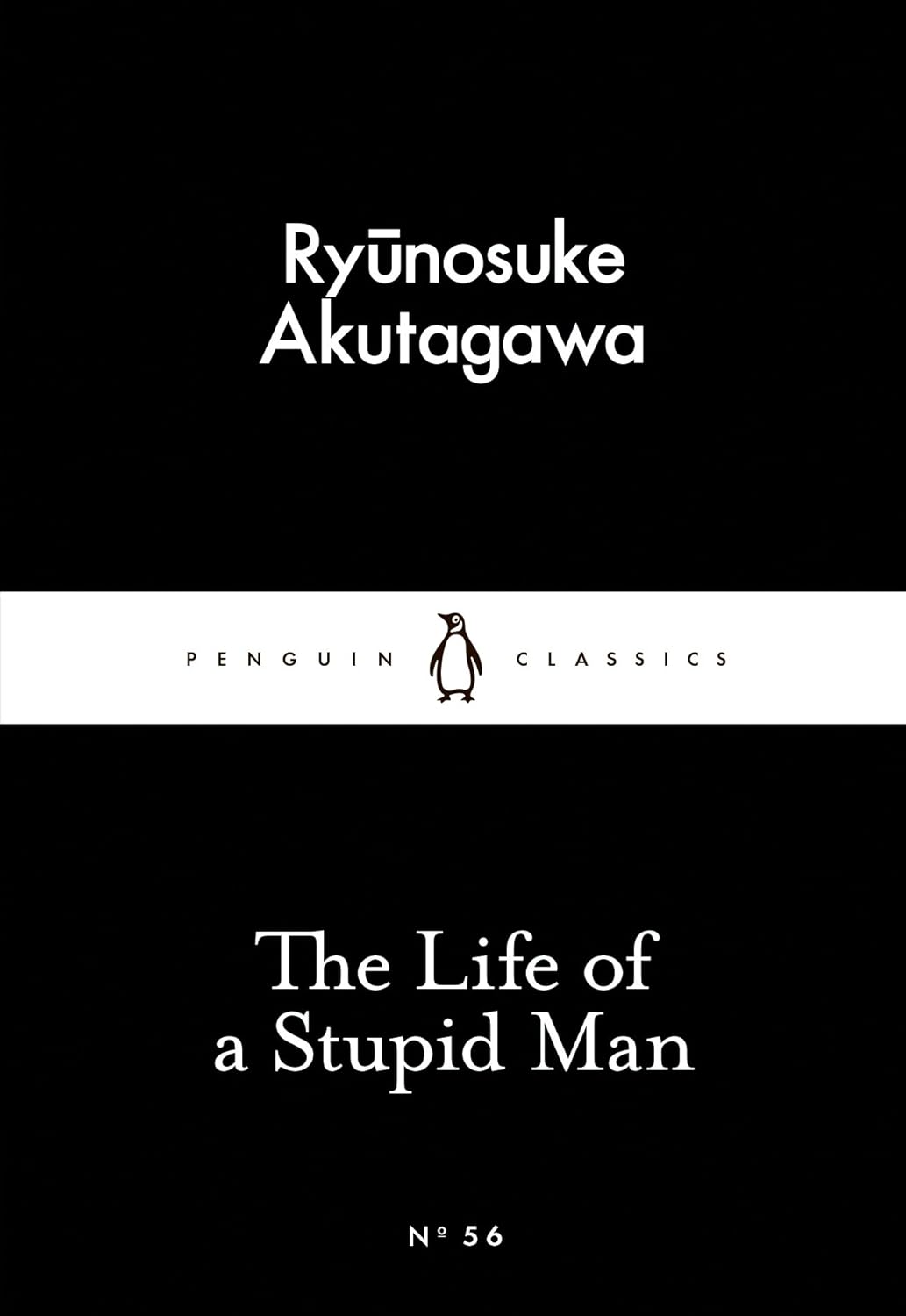
This Penguin Little Black Classics edition, translated into English by Jay Rubin, contains three works: “In a Bamboo Grove,” “Death Register,” and “The Life of a Stupid Man.” The publisher officially lists it as number 56 in the Penguin Little Black Classics collection. The paperback was published by Penguin Classics on February 26, 2015.
A Small Book Filled with Great Questions
Have you ever remembered a moment from your past and wondered why it still hurts? Have you ever found it hard to explain your fear, sadness, or regret to another person? The Life of a Stupid Man speaks to those feelings.
Many books give readers a clear path. They introduce a problem, follow a series of events, and then offer an ending. Akutagawa takes another path. He presents brief memories and images. Each part may look small, but together they reveal a whole emotional life.
This style solves a common problem for readers who want to explore classic literature but feel worried about reading a long or difficult novel. The book is short enough to finish quickly, yet rich enough to think about for days. You can read one section at a time, pause, and consider what it means.
It is an excellent entry point for readers who want to discover Japanese literature, modernist writing, psychological fiction, or short stories with deep meaning.
What Happens in the Book?
The Penguin edition brings together three connected but different works.
“In a Bamboo Grove” presents several statements about a violent event. Different people explain what happened, but their accounts do not fully agree. Every speaker offers a different view. As the story continues, the reader must question memory, truth, pride, guilt, and human nature.
The story later helped inspire Akira Kurosawa’s famous film Rashomon. It is one of Akutagawa’s best-known works because it shows how the same event can look completely different to different people.
“Death Register” is a deeply personal piece about family, memory, sickness, and loss. Akutagawa writes about the people connected to his early life, including painful details about his mother and family history. The language is controlled, but the emotions beneath it are strong.
“The Life of a Stupid Man” is a semi-autobiographical work formed from 51 short sections. These pieces look back at the life of a writer through memories, thoughts, objects, books, people, and moments of fear. The work was written near the end of Akutagawa’s life and is widely read as a personal reflection on his struggles.
Together, these works explore one large question: How can a person know the truth about an event, another human being, or even himself?
A Different Kind of Reading Experience
The Life of a Stupid Man by Ryunosuke Akutagawa does not explain every idea in a direct way. Instead, it invites you to notice small details. A place, a face, a sound, or a book may carry a much larger meaning.
This can make the book feel like a set of photographs from one person’s life. Each photograph captures only one moment, but the full collection reveals patterns. You begin to see the writer’s love of art, his difficult memories, his fear of mental illness, and his growing feeling of distance from the world.
The short form also gives the book a special rhythm. You can read it quickly, but rushing may cause you to miss its quiet power. The best way to experience it is to read slowly. After each section, stop for a moment and think about the feeling or idea behind the words.
This is not a cheerful comfort read. It deals with sadness, anxiety, death, and suicide. However, it does so with literary care rather than cheap shock. Readers who value honest writing about the difficult side of life may find it moving and unforgettable.
Why the Title Matters
The word “stupid” in the title should not be taken as a simple insult. Akutagawa was an educated and highly respected writer. The title shows the harsh way in which the narrator judges his own choices, weaknesses, desires, and failures.
He looks back at his life without trying to make himself appear heroic. He sees beauty, but he also sees fear. He values art, yet he understands that art cannot remove every form of pain. He remembers love and family, but these memories are mixed with loneliness and regret.
This self-criticism makes the book feel honest. The narrator does not ask readers to admire him. Instead, he lets them see his confusion. That openness may help readers recognise feelings they have struggled to name.
The book also asks whether any person can judge an entire life fairly. A life contains good choices and bad choices, hope and fear, love and harm. Reducing all of it to one word may be impossible. That tension gives the title its lasting power.
Meet One of Japan’s Great Modern Writers
Ryunosuke Akutagawa was born in Tokyo in 1892. He studied English literature at Tokyo Imperial University and later worked as a teacher before becoming a full-time writer. He became known for short fiction that combined Japanese history, modern ideas, moral questions, and careful psychological observation.
Akutagawa is often regarded as an important figure in modern Japanese literature. The famous Akutagawa Prize, one of Japan’s major literary awards, was named in his honour after his death.
His stories often focus on people facing fear, shame, desire, pride, and uncertainty. Instead of giving easy moral answers, he allows readers to see how complicated human behaviour can be. This quality is clear in “In a Bamboo Grove,” where several voices offer conflicting versions of one event.
Akutagawa died by suicide in 1927 at the age of 35. That fact makes the personal writing in this collection especially serious. It also means the book requires thoughtful reading. His pain should not be romanticised, but his ability to turn difficult feelings into precise literature remains powerful. Penguin describes him as a short-story writer, poet, essayist, and one of the first Japanese modernists widely translated into English.
What Makes These Stories So Memorable?
The first strength is their brevity. Akutagawa can create a complete mood with only a few details. He does not need hundreds of pages to make a reader feel tension, grief, doubt, or fear.
The second strength is the way he explores truth. In ordinary life, people often believe that one event must have one clear explanation. “In a Bamboo Grove” challenges that belief. Memory can change. Pride can hide facts. Fear can shape a statement. Every speaker may believe a different version.
The third strength is emotional honesty. “Death Register” and “The Life of a Stupid Man” feel close to the author’s private world. They do not present pain as a simple lesson that can be solved easily. Instead, they show how memories and fears may stay with a person for years.
Finally, the writing rewards rereading. The first reading introduces the events and images. A second reading may reveal links between them. A later reading may feel different again because the reader has changed.
Why Choose This Edition from Bookish Wonderland?
A meaningful classic deserves a physical edition that feels comfortable in your hands. Bookish Wonderland prepares books for readers who care about clear text, comfortable paper, and long-term use.
The pages use premium, eye-soothing cream paper. The softer colour is easier on the eyes than bright white paper during long reading sessions. It also gives the book a warm, classic appearance.
Crystal-clear printing keeps every word sharp and easy to follow. This is important in a book where short sentences and small details carry great meaning. Clear text lets you focus on the author’s ideas without being distracted by weak or blurry printing.
High-quality stitched and glue binding provides extra strength. The pages are secured for repeated reading, careful study, and long-term shelf storage. You can return to important sections without worrying that the book will quickly become loose.
These physical features are offered together without unnecessary repetition. The goal is simple: a comfortable reading copy that looks good, reads clearly, and can remain in your collection for years.
Benefits for Different Readers
New readers of Japanese literature can use this collection as a short introduction to one of Japan’s major modern writers. You do not need prior knowledge of Japanese history or literary theory to begin.
Students can study the book for its use of different voices, unreliable narration, memory, fragmented structure, autobiographical fiction, and psychological themes. It offers many ideas for classroom discussion, essays, and literary analysis.
Busy readers can complete the book in a short time. The Penguin Classics paperback contains 64 pages, according to the publisher’s listing, so it fits easily into a weekend, a journey, or several short reading breaks.
Collectors can add number 56 of the Penguin Little Black Classics collection to their shelves. Its compact black design also looks neat beside other books from the same publishing collection.
Writers may learn from Akutagawa’s control. He shows how a small image or a short paragraph can reveal a large emotion. His work is a useful example of how to remove unnecessary words while keeping depth.
Book clubs can use the collection to discuss truth, memory, family, art, personal identity, and the question of how much we can truly understand another person.
A Book for Slow and Thoughtful Moments
This book is ideal for a quiet evening when you want something deeper than a fast adventure. It works well with a notebook nearby. You may wish to mark an image, write down a question, or compare the different accounts in “In a Bamboo Grove.”
It is also a thoughtful gift for someone who enjoys Japanese culture, world classics, short fiction, modernist literature, or books about the human mind. Because it is compact, it can be carried easily in a school bag, office bag, or travel bag.
A teacher may use it to introduce unreliable narration. A university student may examine its autobiographical elements. A new reader may simply enjoy discovering a writer whose influence reaches far beyond the small size of this edition.
Readers should know that the book contains mature and troubling subjects, including mental illness, violence, death, and suicide. It is therefore better suited to mature teenagers and adults who are ready for serious themes.
A Short Book That Stays in the Mind
Some long books disappear from memory soon after the final page. This small book often has the opposite effect. Its images and questions can remain with you because Akutagawa does not provide easy answers.
Can witnesses be trusted? Can memory give us the full truth? Does art help a person survive pain? Can anyone look back at a life without being unfair to himself? These questions give the collection a reach far beyond its page count.
The book’s value comes from this balance. It is easy to carry and quick to read, but not easy to forget. It can serve as a first meeting with Akutagawa or as a compact volume for readers who already know his work.
If you want a simple story with a fully explained ending, this may not be the right choice. But if you enjoy books that ask you to observe, question, and think, it offers a rich experience.
The Life of a Stupid Man by Ryunosuke Akutagawa Price in Bangladesh
Readers searching for The Life of a Stupid Man by Ryunosuke Akutagawa price in Bangladesh can order it from Bookish Wonderland with convenient delivery options. The store provides delivery inside Dhaka and to districts across the country.
Cash on Delivery is available nationwide, allowing you to receive the book before making payment. Readers in Dhaka may also request fast or urgent delivery when the option is available for their location.
You receive a carefully prepared printed book featuring premium cream paper, crystal-clear text, and high-quality stitched and glue binding. These features make it suitable for personal reading, study, gifting, and long-term collection.
What books are in the Penguin Little Black Classics series by Ryunosuke Akutagawa?:
This title is part of the wider Penguin Little Black Classics publishing collection, not a story series written entirely by Akutagawa. Because no other book names were supplied, no unrelated titles have been added.
Order your copy from Bookish Wonderland and discover why Akutagawa’s brief, careful writing continues to speak to readers around the world. Enjoy nationwide delivery, Cash on Delivery, and fast delivery options in Dhaka.
Get this thoughtful Japanese classic for your shelf today.
If you require any customization or have any questions, please inbox us via FB or Insta.
| Primary Specification | |
| Author | Ryūnosuke Akutagawa |
| Translator | S. R. Travers |
| Narrator | Virtual Voice |
| Genre | Japanese Literature, Literary Fiction, Autobiographical Fiction, Modernist Fiction, Short Stories |
| ISBN-13/ISSN | 978-1918966107 |
| ISBN-10 | 1918966109 |
| Publisher | The Lost Book Project |
| Publishing Date | June 8, 2026 |
| Language | English |
| Reading Age | 18+ years |
| Format | Printed Book |
| Physical Specification & Quality | |
| Paper Quality | Premium eye-soothing cream paper |
| Binding Quality | High quality stitched and glue binding (for longevity) |
| Print Quality | Crystal-clear print |
| Pages | 35 pages |
| Country | Japan |
| Logistics Information | |
| Weight | 49 gm |
| Length | 8.5 inches |
| Width | 5.6 inches |
| Height | 0.08 inch |