

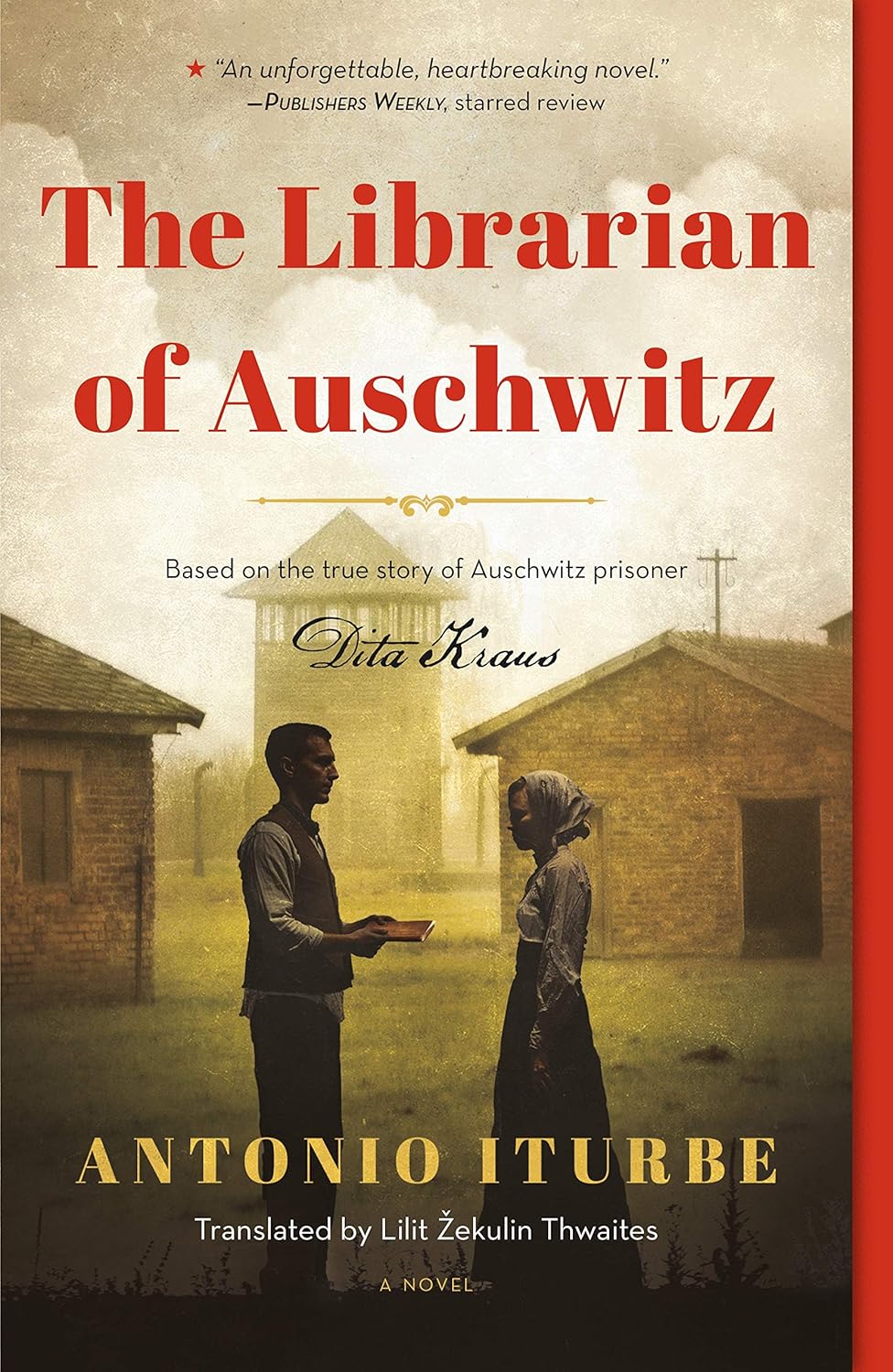
About The Librarian of Auschwitz Book by Antonio Iturbe: A Brave Story of Books, Hope, and Survival
Some books entertain you for a few hours. Other books remain in your mind long after you close the final page. The Librarian of Auschwitz Book by Antonio Iturbe belongs to the second group. Based on the real experiences of Holocaust survivor Dita Kraus, this powerful historical novel tells the story of a young girl who protects eight forbidden books inside Auschwitz-Birkenau.
Dita is only fourteen years old, yet she accepts one of the most dangerous jobs in the camp. She becomes the secret librarian of Block 31. If the Nazi guards discover the hidden books, the result could be death. Still, Dita refuses to let fear take away the small pieces of hope, learning, and human dignity that the books provide.
This is not a light or cheerful story. It presents hunger, fear, loss, cruelty, and the terrible conditions faced by prisoners during the Holocaust. At the same time, it shows that hope can survive in places built to destroy it. It reminds readers that even a damaged book can become precious when people are forbidden to read, learn, think, or dream.
The English edition was translated from Spanish by Lilit Žekulin Thwaites. It is historical fiction based on real people, interviews, and documented events rather than a memoir written directly by Dita Kraus.
Eight Books in the Darkest Place
Fourteen-year-old Dita Adlerova has already lost the safe and normal life she once knew. After being forced from Prague and held in the Terezín ghetto, she and her parents are sent to Auschwitz-Birkenau. Every day in the camp brings fear, hunger, illness, humiliation, and the threat of death.
Dita is placed in BIIb, known as the family camp. Unlike many other prisoners, the families there are temporarily allowed to remain together. Children are taken during the day to Block 31, where prisoner Fredy Hirsch helps run a hidden school. The school has no safe classroom, proper desks, notebooks, or normal lessons. Education itself is dangerous because the Nazis do not want the prisoners to think freely.
Hidden inside Block 31 is a tiny library containing only eight physical books. Some are damaged, and none would appear valuable in an ordinary bookshop. Inside Auschwitz, however, they are treasures. They carry stories, ideas, facts, and memories of a world beyond the fences.
Fredy asks Dita to protect these books and give them to teachers when needed. She must count them, hide them, repair them, and collect them after lessons. A surprise inspection could happen at any moment. Each time she carries a book, she risks being caught and punished.
The prisoners also create “living books.” These are people who remember stories well enough to tell them aloud. In this way, knowledge can continue even when printed books are scarce. The secret school becomes more than a place for lessons. It gives children a short escape from terror and helps them remember that they are still human beings.
The novel follows Dita as she tries to complete her dangerous work while protecting herself and the people she loves. It also explores the lives of Fredy Hirsch and other real individuals whose paths crossed inside Auschwitz. The story asks a simple but powerful question: when almost everything has been taken away, what helps a person continue living?
When History Feels Too Distant
Many readers know basic facts about the Second World War and the Holocaust. They may know dates, numbers, and the names of concentration camps. However, a list of facts cannot always show what daily life felt like for one frightened child.
The Librarian of Auschwitz helps solve this problem by placing readers close to Dita’s experience. You see the camp through the fears, questions, duties, and small choices of a teenage girl. Large historical events become personal. The book shows that the victims were not simply numbers. They were children, parents, teachers, friends, athletes, and readers with plans and dreams.
The novel does not replace a history book, documentary, survivor testimony, or classroom lesson. It offers another path into the subject. By connecting historical facts with a human story, it can encourage readers to learn more about Dita Kraus, Fredy Hirsch, Auschwitz-Birkenau, Terezín, and the people imprisoned there.
Antonio Iturbe researched the story and interviewed Dita Kraus. He learned about her after discovering a reference to the secret library and later contacted her directly. Their conversations helped him preserve a story that might otherwise have remained little known.
Why Dita’s Courage Feels So Powerful
Dita is not shown as a fearless hero who always knows what to do. She is a young person trapped in a place filled with danger. She feels afraid, becomes angry, makes mistakes, and worries about her parents. This makes her courage easier to understand.
Real courage does not mean feeling no fear. It means doing something important while fear is present. Dita knows that hiding the books could cost her life, but she also understands what those books mean to the children and teachers.
Her work may appear small beside the huge violence around her. She is not carrying a weapon or leading an army. She is caring for a few worn books. Yet this quiet act becomes a form of resistance. The Nazis try to remove identity, education, memory, and hope. Dita protects all four whenever she saves a book.
Readers who love books will understand why her task matters. A book can take the mind beyond locked doors and fences. It can preserve a memory after someone is gone. It can teach a child that another world exists. In Block 31, reading is not merely a hobby. It is proof that the prisoners still have minds that cannot be fully controlled.
A Story About More Than Survival
Survival is central to the novel, but the story also explores knowledge, memory, fear, friendship, family, and moral choice. It shows people trying to protect one another when the normal rules of life have been destroyed.
The secret school gives the children a small routine. Lessons cannot provide food or open the camp gates, but they offer mental freedom. Teachers share what they remember, children listen, and Dita moves the books from one class to another. These acts help create order in a place designed around chaos and death.
The book also shows that hope is not always loud or grand. Sometimes hope is a lesson spoken quietly. Sometimes it is a damaged page passed from one person to another. Sometimes it is a teenager deciding that eight books are worth protecting.
The story can make readers think about freedoms that are easy to ignore: going to school, choosing a book, asking questions, sharing ideas, and speaking openly. Dita’s experience shows why these ordinary rights are valuable.
What Makes This Book Worth Reading?
The greatest strength of The Librarian of Auschwitz is its unforgettable true foundation. Dita Kraus was a real person, and the secret library in the family camp existed. The novel turns this remarkable history into a story that modern readers can approach and remember.
The book offers several meaningful reading benefits:
- It introduces an important, lesser-known story from the Holocaust.
- It shows how books and education can resist oppression.
- It helps readers see history through the experience of a teenager.
- It encourages questions about courage, memory, freedom, and human dignity.
- It can lead readers toward further study of survivor accounts and documented history.
- It offers strong topics for school projects, book clubs, essays, and family discussions.
- It shows how an ordinary person can perform an extraordinary act.
The novel also includes painful scenes and mature historical themes. Readers should expect descriptions of camp violence, death, starvation, illness, persecution, and grief. These elements are not included for simple excitement. They are part of the terrible historical setting in which Dita’s story takes place.
Independent reviews classify it as young-adult historical fiction and generally recommend it for readers aged thirteen and above. Parents and teachers may wish to guide younger or sensitive readers because of the subject matter.
A Premium Book Made for Long Reading
A meaningful story deserves a physical copy that feels comfortable and lasts through repeated reading. Bookish Wonderland offers this title for readers who care about both the story and the quality of the printed book.
This edition features premium eye-soothing cream paper. The soft cream colour creates less harsh contrast than bright white pages and helps make long reading sessions more comfortable. The text is produced with crystal-clear printing, allowing letters and lines to remain sharp and easy to follow.
The book also uses high-quality stitched and glue binding for longevity. The pages are held firmly so the copy can better handle careful rereading, study, classroom use, and shelf storage. These quality features make it a good choice for readers who want a durable personal copy rather than a book that feels weak after a few reading sessions.
The clean page layout makes it easier to remain focused on the story. Because this is a serious and emotionally demanding novel, a clear and comfortable physical presentation can help readers move through it without avoidable strain.
How This Book Can Be Used
The Librarian of Auschwitz is suitable for personal reading, but it can also support many learning and discussion activities.
Students can use it as an introduction to Holocaust literature before studying historical documents and survivor testimony. Teachers may pair it with lessons about Nazi persecution, Auschwitz-Birkenau, the Terezín ghetto, banned books, or the role of education during war.
Book clubs can discuss whether protecting books can be considered resistance. Readers can also explore the difference between historical fiction and memoir, asking which parts come from documented history and which parts may have been shaped for the novel.
Parents and older teenagers can read the book together and talk about courage, prejudice, propaganda, human rights, and the danger of treating groups of people as less than human. The novel may also inspire readers to research the real Dita Kraus and learn what happened after the period shown in the story.
It can make a thoughtful gift for someone who enjoys historical fiction, World War II stories, books about books, or fiction inspired by real lives. Because of its painful content, it is best given to a reader mature enough to understand its historical setting.
Who Will Connect With This Story?
This novel is a strong choice for:
- Teenagers aged thirteen and above who are ready for serious historical fiction
- Adult readers interested in Holocaust and Second World War literature
- Readers who enjoyed books about courage, survival, and the power of stories
- Students studying history, literature, war, or human rights
- Teachers seeking discussion-rich historical fiction
- Book clubs looking for a meaningful and emotional selection
- Readers interested in true stories retold through fiction
- Book lovers who believe reading and education should remain free
The story may be especially moving for anyone who has found safety, comfort, or strength inside a book. Dita’s library contains only eight physical volumes, but its importance is greater than its size. It proves that the value of a library is not measured only by the number of books on its shelves.
Why Buy It from Bookish Wonderland?
Bookish Wonderland brings together a large collection of premium and durable English books for readers across the country. When checking The Librarian of Auschwitz by Antonio Iturbe price in Bangladesh, you can choose a copy made for comfortable reading and long-term use.
Customers receive the convenience of nationwide delivery across Bangladesh, including addresses inside and outside Dhaka. Cash on Delivery is available across the country, allowing you to place an order without needing to make an advance online payment. Readers in Dhaka can also ask about fast or urgent delivery when a book is needed quickly.
You receive more than a powerful story. You receive a carefully produced printed book with cream paper, clear text, and a strong stitched-and-glued structure. It is suitable for your personal shelf, a school reading collection, a book-club list, or a thoughtful gift.
What books are in the standalone series by Antonio Iturbe?:
There are no books in a series for The Librarian of Auschwitz. It is a standalone novel and does not belong to a numbered series.
Keep This Story of Courage on Your Shelf
The Librarian of Auschwitz Book by Antonio Iturbe is a painful yet deeply meaningful story about a girl who refuses to let cruelty destroy knowledge and hope. Dita cannot control the camp, remove the guards, or end the war. What she can do is protect eight books—and she does so with extraordinary care.
Reading her story helps keep the memories of real people alive. It reminds us why books, schools, truth, and freedom matter. Most importantly, it shows that even a small act can carry great meaning when it is performed in the face of injustice.
Order your copy from Bookish Wonderland and experience this unforgettable story in a premium, durable printed edition. Cash on Delivery and nationwide delivery are available, with fast or urgent delivery options in Dhaka.
f you require any customization or have any questions, please inbox us via FB or Insta.
| Primary Specification | |
| Author | Antonio Iturbe |
| Translator | Lilit Thwaites |
| Narrator | Marisa Calin |
| Genre | Historical Fiction, Holocaust Fiction, Biographical Fiction, Young Adult Fiction |
| ISBN-13/ISSN | 978-1250258038 |
| ISBN-10 | 1250258030 |
| Publisher | Square Fish |
| Publishing Date | October 1, 2019 |
| Language | English |
| Reading Age | 13–18 years |
| Format | Printed book |
| Physical Specification & Quality | |
| Paper Quality | Premium eye-soothing cream paper |
| Binding Quality | High quality stitched and glue binding (for longevity) |
| Print Quality | Crystal-clear print |
| Pages | 448 pages |
| Country | United States |
| Logistics Information | |
| Weight | 461 gm |
| Length | 8.5 inches |
| Width | 5.6 inches |
| Height | 1.15 inch |