

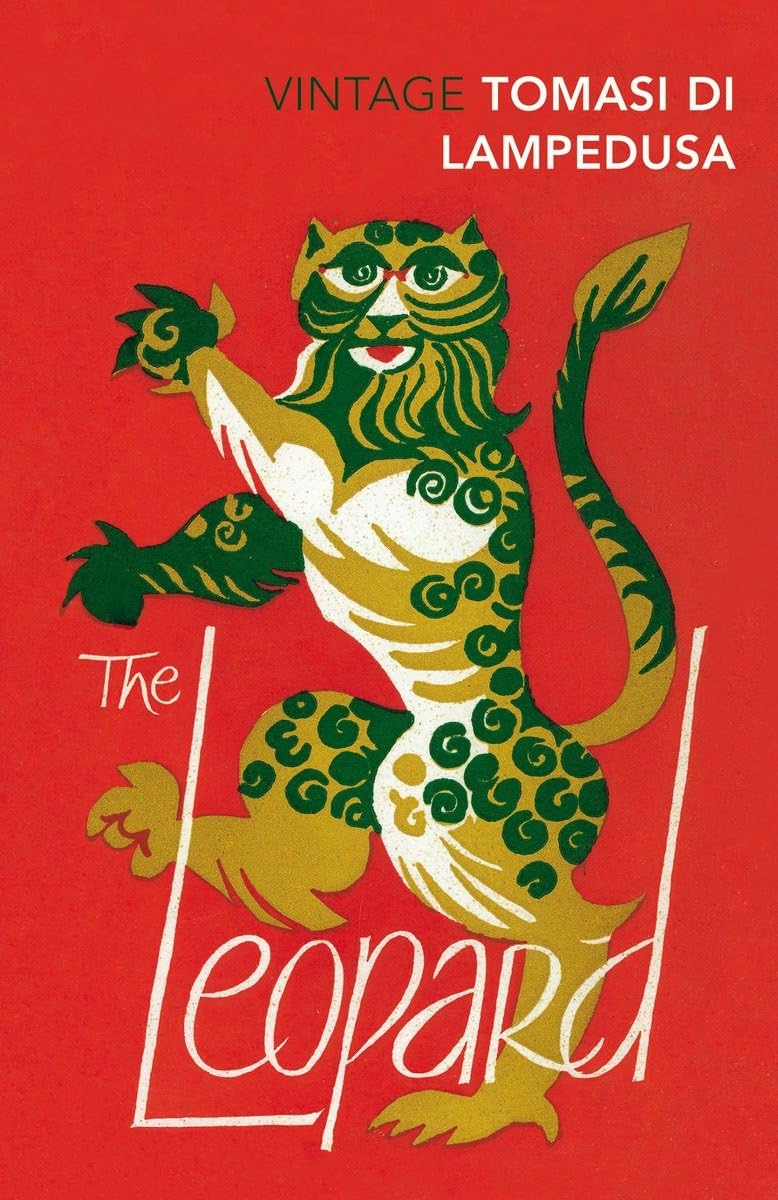
About The Leopard by Giuseppe Di Lampedusa – A Powerful Classic About Change, Family and Old Sicily
The Leopard by Giuseppe Di Lampedusa is a rich historical novel about a noble family living through a time when their world is changing fast. Set mainly in Sicily during the 1860s, the story follows Don Fabrizio Corbera, Prince of Salina, as old royal power starts to fall and a new Italy begins to rise. The prince is deeply aware that his family’s place in society may never be the same again.
Its power comes from people, choices, family, politics, love, class, memory, and the slow movement of history. Lampedusa shows how change can enter a home quietly. A new marriage, a political idea, or a rising social class can reshape a whole way of life.
When the world you know starts to disappear
Many historical novels show wars, leaders, and public events from far away. The Leopard makes history feel personal.
Don Fabrizio does not simply read about change. He sees it inside his own family. His nephew Tancredi supports the new political movement because he understands that the future belongs to people who can adapt. Tancredi later becomes connected with Angelica, the beautiful daughter of a wealthy family from a rising social class. Their relationship shows something bigger than romance. It shows that money, status, and influence are moving into new hands.
For the prince, this creates a hard question: should he fight to protect the old world, or accept that time has already moved on?
That question gives the novel lasting power. Even readers who know little about Italian history can understand the feeling of watching familiar rules change. The book turns a large historical shift into a human story about pride, loss, love, family, and survival.
A story that makes history feel close
The Leopard begins during a key period in the unification of Italy. Sicily is changing politically, and the old aristocratic order is losing part of its control. Lampedusa uses the Salina family to show this change from inside a noble household.
Don Fabrizio is not shown as a simple hero or villain. He can be wise, proud, distant, loving, tired, and thoughtful. He knows his class has serious flaws, yet he also feels tied to its habits, beauty, and history. This makes him feel human instead of symbolic.
The novel also gives strong attention to place. Houses, gardens, meals, churches, heat, dust, clothing, family gatherings, and social visits help build the mood of Sicily. The result is a world that feels elegant but also fragile.
The book was published after Lampedusa’s death in 1958. It later won the Strega Prize in 1959 and became one of the most famous works of modern Italian literature. It asks a simple but difficult question: what happens to people when the world changes faster than they want?
Why this classic is still worth reading
Some classic books can feel distant because their language, setting, or social rules are very different from modern life. The Leopard feels more open once you understand its central idea: people often want change when it helps them, and fear change when it takes something away.
That idea appears in politics, family decisions, marriage, money, reputation, and personal ambition.
Readers can also enjoy the contrast between Don Fabrizio and Tancredi. The prince looks at the world with experience and sadness. Tancredi looks at it with energy and opportunity. One sees what is being lost. The other sees what can be gained.
Angelica adds another important layer. Her family represents new wealth and rising social power. Through her, the novel shows that society is not only changing through armies and laws. It is changing through marriages, homes, money, manners, and relationships.
Made for comfortable, long-term reading
At Bookish Wonderland, this edition is prepared for readers who want a book that feels good in the hand and remains useful after one reading.
- Premium eye-soothing cream paper helps reduce the harsh look of bright white pages.
- Crystal-clear printing keeps the text sharp and easy to follow.
- High-quality stitched and glue binding is designed for better strength and longer use.
- A durable physical format makes the book suitable for home shelves, study, gifting, and repeat reading.
These details matter with a literary classic. The Leopard is a book many readers may want to return to after learning more about its history, characters, or themes. A comfortable page and strong binding can make repeat reading easier.
What you can gain from reading it
The biggest benefit of The Leopard is not one lesson or one answer. It gives readers several ways to think about change.
You can see how people protect status, how families make choices under pressure, how wealth changes social position, and how political change can reach private life. You can also see the difference between accepting change and understanding it.
For students, the novel can support discussion about Italian history, class, aristocracy, family power, symbolism, and historical fiction. For general readers, it can be enjoyed as a slow, thoughtful family drama filled with strong observation.
Who should read The Leopard?
This book can be a good fit for:
- Readers who enjoy historical fiction and classic literature.
- People interested in Italy, Sicily, or European history.
- Readers who like family stories shaped by politics and social change.
- Students studying literature, history, class, or power.
- Readers who enjoy thoughtful characters more than nonstop action.
- Collectors looking for an important twentieth-century European novel.
- Gift buyers searching for a serious, respected literary classic.
If you mainly prefer very fast thrillers, the pace may feel slow. But if you enjoy atmosphere, ideas, character, and history, the slower pace becomes part of the experience.
A useful book for reading, study and gifting
The Leopard works well in more than one setting. You can read it slowly at home, use it for literature study, discuss it in a book club, or give it to someone who enjoys European classics.
It is also a strong choice for readers building a personal library. Because the novel connects history with family life, it can be reread from different angles. A first reading may focus on Don Fabrizio. A later reading may make you notice Tancredi, Angelica, class movement, political change, or the symbols used across the story.
If you are comparing The Leopard by Giuseppe Di Lampedusa book price in Bangladesh, it is worth looking at more than price alone. Paper comfort, print clarity, binding strength, delivery options, and overall reading quality can all affect the value of a physical book.
Why order it from Bookish Wonderland?
Bookish Wonderland makes it simple to order English books from anywhere in the country. Nationwide delivery is available, including delivery inside and outside Dhaka. Cash on Delivery is also available across Bangladesh, and readers in Dhaka can ask about fast or urgent delivery options.
For customers checking Book price in Bangladesh before ordering, the aim is to offer a physical copy that balances reading comfort, durability, and convenient delivery.
You can choose The Leopard for yourself, for study, for a book collection, or as a gift for someone who enjoys serious fiction with history behind it.
If you require any customization or have any questions, please inbox us via FB or Insta.
| Primary Specification | |
| Author | Giuseppe Di Lampedusa |
| Translator | Archibald Colquhoun |
| Narrator | Paul Woodson |
| Genre | Historical Fiction, Literary Fiction, Italian Literature |
| ISBN-13/ISSN | 978-0375714795 |
| ISBN-10 | 0375714790 |
| Publisher | Pantheon |
| Publishing Date | November 6, 2007 |
| Language | English |
| Reading Age | 16+ |
| Format | Printed Book |
| Physical Specification & Quality | |
| Paper Quality | Premium eye-soothing cream paper |
| Binding Quality | High quality stitched and glue binding (for longevity) |
| Print Quality | Crystal-clear print |
| Pages | 336 pages |
| Country | Italy |
| Logistics Information | |
| Weight | 342 gm |
| Length | 8.5 inch |
| Width | 5.6 inch |
| Height | 0.89 inch |