Skip to product information
1 of 1

Bookish Wonderland

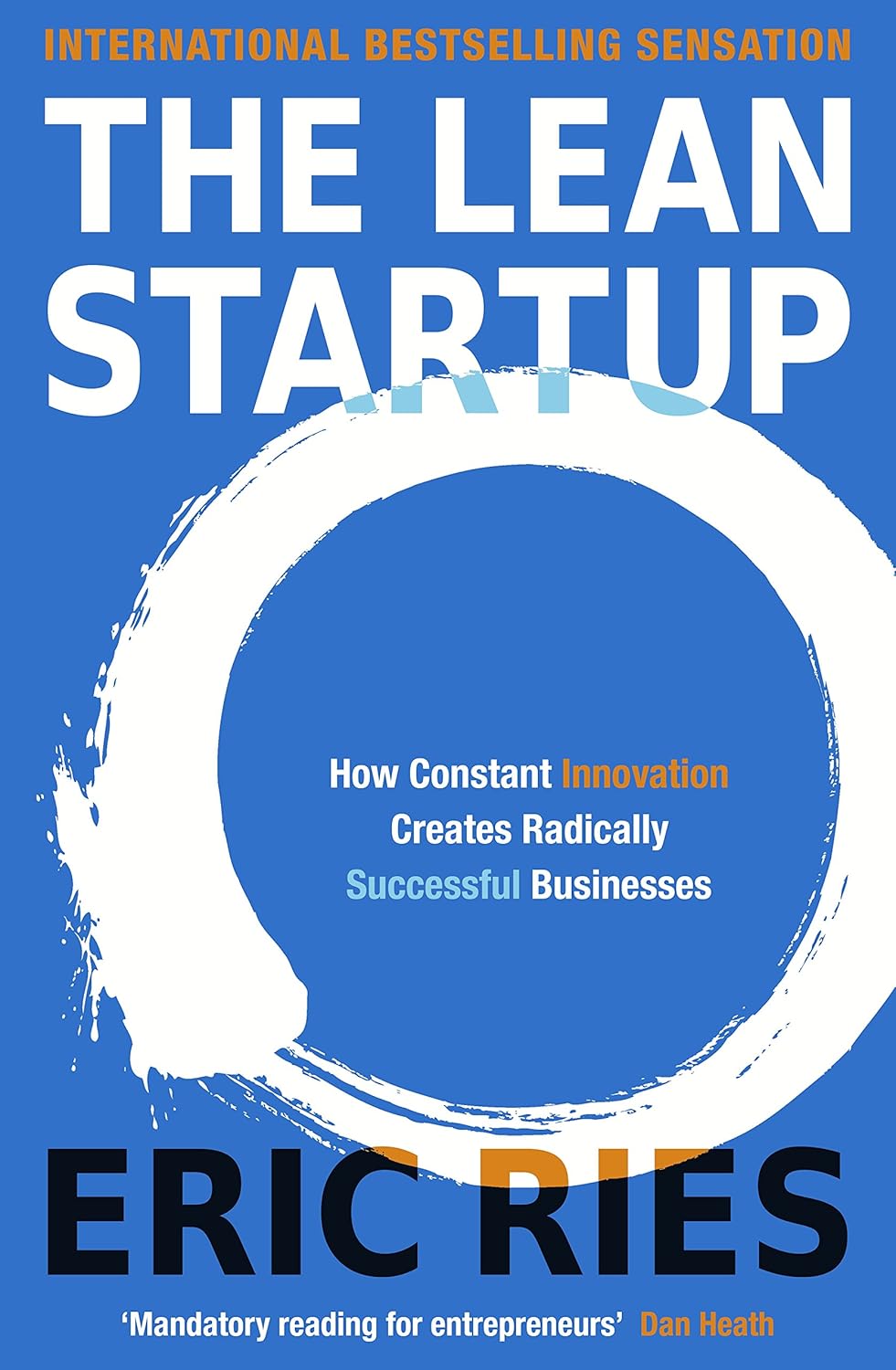
The Lean Startup Book by Eric Ries

The Lean Startup Book by Eric Ries

Regular price Tk 254.00 BDT
Regular price Sale price Tk 254.00 BDT
Sale Sold out
Book cover type
Quantity

The Lean Startup by Eric Ries presents a practical approach to building businesses and launching products under conditions of extreme uncertainty. Ries argues that startups should avoid relying on long plans and untested assumptions. Instead, they should create a minimum viable product, gather real customer feedback, measure meaningful results, and learn quickly through repeated Build-Measure-Learn cycles. A central idea is validated learning, which helps entrepreneurs test whether their strategies are actually creating value. The book also explains innovation accounting, actionable metrics, small batch development, continuous deployment, and the important decision to pivot or persevere. Drawing on Ries’s experience with technology startups and lean manufacturing principles, it shows how teams can reduce waste, shorten development cycles, and adapt before resources are exhausted. The method applies not only to new companies but also to established organizations developing uncertain products, making the book a widely used guide to modern entrepreneurship and innovation management.

Read More

View full details

About The Lean Startup Book by Eric Ries – Build Smarter, Learn Faster

Starting a business is exciting, but it is also full of unknowns. You may have a strong idea, spend money, work for months, and still learn that customers do not want what you built. The Lean Startup Book by Eric Ries was written for this problem. Instead of asking entrepreneurs to make a perfect plan and hope it works, Ries explains how to test ideas early, learn from real customers, and improve step by step.

First published in 2011, The Lean Startup is a well-known modern book on entrepreneurship, innovation, and product development. Ries explains ideas such as validated learning, the Minimum Viable Product, innovation accounting, and the Build-Measure-Learn feedback loop. The goal is simple: reduce wasted effort and discover what customers truly need before too much time and money are spent.

Stop Building in the Dark

Many new businesses begin with a big idea and a long plan. A team may spend months making an app, website, service, or product before showing it to real users. If the main idea is wrong, much of that work can be wasted.

Ries offers another path. Start with the biggest question. Build the smallest useful test. Show it to real customers. Measure what happens. Then learn from the result.

This does not mean making poor products. It means learning before investing heavily in an idea that has not been proven. The book teaches founders to replace guessing with experiments and opinions with useful evidence.

The Build-Measure-Learn Loop

At the center of the book is the Build-Measure-Learn loop. An entrepreneur begins with an idea, builds something that can test it, measures how customers respond, and learns what to do next.

The result may tell the team to keep going. Ries calls this persevering. It may also show that an important assumption is wrong. Then the team may need to pivot, meaning it changes part of the strategy while keeping what it has learned.

Ries also warns about “vanity metrics,” or numbers that look impressive but do not show whether the business is truly improving. He encourages teams to use data that helps them make real decisions.

Learn What Customers Actually Want

One of the strongest lessons in The Lean Startup is that progress is not only about how much work a team completes. A company can build many features and still move in the wrong direction.

Validated learning means learning supported by evidence from real customer behavior. Instead of assuming users want something, a startup should find a way to test that belief.

The Minimum Viable Product, often called an MVP, helps with this. It is a simple version or test made to answer an important question with as little unnecessary work as possible. The point is to learn whether the basic idea is worth developing further.

Practical Lessons You Can Use

The book gives readers ideas that can guide real business decisions:

  • Test the biggest business assumptions early.
  • Use customer behavior to check whether an idea is working.
  • Build in small steps instead of betting everything on one large launch.
  • Measure progress with useful, actionable data.
  • Know when to keep going and when to change direction.
  • Treat entrepreneurship as management under uncertainty.
  • Reduce work that does not create learning or customer value.
  • Create fast feedback loops so mistakes are found earlier.

These ideas can support product launches, marketing tests, software projects, online businesses, and new services. You do not need to run a technology company to understand the main lessons.

Why This Book Can Save More Than Money

The biggest benefit of the Lean Startup method is not only spending less. It is learning faster.

When you find a weak idea early, you can change it before months of work are lost. When customers respond well, you can move forward with more confidence. When results are unclear, you can run another test instead of arguing from opinion.

This mindset can also improve teamwork. A founder, marketer, designer, developer, and manager may all have different ideas about what customers want. A clear experiment gives everyone real evidence to study.

A failed test is not always wasted effort. If it answers an important question and prevents a larger mistake, it can create useful learning.

Who Should Read The Lean Startup?

The Lean Startup is useful for readers who want practical business thinking rather than motivation alone. It can help:

  • New entrepreneurs preparing to launch a business.
  • Startup founders looking for product-market fit.
  • University students studying business or entrepreneurship.
  • Product managers planning new products or features.
  • Small business owners testing new services.
  • Marketing teams running customer experiments.
  • Developers and designers building uncertain product ideas.
  • Managers who want established companies to innovate faster.

Even if you are not starting a company today, the book can teach you to test assumptions before making a large commitment. That skill can help with study projects, side businesses, and digital products.

A Better Way to Think About Planning

Traditional business advice often focuses on detailed planning. Planning still matters, but Ries argues that startups work under extreme uncertainty. When important facts are unknown, a perfect-looking plan can create false confidence.

The Lean Startup asks better questions: What do we believe? Which belief is risky? How can we test it? What did customers actually do? What should we change next?

These questions turn a large dream into smaller decisions. You do not need every answer on day one. You need a process that helps you find better answers as you move.

Made for Reading, Studying, and Reusing

Bookish Wonderland offers The Lean Startup for readers who want a clean, durable printed copy for study, work, or a personal business shelf.

This edition uses premium eye-soothing cream paper for a softer reading experience. The text is printed with crystal-clear quality, and high-quality stitched and glue binding helps improve durability. These features suit readers who want to mark useful ideas, revisit key chapters, and keep the copy for long-term reference.

Buying The Lean Startup in Bangladesh

If you are comparing The Lean Startup by Eric Ries Book price in Bangladesh, value should include more than the selling price. Paper comfort, clear printing, strong binding, delivery service, and payment convenience also matter when choosing a copy for regular use.

Bookish Wonderland provides nationwide delivery across Bangladesh, including inside and outside Dhaka. Cash on Delivery is available across the country, so customers can order without paying online first. Readers in Dhaka may also choose fast or urgent delivery when available.

This makes the book easy to order for students, founders, professionals, and anyone building a useful business-book collection.

If you want one book that explains the foundation of Lean Startup thinking, this is a strong place to begin. It gives you a clear system for testing ideas, learning from customers, measuring useful progress, and changing direction before a small mistake becomes expensive.

Start Building With Better Questions Today

Order The Lean Startup Book by Eric Ries from Bookish Wonderland and put practical startup thinking on your shelf. Get nationwide Cash on Delivery, delivery inside and outside Dhaka, and fast or urgent delivery in Dhaka when available.

If you require any customization or have any questions, please inbox us via FB or Insta.

Primary Specification
AuthorEric Ries
NarratorEric Ries
EditorLauren Dong
GenreBusiness, Entrepreneurship, Management, Innovation
ISBN-13/ISSN978-1524762407
ISBN-101524762407
PublisherCrown Business
Publishing Date October 17, 2017
LanguageEnglish
Reading Age16+
FormatPrinted Book
Physical Specification & Quality
Paper QualityPremium eye-soothing cream paper
Binding Quality High quality stitched and glue binding (for longevity)
Print QualityCrystal-clear print
Pages ‎ 336 pages
CountryUnited States
Logistics Information
Weight342 gm
Length8.5 inch
Width 5.6 inch
Height5.43 inch
What is The Lean Startup Book by Eric Ries about?

The Lean Startup by Eric Ries is a business and entrepreneurship book about building new products without wasting too much time, money, or effort. Ries teaches entrepreneurs to test ideas early, watch how real customers respond, and improve the product based on evidence instead of guesses.

The book explains important ideas such as validated learning, Minimum Viable Product (MVP), Build-Measure-Learn, innovation accounting, and deciding whether to pivot or continue with the current plan. It is especially useful when you have a business idea but are not yet sure exactly what customers will want.

How many books are in The Lean Startup series by Eric Ries, and what are they?

There is no official numbered The Lean Startup series written by Eric Ries. The Lean Startup is a standalone book, so it would be incorrect to label unrelated Eric Ries books as Book 2 or Book 3.

Is The Lean Startup by Eric Ries still worth reading today?

Yes. Some company examples come from an earlier period of the startup world, but the main problem the book addresses is still common: people often build products before proving that customers actually need them.

Ideas such as testing assumptions, launching small experiments, measuring customer behavior, learning from failure, and changing direction when evidence says you should remain useful for modern startups and digital businesses.

Some readers debate how modern teams should use MVPs, but the deeper lesson is not simply “launch something unfinished.” It is to learn important facts about your business before making a much larger investment.

What does Build-Measure-Learn mean in The Lean Startup?

Build-Measure-Learn is one of the central ideas in The Lean Startup.

First, you build something that can test an important business idea. Next, you measure how customers actually respond to it. Finally, you learn from those results and decide what should happen next.

For example, instead of spending one year creating a complete app, a startup could test one important feature with a small group of users. Their behavior may show whether the idea has real value.

The goal is to make this learning cycle faster so businesses can discover mistakes early and improve before spending too much money.

What is an MVP in The Lean Startup, and does it mean making a bad product?

No. An MVP, or Minimum Viable Product, does not simply mean making the cheapest or worst possible version of a product.

Its main purpose is learning. An MVP is a simple product, service, prototype, or experiment that helps a business test an important assumption with real customers.

For example, before building a large online platform, a founder may first test whether people are interested in the service through a basic version. If customers respond positively, the founder has useful evidence for further development.

The key question is not “How little can we build?” It is “What is the simplest test that can help us learn something important?”

Is The Lean Startup useful only for technology startups?

No. Eric Ries uses the word “startup” more broadly than a small technology company. His method is designed for organizations creating something new under conditions where the outcome is uncertain.

That can include software companies, online stores, service businesses, new products inside large companies, education projects, nonprofit ideas, and other forms of innovation.

A small business owner can use the same thinking when testing a new service, price, product, advertisement, or customer group. The important part is uncertainty: when you do not yet know whether an idea will work, testing and learning can reduce unnecessary risk.

Is The Lean Startup suitable for beginners and business students?
Yes. The Lean Startup is suitable for university students, first-time entrepreneurs, young founders, and readers who are beginning to learn about business.
You do not need advanced finance or programming knowledge to understand its main ideas. Concepts such as testing an idea, listening to customer behavior, measuring results, and changing a plan are explained through business examples.
Business and entrepreneurship students can also connect the book with subjects such as marketing, product development, innovation, management, and business planning.
It can be especially useful for someone who wants to understand how a business idea moves from an assumption to something customers actually use and pay for.
What are the main criticisms readers have about The Lean Startup?
One common criticism is that some readers find parts of the book repetitive. The same major ideas are explained through several examples, which can be useful for beginners but may feel longer than necessary to experienced business readers.
Another discussion concerns MVPs. Some entrepreneurs argue that customers today expect polished products, while supporters of the method point out that an MVP is supposed to test an assumption rather than excuse poor quality.
Readers also sometimes find the terminology unusual at first, especially phrases such as validated learning, innovation accounting, pivot, and vanity metrics.
Even with these criticisms, the book remains useful as a framework for thinking carefully about uncertainty and customer demand.
Is The Lean Startup available as a premium edition from Bookish Wonderland?

Yes. Bookish Wonderland offers The Lean Startup Book by Eric Ries in a premium printed format designed for readers who want a comfortable copy for regular reading and study.

The book features crystal-clear printing so letters and diagrams remain sharp and easy to follow. Premium eye-soothing cream paper gives the pages a softer appearance than bright white paper, while the durable construction is suitable for readers who expect to return to important chapters.

It can be a good choice for entrepreneurs, students, business professionals, and readers building a long-term collection of useful English business books.

What is the paper quality of The Lean Startup from Bookish Wonderland?

The Lean Startup from Bookish Wonderland uses premium eye-soothing cream paper.

Cream-colored pages reduce the harsh brightness often found on very white paper, making longer reading sessions more comfortable for many readers. This is useful for a business book because readers often spend extra time stopping, thinking, highlighting ideas, or taking notes while working through concepts.

The smooth paper also works well with the book’s clean printing, keeping letters easy to read without making the pages look overly bright.

For readers who study business books for long periods rather than finishing them in one sitting, comfortable paper can make a noticeable difference.

Will the binding of The Lean Startup last through repeated reading?

The Bookish Wonderland copy is made with high-quality stitched and glue binding to improve durability.

Business books such as The Lean Startup are often used differently from novels. A reader may return to a chapter about MVPs, customer testing, metrics, or pivoting many times. Strong binding helps the pages remain secure during this repeated use.

The combination of stitching and adhesive gives the book extra support compared with a weakly assembled copy that may begin losing pages after frequent opening.

With normal handling and proper storage away from moisture, the book is designed to remain useful on your business bookshelf for a long time.

Why should I buy The Lean Startup by Eric Ries from Bookish Wonderland?

Bookish Wonderland is a practical choice for readers looking for premium and durable English books in Bangladesh.

You can order The Lean Startup with Cash on Delivery available across Bangladesh, so online payment is not required before receiving your order. Delivery is available both inside and outside Dhaka, while customers in Dhaka can also request fast or urgent delivery when the service is available.

Along with convenient delivery, the Bookish Wonderland copy provides clear printing, comfortable cream paper, and strong stitched-and-glue binding. This combination makes it suitable not only for one-time reading but also for studying, highlighting key ideas, and keeping the book as a long-term business reference.