

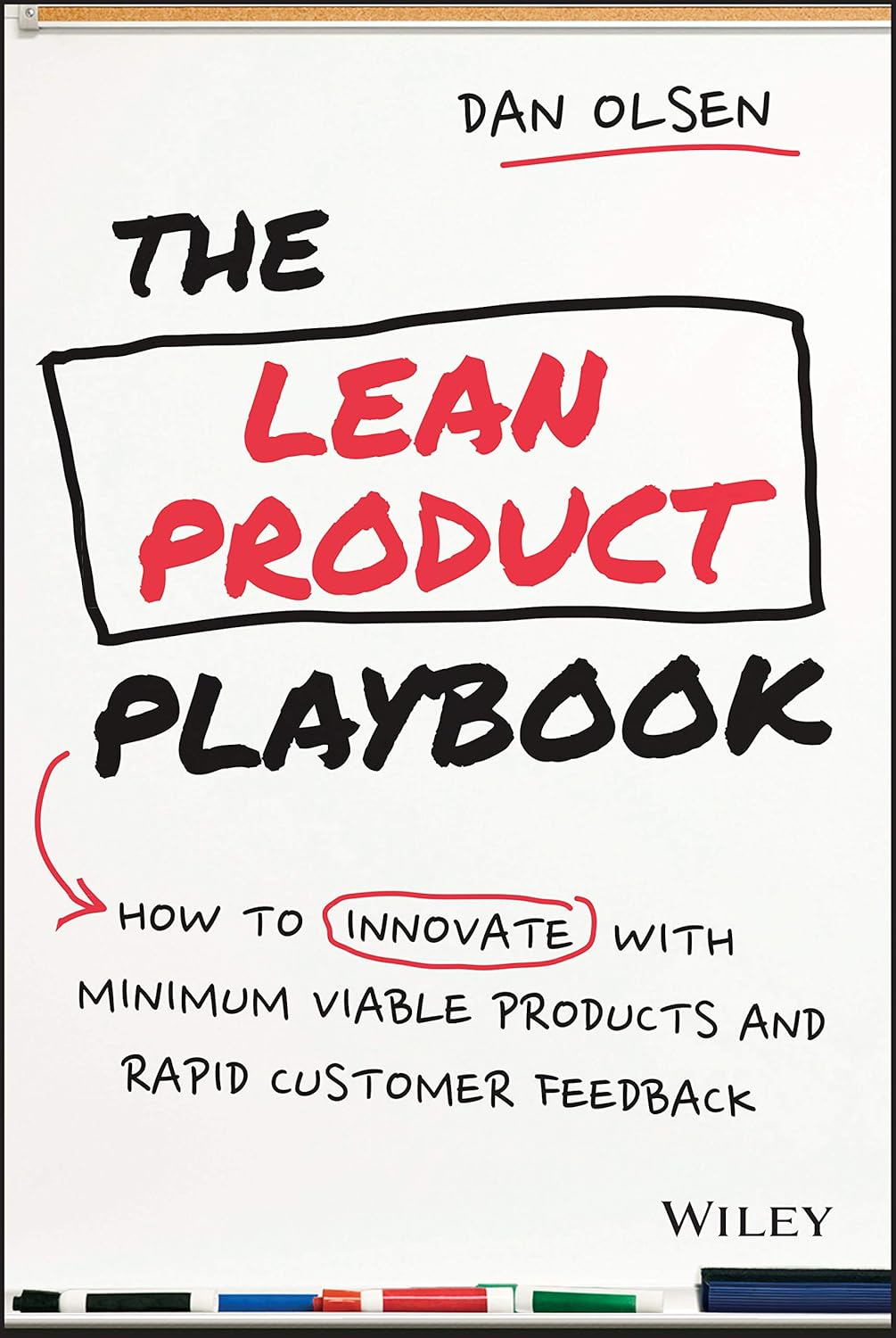
About The Lean Product Playbook by Dan Olsen: A Clear Guide to Building Products People Actually Want
If you have a product idea but do not know what to build first, The Lean Product Playbook by Dan Olsen gives you a simple path. This practical business book is about making better products by learning what customers need before spending too much time or money. Dan Olsen turns Lean Startup ideas into a step-by-step process that teams can use in real work.
The book focuses on one big goal: product-market fit. In simple words, that means making a product that solves a real problem for the right people. Instead of guessing, you learn how to choose your target customer, find needs that are not served well, decide what value your product should give, build a small test version, show it to users, learn from feedback, and improve it.
Stop Building First and Asking Questions Later
Many products fail because teams rush into making features. They may spend months building something before finding out that customers do not need it, do not understand it, or do not value it enough.
This book gives a better way. Dan Olsen teaches you to test important ideas early. You start with the customer and the problem, then move toward the solution. That order matters because a beautiful product can still fail if it solves the wrong problem.
The Lean Product Process breaks a risky idea into smaller questions about the customer, need, value, first features, prototype, and user feedback. Answering them one by one can reduce waste.
A Practical Road Map to Product-Market Fit
A key idea in the book is the Product-Market Fit Pyramid. It connects five parts of a product: target customer, underserved customer needs, value proposition, feature set, and user experience. The lower parts support the upper parts, so weak customer understanding can make later decisions harder.
Olsen then explains a six-step Lean Product Process. You determine the target customer, identify underserved needs, define the value proposition, choose the minimum viable product or MVP feature set, create an MVP prototype, and test that prototype with customers.
This structure does not stop at “talk to customers” or “build an MVP.” It shows how to move from a broad idea to a focused product concept and test whether people want it.
Later chapters also discuss user experience, Agile development, key metrics, analytics, and A/B testing. This connects early product discovery with the work that comes after launch.
What Makes This Book Useful
The Lean Product Playbook is written for action. You can use its ideas while planning a startup, improving an app, changing a service, or deciding which feature should come next.
Useful parts include:
- A clear model for understanding product-market fit
- A six-step process for turning customer needs into a tested product idea
- Guidance on finding and ranking customer needs
- Help with writing a strong value proposition
- A practical way to decide what belongs in an MVP
- Advice on making and testing prototypes before full development
- Examples that show how product choices work
- Guidance on UX, Agile work, metrics, analytics, and experiments
You do not need to be a programmer to follow the main lessons. The book can help founders, product managers, designers, marketers, analysts, developers, and business leaders because product decisions often need input from many roles.
Better Questions Lead to Better Products
One strong benefit of this book is that it gives teams a shared way to think. People often argue about features because each person has a different customer, problem, or goal in mind. Olsen’s frameworks help bring the discussion back to the same basic questions.
Instead of asking, “What feature should we build?” you can ask, “Which customer need are we trying to solve?” Instead of debating opinions for hours, you can create a prototype and test it with users.
For a founder, this can reduce the risk of building too much too early. For a product manager, it can support prioritization. For a designer, it gives context for user problems. For marketers and sales teams, it can make the value proposition easier to explain. For students, it turns product management ideas into a clear process.
The book does not promise that every idea will win. It gives you a better way to learn before making larger bets.
Good for Startups, Teams, and Students
This book fits many real situations. You may have an app idea and need to know which users to target first. You may already have a product but feel customers are not excited about it. You may work in a team that keeps adding features without clearly knowing what problem those features solve.
You can use the book during product discovery: read a part, apply the method, collect feedback, and move to the next step. Teams can also use its models to discuss customers, needs, features, and tests.
Students of business, entrepreneurship, UX, innovation, marketing, and product management can also use it as an introduction to practical product thinking.
A Reading Copy Made for Regular Use
At Bookish Wonderland, this printed edition is prepared for readers who want a comfortable physical copy for study, notes, and repeat reading.
You get premium eye-soothing cream paper for comfortable reading. Crystal-clear print helps headings, charts, examples, and paragraphs stay easy to follow. High-quality stitched and glue binding supports better longevity, which matters for a book you may return to while working on different products or projects.
If you are checking the Book price in Bangladesh for The Lean Product Playbook by Dan Olsen, also look at reading comfort, print clarity, binding quality, and delivery support, not only the price.
Bookish Wonderland offers nationwide delivery across Bangladesh, including inside and outside Dhaka. Cash on Delivery is available nationwide. Readers in Dhaka can also ask about fast or urgent delivery when available.
Is This the Right Book for You?
Choose this book if you want a practical product guide rather than a book built only around big ideas.
It is especially suitable if you are:
- Starting a new product or startup
- Learning product management
- Trying to improve product-market fit
- Planning an MVP
- Working with UX or customer research
- Deciding which features matter most
- Testing an idea before full development
- Looking for a structured Lean product method
It may be less useful if you only want company stories or a short motivational read. This book is made to be applied. You will get more value when you stop, think, test ideas, and use the frameworks on a real product.
Turn Product Ideas into Better Decisions
The strongest reason to read The Lean Product Playbook is simple: it helps turn product building from guessing into learning.
The book gives you a process for asking better questions before you spend heavily on development. You learn to separate the customer problem from your solution, test assumptions, and improve with evidence.
That can be useful whether you are building your first small app or working inside a large company. The tools are meant to help you find a clearer path from an idea to something customers truly value.
If you require any customization or have any questions, please inbox us via FB or Insta.
| Primary Specification | |
| Author | Dan Olsen |
| Narrator | Walter Dixon |
| Genre | Business & Economics, Product Management, Entrepreneurship, Lean Startup |
| ISBN-13/ISSN | 978-1118960875 |
| ISBN-10 | 1118960874 |
| Publisher | Wiley |
| Publishing Date | June 2, 2015 |
| Edition | 1st |
| Language | English |
| Reading Age | 16+ |
| Format | Printed book |
| Physical Specification & Quality | |
| Paper Quality | Premium eye-soothing cream paper |
| Binding Quality | High quality stitched and glue binding (for longevity) |
| Print Quality | Crystal-clear print |
| Pages | 336 pages |
| Country | United States |
| Logistics Information | |
| Weight | 342 gm |
| Length | 8.5 inch |
| Width | 5.6 inch |
| Height | 1.2 inch |