

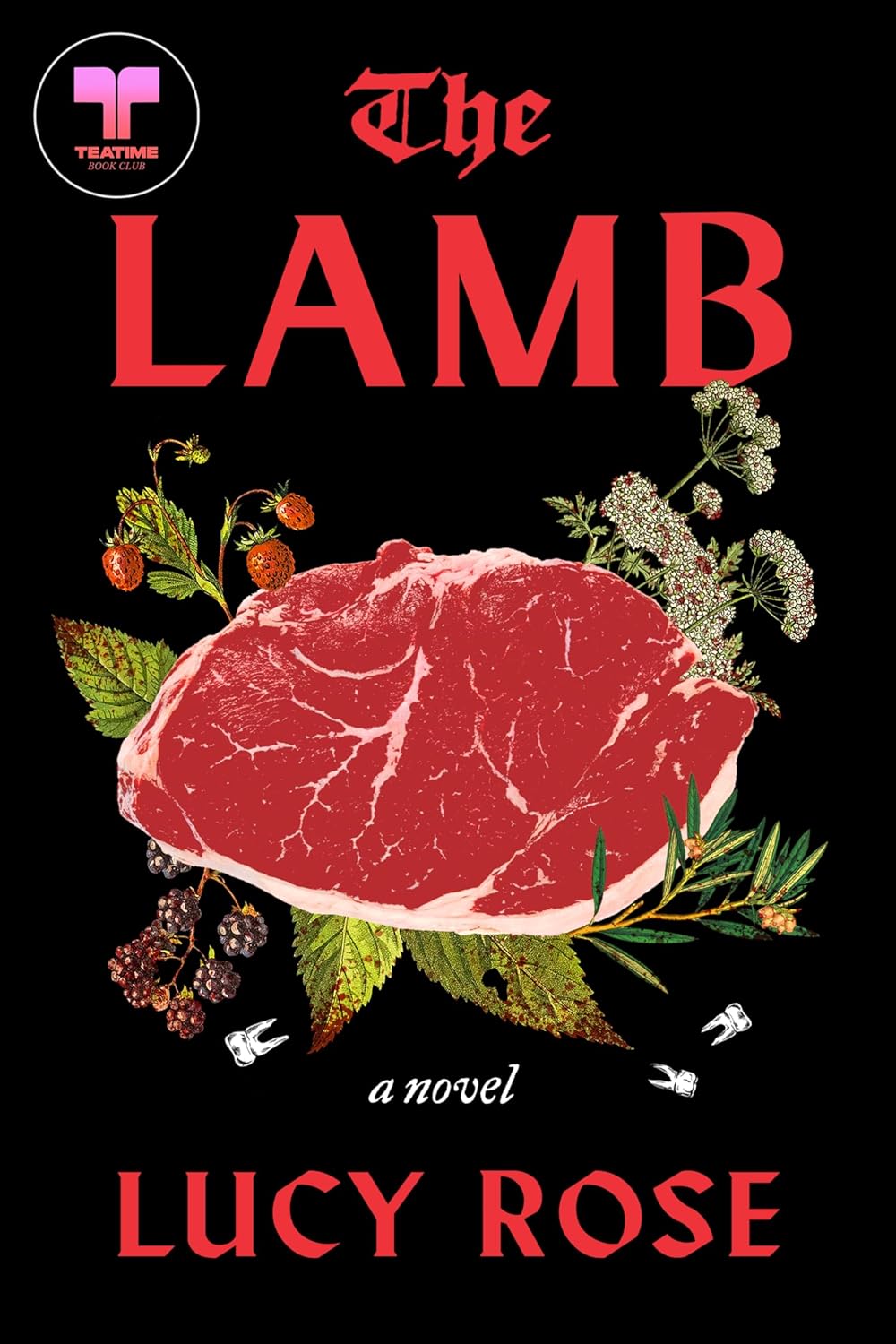
About The Lamb by Lucy Rose: A Dark Tale of Hunger, Love and Freedom
The Lamb by Lucy Rose is a dark, strange, and deeply moving horror novel about a young girl named Margot. She lives with her mother in a lonely cottage beside a forest. Their home may look quiet from the outside, but a terrible secret hides within its walls.
Margot’s mother welcomes lost strangers into the cottage. She calls these visitors “strays.” She gives them warmth, food, and wine, making them feel safe. However, her kindness is only a trap. She kills these people and uses their bodies to satisfy a frightening hunger.
This strange life is the only world Margot has ever known. She loves her mother, but she also fears her. Everything begins to change when a beautiful stranger named Eden arrives during a snowstorm. Mama becomes deeply interested in Eden, and Margot starts to feel pushed aside. As the balance inside the cottage changes, Margot must learn what love, hunger, family, and freedom truly mean.
The Lamb is Lucy Rose’s debut novel and was first published in 2025. It combines gothic horror, folk-horror elements, a dark fairy-tale mood, and an emotional coming-of-age story. The novel is told through Margot’s young and innocent point of view, which makes its disturbing events feel even more haunting.
Welcome to Margot’s Unusual World
Margot has grown up far away from ordinary family life. Her small cottage stands close to the forest, surrounded by cold air, wild land, and deep silence. At school, she can see that other children live differently. Yet at home, Mama’s rules shape everything Margot knows.
Mama says that the people who reach their cottage are strays. These strangers have moved too far away from the safe road. They believe they have found shelter, but they have actually entered a dangerous place.
For Margot, this pattern has become normal. She watches, learns, and obeys. Her mother has taught her that their hunger is natural and that the outside world cannot understand them. But Margot slowly starts asking questions. Is this really what family life should be? Must she become exactly like Mama? Can love still be called love when it is mixed with fear, control, and pain?
These questions give the story its heart. The book contains shocking horror, but it is not only about violence. It explores what happens when a child grows up under the control of a powerful parent. Margot must decide whether she will accept the life chosen for her or search for a different future.
A Stranger Changes Everything
The arrival of Eden changes the quiet rhythm of the cottage. She appears during a snowstorm, bright and attractive against the cold darkness outside. Unlike the other strays, Eden is not quickly treated as food. Mama wants her to stay.
Margot soon sees her mother giving Eden the care and attention that once belonged to her. The cottage becomes filled with jealousy, fear, desire, and doubt. Margot is no longer certain of her place in Mama’s life.
Eden’s presence also opens a door to something new. She shows Margot that another kind of life may exist beyond the forest. Yet Eden is not a simple rescuer, and the relationships inside the house remain dangerous. Each woman wants something, and those wants begin to pull the family apart.
This growing tension drives the novel. Readers may wonder whether Eden will save Margot, harm her, or become trapped herself. Lucy Rose does not turn the story into a simple fight between good and evil. Instead, the characters are shaped by loneliness, need, hunger, and their strong wish to be loved.
When Love Starts to Feel Like a Cage
Margot loves Mama because Mama is her whole world. At the same time, Mama controls what Margot sees, understands, and believes. This creates the main emotional problem of the story: how can a child leave the person she loves when that person is also hurting her?
Many readers know the feeling of being told who they should become. A parent, family member, or social rule may try to choose a person’s future. Margot faces an extreme form of this problem. Mama expects her daughter to share the same hunger, follow the same habits, and continue their hidden way of life.
Margot needs more than physical safety. She needs the right to think for herself. She needs to understand her feelings and decide what kind of person she wishes to be.
The novel offers no quick or easy answer. Instead, it follows Margot as she notices the truth little by little. Her journey shows that freedom often begins with one small question: “Do I want this life?”
For readers who enjoy horror with emotional meaning, this conflict makes The Lamb by Lucy Rose much more than a frightening story. It becomes a painful look at family control and the difficult work of finding your own voice.
Horror with a Deeper Meaning
Cannibalism is one of the book’s clearest and most disturbing elements. However, it also works as a symbol. Mama does not only consume bodies; she consumes attention, care, and control. Her endless hunger suggests an empty place inside her that food cannot fill.
The story connects hunger with many human needs. A person may hunger for love, safety, power, freedom, or the feeling of being wanted. When these needs become unhealthy, love can turn into possession.
Margot also has desires, but she does not fully understand them at first. She wants Mama’s love while also wanting distance from her. She wants to belong, yet she dreams about escaping. These opposite wishes make her feel believable and vulnerable.
Readers and reviewers often discuss the novel’s use of domestic cannibalism as a metaphor for need, dependence, control, motherhood, and the desire to be accepted. Community reactions also frequently highlight its poetic language, childlike narration, slow pace, and disturbing emotional effect.
A Dark Fairy Tale for Adult Readers
The Lamb often feels like a fairy tale told beside a fire, but it is not a gentle children’s story. It has a remote cottage, a dangerous forest, a lost stranger, a controlling mother, and a young girl trying to understand the rules of her world.
These familiar parts are changed into something modern and frightening. The forest can suggest both danger and freedom. The cottage is a home, yet it can also feel like a prison. Mama is a caregiver, but she is also the monster Margot may need to escape.
Lucy Rose uses simple images from food, weather, animals, blood, and the natural world to build the book’s mood. Beauty and horror often appear together. This contrast gives the novel its special voice.
The story is suitable for adult readers who like literary horror, gothic fiction, queer fiction, dark folklore, and unusual coming-of-age novels. It is less suitable for anyone seeking light entertainment or fast action on every page. The fear grows slowly through the setting, family tension, and Margot’s changing understanding.
Why the Child’s View Matters
Margot does not describe her home as an adult would. She has lived with Mama’s rules for so long that terrible things can seem ordinary to her. Readers can often understand the danger before Margot fully recognizes it.
This gap creates strong tension. We want Margot to see the truth, but we also understand why she finds it hard. Mama is not only a threat. She is the person who raised, fed, taught, and protected her. Leaving Mama would also mean leaving the only life Margot knows.
The child’s point of view gives the book both innocence and sadness. Margot notices small changes in voices, faces, meals, and weather. These details show her fear even when she cannot explain it directly.
This style makes the story feel close and personal. Instead of watching the horror from a safe distance, readers experience the cottage through Margot’s limited knowledge. The result is a slow, tight feeling that may stay in the mind long after the last page.
A Story About Mothers and Daughters
At the centre of The Lamb is the bond between Margot and Mama. Their relationship contains love, dependence, jealousy, control, and fear.
Mama has built a small world in which she holds all the power. She decides who enters the house, what happens to the strays, and what Margot should become. Yet the arrival of Eden changes where Mama places her attention. Margot begins to see that her mother’s love may have rules and limits.
The novel asks difficult questions about motherhood. Can a mother love her child while also causing harm? What happens when care becomes ownership? Can a daughter choose a new life without feeling that she has betrayed her mother?
There are no simple answers. That uncertainty gives the novel much of its emotional force. Readers who enjoy stories about difficult family bonds will find a great deal to think about beneath the horror.
Nature, Animals and Appetite
Food and nature appear throughout the story. The forest, snow, animals, meat, and the body are not just background details. They help the novel examine the line between human behaviour and animal instinct.
Mama treats hunger like a natural force. But the story asks whether every desire should be followed simply because it feels natural. It also invites readers to think about who is seen as food, who has power, and how people make violence feel normal.
The title, The Lamb, carries several possible ideas. A lamb may represent innocence, weakness, sacrifice, or a creature being prepared for slaughter. Margot may appear gentle and powerless, but she is also growing. The title encourages readers to question who is the hunter and who is the meal.
These ideas make the book useful for reading groups. Different readers may understand its symbols in different ways, leading to thoughtful discussions about family, gender, appetite, meat, love, and freedom.
What Kind of Reading Experience Does It Offer?
The Lamb is built more around mood and emotional pressure than constant action. Its pace allows readers to stay inside Margot’s strange daily life and watch her awareness grow.
The writing is often poetic, sensory, and dreamlike. Readers can almost feel the cold outside the cottage, smell the meals, and sense the silence between the characters. This beautiful style stands against the ugly acts taking place within the story.
Some readers may love this slow, haunting approach. Others may find parts of the middle repetitive or wish for a quicker plot. Reader discussions show both reactions, especially regarding the pace and ending.
This is a good choice for people who value atmosphere, character, and meaning more than a simple chase or mystery. The strongest question is not merely what Mama will do next. It is whether Margot can understand her own needs before Mama’s hunger decides her future.
Important Content to Know Before Reading
The Lamb is written for mature readers. It includes cannibalism, murder, blood, child abuse, parental control, bullying, animal harm, disturbing food images, and emotional trauma.
These subjects are important to the story and its themes. They are not added only for surprise. Still, some scenes may be very uncomfortable.
Readers who are sensitive to harm involving children or animals should consider these warnings before ordering. Those who enjoy dark and challenging fiction may appreciate how the novel joins body horror with an emotional story about growing up.
It is best approached as adult literary horror, not as a children’s book despite the young narrator, fairy-tale style, and word “Lamb” in its title.
Made for a Better Reading Experience
A powerful story deserves a physical form that feels good to hold. Bookish Wonderland prepares this printed edition for readers who care about comfort and durability.
The premium eye-soothing cream paper creates a soft reading surface. It reduces the harsh look that bright white pages can have, making long reading sessions more comfortable.
Crystal-clear printing keeps the letters sharp and easy to read. The clean text supports the novel’s detailed and atmospheric writing without making the page feel tiring.
High-quality stitched and glue binding adds strength to the book. The stitched structure helps keep the pages secure, while glue provides extra support. With careful use and dry storage, the book can remain part of a reader’s collection for a long time.
These features are especially helpful for readers who plan to reread the novel, lend it to trusted friends, or keep it on a horror-fiction shelf.
Why Buy It from Bookish Wonderland?
Bookish Wonderland offers a large collection of premium and durable English books for readers across the country. You can order The Lamb by Lucy Rose without needing to visit a physical shop.
Cash on Delivery is available nationwide, allowing customers to pay when the parcel arrives. Delivery is offered both inside and outside Dhaka. Readers in Dhaka may also request a fast or urgent delivery option when available.
Customers searching for The Lamb by Lucy Rose Book price in Bangladesh can order a readable, shelf-worthy printed edition with premium cream paper, clear text, and strong binding.
Bookish Wonderland focuses on the complete reading experience: an interesting title, comfortable pages, clean printing, lasting construction, and dependable delivery.
Who Will Enjoy The Lamb?
This novel may be a strong choice for readers who enjoy:
- Gothic and folk horror
- Dark fairy-tale settings
- Literary horror with deeper meaning
- Difficult mother-and-daughter relationships
- Queer themes and female-centred stories
- Child narrators with limited understanding
- Slow, tense, atmospheric storytelling
- Stories about control, desire, and freedom
- Disturbing books that inspire discussion
- Unusual coming-of-age fiction
It can also make a thoughtful gift for an adult horror reader who prefers emotional, strange, and beautifully written stories over simple jump scares.
If you want a dark book that can frighten you, move you, and leave you with questions, this is a memorable choice. Order The Lamb by Lucy Rose from Bookish Wonderland today and enter a forest where love can feed, trap, protect, and consume.
If you require any customization or have any questions, please inbox us via FB or Insta.
| Primary Specification | |
| Author | Lucy Rose |
| Narrator | Emma Rydal |
| Genre | Gothic fiction, horror, literary fiction, queer fiction, coming-of-age fiction, contemporary folktale |
| ISBN-13/ISSN | 978-0063374614 |
| ISBN-10 | 0063374617 |
| Publisher | Harper Perennial |
| Publishing Date | February 17, 2026 |
| Language | English |
| Reading Age | 18+ years |
| Format | Printed book |
| Physical Specification & Quality | |
| Paper Quality | Premium eye-soothing cream paper |
| Binding Quality | High quality stitched and glue binding (for longevity) |
| Print Quality | Crystal-clear print |
| Pages | 336 pages |
| Country | United States |
| Logistics Information | |
| Weight | 357 gm |
| Length | 8.5 inches |
| Width | 5.6 inches |
| Height | 0.9 inch |