

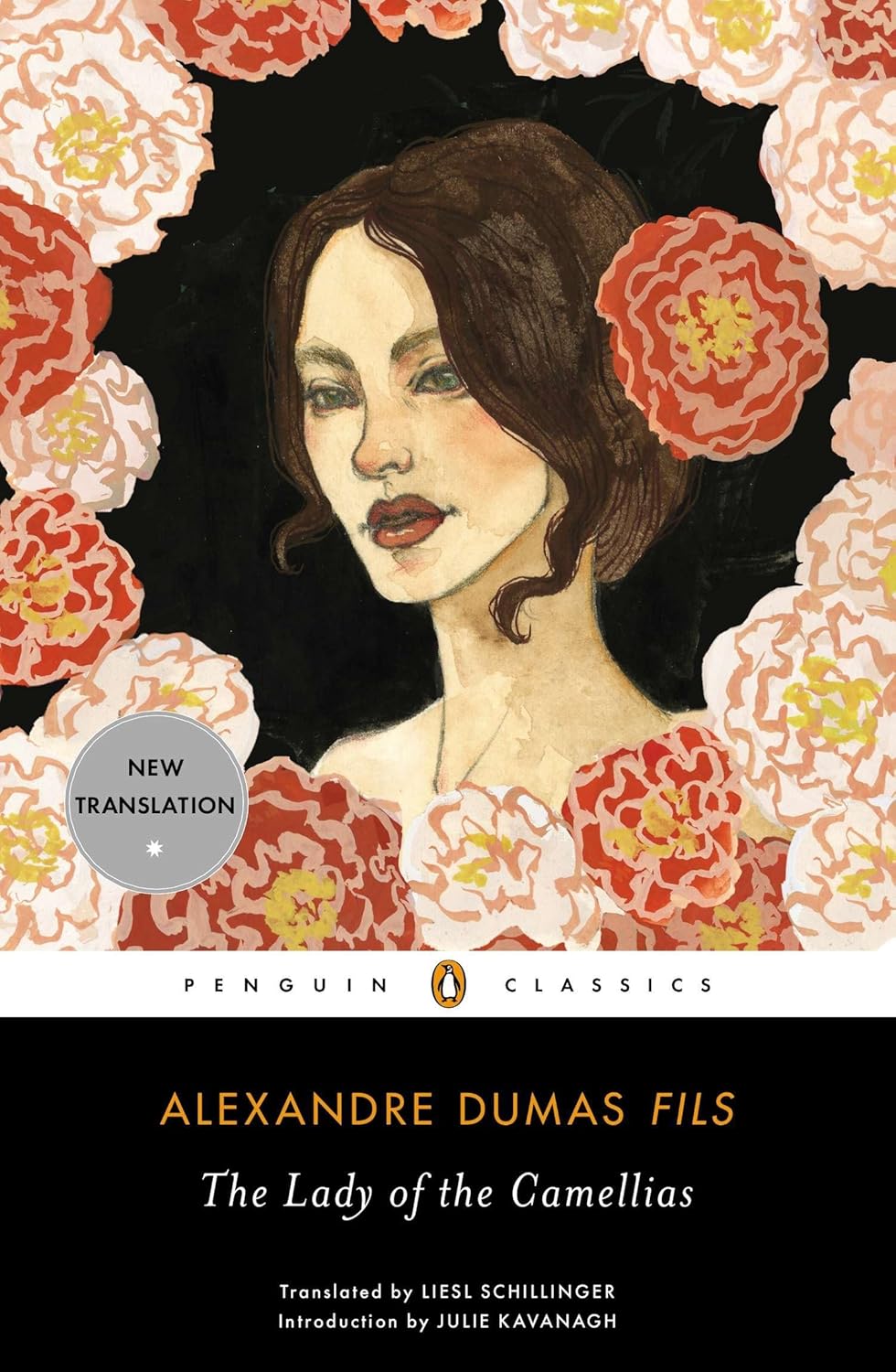
About The Lady of the Camellias Novel by Alexandre Dumas – A Timeless Story of Love and Sacrifice
The Lady of the Camellias Novel by Alexandre Dumas fils is a moving French classic about love, social judgment, sacrifice, and loss. First published in 1848 under the French title La Dame aux Camélias, the novel follows Marguerite Gautier and Armand Duval, two people who fall deeply in love but live in a world that refuses to accept their relationship. The story was partly inspired by the author’s connection with the real-life Parisian courtesan Marie Duplessis. It later inspired Giuseppe Verdi’s famous opera La Traviata and many plays, films, ballets, and other adaptations.
This is not simply an old romance. It is a story about how quickly society can judge a person without understanding that person’s heart. Marguerite is admired for her beauty, style, and charm, yet many people do not treat her with respect. Armand sees more in her. Their relationship gives Marguerite hope for a quieter and more honest life, but family pressure, money problems, illness, jealousy, and social rules soon stand between them.
Readers who enjoy emotional classics, tragic romances, historical Paris, and meaningful stories will find much to remember in this novel.
A Beautiful Woman Hidden Behind a Public Image
Marguerite Gautier is one of the most admired courtesans in Paris. She lives among parties, theatres, fine clothes, expensive gifts, and wealthy admirers. She is known as the Lady of the Camellias because she is often seen carrying her favourite flowers. From a distance, her life looks bright and exciting. However, the beauty around her hides loneliness, debt, poor health, and a deep wish to be loved as a person.
Marguerite suffers from consumption, the old name commonly used for tuberculosis. Her illness brings a quiet feeling of danger into the story. She knows that beauty, money, and attention cannot protect her forever. This knowledge makes her choices more urgent and her love more painful.
Armand Duval is a young man who has admired Marguerite from afar. Unlike many of the men around her, he appears to care about her health and happiness. When he finally enters her life, his feelings are strong and sincere. Marguerite is not used to receiving this kind of love. At first, she is careful, but she slowly allows herself to believe that another kind of life may be possible.
Their love gives both characters hope, but it also exposes their weaknesses. Armand can be caring and loyal, yet he can also become jealous, angry, and cruel when he feels rejected. Marguerite is loving and brave, but she carries heavy secrets and responsibilities that she cannot easily explain. These human flaws make their relationship feel real, even though the story comes from another century.
When Love Is Not Enough to Defeat Society
Many love stories ask whether two people truly care for each other. This novel asks a harder question: what happens when love is real but society has already decided that one person is not worthy of it?
Marguerite’s past follows her everywhere. Even when she tries to leave her former way of life, respectable society continues to judge her. Armand’s family worries that his relationship with her will harm their name and future. Their concern is not based only on whether Armand is happy. It is based on social class, public gossip, marriage expectations, and the fear of shame.
This creates the main struggle of the novel. Marguerite and Armand can escape Paris for a time, but they cannot easily escape the ideas held by the people around them. Their peaceful country life offers a picture of what they might have shared. Marguerite begins giving up parts of her costly old life, showing that her feelings are more serious than Armand first understands.
Then Armand’s father, Monsieur Duval, intervenes. He fears that the relationship may damage the marriage prospects of Armand’s sister and bring trouble to the family. His request places Marguerite in a heartbreaking position. She must choose between her own happiness and the future of the man she loves.
The problem is not a lack of feeling. The problem is that Marguerite’s most loving act must remain hidden. Because Armand does not know the full truth, he misunderstands her decision. His pain turns into anger and a wish to hurt her. The reader can see what he cannot, which makes the later events even more difficult to watch.
A Tragic Romance with More Than a Sad Ending
The Lady of the Camellias is famous as a tragic love story, but its value comes from more than its ending. The novel looks closely at respect, reputation, money, illness, family duty, and the different rules society applies to men and women.
Marguerite receives attention from powerful men, but attention is not the same as respect. People enjoy her company while keeping her outside the world they call respectable. The same society that supports her costly lifestyle later uses that lifestyle as a reason to condemn her.
This unfairness remains easy to understand today. People are still judged by their past, work, income, clothing, relationships, and public image. A person may change sincerely and still find that others refuse to see the change. Marguerite’s experience asks readers to think about whether society gives everyone the same chance to begin again.
The book also shows how silence can damage love. Marguerite hides the reason behind an important choice because she believes that doing so will protect Armand and his family. Armand reacts to what he sees instead of what is true. Pride and jealousy then make the distance between them larger.
Readers who have experienced a serious misunderstanding may recognise this pain. One honest conversation might appear able to change everything, yet the characters are trapped by promises, fear, pride, and the social values of their time.
Why Marguerite Gautier Remains Memorable
Marguerite is not written as a simple symbol of perfection. She can be playful, proud, practical, generous, tired, frightened, and deeply loving. She understands how money controls her life, and she knows that affection alone cannot always pay debts or provide safety. These facts make her choices more complex than they first appear.
Her greatest strength is her ability to love without receiving public praise for it. She makes an enormous personal sacrifice, yet the person she is trying to protect does not immediately understand what she has done. She loses the life she wanted and suffers Armand’s anger without being able to defend herself fully.
Her illness also changes how every happy moment feels. Time is limited, so love becomes both more precious and more dangerous. Readers know that Marguerite cannot wait forever for society to become kinder.
The character was inspired by Marie Duplessis, a famous nineteenth-century Parisian courtesan with whom Alexandre Dumas fils had a relationship. Dumas transformed elements of that experience into fiction, giving the novel a personal emotional foundation.
Marguerite is memorable because the novel lets readers see the human being behind the label placed on her. She wants affection, peace, dignity, and a life in which she does not need to perform for others. Those wishes are simple, but the world around her makes them painfully difficult to reach.
A Story Told Through Memory and Discovery
The novel uses a frame narrative rather than beginning as a simple account of two lovers meeting. The narrator first learns about Marguerite after her death, when her possessions are being sold. Through later conversations, letters, memories, and Armand’s account, her story is slowly revealed.
This structure gives the book a feeling of looking back at something that can no longer be repaired. Readers understand early that the story will not lead to an easy happy ending. The suspense comes from discovering how the relationship failed and what each person did not know at the time.
Letters are especially important. They carry explanations and emotions that could not be shared openly. They allow Marguerite’s voice to remain present even when she is absent. They also reveal the painful difference between appearance and truth.
The storytelling method suits the novel’s themes. Marguerite is judged publicly while her true feelings remain private. The reader must move beyond gossip and visible events to discover who she really was. In that sense, reading the novel becomes an act of understanding someone whom society misunderstood.
A Classic That Shaped Theatre, Opera, and Film
The influence of The Lady of the Camellias reaches far beyond the printed page. Dumas adapted the novel for the stage, and its tragic romance became the foundation for Giuseppe Verdi’s opera La Traviata. It has also inspired many films, plays, ballets, and other creative works. Penguin describes it as the landmark novel behind La Traviata and notes its long history of stage and screen adaptations.
This cultural history makes the novel a useful choice for readers interested in literature, theatre, music, film, or adaptation. Reading the original story helps explain why Marguerite’s struggle has remained powerful across different countries and generations.
Readers familiar with La Traviata may recognise the main emotional conflict, even though names and certain details differ. People who know later tragic romances may also notice themes that have been repeated in modern books and films: a socially forbidden relationship, a hidden sacrifice, a painful misunderstanding, and love understood too late.
The story has survived because its central emotions are easy to recognise. The setting is nineteenth-century Paris, but the need to be loved without judgment is not limited to one place or period.
Who Will Enjoy This Novel?
The Lady of the Camellias is a strong choice for readers who like classic romance with emotional depth. It is particularly suitable for people who prefer a meaningful love story over a light romantic comedy.
You may enjoy this book if you like:
- Tragic and forbidden love stories
- French classic literature
- Novels set in nineteenth-century Paris
- Stories about sacrifice and social judgment
- Complex female characters
- Books involving family pressure and class difference
- Emotional stories told through memories and letters
- Literature connected with famous plays, films, and operas
It can also support school, college, book-club, or personal reading. Students can explore subjects such as gender, reputation, class, illness, sacrifice, narrative structure, and the difference between public appearance and private truth.
Book clubs may find many questions to discuss. Was Marguerite right to hide the truth? Was Monsieur Duval protecting his family or acting unfairly? Could Armand have responded differently? Does sacrifice remain loving when it removes another person’s right to choose? These questions prevent the novel from becoming only a sad romance.
A More Comfortable Way to Read a Lasting Classic
Classic books are often read slowly, studied closely, or returned to after several years. A weak physical copy can make that experience less enjoyable. Thin paper may allow text to show through, unclear printing can tire the eyes, and a weak spine may loosen after repeated reading.
Bookish Wonderland offers this printed edition for readers who want a more comfortable and durable reading experience. The book is prepared with premium eye-soothing cream paper, helping reduce the harsh look that bright white pages may create during long reading sessions.
Crystal-clear printing keeps the letters sharp and easy to follow. This is especially useful in a classic novel where readers may pause to study a sentence, underline a meaningful idea, or return to an earlier scene.
The high-quality stitched and glue binding is designed for longevity. It gives the pages stronger support and helps the book remain useful through regular reading, study, and careful rereading.
These features make the edition suitable for a personal collection, student shelf, reading corner, or thoughtful gift. Instead of buying a copy only for one quick reading, you can keep a book designed to stay with you.
What You Receive from This Edition
- Premium eye-soothing cream paper for comfortable reading
- Crystal-clear print for sharp and clean text
- High-quality stitched and glue binding for better longevity
- A printed English edition suitable for reading and collecting
- A timeless French classic with lasting literary importance
- A story that can support study, discussion, and personal reflection
- Nationwide delivery through Bookish Wonderland
- Cash on Delivery available across Bangladesh
- Delivery available inside and outside Dhaka
- Fast or urgent delivery options available in Dhaka
The paper, printing, and binding benefits work together without changing the heart of the reading experience. The purpose is simple: to help you focus on Marguerite and Armand’s story without being distracted by an uncomfortable physical copy.
A Meaningful Gift for Readers
This novel can be a thoughtful gift for someone who loves classics, tragic romances, opera, French literature, or emotionally powerful stories. Its themes make it suitable for birthdays, academic achievements, book-club exchanges, or a personal library.
It is also a meaningful choice for a reader beginning to explore nineteenth-century European literature. The central story is direct and emotional, while the deeper social questions give the reader much to consider after finishing it.
For an experienced classics reader, the novel offers a chance to study a work that influenced later romantic tragedy. For a new reader, it offers an accessible human conflict: two people love each other, but judgment, secrecy, and sacrifice stand between them.
The Lady of the Camellias Book Price in Bangladesh
Readers searching for The Lady of the Camellias by Alexandre Dumas price in Bangladesh can order this premium printed edition from Bookish Wonderland. The final price should be checked on the current product page because prices may change with printing, stock, and delivery conditions.
Cash on Delivery is available nationwide, allowing customers to place an order without making an advance online payment where the service applies. Bookish Wonderland delivers both inside and outside Dhaka. Customers in Dhaka may also request a fast or urgent delivery option, subject to location and availability.
This makes the book easier to order for readers, students, collectors, and gift buyers across the country.
Order The Lady of the Camellias Novel by Alexandre Dumas from Bookish Wonderland and experience this enduring tale through premium cream paper, crystal-clear printing, and durable stitched and glue binding. Nationwide delivery and Cash on Delivery are available, with fast delivery options in Dhaka.
If you require any customization or have any questions, please inbox us via FB or Insta.
| Primary Specification | |
| Author | Alexandre Dumas fils |
| Translator | Liesl Schillinger |
| Narrator | Alyssa Bresnahan, John McDonough, Firdous Bamji |
| Genre | Classic Fiction, Literary Fiction, Historical Romance, Tragic Romance |
| ISBN-13/ISSN | 9780143107026 |
| ISBN-10 | 014310702X |
| Publisher | Penguin Classics |
| Publishing Date | June 25, 2013 |
| Language | English |
| Reading Age | 18+ years |
| Format | Printed book |
| Physical Specification & Quality | |
| Paper Quality | Premium eye-soothing cream paper |
| Binding Quality | High quality stitched and glue binding (for longevity) |
| Print Quality | Crystal-clear print |
| Pages | 240 pages |
| Country | France |
| Logistics Information | |
| Weight | 259 gm |
| Length | 8.5 inches |
| Width | 5.6 inches |
| Height | 5 inch |