

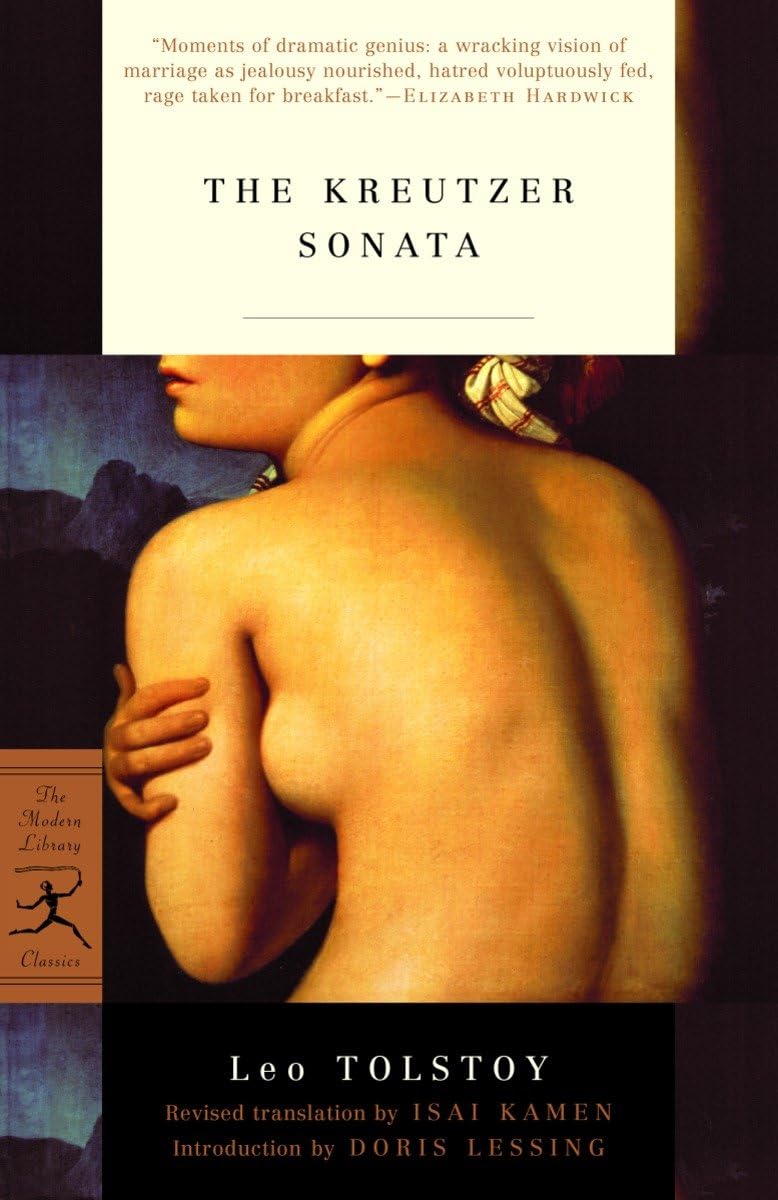
About The Kreutzer Sonata by Leo Tolstoy: A Dark Classic About Love, Marriage and Jealousy
Some books entertain you for a few hours. Other books enter your mind, disturb your comfort and make you think about human life in a new way. The Kreutzer Sonata by Leo Tolstoy belongs to the second group. This short but powerful classic follows a troubled man named Pozdnyshev as he tells a stranger the shocking story of his marriage. What begins as a train conversation slowly becomes a painful confession filled with love, anger, fear, pride and jealousy.
Tolstoy does not give readers a simple romance or an easy moral lesson. He asks hard questions about marriage, desire, trust, social rules and the way men and women are treated. His narrator speaks with great force, but readers are not required to accept everything he says. Part of the book’s power comes from deciding where Pozdnyshev is honest, where he is confused and where he tries to escape responsibility for his terrible actions.
Named after Beethoven’s famous violin sonata, this novella combines music, emotional tension and psychological conflict. It is an excellent choice for readers who enjoy Russian classics, serious fiction and stories that continue to create debate long after the final page.
A Train Journey That Becomes a Shocking Confession
The story opens during a train journey. Several passengers begin talking about love, marriage and divorce. Each person has a different opinion. Some defend traditional marriage, while others believe that people should marry for love. Pozdnyshev listens to this discussion and finally joins it. His strange manner and strong ideas make the other passengers uncomfortable.
When most of the passengers leave, Pozdnyshev begins speaking privately to the unnamed narrator. He reveals that he is the man who killed his own wife. From that moment, the peaceful train carriage becomes the setting for a dark and deeply personal confession.
Pozdnyshev explains how he once lived, why he married and how his relationship slowly became unhappy. He says that he and his wife were attracted to each other, but they did not build the trust and understanding needed for a peaceful life. Their home became full of arguments, resentment and hidden anger. Even ordinary family problems grew into emotional battles.
As Pozdnyshev continues his story, readers see how his jealousy begins to control him. His wife becomes friendly with Trukhachevsky, a talented violinist. Together, they play Beethoven’s Violin Sonata No. 9, commonly called the Kreutzer Sonata. Pozdnyshev becomes convinced that their shared music hides a romantic relationship. His suspicion grows until he can no longer think clearly.
When Jealousy Changes the Way a Person Sees Everything
Many people know the pain of doubt in a relationship. A late reply, a private conversation or a small change in behaviour may create fear. Most people can step back, ask questions and search for the truth. Pozdnyshev cannot. His jealousy changes the meaning of everything he sees.
A smile becomes proof. A musical performance becomes a secret message. His wife’s independence becomes a threat. Instead of speaking with honesty or accepting uncertainty, he feeds his own fear. Tolstoy shows how jealousy can become a closed room in which every thought supports the same dark belief.
This makes The Kreutzer Sonata more than a story about one marriage. It becomes a study of how the human mind can build a frightening story from suspicion. Pozdnyshev repeatedly presents his opinions as facts, but readers can see that his thinking is shaped by anger, pride and a desire for control.
The book gives no quick answer to jealousy, but it offers an important warning. Love without trust can become possession. Fear without open conversation can grow into hatred. Pride can stop a person from seeking help or admitting that he may be wrong. Readers who enjoy psychological fiction will find much to examine in Pozdnyshev’s words, actions and efforts to explain himself.
A Marriage Built on Desire but Missing Understanding
Pozdnyshev believes that physical desire is the main cause of his failed marriage. He attacks the social customs that teach young men to chase pleasure and young women to prepare themselves for marriage. He argues that society gives beautiful names to behaviour that is often selfish, unfair or harmful.
These ideas reflect Tolstoy’s strict religious and moral beliefs during the later period of his life. However, the story remains interesting because Pozdnyshev is not a calm or perfect teacher. He is a deeply unreliable man speaking after committing an act of violence. His ideas must therefore be read with care.
Some readers may agree with his criticism of shallow attraction and unhappy marriages. Others may reject his extreme views about intimacy and abstinence. Many readers will notice that he blames society, desire, music and his wife while struggling to face his own responsibility.
This tension makes the novella valuable for discussion. Tolstoy does not simply describe a bad marriage from a safe distance. He places readers inside the thoughts of a husband whose fear and resentment have become dangerous. The result is uncomfortable, but it encourages serious thought about equality, communication, control and personal responsibility within marriage.
Why Beethoven’s Music Matters to the Story
Music is not simply a decoration in this book. It is one of the central forces in Pozdnyshev’s confession. When his wife and Trukhachevsky perform Beethoven’s Kreutzer Sonata together, Pozdnyshev feels that the music creates a powerful bond between them. He cannot see their performance as an artistic partnership. He sees it through the eyes of jealousy.
Tolstoy uses this scene to ask whether music can awaken feelings that words cannot control. Pozdnyshev believes that music carries people into emotional states without clearly explaining what they should do with those feelings. He is frightened by its power because he cannot control its effect on himself or others.
Readers do not need to know classical music to understand this part of the story. The scene works because most people know how a song can suddenly change a mood, bring back a memory or make a moment feel larger. Beethoven’s composition becomes a symbol of beauty, passion and emotional freedom, but Pozdnyshev turns that beauty into evidence for his suspicion.
This connection between literature and music gives the book a special atmosphere. Readers who listen to Beethoven’s Kreutzer Sonata before or after reading may gain another way to experience the tension and emotion behind Tolstoy’s title.
A Short Classic With Deep Psychological Power
Some readers want to explore classic literature but feel nervous about starting a very long Russian novel. The Kreutzer Sonata offers a strong solution. It delivers Tolstoy’s moral questions, sharp observation and psychological depth in the shorter form of a novella.
The book can usually be completed much faster than War and Peace or Anna Karenina, yet it leaves plenty to discuss. Its train setting creates a close, almost trapped feeling. Pozdnyshev’s voice pulls readers forward because they know from the beginning that his story ends in violence. The suspense comes from learning how his marriage reached that point and how he explains what he did.
This is not a light or cheerful read. It deals with murder, controlling behaviour, marital conflict, misogynistic ideas and emotional abuse. However, readers who are prepared for those themes may find the book deeply rewarding. It shows how a writer can use one confession to explore private pain and wider social problems.
The story is particularly useful for readers interested in unreliable narrators. Pozdnyshev tells the events in his own words, but his version cannot be treated as fully fair or complete. Readers must examine his claims, notice his excuses and imagine the voices that are missing.
Questions That Still Feel Important Today
Although the novella comes from the nineteenth century, many of its questions remain alive. Can people build a lasting marriage when they do not speak honestly? When does love turn into control? How do social rules create unequal relationships? Can strong emotion excuse harmful behaviour? What happens when a person treats suspicion as proof?
Modern readers may strongly disagree with some of Pozdnyshev’s statements, especially his ideas about women, sexuality and marriage. That disagreement is part of the reading experience. The book provides an opportunity to study harmful beliefs rather than quietly accepting them.
The absence of the wife’s full voice is also important. Readers learn about her mainly through the man who judged, controlled and eventually killed her. This forces us to ask what her account might have revealed. Was the relationship with the violinist truly romantic, or was it created by Pozdnyshev’s jealousy? Tolstoy does not give an easy, certain answer.
For book clubs and literature students, these open questions can support rich discussion. Two readers may finish the same story with very different views of its message. One may focus on Tolstoy’s criticism of desire, while another may see a warning about male control, violence and the danger of blaming victims.
Features That Make This Edition Comfortable to Read
Bookish Wonderland presents this classic in a printed form designed for readers who want comfort as well as durability. The pages use premium eye-soothing cream paper, which gives the book a warm and pleasant appearance. The softer page colour can feel more comfortable than bright white paper during longer reading sessions.
The crystal-clear print keeps letters sharp and easy to follow. This is especially helpful in a story filled with long speeches, serious arguments and changing emotions. Clear text allows readers to focus on Pozdnyshev’s confession without being distracted by weak or blurred printing.
High-quality stitched and glue binding provides extra strength. The stitching helps hold the page sections together, while the glue supports the structure of the book. With sensible care, this combination helps the copy remain useful through repeated reading, study, annotation and lending.
These physical qualities make the book suitable for a home library, student collection or thoughtful gift. It is not only a story to finish once. Readers may wish to return to important passages as their understanding of Tolstoy, marriage, music or unreliable narration grows.
What Readers Can Gain From This Book
The greatest benefit of The Kreutzer Sonata is not simple comfort. It is the chance to examine difficult thoughts in a safe reading space. Tolstoy allows readers to enter the mind of a jealous man and observe how desire, pride, fear and social beliefs can become connected.
Literature students can study first-person narration, framing, symbolism, moral argument and psychological realism. New readers of Tolstoy can experience his ability to turn personal conflict into a much wider discussion. Fans of dark fiction can follow a tense confession in which the ending is known but the emotional path remains gripping.
The novella can also help readers practise critical thinking. Pozdnyshev speaks with confidence, yet confidence does not make every statement true. Readers must separate observation from prejudice and explanation from excuse. This skill matters far beyond literature.
Book clubs can use the story to discuss marriage, gender, music, jealousy and responsibility. Couples or adult readers may reflect on the importance of trust and honest conversation, although this book should never be treated as a simple relationship guide. It is a tragic fictional warning told through a troubled and often disturbing narrator.
Who Should Read The Kreutzer Sonata?
This book is a strong choice for adult readers who enjoy Russian literature, psychological fiction, philosophical stories and morally complex characters. It may also appeal to readers of crime fiction because a killing stands at the centre of the confession, although the book focuses more on thought and motive than on investigation.
Fans of Dostoevsky, Chekhov, Turgenev and other classic writers may appreciate its serious questions and intense inner conflict. Readers interested in classical music can explore the role of Beethoven’s sonata and the way Tolstoy presents music as an emotional force. Students may use the novella for essays about jealousy, gender, marriage, unreliable narration, symbolism or censorship.
Because the story contains murder, domestic violence, controlling behaviour and strong opinions about sexuality, it is more suitable for mature readers. Anyone affected by these topics should approach it with care.
The book may not suit someone seeking a gentle romance, a happy marriage story or an action-filled mystery. Its main movement happens within conversation and memory. For the right reader, however, that intimate form creates greater tension than a fast external plot.
A Meaningful Gift for Serious Readers
Finding a gift for a thoughtful reader can be difficult. A popular story may be enjoyable but quickly forgotten. The Kreutzer Sonata offers something more lasting. It is short enough to feel approachable, yet deep enough to support rereading and discussion.
The book can be given to a university student, a lover of classics, a musician, a book-club member or someone building a personal library. It also pairs well with other works by Tolstoy, especially The Death of Ivan Ilyich, Family Happiness, Anna Karenina and War and Peace.
A durable printed copy makes the reading experience more personal. Important lines can be marked, questions can be written in the margins and key scenes can be revisited without searching through a screen. The premium cream paper and clear printing add comfort, while the stitched and glue binding helps the book withstand regular use.
If you are comparing The Kreutzer Sonata by Leo Tolstoy book price in Bangladesh, remember to consider the reading quality and physical construction as well as the price. A well-made copy offers better long-term value for study, collection and repeated reading.
Is The Kreutzer Sonata Part of a Series?
No. The Kreutzer Sonata is a standalone novella and does not belong to a numbered story series. It can be read without any other Tolstoy book. Some publishers include it in collections with other short works, but those collections do not turn the novella into part of a continuing series.
Bookish Wonderland offers a large collection of premium and durable English books for readers across Bangladesh. Customers can order from Dhaka or any other supported location in the country and enjoy nationwide delivery.
Cash on Delivery is available across Bangladesh, making the ordering process simple for customers who prefer to pay when the book arrives. Readers in Dhaka may also request a fast or urgent delivery option when available. This can be useful for birthday gifts, study needs, book-club meetings or last-minute reading plans.
You also receive a reading copy made with premium eye-soothing cream paper, crystal-clear print and high-quality stitched and glue binding. These qualities provide a comfortable page, readable text and a stronger physical structure for long-term use.
The Kreutzer Sonata by Leo Tolstoy is more than a famous title from the past. It is an intense examination of jealousy, marriage, desire, music and personal responsibility. Its questions are difficult, its narrator is disturbing and its emotional power is hard to forget.
Add this classic to your shelf today and discover why readers still debate it more than a century after its publication. Order your copy from Bookish Wonderland and enter one of Tolstoy’s shortest yet most challenging works.
If you require any customization or have any questions, please inbox us via FB or Insta.
| Primary Specification | |
| Author | Leo Tolstoy |
| Translator | Isai Kamen |
| Narrator | Jonathan Oliver |
| Genre | Classic Fiction, Russian Literature, Psychological Fiction, Philosophical Fiction, Short Stories |
| ISBN-13/ISSN | 978-1975686208 |
| ISBN-10 | 1975686209 |
| Publisher | CreateSpace Independent Publishing Platform |
| Publishing Date | August 22, 2017 |
| Language | English |
| Reading Age | 14+ years |
| Format | Printed book |
| Physical Specification & Quality | |
| Paper Quality | Premium eye-soothing cream paper |
| Binding Quality | High quality stitched and glue binding (for longevity) |
| Print Quality | Crystal-clear print |
| Pages | 150 pages |
| Country | United States |
| Logistics Information | |
| Weight | 169 gm |
| Length | 8.5 inches |
| Width | 5.6 inches |
| Height | 0.34 inch |