

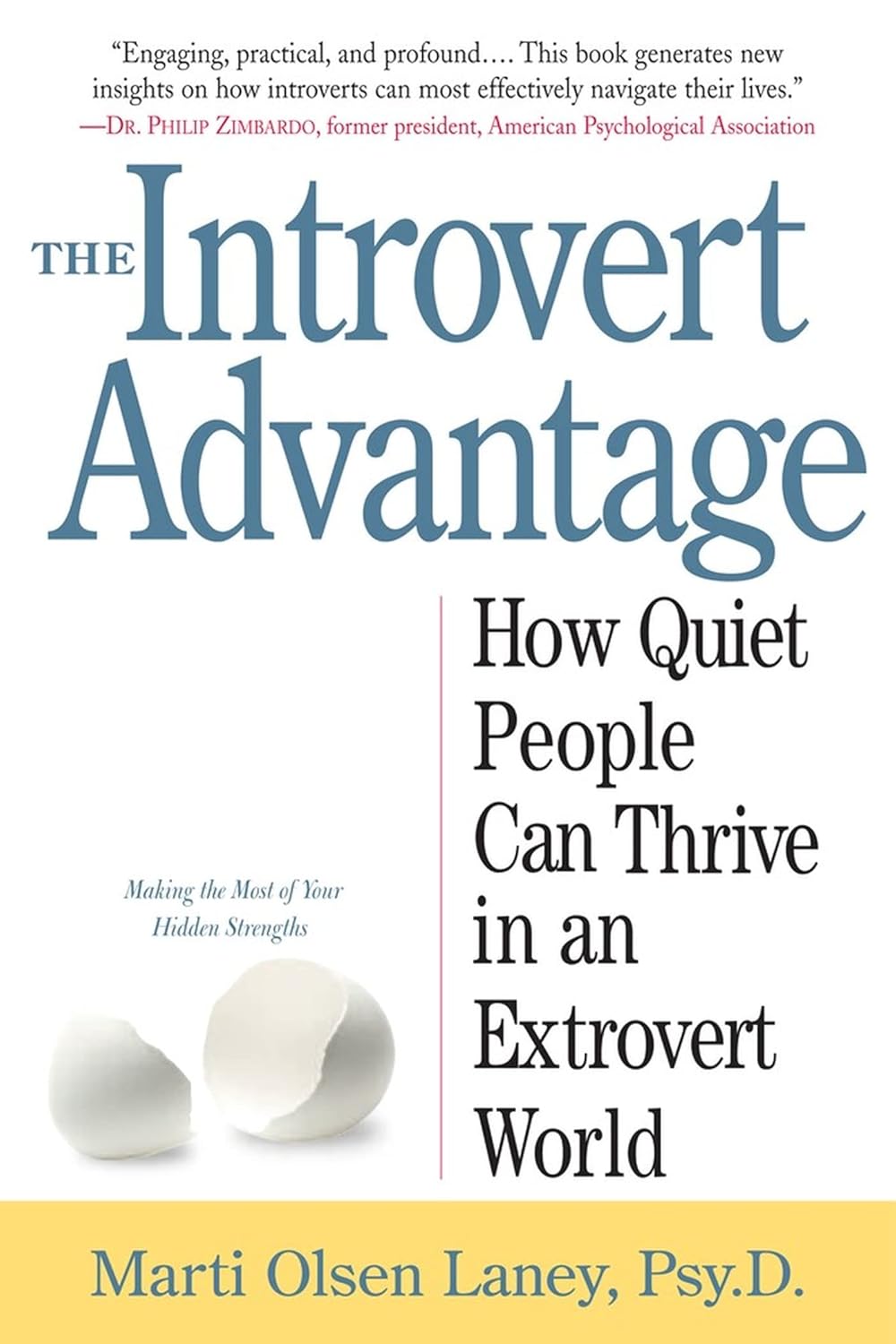
About The Introvert Advantage by Marti Olsen Laney Psy.D.: Feel Strong in Your Quiet Nature
Do busy rooms make you tired? Do you need time alone after talking with many people? Do you think carefully before you speak, then find that the talk has already moved on? The Introvert Advantage by Marti Olsen Laney Psy.D. is written for people who know these feelings. It offers a kind message: being quiet is not a fault that needs to be fixed.
The full subtitle is How Quiet People Can Thrive in an Extrovert World. First published in 2002, the book became an early popular guide for readers who felt that school, work, parties, and even family life often rewarded the loudest voice. Laney explains introversion through everyday stories, simple psychology, and practical steps for managing energy.
This is not a book about hiding from people. It is about understanding your natural pace so you can join the world without feeling empty. The author shows how introverts can speak up, build close relationships, work well, raise children, enjoy social events, and protect time for rest. Her goal is not to turn an introvert into an extrovert. It is to help quiet people use their own strengths with more confidence.
You Are Not a Failed Extrovert
Many introverts grow up hearing the same words: speak more, join in, be faster, smile more, or stop being so quiet. After hearing this for years, a person may start to believe something is wrong. They may force themselves through too many plans, copy louder people, or feel guilty whenever they need a calm evening.
Laney offers another way to see the problem. The issue may not be a lack of skill or care. You may simply use and restore energy in a different way. A large group, long meeting, noisy shop, or full day of conversation can use a great deal of energy. Quiet time can help you feel ready again.
Learn Where Your Energy Goes
One of the book's main ideas is that introverts must watch their energy. An extroverted person may feel more awake after a lively event. An introverted person may enjoy the same event but need a break afterward. Enjoying people and needing rest can both be true.
The book helps readers notice what fills or drains their inner battery. A quiet morning, a short walk, time with one close friend, or an hour spent reading may feel restoring. Back-to-back meetings, surprise visitors, loud music, and constant phone calls may feel draining. Once you know your pattern, you can prepare instead of blaming yourself.
Laney suggests working with your pace. You might arrive at an event after resting, take a short break, plan a simple way to leave, or keep the next morning free. These steps do not make life smaller. They can help you stay present and enjoy the time you choose to give.
Introversion Is Not the Same as Shyness
A quiet person is not always shy. Introversion is a broad personality trait linked with an inward focus and a preference for lower stimulation. Shyness is more closely linked with fear, worry, or feeling judged. A confident introvert may speak well in public and still want to go home alone afterward. A shy extrovert may want company but feel scared to approach people.
This difference matters because the right response is different. An introvert may mainly need rest, space, or a smaller group. A shy person may want help building confidence and facing fear. Some people experience both, and many people fall somewhere between strong introversion and strong extroversion.
The book gives useful language for talking about these needs. It can help a partner understand that quiet time is not rejection. It can help a manager see that silence does not mean a worker has no idea. It can help a parent stop treating a calm child as a problem.
Take Part Without Losing Yourself
Social life can become hard when every plan seems built around noise, speed, and long hours. An introvert may enjoy dinner with two friends but struggle at a crowded party. They may love deep talk but dislike quick small talk. They may want time to think before answering a personal question.
Laney gives practical ways to make social time easier. Choose events that matter. Ask thoughtful questions. Look for one friendly face instead of trying to work the whole room. Take short breaks when needed. Tell close people when you need to leave or rest. These small choices can reduce stress while keeping real connection alive.
The reader also learns that listening is an active strength. Careful listeners can notice detail, remember what matters, and make other people feel heard. A slower answer may also be a deeper answer. The book encourages readers to stop measuring social value only by speed, volume, or the number of people they know.
Bring Your Quiet Strength to Work
Modern workplaces often reward quick speech, open offices, group thinking, constant messages, and many meetings. These habits can make a capable introvert look less involved than a louder coworker. The problem is not always the quality of the idea. It may be the way the room asks people to share it.
The book helps readers prepare for these moments. Read the meeting plan early. Write down two points before entering. Ask for a moment to think. Send a clear note after the meeting if a better answer comes later. Build work around periods of deep focus when possible. Speak early once, so joining later feels easier.
Make Close Relationships Easier
Introverts can care deeply while showing love in calm ways. They may prefer one honest talk to a full day of messages. They may need silence after work before they can listen well. A partner or friend can misunderstand this need and think the introvert is angry, bored, or pulling away.
Laney encourages clear talk before hurt feelings grow. Explain that alone time helps you return with more attention. Plan both shared time and private time. Choose places where conversation is possible. Let the other person know when you need time before answering. These habits make quiet needs visible instead of mysterious.
Help an Introverted Child Feel Safe
Parents may worry when a child watches before joining, keeps only a few friends, or needs quiet after school. The book asks adults to look with patience. A child may be studying the room, gathering courage, or recovering from a busy day. Pushing too hard can turn a normal preference into shame.
Laney's guidance encourages parents to give warning before new events, allow warm-up time, and avoid speaking as if quietness is a defect. Teachers can give a child time to prepare an answer or share ideas in writing. Families can protect rest while still helping the child learn social skills.
Small Tools You Can Try Right Away
The advice becomes useful when it enters daily life. Readers can test simple actions such as:
-
Leave a little quiet space between demanding plans.
-
Prepare key words before a meeting or difficult talk.
-
Choose a smaller event when a large one feels too much.
-
Take a short walk or silent break to restore energy.
-
Tell trusted people what kind of support helps you.
-
Use writing when spoken answers need more thinking time.
-
Protect sleep, food, movement, and other basic needs.
-
Say no kindly when your schedule is already too full.
What This Book Can Give You
-
A kinder way to understand your quiet nature.
-
Words for explaining your need for time and space.
-
Better planning for work, meetings, and social events.
-
Ideas for stronger friendships and loving relationships.
-
Support for raising or teaching an introverted child.
-
More confidence in listening, focus, and careful thought.
-
Permission to rest without treating rest as failure.
-
A practical guide you can return to during busy times.
The deepest benefit may be self-respect. When you stop spending all your energy pretending, you can use more of it on learning, creating, helping, loving, and doing good work.
Read the Science with a Careful Mind
The book uses brain pathways and body chemicals to explain differences between introverts and extroverts. These parts may sound firm, but personality science is more complex than a simple two-type map. Current psychology treats introversion and extroversion as points on a broad line, and many people sit near the middle or act differently in different settings.
For that reason, the book is best used as a practical self-help guide, not as a medical test or final map of the brain. Its advice about self-acceptance, planning, communication, and rest may still be useful even when a scientific explanation is simplified or debated.
If fear, loneliness, low mood, or social worry is causing serious pain, a book may not be enough. A trained mental health professional can help identify what is happening. Introversion itself is not an illness, but it can exist beside anxiety or other problems that deserve care.
Who Will Enjoy This Guide?
This book is a strong choice for quiet adults who feel tired from trying to keep up with a loud world. It can also help students entering university, workers starting a new job, parents of calm children, teachers, team leaders, couples with different energy styles, and extroverts who want to understand someone they love.
Read it slowly over several evenings. Mark the examples that feel familiar. Try one change for a week, then notice whether your energy, focus, or communication improves. A friend, partner, or book club can read it too and compare experiences without turning personality labels into boxes.
Made for Calm and Comfortable Reading
Bookish Wonderland offers this printed book with premium eye-soothing cream paper, crystal-clear print, and high-quality stitched and glue binding. The pages are comfortable for longer reading, while the firm binding supports regular use. It is a practical copy for your bedside, study desk, office shelf, or personal growth collection.
Useful at Home, Work, and School
Keep the book nearby when a busy week leaves you drained. Use its ideas before a meeting, family event, class presentation, job interview, or difficult conversation. Parents can read selected parts while thinking about a child. Couples can use a chapter to discuss different needs without deciding that one style is better.
The book also makes a thoughtful gift for a quiet friend, student, coworker, partner, or family member. It says something many introverts need to hear: you do not have to become louder to build a full and meaningful life.
Give Your Quiet Side the Support It Deserves
Readers checking the book price in Bangladesh for The Introvert Advantage by Marti Olsen Laney Psy.D. can order easily from Bookish Wonderland. Nationwide delivery is available inside and outside Dhaka, with Cash on Delivery across the country. A fast or urgent delivery option is also available within Dhaka.
Choose this book if you want to understand your energy, explain your needs, and use quiet strengths with greater confidence. It will not ask you to hide forever or become a different person. It will help you build a life that leaves room for both connection and calm.
Add The Introvert Advantage to your shelf today. If you need customization or want to ask about the available copy, please inbox Bookish Wonderland through Facebook or Instagram. Order now, start reading at your own pace, and discover how a quieter way of living can still be strong, social, successful, and deeply rewarding.
If you require any customization or have any questions, please inbox us via FB or Insta.
| Primary Specification | |
| Author | Marti Olsen Laney, Psy.D. |
| Narrator | Tamara Marston |
| Editor | Elaine Tom |
| Genre | Self-Help, Psychology, Personality Psychology, Personal Growth, Communication & Social Skills |
| ISBN-13/ISSN | 978-0761123699 |
| ISBN-10 | 0761123695 |
| Publisher | Workman Publishing Company |
| Publishing Date | February 1, 2002 |
| Edition | 1st |
| Language | English |
| Reading Age | 16+ |
| Format | Printed Book |
| Physical Specification & Quality | |
| Paper Quality | Premium eye-soothing cream paper |
| Binding Quality | High quality stitched and glue binding (for longevity) |
| Print Quality | Crystal-clear print |
| Pages | 330 pages |
| Country | USA |
| Logistics Information | |
| Weight | 354 gm |
| Length | 8.5 inches |
| Width | 5.6 inches |
| Height | 0.75 inch |