

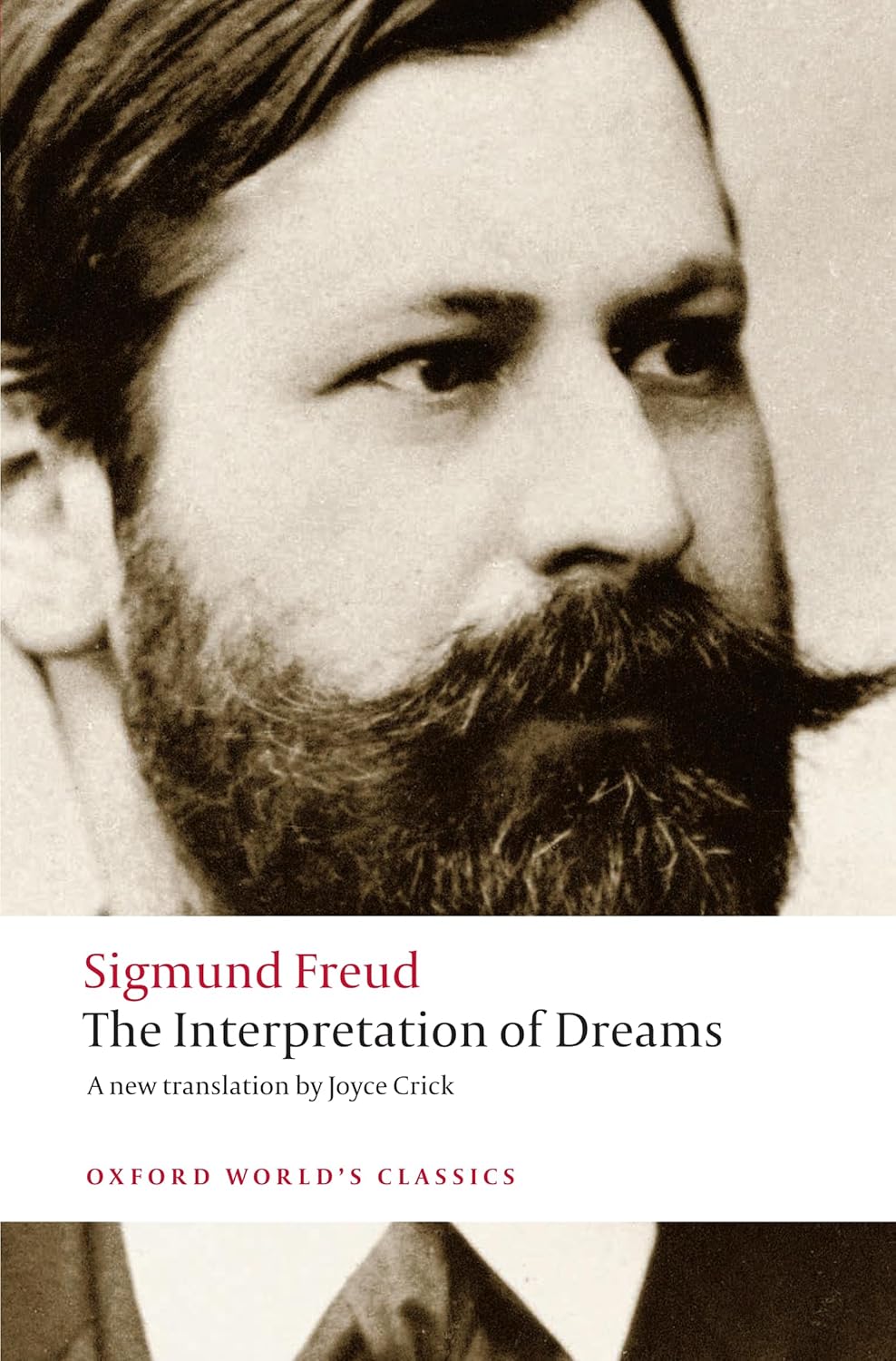
About The Interpretation of Dreams by Sigmund Freud: Enter the Hidden World of the Mind
Why do dreams mix old memories, strange places, strong feelings, and people who do not belong together? Why can a dream feel important even when its story makes little sense? The Interpretation of Dreams by Sigmund Freud begins with questions like these. Freud asks readers to treat dreams as meaningful acts of the mind rather than empty pictures made during sleep.
The German work, titled Die Traumdeutung, first appeared in November 1899, although its title page carried the date 1900. An authorized English translation by A. A. Brill followed in 1913. The book became a central text in the history of psychoanalysis and changed the way many people talked about dreams, hidden wishes, childhood, memory, and the unconscious mind.
This is not a modern dream dictionary that gives one fixed meaning for every object. Freud does not say that a river, house, animal, or journey must mean the same thing for everyone. He asks the dreamer to study personal memories, feelings, words, and links. That patient search makes the book difficult at times, but it is also what makes the reading experience rich.
When a Dream Makes No Sense
Many people wake with only small pieces of a dream. One part may feel funny, another frightening, and another completely impossible. A person may appear with someone else's face. A small event may carry a very large feeling. Places can change without warning, while time moves in odd ways.
The easy answer is to call the dream nonsense and forget it. Freud offers a different answer. He argues that the strange surface may be the result of mental work that has changed and hidden the thoughts beneath it. The dream looks broken because several ideas, wishes, memories, and feelings have been joined and moved.
The Dream You Remember and the Thoughts Below It
Freud separates a dream into manifest content and latent content. Manifest content is the dream as you remember it: the room, people, actions, words, images, and emotions. Latent content is the group of hidden dream thoughts that Freud believes helped produce that remembered story.
For example, a person may dream about missing a train. The surface story is simple. Yet the dreamer may connect the train with work, a lost chance, a family goodbye, fear of being late, or a wish to avoid a journey. Freud's method does not begin by choosing one answer. It begins by following the dreamer's own links.
Freud's Bold Claim About Wishes
Freud argues that dreams are forms of wish fulfilment. This does not mean every dream feels happy or shows a simple wish coming true. In his theory, the wish may be hidden, changed, mixed with fear, or pushed away by the waking mind. The final dream can therefore feel painful, silly, or confusing.
This claim is one of the most debated parts of the book. Nightmares and dreams after frightening events seem hard to explain as fulfilled wishes. Freud worked through many possible objections and later changed or expanded parts of his thinking, but he continued to give wishes a central place.
Readers do not need to accept the claim before opening the book. The value comes from seeing how Freud builds an argument, uses examples, answers critics, and connects dreams with a larger picture of mental life.
How Dream-Work Changes an Idea
Freud uses the term dream-work for the mental process that turns hidden thoughts into the dream a person remembers. He describes several important parts of this process:
-
Condensation joins many people, ideas, words, or memories into one dream element.
-
Displacement moves a strong feeling from an important thought onto a smaller detail.
-
Representation changes abstract thoughts into pictures, scenes, objects, or word images.
-
Secondary revision gives loose dream pieces a more ordered story when the person wakes.
Imagine several memories being folded into one picture. A face may combine two people. A place may contain parts of a childhood home and a present office. A weak detail may hold the strongest feeling. The dream-work idea gives readers a way to think about why dreams can be both familiar and strange.
Freud says interpretation tries to travel in the opposite direction. It starts with the finished dream and follows associations back toward the thoughts that may have helped form it.
Why Personal Associations Matter
Freud's main tool is free association. The dreamer takes one detail and says whatever comes to mind without trying to make the answer look sensible, polite, or important. One thought leads to another. A word may recall a joke, a name, a childhood event, a worry, or something that happened the day before.
This method asks for patience. A quick symbol list may feel easier, but it removes the dreamer's personal history. A dog may mean comfort to one reader and fear to another. Rain may recall a wedding, a lost game, a family home, or nothing important at all.
The book therefore teaches a wider reading habit: context matters. An image gains meaning through its place in a person's life. Even readers who reject Freud's final explanation can find this close attention to words, memory, and feeling interesting.
Dreams, Childhood, and the Unconscious
The Interpretation of Dreams is larger than a book about sleep. Freud uses dreams to present his early picture of an active unconscious mind. In this picture, wishes, memories, and conflicts can affect a person even when they are not fully known to conscious thought.
Childhood has an important role in the argument. Freud believes early experiences can return in changed form and join with recent events. Something small from the day before may open a path to a much older memory. This link between present life and early life became central to psychoanalysis.
A Book That Changed More Than Psychology
Freud's ideas moved far beyond the clinic. Writers, artists, filmmakers, and thinkers used dreams as doors into hidden desire, fear, memory, and identity. Surrealist art and modern literature often played with the kind of strange links, mixed images, and secret meanings that Freud made famous.
Everyday language also changed. People now speak about hidden motives, Freudian slips, repression, and the unconscious even when they have never read Freud. Not every use is correct, but the words show the size of his cultural influence.
Reading the original argument gives a clearer view than meeting Freud only through jokes or short quotes. The book shows a thinker testing a new method, making brave claims, and trying to create a full model of the mind from dreams.
Read It as History and an Argument
Modern sleep research does not accept all of Freud's dream theory as proven fact. His interpretations often depend on personal association and can be hard to test. Researchers now study dreaming through brain activity, sleep stages, memory, emotion, learning, and many other methods that were not available to Freud.
The strong claim that dreams mainly disguise wishes remains disputed. Some modern findings continue to raise questions about how dreams support sleep or connect with emotion, but no single theory explains every dream. Readers should therefore avoid using this book as a medical test or a certain key to another person's mind.
This limit does not erase the book's historical value. It is a major work in intellectual history, psychoanalysis, and the study of how humans explain inner life. The best reading style is open but careful: understand the idea, examine the evidence, notice the assumptions, and decide what remains useful.
What You Can Learn from the Book
-
The difference between a remembered dream and Freud's idea of hidden dream thoughts.
-
How condensation, displacement, representation, and secondary revision shape dream-work.
-
Why Freud connects dreams with wishes, memory, childhood, and the unconscious.
-
How free association follows personal links instead of fixed symbol meanings.
-
Why this book became central to the birth and growth of psychoanalysis.
-
How one argument influenced psychology, literature, art, film, and everyday language.
-
How to compare a famous historical theory with modern scientific questions.
-
A slower way to notice language, emotion, memory, and detail.
The book rewards readers who enjoy following an idea from its first question to its largest claim. You may agree with some parts and challenge others. Either way, the journey gives you a clearer understanding of why Freud remains important and controversial.
Who Will Enjoy Reading It?
This book is a strong choice for students of psychology, literature, philosophy, history, cultural studies, counselling, and psychoanalysis. It also suits curious readers who keep a dream journal, enjoy studying symbols, or want to understand a book that shaped twentieth-century thought.
It is not a light guide that can be finished without effort. Freud reviews earlier dream theories, gives long examples, and develops many technical ideas. A new reader may find some pages slow. Reading one section at a time and keeping short notes can make the argument easier to follow.
Teachers can use the text to discuss how a theory is built. Book clubs can compare Freud's claims with personal experience or newer dream research. Writers and artists may enjoy the attention given to images, wordplay, memory, and surprising mental links.
Choose the Translation with Care
The book was revised across several German editions, and English versions do not always use the same wording. A. A. Brill produced the authorized English translation published in 1913. James Strachey's later work became widely known through the Standard Edition, while newer translations try to return to Freud's original language in different ways.
The exact notes, wording, and page count can therefore change by edition. Before using a quotation in an essay, check the translator and publication details printed in your copy. This small step prevents confusion when two versions use different terms.
Made for Focused, Comfortable Reading
Bookish Wonderland offers this printed book with premium eye-soothing cream paper, crystal-clear print, and high-quality stitched and glue binding. The clear pages help with long paragraphs, technical words, and detailed examples. The firm binding supports regular reading, note-taking, class use, and return visits to important chapters.
Useful for Study and Personal Reading
Read it beside a notebook and record each new term in your own words. If you keep a dream journal, compare Freud's method with your experience without treating every dream as a diagnosis. Students can use the book for essays about the unconscious, psychoanalysis, dream theory, modernism, symbolism, or the history of psychology.
Add a Landmark Work to Your Shelf
Readers comparing the book price in Bangladesh for The Interpretation of Dreams by Sigmund Freud can order easily from Bookish Wonderland. Nationwide delivery is available inside and outside Dhaka, with Cash on Delivery across the country. Fast or urgent delivery is also available within Dhaka when the book is needed sooner.
Choose this classic if you want to explore where psychoanalysis began, learn Freud's famous method, and understand why dreams became such a powerful subject in modern culture. Read it with curiosity, question it with care, and let its strange examples open new discussions about memory, desire, and the hidden parts of thought.
Add The Interpretation of Dreams to your collection today. If you need customization or want to ask about the available edition or translation, please inbox Bookish Wonderland through Facebook or Instagram. Order now and begin a challenging, curious, and unforgettable journey into one of the most debated books about the human mind.
If you require any customization or have any questions, please inbox us via FB or Insta.
| Primary Specification | |
| Author | Sigmund Freud |
| Translator | Joyce Crick |
| Genre | Psychology, Psychoanalysis, Dream Analysis, Classic Nonfiction |
| ISBN-13/ISSN | 978-0199537587 |
| ISBN-10 | 0199537587 |
| Publisher | Oxford University Press |
| Publishing Date | September 15, 2008 |
| Edition | 1st |
| Language | English |
| Reading Age | 16+ |
| Format | Printed Book |
| Physical Specification & Quality | |
| Paper Quality | Premium eye-soothing cream paper |
| Binding Quality | High quality stitched and glue binding (for longevity) |
| Print Quality | Crystal-clear print |
| Pages | 512 pages |
| Country | UK |
| Logistics Information | |
| Weight | 534 gm |
| Length | 8.5 inches |
| Width | 5.6 inches |
| Height | 1 inch |