

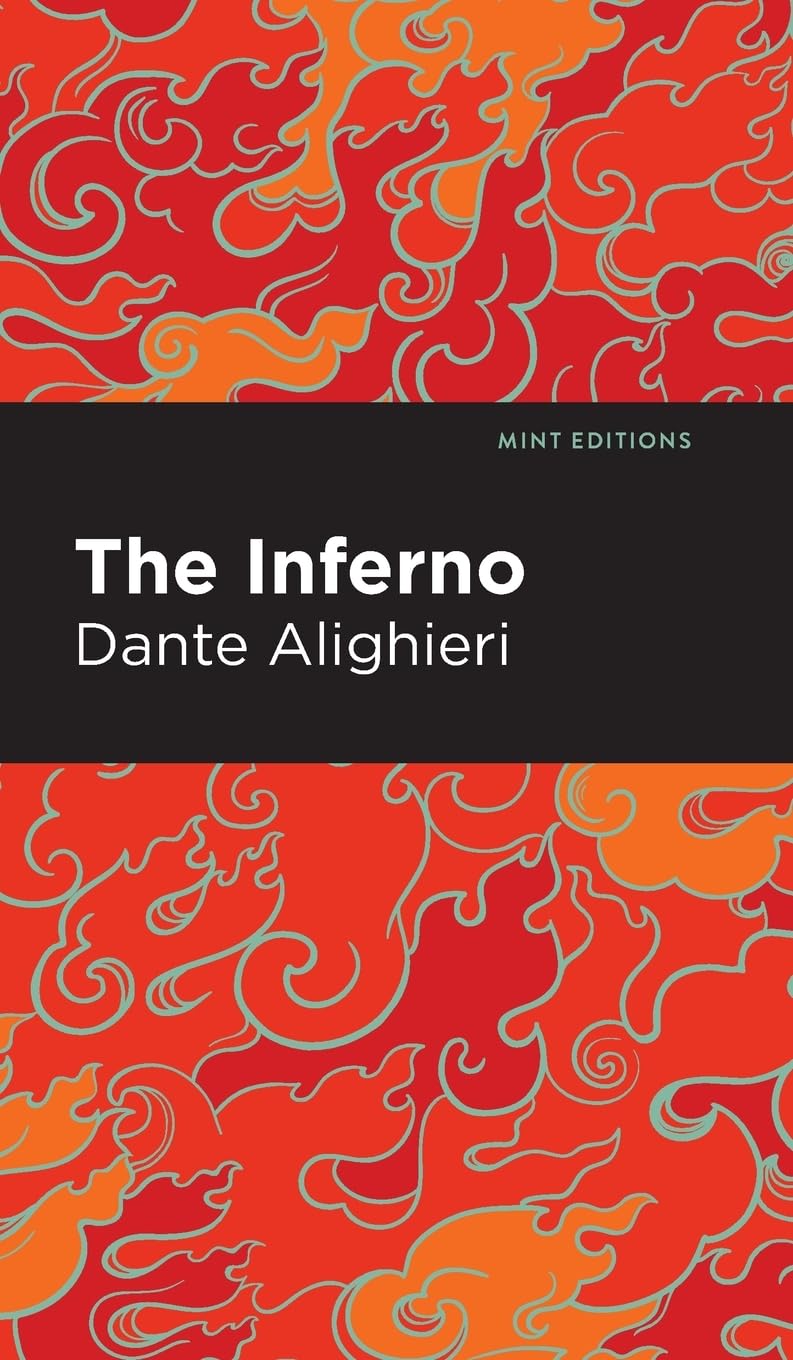
About The Inferno by Dante Alighieri – A Timeless Journey Through the Darkest Part of the Divine Comedy
The Inferno by Dante Alighieri is one of the most famous works in world literature. It is the first part of The Divine Comedy, Dante’s great poem about a journey through Hell, Purgatory, and Paradise. The story begins when Dante, the main traveler in the poem, finds himself lost in a dark wood. He is confused, afraid, and unable to find the right path. Soon, the Roman poet Virgil appears and becomes his guide. Together, they begin a journey through Hell, where Dante sees the results of human choices, meets famous figures from history and legend, and learns hard lessons about justice, guilt, courage, love, pride, and responsibility.
This is not only a story about punishment. It is also a book about what people do with their lives. Dante asks difficult questions in a simple human way: Why do people choose wrong actions? Can a person lose the right path? What makes an action fair or unfair? What happens when desire becomes stronger than reason? These ideas make the book meaningful even many centuries after it was written.
Why This Classic Still Matters
Some classic books feel far away from modern life. The Inferno does not. Its world is old, but its questions are still familiar. People still deal with anger, greed, pride, betrayal, fear, ambition, and the wish to be remembered. Dante turns these human problems into powerful scenes. Each part of Hell is built around a different kind of wrongdoing, so the journey works almost like a map of human behavior.
Readers often know the title before they know the full story. The book has influenced novels, films, games, art, music, and modern ideas about Hell. Many images people connect with circles of Hell, dark punishments, and a guided trip through the afterlife come from Dante’s poem. Reading the original work gives you a clearer sense of where these ideas came from and why they became so important.
A Difficult Classic Made Easier to Approach
Many readers want to read Dante but worry that the book may be too hard. That concern is normal. The Inferno was written in the early fourteenth century, and it contains many references to Italian politics, Christian thought, classical mythology, and people from Dante’s own time. A first-time reader may not understand every name or event. That does not mean the book is out of reach.
The best way to read it is to follow the journey first. You do not need to understand every historical detail on the first page. Focus on where Dante and Virgil are going, who they meet, what mistake or sin is being shown, and what Dante learns from the meeting. Notes and explanations can help with deeper details later. Reading slowly also makes the poem much easier to enjoy.
This is where a clear printed copy can make a real difference. Long classic texts are easier to stay with when the page is comfortable to read, the print is sharp, and the book can handle repeated use. Bookish Wonderland prepares this edition for readers who want a physical copy that feels suitable for study, personal reading, and long-term keeping.
A Journey Through the Nine Circles of Hell
The main action follows Dante and Virgil as they move deeper into Hell. Dante’s Hell is arranged in levels, with different groups placed according to the type and seriousness of their actions. As the travelers move downward, the punishments become more severe and the moral questions become darker.
The structure is one reason the book is easy to remember. Each place has its own mood. Some scenes are quiet and sad. Others are frightening, violent, strange, or deeply symbolic. Dante uses storms, ice, fire, darkness, rivers, monsters, walls, and ruined places to create a world that feels carefully designed rather than random.
Virgil is more than a guide who shows the road. He also stands for reason, wisdom, learning, and the value of clear thought. Dante often becomes emotional when he meets the dead. Virgil pushes him to look more carefully at what he is seeing. This creates one of the most interesting parts of the book: the struggle between feeling sorry for a person and understanding the moral meaning of that person’s choices.
More Than a Story About Hell
The Inferno can be read as an adventure, a religious poem, a political work, a moral study, or a personal story. That is why different readers can find different things in it.
For a student, it can open the door to medieval literature and European intellectual history. For a reader of fantasy, it offers a detailed imagined world with clear rules and unforgettable settings. For a reader interested in philosophy, it raises questions about justice and free will. For a reader interested in religion, it explores sin, judgment, repentance, and the order of the afterlife. For a writer, it shows how a journey can be used to organize a very large set of ideas.
The book also has a personal side. Dante does not stand outside the story as a cold observer. He reacts. He is frightened, shocked, angry, confused, and sometimes moved by the people he meets. His changing reactions help readers enter the poem with him. The journey becomes not only a tour of Hell but also a process of learning how to judge actions more clearly.
What Makes Dante’s Writing So Powerful
Dante’s great skill is turning big ideas into scenes that can be seen in the mind. Instead of giving only a lecture about greed, betrayal, violence, or pride, he shows people living inside the results of those choices. The punishment often reflects the action in a symbolic way. This idea, often called contrapasso, gives many parts of the poem their strong visual and moral effect.
The poem also moves with purpose. The travelers are always going somewhere. There is another gate, another path, another circle, another person, and another question ahead. This movement helps the book feel active even when it is dealing with serious subjects.
The Inferno contains 34 cantos, while Purgatorio and Paradiso contain 33 each, making 100 cantos across The Divine Comedy when the introductory first canto is included. This careful structure shows how much planning Dante put into the work. Numbers, levels, repeated patterns, and balanced parts all help create a sense of order.
A Strong Choice for Students and Serious Readers
If you study English literature, comparative literature, philosophy, history, religion, or cultural studies, The Inferno is a useful book to know. It is often discussed because of its influence on later writing and art. Reading the text directly gives you more than a short summary can provide. You can see how Dante builds tension, uses dialogue, changes tone, and connects personal stories with larger moral ideas.
It is also valuable for readers who simply want to understand famous books. Many people have heard the name Dante or the phrase “Dante’s Inferno” without reading the poem. Finishing it gives you a stronger base for understanding many later works that refer to its characters, places, and images.
Built for Comfortable Reading and Long-Term Use
At Bookish Wonderland, the physical reading experience matters. A classic like this may be read more than once, marked for study, discussed in class, or kept for years. This edition is made with practical quality in mind:
-
Crystal-clear print for sharp and easy-to-read text
-
Premium eye-soothing cream paper for a softer reading experience
-
High-quality stitched and glue binding for better strength and longevity
-
Durable construction suitable for regular reading and study
-
Clean page presentation that helps readers stay focused on the text
These features are especially useful for a book that readers may return to many times. Instead of treating the copy as something disposable, you can keep it as part of a personal literature collection.
What You Gain From Reading It
The value of The Inferno is not only in knowing what happens next. The book trains you to think about cause and effect. Every major scene asks you to look at a choice, an action, and a result. It can make you think about how people explain their own behavior, how they blame others, and how they understand responsibility.
It also builds cultural knowledge. Dante brings together biblical figures, Greek and Roman myths, political leaders, poets, and people from his own life. Even when you do not know every reference, you begin to see how Western literary traditions connect across time.
Another benefit is stronger reading patience. This is not a book designed for fast scrolling. It rewards attention. Reading one canto at a time can help you build the habit of staying with a difficult text, thinking about it, and returning to confusing parts without giving up.
Who Should Read The Inferno?
This book is a good choice for readers who enjoy classics, philosophy, history, poetry, religion, mythology, or dark imaginative worlds. It can also work well for students who need to study Dante, teachers looking for a classroom text, and collectors building a shelf of major world classics.
Fans of modern fantasy may enjoy seeing an early example of detailed world-building. Readers who like moral questions may enjoy the way each encounter becomes a small case about human behavior. People who enjoy symbolism can spend a long time studying the meaning behind the places, punishments, creatures, and numbers.
It is also a strong gift for a serious reader. The title is widely known, the work has lasting literary value, and a durable printed edition can stay useful for years.
A Meaningful Addition to Your Personal Library
Some books are read once and forgotten. The Inferno is the kind of book people return to because each reading can reveal something new. A younger reader may first notice the strange punishments and dramatic scenes. A student may later notice the history and politics. A mature reader may focus more on responsibility, justice, fear, ambition, and the problem of judging other people.
That lasting value is one reason the poem has stayed important for centuries. It does not give only one simple message. It gives readers a world full of people who made choices, defended those choices, and now face the results. Dante asks us to look closely rather than accept easy answers.
For readers comparing The Inferno by Dante Alighieri and other Book price in Bangladesh listings, it is worth looking beyond price alone. Print clarity, comfortable paper, solid binding, and reliable delivery can make a major difference when buying a classic you may read, study, and keep for years.
Order The Inferno from Bookish Wonderland
Bookish Wonderland makes it simple to buy this classic from anywhere in the country. Nationwide delivery is available across Bangladesh, including delivery inside and outside Dhaka. Cash on Delivery is available, and readers in Dhaka can also ask about fast or urgent delivery when needed.
If you want a classic that combines a memorable journey, strong ideas, history, poetry, mythology, and moral questions, The Inferno by Dante Alighieri is a strong choice. It can challenge you, surprise you, and give you many ideas to think about long after the last page.
Order now from Bookish Wonderland and add one of the most influential works in world literature to your collection.
If you require any customization or have any questions, please inbox us via FB or Insta.
| Primary Specification | |
| Author | Dante Alighieri |
| Translator | James Romanes Sibbald |
| Genre | Epic Poetry, Religious Poetry, Classic Literature |
| ISBN-13/ISSN | 978-9353367985 |
| ISBN-10 | 9353367980 |
| Publisher | Lector House |
| Publishing Date | June 10, 2019 |
| Language | English |
| Reading Age | 18+ years |
| Format | Printed book |
| Physical Specification & Quality | |
| Paper Quality | Premium eye-soothing cream paper |
| Binding Quality | High quality stitched and glue binding (for longevity) |
| Print Quality | Crystal-clear print |
| Pages | 278 pages |
| Country | USA |
| Logistics Information | |
| Weight | 301 gm |
| Length | 8.5 inches |
| Width | 5.6 inches |
| Height | 0.63 inch |