

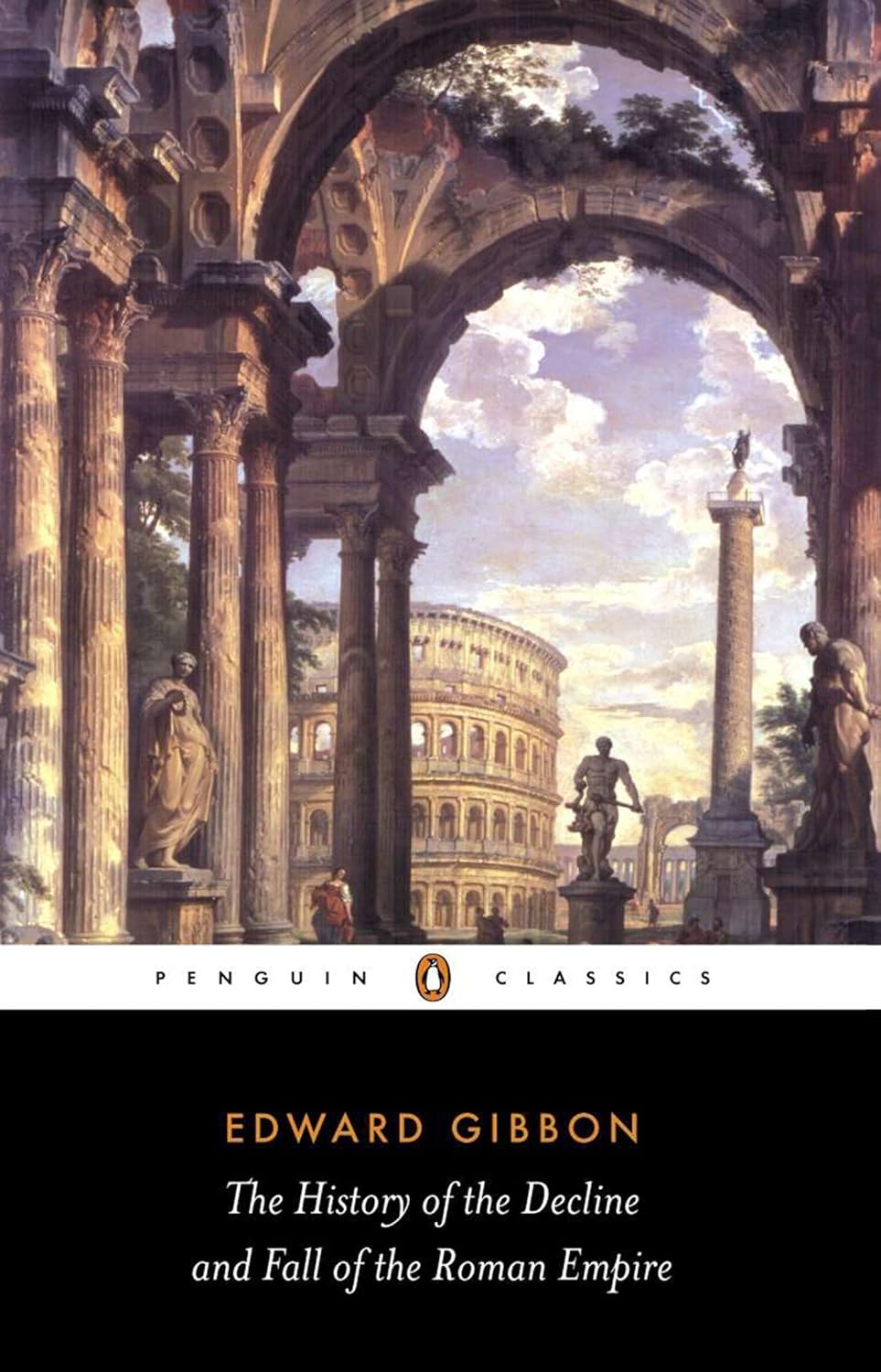
About The History of the Decline and Fall of the Roman Empire by Edward Gibbon (Volume 1-3 of 6)
How could an empire that ruled so much of the known world grow weak and lose its power? Edward Gibbon spent years asking that question. In The History of the Decline and Fall of the Roman Empire, he follows rulers, armies, beliefs, and daily life across centuries of change. These first three volumes of a six-volume work give you a place to begin his great history.
This is a book for readers who want more than a short account of Rome’s fall. Gibbon looks closely at decisions people made, the struggles for power, and the ways an empire changed from within. He tells a large story, but he also asks a simple question that still matters: what helps a society last?
If you love Roman history, this set gives you many hours of reading. If you are new to Gibbon, it lets you begin with the first half of the work and decide how you want to continue. Bookish Wonderland offers this listing for readers in Bangladesh who want to spend time with one of history’s most famous books. The publisher describes the first three volumes as part of a six-volume work; Volumes 4–6 are not included in this listing.
A big story that begins with Rome
Rome’s history is full of famous names and battles. Gibbon is interested in those events, but he also looks at the people and systems behind them. Why did one ruler hold power while another lost it? What happened when armies gained influence? How did choices made in one part of the empire affect people far away?
The first three volumes invite you to follow these questions over a long stretch of time. You see that the decline of an empire was not one event on one day. Changes came through war, weak rule, disputes over who should lead, and shifts in the wider world. Some moments moved quickly. Others took years to show their full effect.
That wide view is part of the book’s appeal. You can turn a page to meet a ruler facing a hard choice, then step back to see how that choice fits into a much larger story. Gibbon connects events that might seem separate at first. As you read, the size of Rome becomes easier to picture—and so does the difficulty of keeping such a vast empire together.
Why readers still choose Gibbon
Many newer books can tell you when Rome fell. Gibbon offers something different: the chance to read a historian’s long, carefully argued account. His work is famous for both the size of its subject and the strength of its writing. You can read it for the history, but you can also read it to see how an influential writer made sense of that history.
Gibbon does not simply place dates in order. He weighs people’s actions and asks what they meant. He has opinions, and his voice is often sharp. That makes the book lively, even when it asks you to slow down and think. You may agree with one point and question the next. Both responses can make the reading more rewarding.
The book was written more than two centuries ago. Historians have learned more since then, so Gibbon should not be the only source you use to study Rome. Yet reading him helps you understand a major work of history on its own terms. You see the questions he asked, the links he drew between events, and the influence a single book can have on later readers.
Take the time to understand what changed
It can be hard to make sense of Rome from a short video or a quick list of facts. A list may tell you that an emperor rose to power, lost a war, or died. It may leave you wondering what happened before and after. Gibbon gives you room to follow the links.
These volumes suit a reader who likes to pause over a question. What did a change in leadership mean for an army? Why might a decision that helped one ruler cause trouble later? How did the empire’s great size shape its problems? You do not have to answer every question at once. The value of a long history is that you can watch ideas develop as the story moves on.
You can also read at your own pace. A few pages at a time may be more enjoyable than trying to finish a large volume quickly. Keep a note of a name or place you want to remember. Return to a passage that made you think. This is the kind of work that rewards patience.
What do Volumes 1–3 offer?
This listing gives you Volumes 1, 2, and 3 of six. They are the opening half of Gibbon’s larger work, so you can begin at the beginning and follow his account in order. The set is a good choice if you are starting a study of Gibbon or building a history collection one part at a time.
The three-volume format also makes the scope clear before you buy. You know which part of the work you are choosing. If you later want to continue, the remaining part is Volumes 4–6. A publisher lists the first three and the final three as separate sets. Check the product details before ordering if you want a particular publisher’s printing or binding.
These first volumes are substantial reading. They are well suited to someone who wants to stay with the subject, follow events across many years, and hear Gibbon’s full argument develop. They also make a thoughtful gift for a reader who has often said they want to read more Roman history but has not yet begun.
For the reader who wants more than a quick answer
Perhaps you already know a few Roman emperors. Perhaps you have watched a documentary and want to go deeper. Or perhaps the title has been on your reading list for years. Gibbon gives you a project you can enjoy over time.
You do not need to remember every name on the first reading. Start with the larger questions. Who has power? What is changing? What does Gibbon think caused that change? The details will become easier to place as you continue. If a section feels dense, reading it in smaller parts can help.
This is also a good book for conversations. A friend may see a ruler’s choice one way while you see it another. A student may want to compare Gibbon’s view with a modern history book. A reader who loves writing may notice how he turns research into an account that holds attention. The same set can offer something different to each person.
A place for history on your shelf
A long work is easier to return to when you enjoy using the physical books. Bookish Wonderland describes its English books as made for comfortable reading, with eye-soothing cream paper, crystal-clear print, and stitched and glue binding for strength. Those details matter when you plan to turn many pages over many reading sessions.
The cream pages provide a soft background for the text. Clear print helps you follow a line without strain from faint or messy letters. Strong binding helps the books stand up to careful, repeated use. Keep the volumes dry, support the spine when you open them, and store them upright to help them last.
If the look of a particular printing matters to you, ask Bookish Wonderland about the copy available before placing your order. Publishers have issued Gibbon’s work in different formats over the years, so the format, cover, and extra material can vary. The key detail for this listing is the set’s scope: it covers the first three of six volumes.
Make room for a slower kind of reading
Some books are made for one fast weekend. Gibbon’s history invites a different habit. You might read a chapter in the evening, stop to think about a ruler’s decision, and pick up the thread the next day. Over time, those small reading sessions build a much bigger picture.
That can make the set especially satisfying for someone who likes a lasting reading project. You are not buying a brief account to finish and forget. You are giving yourself space to explore a subject from many sides. There is history here to learn, writing to enjoy, and plenty of room to form your own view.
A reading notebook can help. Write down questions, unfamiliar names, or ideas you want to check in another source. You can also simply read for pleasure and follow the story as Gibbon tells it. There is no single right way to approach a work this large.
A gift with plenty to discover
If you know someone who loves ancient Rome, these volumes offer a gift they can spend real time with. They may enjoy military history, political choices, or the story of how great powers change. Gibbon brings those interests together in one broad work.
It is also a useful gift for a reader who enjoys classic nonfiction. The book asks for attention, so it is best for someone who likes long histories and older writing. If they usually prefer short, simple introductions, a shorter book on Rome may be a better first step. But for the person ready to settle into a major historical work, Volumes 1–3 offer a strong beginning.
You can give the set for a birthday, a graduation, or simply to encourage a loved one’s interest in history. What makes it special is the time inside it: the reader can return to these volumes for months, finding a new question or passage on each visit.
What books are in the The Decline and Fall of the Roman Empire series by Edward Gibbon?:
- The Decline and Fall of the Roman Empire by Edward Gibbon (Volumes 1-3 of 6)
- The Decline and Fall of the Roman Empire by Edward Gibbon (Volumes 4-6 of 6)
Best Sellers Rank of This Book
- #48,619 in Books
- #39 in Italian History (Books)
- #73 in Ancient Roman History (Books)
- #158 in History of Civilization & Culture
Ready to begin?
If you have wanted to understand Rome through one of the best-known works of historical writing, start here. Volumes 1–3 let you enter Gibbon’s account at the beginning, spend time with its people and questions, and decide when you are ready for the rest.
Before ordering, check that Volumes 1–3 of 6 are the books you want. If you are comparing the Book price in Bangladesh for Gibbon’s work, compare the volume numbers too: a single volume, this three-volume set, and a complete six-volume set contain different amounts of the work.
Order The History of the Decline and Fall of the Roman Empire by Edward Gibbon from Bookish Wonderland and begin a reading project you can return to again and again.
If you require any customization or have any questions, please inbox us via FB or Insta.
| Primary Specification | |
| Author | Edward Gibbon |
| Genre | Ancient world history, European history, classic nonfiction |
| ISBN-13/ISSN | 978-0679423089 |
| ISBN-10 | 0679423087 |
| Publisher | Everyman's Library |
| Publishing Date | October 26, 1993 |
| Language | English |
| Reading Age | 18+ |
| Format | Printed book |
| Physical Specification & Quality | |
| Paper Quality | Premium eye-soothing cream paper |
| Binding Quality | High quality stitched and glue binding (for longevity) |
| Print Quality | Crystal-clear print |
| Pages | 1902 pages |
| Country | England |
| Logistics Information | |
| Weight | 1912g |
| Length | 8.5 inch |
| Width | 5.6 inch |
| Height | 4.49 inch |