

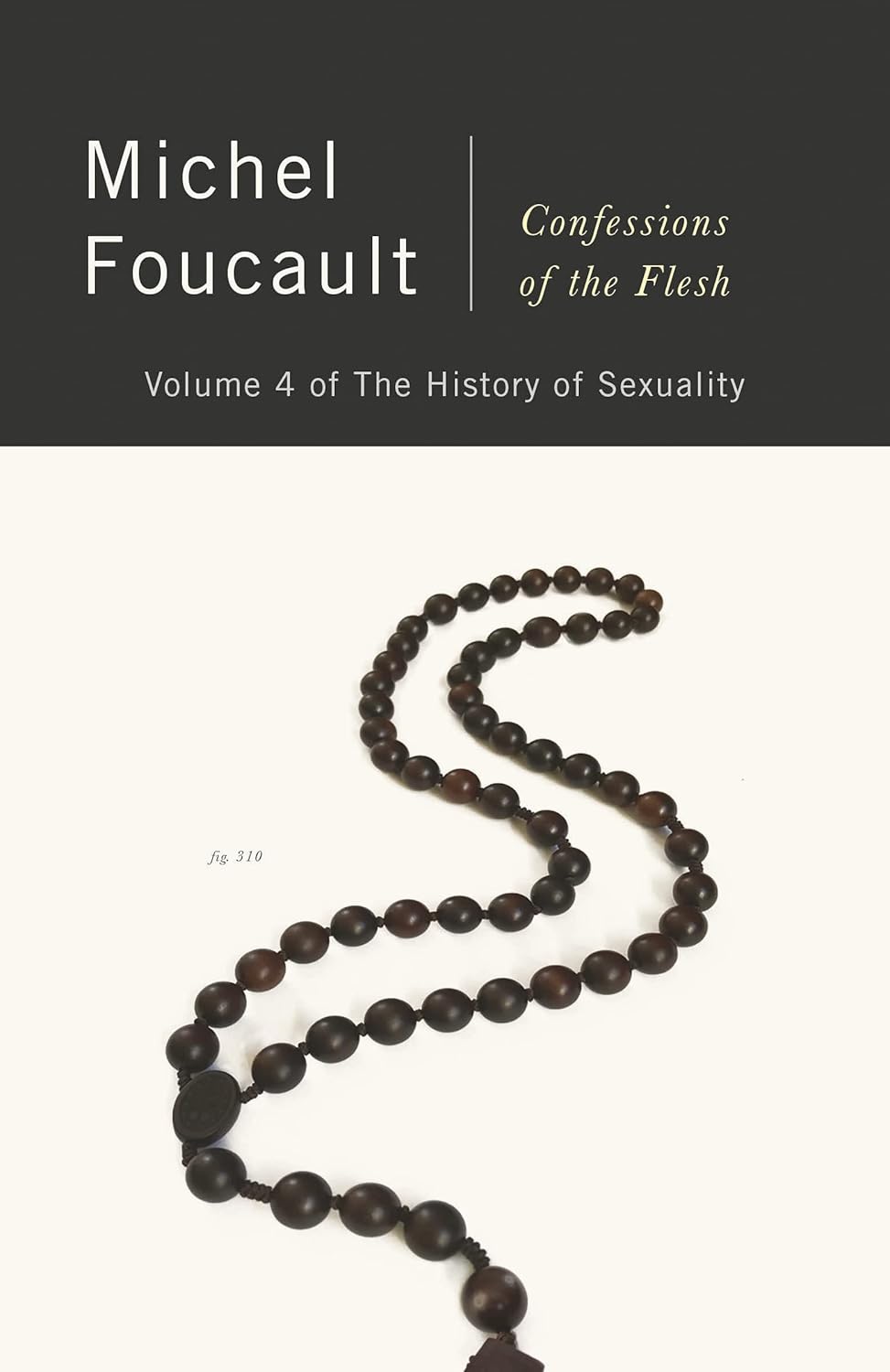
About The History of Sexuality by Michel Foucault (Volume 4 of 4): Confession, Faith, and the Making of Desire
The History of Sexuality by Michel Foucault (Volume 4 of 4) is also known as Confessions of the Flesh. It completes Foucault’s major study of sexuality, power, truth, and the way people understand themselves. Here, he asks how early Christian thought changed older ideas about pleasure into ideas about the flesh, sin, desire, and the inner self.
Foucault studies sermons, spiritual advice, and church debates. He shows how Christian writers asked people to watch their thoughts, reveal hidden desires, and seek truth within. The result is a deep history of how belief, duty, and self-examination shaped Western life.
When a famous theory feels hard to enter
Many readers want to understand Foucault but worry that philosophy will feel too difficult. Words such as subjectivity, confession, and chastity can seem heavy. The history may also feel far from daily life.
Begin with one simple question: why do people feel that telling the truth about desire reveals who they are? Foucault follows this question through early Christian life. Confession becomes more than listing wrong acts. It becomes a way to search the mind and form a certain kind of person.
Read a few pages at a time. Mark each main example and ask what kind of self it creates. This slow method turns a hard work into clear discoveries. You do not need to agree with every claim to learn from its questions.
What is Confessions of the Flesh about?
Confessions of the Flesh studies the first centuries of Christianity. Foucault explores how Christian teachers used Greek and Roman ideas but changed their purpose. Ancient writers often asked how a free person could manage pleasure. Christian writers gave more attention to salvation, purity, obedience, temptation, and hidden desire.
The word “flesh” does not simply mean the body. It points to a way of experiencing the self. A person must notice thoughts and desires, judge them, and often reveal them. The body matters, but so do intention, memory, imagination, and will.
Foucault examines baptism, penance, confession, spiritual guidance, virginity, marriage, and procreation. These practices join the wish to know the self with the duty to transform it. Private life becomes a place where truth and authority meet.
Confession becomes more than speaking
Today, confession may sound like saying what you did wrong. Foucault finds a wider process. Early Christian practices asked believers to examine thoughts, admit weakness, follow guidance, and show changed lives. Truth had to be spoken and lived.
Such speech creates a new relation between a person and authority. The believer learns to look inward. A hidden thought may matter before it becomes an act. The self becomes something to read, test, and explain.
Foucault traces how many practices slowly joined truth to the inner life. He does not say one rule suddenly created the modern person. Readers instead see why secret desires came to feel like signs of identity.
The body, the soul, and the truth
One strong idea is that control does not work only from outside. Rules tell people what to do, but people also learn to watch themselves. They search for troubling thoughts, question motives, and measure life against a moral ideal.
This inner work can offer purpose and change. It can also create fear, shame, and doubt. Foucault asks readers to notice both sides. He studies systems that produce knowledge and shape conduct, not a simple fight between good and bad people.
The book joins history and philosophy. It asks how a person becomes someone who must tell the truth about the self. Who listens to that truth, and what power comes with the answer?
Marriage and the duties of shared life
Marriage receives careful attention. Foucault looks at how Christian thinkers discussed husbands and wives, sexual relations, children, and the duties placed on each partner.
Marriage became a moral relation with rules, goals, and responsibilities. Questions about sexual relations were tied to faith and self-control. Procreation mattered, but ideas about the married bond also developed.
These pages show that ideas called traditional have their own history. They were argued over and changed. Foucault is not giving modern advice. He shows how marriage helped form moral subjects and define proper desire.
Virginity, purity, and a new ideal
Foucault also studies the high value placed on virginity. For some Christian writers, it was not merely the absence of sexual action. It was a complete life of devotion, struggle, and a special relation to God.
This ideal required watching dreams, images, memories, and small movements of desire. The struggle moved inward. Purity became connected to attention, knowledge, and care over thought.
The question is no longer only, “What did you do?” It can become, “What did you want, and what does that wish say about you?” This shift is important to the history of the desiring subject.
Saint Augustine and the problem of desire
The later part gives special attention to Saint Augustine. Foucault studies marriage, the Fall, sexual will, and libido. Desire does not always obey conscious choice. The body may seem to move against the mind.
If desire can resist the will, people may study both acts and the divided self behind them. Sexuality becomes tied to human nature, sin, grace, and freedom.
Religion readers will find a history of ideas, while readers of identity will see a map of inner conflict. Foucault does not preach Augustine’s view. He shows how strong concepts entered Western thought.
How this volume connects with the first three
Volume 1 links modern talk about sexuality to knowledge and power. Volumes 2 and 3 move back to Greece and Rome to study pleasure, ethics, marriage, self-care, and conduct.
Volume 4 moves into early Christianity. Christian teachers received ancient ideas, then placed them inside new beliefs about creation, salvation, sin, and eternal life.
The project now comes together. Readers follow a change from balanced pleasure toward a duty to find and speak the truth of desire. The series shows that sexuality has a history made through language, practices, institutions, and power.
Do you need to read the earlier volumes first?
You can read Volume 4 alone if your main interest is early Christianity, confession, or desire. A good introduction can help with key terms.
Reading Volumes 1, 2, and 3 first gives a clearer path. Volume 1 introduces power, knowledge, and sexuality. Volumes 2 and 3 explain the Greek and Roman background. This foundation makes the Christian changes easier to see.
For a class, follow your teacher’s order. For personal reading, begin with the topic that calls to you, then return to the other books for context.
What makes this book worth reading
It completes Michel Foucault’s four-volume History of Sexuality, explains why confession matters to the history of the self, connects early Christian thought with Greek and Roman ethics, examines marriage, procreation, virginity, penance, and desire, shows how people learned to search for truth inside themselves, gives students a major source for philosophy, history, religion, and cultural studies, and encourages readers to question ideas that may seem natural or timeless.
The work offers more than facts. It gives readers a new lens. Self-examination, advice, or talk about inner desire may look different. Even private feelings can be shaped by a long social history.
What you may gain from reading it
First, the book joins large ideas with clear practices: baptism, confession, marriage, prayer, and spiritual guidance. These examples show how power can work through habits and beliefs, not only laws.
Second, it rewards careful reading. Foucault compares texts and tracks small changes in meaning. Students learn how to build an argument without treating the past as one simple block.
Third, it opens discussion. Does speaking about the self create freedom, control, or both? Readers may compare ancient self-care, Christian self-examination, and modern therapy. The book offers tools for sharper questions.
Good ways to use this volume
This book fits courses in philosophy, history, theology, sociology, gender studies, literary theory, and cultural studies. It can support essays about confession, Christian ethics, the body, subjectivity, truth, or power.
Independent readers can use a notebook. After each section, note the practice, truth, and guide involved. A reading group can discuss one chapter at a time and compare it with a Christian source.
It is also a thoughtful gift for a reader who owns the first three books. It completes the set. Rich ideas make it a book to mark, revisit, and discuss.
Readers may also use this volume beside Foucault’s lectures or other works on power and ethics. Comparing the texts can show how his questions changed over time. Teachers may assign one short section, then ask students to explain it in plain language. This approach keeps the ideas open and makes classroom discussion less frightening. It also helps new readers build confidence before they return to the longer arguments carefully.
A comfortable edition for close study
Bookish Wonderland offers a reader-friendly copy made for steady reading and note-based study.
- Premium eye-soothing cream paper gives each page a soft look.
- Crystal-clear printing keeps small words and punctuation easy to follow.
- High-quality stitched and glue binding supports regular use.
- A durable finish helps protect the book on a study table or shelf.
These features matter for a thoughtful book that readers may open many times. The comfortable paper supports longer sessions, while the clear print helps you stay with detailed arguments. The strong build also makes the copy suitable for a student, teacher, researcher, home library, or meaningful gift.
What books are in the The History of Sexuality series by Michel Foucault?:
- The History of Sexuality, Volume 1: The Will to Knowledge by Michel Foucault (The History of Sexuality, Book 1 of 4)
- The History of Sexuality, Volume 2: The Use of Pleasure by Michel Foucault (The History of Sexuality, Book 2 of 4)
- The History of Sexuality, Volume 3: The Care of the Self by Michel Foucault (The History of Sexuality, Book 3 of 4)
- The History of Sexuality, Volume 4: Confessions of the Flesh by Michel Foucault (The History of Sexuality, Book 4 of 4)
Easy ordering from Bookish Wonderland
When comparing the Book price in Bangladesh for The History of Sexuality by Michel Foucault (Volume 4 of 4), consider the paper, printing, binding, and service along with the cost. A book used for close study should feel comfortable and remain secure through repeated reading.
Bookish Wonderland offers Cash on Delivery nationwide. Customers can order from Dhaka or other supported places across the country. Fast or urgent delivery is available in Dhaka when the book is needed soon. For the current price, stock, delivery time, or customization help, send a message through Facebook or Instagram before ordering.
Complete the journey into truth and desire
Confessions of the Flesh brings Foucault’s project to its final stage. Early Christian teachers, believers, married couples, virgins, and spiritual guides reveal how desire became something to examine, confess, manage, and connect to truth.
Read it to understand ideas that still shape modern life. Keep it beside the first three volumes to complete a landmark work. Return when you want to think about faith, authority, the body, or the inner self.
Order The History of Sexuality by Michel Foucault (Volume 4 of 4) from Bookish Wonderland today. Finish the collection with a rewarding book that can change how you see confession, desire, and the making of the self.
If you require any customization or have any questions, please inbox us via FB or Insta.
| Primary Specification | |
| Volume | 4 of 4 |
| Author | Michel Foucault |
| Translator | Robert Hurley |
| Narrator | Elliot Fitzpatrick |
| Editor | Frederic Gros |
| Genre | Philosophy, Social Theory, History, Sexuality Studies, Post-Structuralist Philosophy |
| ISBN-13/ISSN | 978-0525565413 |
| ISBN-10 | 0525565418 |
| Publisher | Vintage |
| Publishing Date | January 18, 2022 |
| Language | English |
| Format | Printed Book |
| Physical Specification & Quality | |
| Paper Quality | Premium eye-soothing cream paper |
| Binding Quality | High quality stitched and glue binding (for longevity) |
| Print Quality | Crystal-clear print |
| Pages | 416 pages |
| Country | France |
| Logistics Information | |
| Weight | 439 gm |
| Length | 8.5 inches |
| Width | 5.6 inches |
| Height | 0.88 inch |