

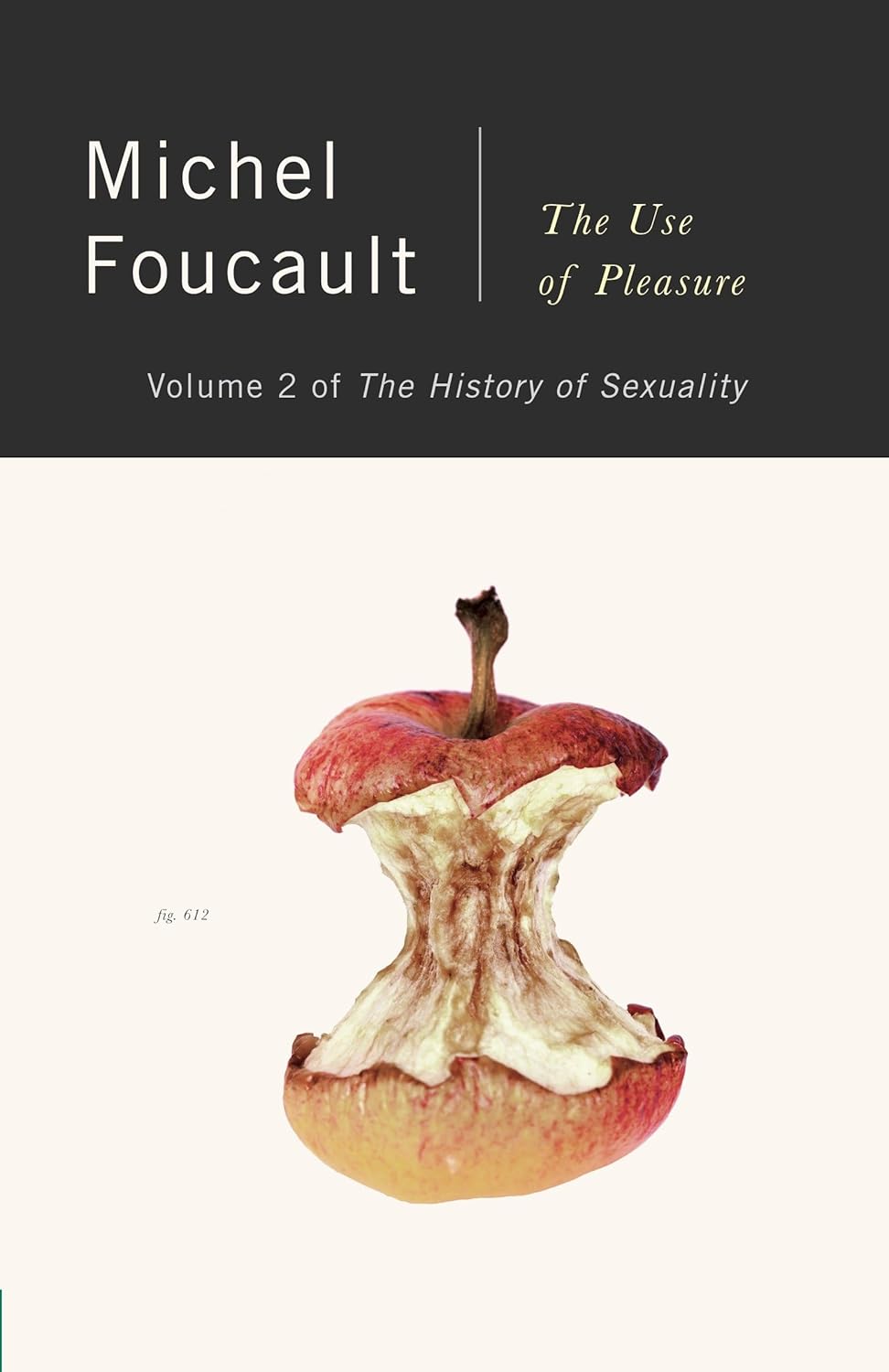
About The History of Sexuality by Michel Foucault (Volume 2 of 4): Ancient Greek Pleasure, Ethics, and Self-Mastery
The History of Sexuality by Michel Foucault (Volume 2 of 4) takes readers from modern institutions into the world of ancient Greek thought. Commonly titled The Use of Pleasure, this volume asks how food, health, marriage, desire, and intimate acts became matters of moral care. Foucault reads works by Greek philosophers, doctors, and other writers to see how people were taught to guide their conduct.
This is not a list of ancient customs. It is a study of ethics: how a person tries to shape a way of living. Foucault looks beyond rules and asks what people were expected to control, why they accepted that task, which daily practices they used, and what kind of person they hoped to become.
The result is a demanding but rewarding book about pleasure and freedom. It shows that moral life is not made only by bans. It can also be formed through training, moderation, self-knowledge, and choices about how to use freedom. Readers who enjoyed the ideas about power in Volume 1 can now see Foucault turn toward the active work people perform upon themselves.
When ancient morality looks too simple
Ancient Greece is often pictured in one of two easy ways. Some people imagine a world of complete freedom and pleasure. Others read the past as an early version of modern moral rules. Foucault shows why both pictures are too neat.
Greek writers did worry about intimate conduct, but they did not always organise those worries through the same identities and laws used today. Their questions often concerned amount, timing, social position, health, household order, and mastery over appetite. The issue was not simply whether pleasure was allowed. It was how pleasure should be used.
This approach gives readers a better way to meet a distant culture. Instead of forcing modern labels onto old texts, Foucault studies the questions those texts asked. The difference matters because the words people use can shape what they notice, fear, and value.
What The Use of Pleasure examines
The book focuses mainly on classical Greek thought and explores several connected areas. Medical writing links intimate activity with sleep, food, exercise, seasons, strength, and health. Household writing considers marriage, authority, and the duties of a man who manages a home. Philosophical works ask how desire can be guided by reason.
Foucault also examines Greek discussion of relationships between adult men and younger males. He studies how writers linked desire with status, education, honour, freedom, and the future role of the younger person. These texts came from a society with deep inequalities, so their moral world cannot simply become a model for today.
Across these subjects, one question keeps returning: how should a free man govern himself so that pleasure does not govern him? The answer involves balance and deliberate practice rather than the total rejection of the body.
Ethics is more than following a rule
Two societies may give similar advice but understand it in very different ways. Both may praise restraint, loyalty, or care for health. Yet one may treat an act as obedience to a universal law, while another may treat it as personal training for a chosen style of life.
Foucault therefore looks at more than a moral code. He asks what part of the self becomes the main concern, how a person relates to a rule, what work the person performs, and what goal guides that work. These parts help explain how someone becomes a moral subject.
The idea is useful far beyond ancient history. It helps readers separate an outward rule from the reason and practice behind it. Two people may perform the same act while understanding themselves in different ways. Ethics includes conduct, but it also includes the form a person gives to a life.
Understanding aphrodisia in simple words
Foucault uses the Greek term aphrodisia for acts, desires, and pleasures connected with sexuality. The ancient category does not match the modern idea of sexuality as a deep identity. It points more toward an area of conduct where appetite and action require care.
Greek moral thought often viewed pleasure as natural, yet open to misuse. The danger was excess or loss of command. A person who could not guide appetite might appear unfit to guide a home, take part in public life, or rule themselves. Control of pleasure became tied to ideas about freedom and character.
This does not mean the Greeks shared one perfect view. Foucault studies selected texts, not every person who lived in the ancient world. His aim is to show a pattern of thought and the problems writers chose to discuss.
Freedom requires self-mastery
In the moral world Foucault studies, freedom does not mean doing anything at any time. A free person is expected to avoid becoming a servant to appetite. The struggle is therefore inside daily action: choosing measure, time, purpose, and limits.
Self-mastery does not require hating pleasure. It requires using pleasure without being ruled by it. Reason should guide appetite, just as an ordered household or city was believed to need sound direction. This link between personal command and social authority appears again and again.
Modern readers may find this idea both familiar and strange. Advice about habits, balance, and discipline still exists today. Yet ancient Greek ethics was tied to status and mainly addressed free men. The book lets readers see both a lasting question about self-control and the unequal world in which it was asked.
A major change after Volume 1
Volume 1 studies modern speech, knowledge, institutions, and power. Volume 2 turns much further back in time and gives greater attention to ethics and practices of the self. The change can surprise readers expecting a direct continuation.
Foucault explains that he changed the path of his project because he needed to study how people came to understand themselves as subjects of desire. Ancient texts offered a way to examine moral self-formation before later Christian forms of confession became central.
The two volumes still belong together. The first asks how systems shape people and produce truths. The second asks how people take up moral demands and work on themselves. Power has not vanished, but the reader now sees the subject as active, choosing and shaping a style of life within a social world.
What this book does not claim
The Use of Pleasure is not a complete history of ancient Greece. It does not describe every region, class, gender, or ordinary person. Much of its evidence comes from texts written by educated men for a limited audience. That boundary should remain clear.
It is also not a claim that the ancient world was better. Foucault finds important differences in the way ethics worked, but he does not erase inequality. Readers should not turn self-mastery or an aesthetics of life into a simple slogan.
Finally, this is not a personal wellness manual. Its discussions of diet, bodies, and conduct belong to historical analysis. The lasting value comes from the questions it teaches us to ask about moral systems, not from copying old advice.
A simple way to read a difficult work
Begin with the introduction, but do not worry if every term is not clear. Keep one question beside you: what kind of person did these Greek texts want to form? That question connects the parts about health, marriage, pleasure, and love.
Read one section at a time. After each part, write a short note about the problem, the recommended practice, and the hoped-for result. This turns a dense argument into a clear pattern. A trusted guide or reading group can help with historical terms.
It is fine to disagree with Foucault. Ask which voices are missing, how well his examples support the claim, and whether he gives enough attention to inequality. Careful questions make the reading stronger and more useful.
What readers can take away
The first benefit is a richer idea of ethics. Moral life includes more than written rules. It also involves habits, reasons, training, goals, and the relationship a person builds with the self.
The second benefit is better historical thinking. Readers learn not to assume that familiar words mean the same thing in every age. Ancient people organised desire through categories that differ from modern identity language.
Best moments to use this volume
A reading group can compare one section with modern advice about health, relationships, or self-control. Teachers can use selected passages to show the difference between a rule and a practice of self-formation. Independent readers can pair it with Volume 1 and notice how the method changes.
Who will value The Use of Pleasure?
Choose this volume if you enjoy slow, idea-rich nonfiction. It is especially useful for readers interested in ancient Greece, ethics, philosophy, history of sexuality, or the ways people shape themselves through daily practice.
The book can feel difficult for a beginner because Foucault assumes patience and moves through many old texts. Simple notes and short reading sessions make it easier. You do not need to accept every claim to learn from the questions.
Volume 2 can be read alone, but Volume 1 gives helpful background. Starting with the first book makes the shift from modern power to ancient ethics easier to understand.
Made for focused reading and study
Bookish Wonderland offers a reader-friendly copy for study, note-taking, and repeat reading. Premium eye-soothing cream paper gives each page a soft appearance, while crystal-clear print makes names and key terms easier to follow. High-quality stitched and glue binding supports regular use, and a durable finish makes the book suitable for class, a study desk, a home library, or a gift.
What books are in the The History of Sexuality series by Michel Foucault?:
The completed sequence contains four volumes. Together, they move from modern power and knowledge to Greek, Roman, and early Christian ways of thinking about desire and the self.
- The History of Sexuality, Volume 1: The Will to Knowledge by Michel Foucault (The History of Sexuality, Book 1 of 4)
- The History of Sexuality, Volume 2: The Use of Pleasure by Michel Foucault (The History of Sexuality, Book 2 of 4)
- The History of Sexuality, Volume 3: The Care of the Self by Michel Foucault (The History of Sexuality, Book 3 of 4)
- The History of Sexuality, Volume 4: Confessions of the Flesh by Michel Foucault (The History of Sexuality, Book 4 of 4)
Order your study copy with ease
When comparing the Book price in Bangladesh for The History of Sexuality by Michel Foucault (Volume 2 of 4), consider paper comfort, print clarity, and binding strength as well as cost. A study book should remain comfortable through slow reading, notes, and later review.
Cash on Delivery is available nationwide, with service inside and outside Dhaka. Fast or urgent delivery is available in Dhaka when needed. Contact Bookish Wonderland through Facebook or Instagram for the current price, stock, delivery time, or customization support.
Continue the journey from power to ethics
The Use of Pleasure asks readers to leave modern assumptions at the door and listen carefully to a different moral language. Pleasure remains important, but the larger question is how a person shapes conduct, freedom, and character.
Read it to understand ancient Greek ideas with greater care. Keep it for the questions it raises about rules, habits, status, moderation, and the making of a self. Place it beside Volume 1 and watch Foucault’s project open in a surprising new direction.
Order The History of Sexuality by Michel Foucault (Volume 2 of 4) from Bookish Wonderland today. Add The Use of Pleasure to your collection and continue one of the most influential studies of sexuality, ethics, power, and Western thought.
If you require any customization or have any questions, please inbox us via FB or Insta.
| Primary Specification | |
| Volume | 2 of 4 |
| Author | Michel Foucault |
| Translator | Robert Hurley |
| Narrator | Elliot Fitzpatrick |
| Genre | Philosophy, Social Theory, History, Sexuality Studies, Post-Structuralist Thought |
| ISBN-13/ISSN | 978-0394751221 |
| ISBN-10 | 0394751221 |
| Publisher | Vintage |
| Publishing Date | April 14, 1990 |
| Language | English |
| Reading Age | 18+ |
| Format | Printed Book |
| Physical Specification & Quality | |
| Paper Quality | Premium eye-soothing cream paper |
| Binding Quality | High quality stitched and glue binding (for longevity) |
| Print Quality | Crystal-clear print |
| Pages | 304 pages |
| Country | France |
| Logistics Information | |
| Weight | 325 gm |
| Length | 8.5 inches |
| Width | 5.6 inches |
| Height | 0.64 inch |