

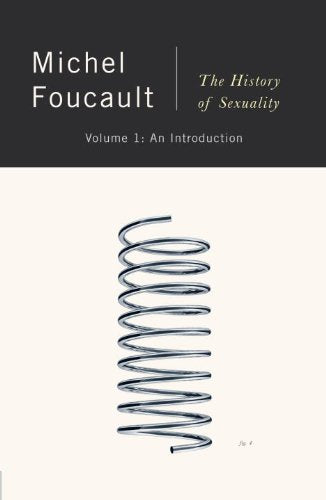
About The History of Sexuality by Michel Foucault (Volume 1 of 4): Power, Truth, and Why We Talk About Sex
The History of Sexuality by Michel Foucault (Volume 1 of 4) is a bold work of philosophy and social history. It asks a question that still feels important: if society once tried to silence sex, why have people spent so much time talking, studying, judging, and confessing about it?
Foucault does not write a simple history of private behaviour. He looks at the systems that teach people how to speak about sexuality and how to see themselves. Doctors, schools, churches, courts, families, and governments all become part of the inquiry. His focus is not gossip or advice. It is the link between knowledge, truth, identity, and power.
This first volume is also known in English as The Will to Knowledge or An Introduction, depending on the edition. It opens the larger four-volume project and gives readers its main ideas. The book is short beside many academic studies, but each chapter carries questions that can change how readers understand modern life.
When the usual story feels too simple
A common story says that older Western society treated sex with silence and shame. Under this view, the Victorian age pushed desire into darkness, and modern people became free only when they started speaking openly. Foucault calls this broad claim the repressive hypothesis.
He does not say that rules, bans, shame, or punishment never existed. Instead, he asks whether repression tells the whole story. During the same period, many institutions began collecting details about bodies, desire, marriage, birth, health, and behaviour. Experts formed new labels. People were asked to explain themselves. Far from disappearing, talk about sexuality grew.
This shift solves a problem for readers who find simple stories of freedom and control unhelpful. Foucault offers a stronger set of questions. Who asks us to speak? Who records the answer? What kind of person does the answer make us? These questions help readers examine power where it may not look like force.
The book’s main argument in plain words
Foucault argues that power does more than say no. It can produce ideas, categories, habits, and accepted truths. A rule may forbid an act, but a whole system can also name people, study them, compare them, and decide what counts as normal.
This is why the book studies discourse, meaning organised ways of speaking and creating knowledge. Medical reports, legal cases, school rules, religious confession, family advice, and scientific writing may use different words. Together, they can shape how a society understands sexuality.
The point is not that every statement is a lie or that facts do not matter. The deeper claim is that knowledge grows inside social relations. When experts define a problem, their language can help people, but it can also judge, divide, or manage them. Knowledge and power often work together.
Why confession matters
One of the book’s clearest ideas concerns confession. In a religious setting, a person may tell private thoughts to a spiritual leader. Foucault argues that this pattern moved into modern life. People began speaking about desire to doctors, therapists, teachers, officials, partners, and themselves.
The listener is not always a harsh ruler. That is what makes the process interesting. A person may speak because they want help, truth, health, freedom, or self-knowledge. Yet the answer can enter a record and be measured against a standard. A private feeling becomes information.
Foucault asks why people believe that their deepest truth is hidden inside sexuality and must be spoken. His question can make familiar acts look strange. A form, interview, diagnosis, or personal story may not simply reveal an identity that was always complete. The act of explaining can help build that identity.
Power is more than a command from above
Many people picture power as a king, government, boss, or law giving an order. Foucault widens the view. Power also moves through small relationships, daily habits, expert advice, family expectations, and ideas about normal conduct.
This does not mean every person has equal power. It means control has many paths. A parent may repeat a medical rule. A school may watch behaviour. A patient may watch themselves after learning a diagnosis. People can carry standards inside them, even when no guard is present.
Power can also meet resistance. Wherever people are shaped, they can question, refuse, change, or reuse what they are given. The book does not offer one easy escape. It teaches readers to look closely at the exact relationship, the words being used, and the kind of truth being requested.
Meet the idea of biopower
Near the end, Foucault introduces biopower, one of the book’s most influential ideas. Older sovereign power was often shown through the ruler’s right to take goods, demand service, or cause death. Modern power increasingly became concerned with managing life.
Institutions counted births, deaths, illness, life span, and population. They studied public health, housing, work, reproduction, and risk. Individual bodies were trained, checked, and made useful, while whole populations became objects of planning. Power worked through care and improvement as well as punishment.
This idea helps readers understand why a helpful system can still deserve questions. A health programme may protect life, yet it also gathers information and sets standards. Foucault invites careful thought about who designs those standards, whose lives they describe, and what happens to people who do not fit them.
Not a guide to relationships or sexual health
The title can create the wrong expectation. This is not a romance book, a personal health guide, or a manual about intimate acts. It does not tell readers how to build a relationship or make medical choices. It is a study of how Western societies created knowledge about sexuality.
The word history can also mislead. The book does not move year by year through every culture. It follows selected changes in Western thought, mainly around the modern period. Its aim is to test a familiar story and offer a new method for thinking about power.
Readers seeking health advice should use qualified medical sources. Readers seeking a complete global history will need other books too. This volume is most valuable as a sharp argument that opens questions rather than a final reference that closes them.
Why a short book may take time
Foucault’s writing is compact. A page may introduce a term, challenge a common belief, and change the direction of the argument. New readers can feel lost if they rush. The best solution is to read in small parts and pause.
Start by keeping three ideas in view: repression does not explain everything, power produces as well as forbids, and speech about sexuality can create knowledge and control. These points act like a map. Other terms become easier when connected to them.
It can also help to write one plain sentence after each section. Ask what claim Foucault is testing and what example he uses. You do not need to agree with every point. A careful disagreement is part of serious reading. The goal is to understand the question before deciding whether the answer works.
What readers can gain
The first benefit is stronger critical thinking. Readers learn to test a story that seems obvious and look for evidence it leaves out. The second is a richer view of power. Control can work through knowledge, care, advice, and normal standards, not only open force.
The third benefit is a better language for discussing modern identity. Terms such as discourse, normalization, confession, and biopower help explain how personal life connects with institutions. These words may look difficult at first, but the ideas become clear through examples.
The final benefit is lasting rereading value. A chapter may feel different after studying history, media, gender, law, medicine, or politics. Readers can return to the book as their questions change and find another part of the argument waiting.
Good ways to use this volume
A reading group can take one chapter at a time and begin with a simple question: what common belief is being challenged here? Teachers can use short parts to start discussion, while independent readers can follow the argument with notes or a trusted guide.
This is also a thoughtful gift for a serious reader who likes ideas that question everyday life. It suits someone willing to slow down, underline key lines, and think beyond quick answers.
Who is this book for?
Choose this volume if you enjoy philosophy, social theory, history of ideas, or books about the hidden workings of power. It is useful for students, teachers, researchers, writers, and readers interested in how societies create ideas of truth and normality.
It may not suit someone looking for a light story or direct self-help. The subject is adult, and the argument can be dense. However, no expert background is required if the reader is patient and willing to pause over new terms.
Volume 1 is the best place to begin the series. It explains the broad problem before the later books move into older Greek, Roman, and Christian sources. Reading the books in order makes the change in Foucault’s project easier to see.
A comfortable copy for study and rereading
Bookish Wonderland offers a reader-friendly copy designed for careful study. Premium eye-soothing cream paper gives the pages a soft appearance, while crystal-clear print helps readers follow dense paragraphs and key terms. High-quality stitched and glue binding supports regular use, and a durable finish makes the book suitable for a study desk, class, home library, or thoughtful gift.
What books are in the The History of Sexuality series by Michel Foucault?:
The completed History of Sexuality sequence contains four volumes. The first develops the main framework, while the next three examine ancient Greek, Roman, and early Christian approaches to desire, ethics, and the self.
- The History of Sexuality, Volume 1: The Will to Knowledge by Michel Foucault (The History of Sexuality, Book 1 of 4)
- The History of Sexuality, Volume 2: The Use of Pleasure by Michel Foucault (The History of Sexuality, Book 2 of 4)
- The History of Sexuality, Volume 3: The Care of the Self by Michel Foucault (The History of Sexuality, Book 3 of 4)
- The History of Sexuality, Volume 4: Confessions of the Flesh by Michel Foucault (The History of Sexuality, Book 4 of 4)
Easy ordering from Bookish Wonderland
When comparing the Book price in Bangladesh for The History of Sexuality by Michel Foucault (Volume 1 of 4), consider reading comfort, print clarity, and binding strength along with cost. This is a book many readers underline, study, and reopen, so a comfortable copy has real value.
Cash on Delivery is available nationwide. Customers can order from inside or outside Dhaka, and fast or urgent delivery is available in Dhaka when needed. For the latest price, stock, delivery time, or customization help, contact Bookish Wonderland through Facebook or Instagram.
Begin with the question behind modern identity
Why do people believe that sexuality reveals a deep truth about who they are? Who taught society to ask that question, and what forms of power grow around the answer? Foucault turns these familiar ideas into a powerful field of inquiry.
Open this volume for its famous challenge to the story of repression. Stay for its clear links between speech, knowledge, bodies, institutions, and everyday self-understanding. The book may be demanding, but its questions can remain active long after the last page.
Order The History of Sexuality by Michel Foucault (Volume 1 of 4) from Bookish Wonderland today. Begin the full series with the volume that introduces its central ideas and discover a new way to think about power, truth, identity, and modern life.
If you require any customization or have any questions, please inbox us via FB or Insta.
| Primary Specification | |
| Volume | 1 of 4 |
| Author | Michel Foucault |
| Translator | Robert Hurley |
| Narrator | Michael Page |
| Genre | Philosophy, Social Theory, History, Cultural Criticism, Sexuality Studies |
| ISBN-13/ISSN | 978-0679724698 |
| ISBN-10 | 0679724699 |
| Publisher | Vintage |
| Publishing Date | April 14, 1990 |
| Language | English |
| Reading Age | 18+ |
| Format | Printed Book |
| Physical Specification & Quality | |
| Paper Quality | Premium eye-soothing cream paper |
| Binding Quality | High quality stitched and glue binding (for longevity) |
| Print Quality | Crystal-clear print |
| Pages | 168 pages |
| Country | France |
| Logistics Information | |
| Weight | 192 gm |
| Length | 8.5 inches |
| Width | 5.6 inches |
| Height | 0.48 inch |