

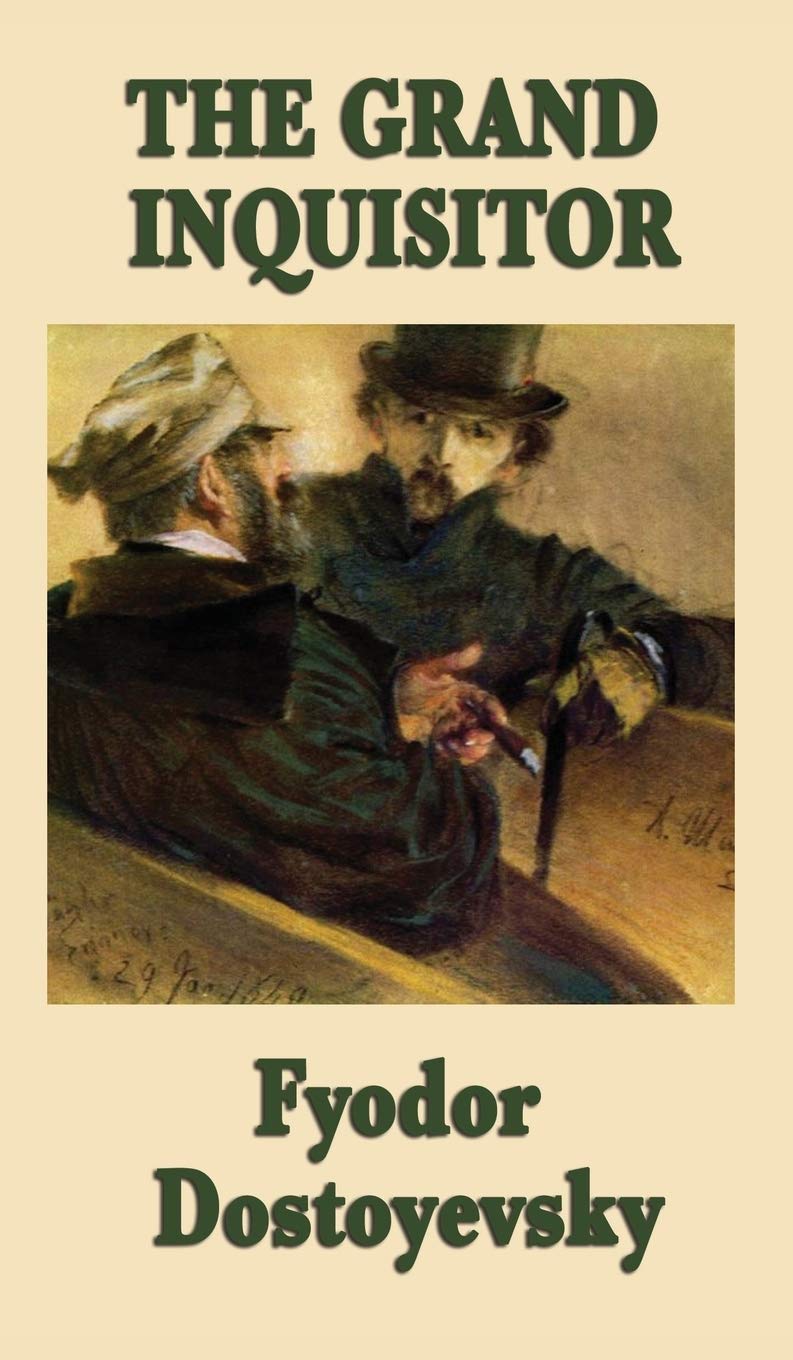
About The Grand Inquisitor by Fyodor Dostoyevsky – A Powerful Story About Freedom, Faith and Human Choice
The Grand Inquisitor by Fyodor Dostoyevsky is a famous philosophical story taken from The Brothers Karamazov. It appears inside a conversation between the brothers Ivan and Alyosha Karamazov. Ivan tells Alyosha an imagined poem in which Christ returns to Earth during the Spanish Inquisition in Seville. The people recognize Him, but the powerful Grand Inquisitor has Him arrested.
Most of the power comes from the Grand Inquisitor speaking to the silent Christ. He argues that human beings do not truly want the difficult freedom Christ gave them. In his view, most people would rather have bread, certainty, miracles, and someone strong to tell them what to do. Christ does not answer with a long argument. His response is simple, quiet, and unforgettable.
In a small number of pages, Dostoyevsky opens questions about freedom, religion, authority, responsibility, love, and human weakness.
When a short classic feels more meaningful than a long novel
Some readers want to explore Dostoyevsky but feel unsure about starting with a very long novel. The Grand Inquisitor can be a strong entry point because it is short, focused, and full of the ideas that made Dostoyevsky famous.
The main question appears quickly: is freedom a gift, or can freedom become a burden that many people would rather escape?
Instead of explaining every idea as a lesson, Dostoyevsky places those ideas inside a dramatic situation. One man speaks with complete confidence about what humanity needs, while Christ remains almost completely silent. The contrast makes the reader do the thinking.
Christ returns, but power does not welcome Him
Ivan’s imagined story takes place in Seville during the Spanish Inquisition. Christ appears among ordinary people and is recognized through acts of compassion and healing. The crowd is drawn to Him, but the Grand Inquisitor sees His return as a threat.
The Inquisitor believes that the institution he serves has corrected what he sees as Christ’s mistake: giving people too much freedom.
He argues that people are weak. They want food, safety, wonders, and clear authority. In his view, freedom creates fear because it forces each person to choose, believe, and accept responsibility.
The Inquisitor does not see himself as a simple villain. He believes control can make people happier. That idea forces readers to ask whether comfort is worth the loss of freedom.
Bread, miracle, and authority
A major part of the Inquisitor’s argument is built around the temptations of Christ in the wilderness. He returns to three ideas: bread, miracle, and authority.
Bread stands for material security. The Inquisitor says hungry people will follow whoever feeds them. Miracle stands for certainty. He thinks people do not want the difficult work of faith and would rather see something that removes doubt. Authority stands for control. He believes people are happier when someone else makes the hardest choices for them.
These ideas make the story larger than its historical setting. Readers can think about politics, religion, leadership, and everyday choices. How much freedom do people really want? When does guidance become control? Why can certainty feel safer than responsibility?
Ivan and Alyosha make the debate more personal
The Grand Inquisitor is not separate from The Brothers Karamazov by accident. Ivan tells the story to his younger brother Alyosha, who has deep religious faith.
Ivan struggles with suffering, justice, and belief. He cannot easily accept a world where innocent people suffer. His imagined Grand Inquisitor becomes one way for him to challenge ideas about God, freedom, and human nature.
Alyosha does not answer Ivan with a long lecture. Their relationship gives the chapter an emotional side that goes beyond abstract philosophy. The standalone piece works on its own, but the larger novel gives Ivan and Alyosha even more depth.
The silent answer is one of the most famous moments
Throughout the Inquisitor’s long speech, Christ stays silent. That silence matters.
The Inquisitor builds a huge argument about power and human weakness. He believes he understands what people truly need. Instead of answering with another speech, Christ responds with a kiss.
Readers have interpreted this moment in many ways. It can be read as love answering power, compassion answering accusation, or a refusal to fight control with another form of control.
Dostoyevsky does not reduce the ending to one easy meaning. Two readers can finish the same pages and walk away with different thoughts.
Why this work still feels modern
The story comes from the nineteenth century and uses a religious setting, but its questions are still easy to recognize today.
People still debate freedom and security. Leaders still promise safety in exchange for trust and obedience. People still struggle with doubt, responsibility, and the desire for simple answers.
The Grand Inquisitor does not give a neat final lesson. It gives readers a problem and asks them to think. That makes it useful for literature students, philosophy readers, religious studies students, political thinkers, and anyone interested in human behavior.
Premium quality for a book you may reread
Bookish Wonderland offers this edition for readers who want a comfortable physical copy that can stay useful for study and repeated reading.
- Premium eye-soothing cream paper: Soft-looking pages designed for comfortable reading.
- Crystal-clear print: Sharp text helps readers follow long speeches and important ideas.
- High-quality stitched and glue binding: Made for stronger page hold and better longevity.
- Durable reading quality: Suitable for study, gifting, travel, annotation, and personal libraries.
This is the kind of short classic many readers return to after learning more about Dostoyevsky, religion, philosophy, or political thought.
Who should read The Grand Inquisitor?
The book is a strong choice for readers who enjoy philosophy, Russian literature, religious fiction, psychological writing, political ideas, and moral questions.
It can also suit readers who want a shorter introduction to Dostoyevsky before beginning Crime and Punishment, The Idiot, or The Brothers Karamazov.
Students may find it useful for essays and discussions about free will, authority, faith, suffering, obedience, and power. General readers can enjoy it as an intense conversation between two very different ideas about humanity.
Because the work deals with theology and philosophy, it is usually more rewarding for older teens and adults.
If you are checking the Book price in Bangladesh for The Grand Inquisitor by Fyodor Dostoyevsky, Bookish Wonderland offers nationwide delivery and Cash on Delivery. Readers in Dhaka can also ask about fast or urgent delivery when available.
Why choose Bookish Wonderland?
Bookish Wonderland helps readers across Bangladesh order premium English books with nationwide Cash on Delivery and delivery inside and outside Dhaka. Customers in Dhaka can also ask about fast or urgent delivery when available.
The Grand Inquisitor is worth keeping if you enjoy books that can be read quickly but thought about for a long time. Its debate about freedom, comfort, truth, faith, and authority can open new questions every time you return to it.
If you require any customization or have any questions, please inbox us via FB or Insta.
| Primary Specification | |
| Author | Fyodor Dostoyevsky |
| Narrator | Alan Lamberg, Dan Ribaudo |
| Genre | Philosophical Fiction, Literary Fiction, Christian Fiction, Parable |
| ISBN-13/ISSN | 979-8880916054 |
| ISBN-10 | 1438285361 |
| Publisher | Start Publishing PD |
| Publishing Date | 22 May 2024 |
| Language | English |
| Reading Age | 12+ years |
| Format | Printed book |
| Physical Specification & Quality | |
| Paper Quality | Premium eye-soothing cream paper |
| Binding Quality | High quality stitched and glue binding (for longevity) |
| Print Quality | Crystal-clear print |
| Pages | 56 pages |
| Country | USA |
| Logistics Information | |
| Weight | 61 g |
| Length | 8.5 inch |
| Width | 5.6 inch |
| Height | 0.36 cm |